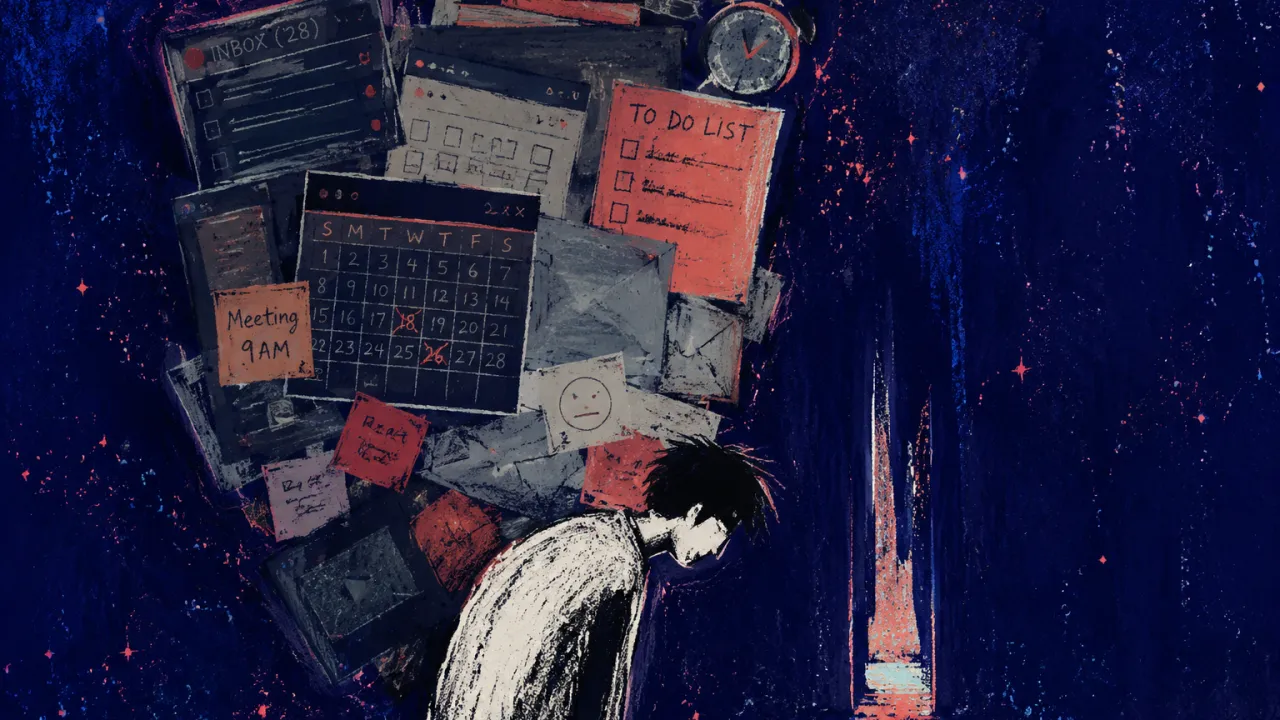
When Minimalist Transition starts taking over your home screen, closet, calendar, and checkout habits, the pressure shows up in the body as a constant need to scan what still has to be managed. That tight, daily friction is not just about owning too much; it is an environmental, structural dynamic where objects, apps, subscriptions, routines, and expectations keep asking for attention. The cards below reflect the shape of that stripped-down threshold without turning it into advice. Here are the Tarot Cards that tend to mirror this kind of transition.
The Fool UprightThe bundle on the staff is small, portable, and visibly insufficient for a long mountain route, yet it allows the body to stay light. The rose is held with two fingers rather than clenched, turning possession into a temporary tool instead of a fixed identity. In a personal growth setting, the scene points to a transition where fewer commitments, fewer inputs, and less social proof become the external conditions for movement. You are dealing with a stripped-down stage, not an empty one: the structure asks what can travel with you without becoming the weight that stops you.
The Magician UprightThe Magician's table is full, but it is not cluttered: four tools, each with a clear symbolic job, sit inside a simple garden frame. The red and white flowers repeat the clothing's color code, turning the whole scene into a curated working environment rather than an accumulation of objects. That visual economy fits the lived pressure of simplifying a life that has too many apps, purchases, routines, and unfinished commitments competing for space. The issue is not emptiness; it is selection under real constraints. Minimalist Transition belongs here because the card makes curation visible. You are not being asked to erase desire or ambition, but to keep only the tools that still translate into a livable daily structure.
The High Priestess UprightPlain clothing, a stone seat, a veiled sanctuary, and a single scroll create a scene where exposure is deliberately reduced. The High Priestess does not display everything she holds; she keeps the essential structure close and lets the boundary decide what belongs inside. That visual economy connects to a minimalist transition because the issue is not just fewer objects. It is the pressure of deciding which possessions, inputs, subscriptions, routines, and social demands are allowed to keep occupying your limited bandwidth. The card gives the transition a threshold shape. You are not simply clearing space; you are testing whether your physical life can become quiet enough for the next layer of priorities to be heard.
The Emperor UprightThe stone throne is severe, square, and stripped of softness, while the Emperor's tools are few but unmistakably important. The image shows a life structure built around essentials, boundaries, and controlled access rather than abundance or decoration. That austerity connects to a minimalist transition when your lifestyle has become too noisy to govern. The pressure is not just owning too much; it is the constant micro-management of objects, apps, obligations, and visual clutter that keeps pulling authority away from your core priorities. The card's challenge is to distinguish useful simplicity from rigid deprivation. A leaner system should give your day more movement and attention, not turn your home or routine into another stone throne.
The Lovers UprightNaked bodies stand in an uncluttered garden with no furniture, tools, bags, armor, or status objects surrounding them. The scene shows exposure and simplicity at the same time, which is why the move toward less can feel both clean and destabilizing. In lifestyle terms, minimalism is not only about removing items. You are testing whether a stripped-down environment can still hold comfort, identity, routine, pleasure, and practical support without recreating clutter in a new form.
The Hermit UprightThe gray cloak hides status, the lantern reduces the field of vision, and the mountain removes the figure from ordinary traffic. Nothing in the image is abundant in a social sense, but the few remaining tools are exact: light, staff, footing, and distance. Minimalist Transition appears when direction is rebuilt through subtraction. You may be cutting away goals, identities, or public markers that once made the future look impressive but now scatter your energy. The Hermit gives this reduction a structure. The outer world may read the smaller life as retreat, but the card shows a deliberate narrowing of inputs so the next path can be chosen by signal rather than noise.
The Hanged Man UprightThe scene is almost bare: one body, one rope, one living frame, and a blank field around them. Nothing in the image suggests abundance, clutter, or excess; the figure is held by the few things that actually matter to the structure. Minimalist Transition appears when the lifestyle system is being stripped back to essentials, but the stripping back has its own pressure. You may be reducing objects, apps, obligations, routines, or aesthetic expectations while discovering which supports are genuinely necessary and which were only noise. The card keeps this transition from becoming a fantasy of instant simplicity. It shows that removing excess can temporarily reduce comfort, speed, and identity, because the body has to learn how to be held by fewer external things.
Death UprightThe black flag with the single white rose stands above a field where excess status symbols have dropped out of active use. The crown and scepter are still visible, but they no longer run the scene; the image is organized around one stark signal and one forward passage. For personal growth, this points to a minimalist transition where fewer goals, fewer systems, and fewer borrowed ambitions create room for an actually livable structure. You are not simply cutting things out for aesthetic control; the card shows a narrowing process that separates what still carries movement from what only preserves an old image of progress.
Temperance UprightThe two cups are the only active tools in the figure's hands, and the robe is clean, plain, and ordered. Nothing in the scene is crowded, yet the work being done is precise; the power comes from fewer containers being used well. That visual economy fits a minimalist transition because the external task is not aesthetic emptiness, but reducing the number of objects, habits, and commitments that require management. You are standing in the early stage where less has to become functional, not just visually calm.
The Star UprightThe unclothed figure occupies an open landscape with only water, soil, stars, and two vessels as tools. Nothing in the scene is padded by excess furniture, status objects, or visual clutter. That stripped-down composition gives Minimalist Transition its pressure: simplification is not just aesthetic removal, it exposes which routines and possessions were acting as scaffolding. You regain usable space by deciding what can keep receiving energy and what no longer belongs in the daily system.
The Sun UprightThe naked child on the horse is not surrounded by tools, possessions, or layered protection. The image is visually abundant, but the abundance comes from light, movement, and a few strong symbols rather than accumulation. That makes the card a precise mirror for a minimalist transition in lifestyle. You may be trying to reduce the number of objects, commitments, apps, rituals, or aesthetic demands your daily system has to carry. The point is not emptiness. The Sun shows a stripped-back environment that still has warmth, direction, and support, which helps distinguish real simplification from a new performance of having less.
Judgement UprightThe open coffins are still present, but they no longer contain the whole body. The image holds a precise physical tension: the old storage structure remains visible while the figures begin to occupy space beyond it. That visual tension maps cleanly onto a minimalist transition when decluttering is not just about owning fewer objects. It becomes a renegotiation of what your home, closet, devices, subscriptions, and routines are allowed to keep carrying for you. You are not being asked to erase your life down to an aesthetic. The card points to the moment when old containers can be opened, inspected, and released according to the life they now support or obstruct.
Four of Cups UprightThe crossed arms and folded legs make the body smaller, but the posture also draws a clear line around what can enter. Around him, the cups are intact and available, which makes the pressure subtler: the problem is not emptiness, but the burden of having more inputs than the day can meaningfully hold. Minimalist Transition appears here as a physical negotiation with capacity. The figure is not rejecting life itself; he is surrounded by offerings that have to be filtered before they become part of a usable lifestyle. For you, the card points to the threshold where simplifying stops being an aesthetic preference and becomes a practical boundary. The useful question is not how little you can own or do, but which cups still deserve a place inside your real daily bandwidth.
Eight of Cups UprightThe cups are not shattered, empty, or stolen. They remain upright and usable while the figure creates distance from them, which makes the departure a choice to carry less rather than a scene of total loss. In lifestyle terms, that choice points to a minimalist transition with real friction. You may be moving away from possessions, subscriptions, routines, comfort purchases, or status-coded habits that still have value but no longer justify the space they occupy in your daily system. The river line gives the transition its boundary. The card does not romanticize simplicity; it shows that reducing a life requires crossing out of the old arrangement before the new physical and energetic order has fully formed.
Page of Cups UprightThe Page stands between the cup and the sea, holding a small creature that may not belong in the vessel forever. The visual tension is practical and emotional at once: the container is beautiful, but the living thing inside it raises the question of whether keeping something is still the same as caring for it. A minimalist transition often begins in exactly that threshold. You may be sorting objects, subscriptions, routines, apps, clothes, or commitments that once felt meaningful but now require ongoing maintenance from a life system that has limited space. The platform creates a safe pause before release. This is not about stripping life down for an aesthetic ideal; it is about seeing which containers still support the life you are actually trying to live.
Ace of Swords UprightOne hand, one sword, one crown, and a bare horizon dominate the image. The scene has almost no visual excess, so the blade becomes a tool for separating what is essential from what only fills space. This is the lifestyle pressure behind a Minimalist Transition. You may be reducing possessions, commitments, apps, routines, or aesthetic clutter because your physical system has started to tax your attention instead of supporting it. The card does not romanticize emptiness. Its clarity comes from function: the sword is kept because it does work, and everything around it is sparse enough for that work to be visible.
Seven of Swords UprightFive swords are carried away, while two remain planted on the path behind the figure. The image is built around selective removal: the body can move only because it accepts that not everything in the original set can be taken. In a lifestyle reading, this becomes the pressure point of a minimalist transition. You are not simply getting rid of objects; you are testing which habits, tools, clothes, subscriptions, routines, and self-images are actually portable into the next version of daily life. The awkward bundle of swords keeps the transition honest. A lighter system is not created by aesthetic subtraction alone; it is created by noticing where excess has become difficult to carry and where the remaining pieces still mark the boundary of the old setup.
Queen of Swords UprightThe long sword, plain white robe, and sparse high landscape strip the scene down to edge, signal, and air. Even the butterflies carved into the throne make change look deliberate rather than decorative. For minimalist transition, the card's logic is not aesthetic emptiness; it is the external pressure to remove what keeps taxing your bandwidth. You are facing the practical threshold where possessions, subscriptions, social obligations, and lifestyle ideals must be separated from what actually supports a cleaner life.
Page of Wands UprightOne figure, one wand, and a wide desert reduce the scene to essentials. The page still has color, identity, and movement, but the environment has been stripped of clutter, surplus, and competing objects. That physical spareness maps cleanly onto minimalist transition. You are testing whether fewer routines, fewer possessions, or fewer commitments can become a livable structure rather than an empty aesthetic.
Knight of Wands UprightThe horse carries only a bridle and saddle, while the knight’s visible kit is compact and purpose-built. Against the open desert, extra weight would immediately become drag. That physical setup makes the card a precise image for a minimalist transition in lifestyle terms. The point is not bare aesthetics; it is the practical need to reduce what your system must carry so movement becomes possible again. You may be sorting possessions, commitments, subscriptions, routines, or digital inputs, but the deeper structure is the same. The card frames minimalism as mobility under pressure: fewer moving parts, clearer control points, and less friction between intention and daily execution.
No cards available for this filter.