Who Are You Before Editing?
This page maps the fatigue of filtering yourself through related tarot cards and tarot reading insights.

Self-editing Exhaustion
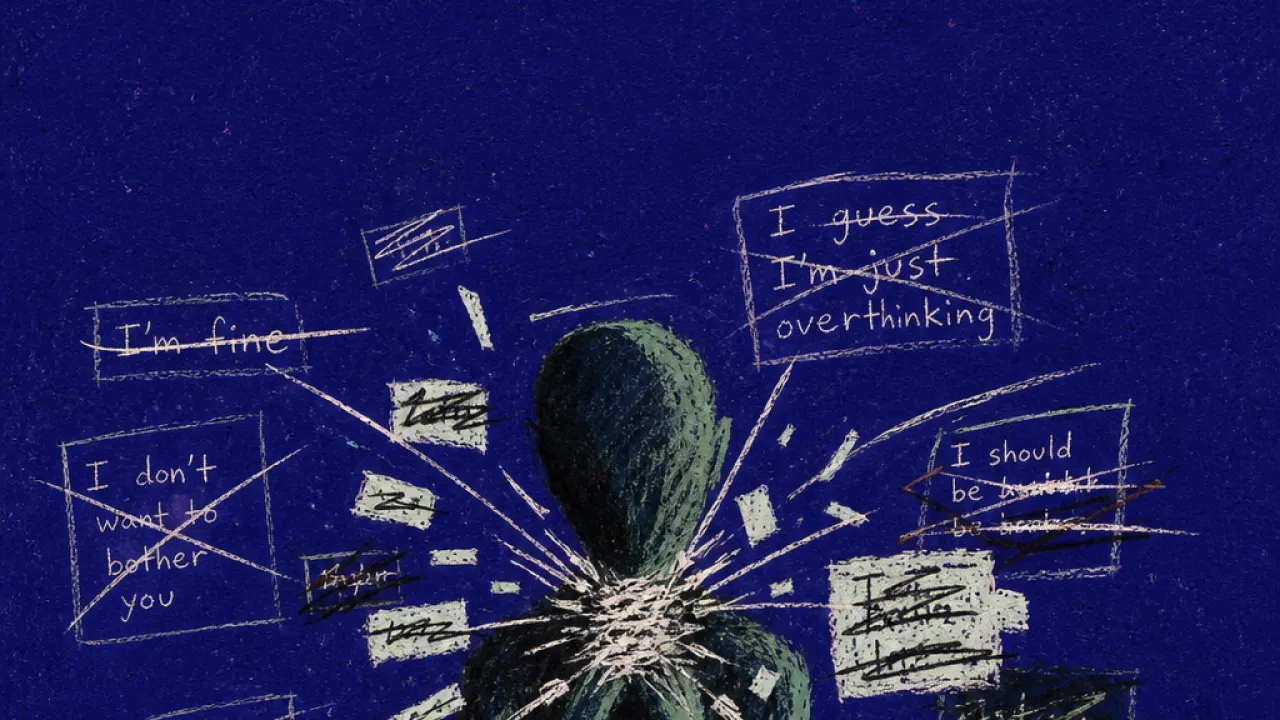
What does this feel like?
Self-Editing Exhaustion — you are halfway through typing a reply, then you delete it, then you type it again with fewer feelings in it, then you delete the part that sounds too direct, too needy, too intense, too weird, too much like you. Your thumb hovers over the send button while your throat tightens, and the message starts to feel less like a sentence and more like a risk assessment. You reread a joke before posting it, soften a boundary before saying it, add a smiley face after something serious so no one can accuse you of being difficult, and by the time your words reach another person they have been sanded down so finely that even you can barely recognize them. You are not lying exactly; you are translating yourself into the version least likely to be questioned. The exhausting part is that this happens before anyone else even reacts. You become both the speaker and the audience, the person trying to express something and the person scanning it for every possible way it could land wrong. In conversations, you listen to yourself as if from a few feet away, adjusting your tone while you are still speaking, watching people's faces for tiny shifts, trying to stay natural while managing every edge. Later, alone, your body keeps replaying what you said, what you should have said, whether your silence looked cold, whether your honesty looked dramatic, whether your calm looked fake. Over time, your own voice starts arriving late, already revised, like it has to pass through a hallway of crossed-out drafts before it is allowed into the room. The cost is not just tiredness; it is the slow disappearance of unedited desire, the strange loneliness of never quite meeting yourself out loud, much like the figure on the Eight of Swords, bound and blindfolded among sharp lines, surrounded by limits that make every direction feel unsafe.
What's pulling at you?
You're not quiet because you have nothing to say; you're caught between wanting to be understood and needing every version of yourself to be acceptable before it leaves your body. The more you try to prevent being misread, the further your own voice gets pushed behind the edits, until speaking feels less like expression and more like damage control.
How It Shows Up?
- You write a text at night, delete it, rewrite it, then remove the sentence that sounded most like what you meant. Your jaw locks, your thumb hovers, and your throat feels tight even though no one has replied yet; the blank space under the blinking cursor starts to feel like a small ring of swords. You can leave the message unsent without making that pause mean anything more than a pause.
- A friend or partner asks what is wrong, and you feel the honest answer rise in your chest before you trim it into something easier to receive. You say, "I'm just tired," while your stomach drops because you know you have moved the whole conversation away from what mattered. It is allowed to notice the edit without forcing yourself to undo it on the spot.
- At work or school, you reread one Slack message, email, or discussion post so many times that the task itself disappears behind the wording. Your shoulders creep up, your eyes start to ache, and every comma feels like it could change how competent, friendly, or difficult you seem. You can send something plain and still let your body take a breath afterward.
- In a group setting, you hear yourself laughing a half-second after everyone else because part of you is still checking whether your reaction fits the room. Your face keeps moving, but your chest feels held in place, and your attention keeps darting from one person's expression to another like you are trying to stay inside invisible lines. It is fine to step out for water without explaining the whole reason.
- By the end of the day, the tension settles in one familiar place: the back of your neck, the hinge of your jaw, the narrow band around your throat. Even when you are alone, your mind keeps revising old sentences, testing better versions of moments that are already over. You can let the body be tired without turning that tiredness into another thing to perform correctly.
Self-editing Exhaustion in Tarot Cards
Self-Editing Exhaustion lives in the gap between wanting to be understood and needing every word to feel safe before it leaves your body. You can feel it in the tight throat, clenched jaw, and thumb hovering over an unsent message. From an existential angle, its structural framework is the cost of turning your own voice into a draft before anyone else hears it. The Tarot Cards below make that shape visible without explaining it away.
Self-editing Exhaustion in Tarot Card Reading Insights
When Self-Editing Exhaustion turns every text, email, and conversation into another draft, people bring that same stuckness into readings too. These Tarot Reading Insights show what came up when the question was about speaking, being seen, and not shrinking every word first.

A WhatsApp Replay on the Tube, Then One Sentence Allowed to Stand
Topic:Social Tarot Reading
Struggle:Boundary Control Strain
Context:Unspoken Social Rules

Three Rewrites on the Northern Line: From Shame to One Honest Sentence
Topic:Introspection Tarot Reading
Struggle:Vulnerability Containment Strain
Context:Public Mask Collapse

Four Slack Rewrites, One Safe Reply, and a Design Concern Restored
Topic:Introspection Tarot Reading
Struggle:Belonging-Authenticity Split
Context:Conditional Belonging Pressure

After Fandom Consensus Erased "I'm Not Sure," One Honest Line Stayed
Topic:Social Tarot Reading
Struggle:Belonging-Authenticity Split
Context:Community Integration Trial

When "Being Fair" Means Editing Yourself Out: Keeping a View Visible
Topic:Social Tarot Reading
Struggle:Inner Compass Overload
Context:Direct Communication Trial

When 'Drama' Makes the Sentence Disappear: Keeping It Intact
Topic:Love Tarot Reading
Struggle:Truth-Connection Split
Context:Direct Communication Trial

Coffee-Machine Small Talk: Naming Rest Without Upgrading It
Topic:Introspection Tarot Reading
Struggle:Belonging-Authenticity Split
Context:Social Performance Loop

Slack on One Screen, Notes on the Other—Then Letting the Ask Stand
Topic:Career Tarot Reading
Struggle:Power-Belonging Split
Context:Direct Communication Trial

When a Casual Invite Becomes a Belonging Test: The One-Sentence No
Topic:Social Tarot Reading
Struggle:Relational Boundary Drift
Context:Social Performance Loop

From Going Quiet When Parents Defend a Sibling to One Calm Sentence
Topic:Family Tarot Reading
Struggle:Belonging-Authenticity Split
Context:Family Script Pressure