The 11:30 p.m. RSVP Algebra
You get a last-minute all-hands invite right after a day of back-to-back meetings, and suddenly you’re doing RSVP algebra instead of eating dinner—classic Sunday Scaries energy, just on a weekday.
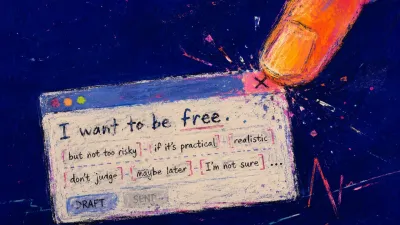
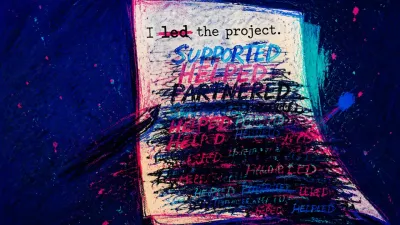
Taylor settled onto her Toronto apartment couch with her laptop balanced on her knees like it was a fragile tray. Slack glowed on the left. The all-hands invite sat open on the right. Apple Notes hovered in the middle—two sentences, rewritten so many times the words had started to feel fake.
The radiator clicked like it was counting down. Her phone was warm from scrolling, the kind of warm that makes your palm feel vaguely guilty. Every time she imagined speaking in that company-wide room, her throat tightened as if it were trying to close the door from the inside. Her breathing stayed up in her chest—small, quick sips of air. Her shoulders had crept so high they looked like they were trying to turn into earmuffs.
“I don’t know if I’m setting a boundary or making an excuse,” she said. “If I say yes, I have to show up as the version of me who has it together. If I say no… it feels like I’m admitting I can’t handle it.”
I’d heard variations of it for years, but the modern costume is always the same: the calendar invite that feels like a verdict, the unsent draft that masquerades as ‘being thoughtful,’ the quiet belief that visibility must be paid for with perfection.
“We can work with this,” I told her, keeping my voice steady on purpose. “Not to force a brave answer out of you—but to find clarity: to tell the difference between fear-based hiding and capacity-based boundaries, and to choose a level of visibility you can actually live with.”

Choosing the Compass: The Four-Layer Insight Ladder for Work Visibility Anxiety
I invited Taylor to place both feet on the floor and take one slower breath—not as a ritual for mystery, but as a switch for attention. Then I shuffled, the cards making that familiar soft snap against my palms, like turning pages in an old field notebook.
“Today, we’ll use a spread called the Four-Layer Insight Ladder · Context Edition,” I said.
For you reading this: a standard decision spread can flatten a problem like this into a binary yes/no. But this dilemma isn’t really about choosing a single correct answer—it’s about discernment. This ladder separates what’s actually true in your capacity from what’s loud in your fear, then shows how to turn the insight into a clean, communicable next step.
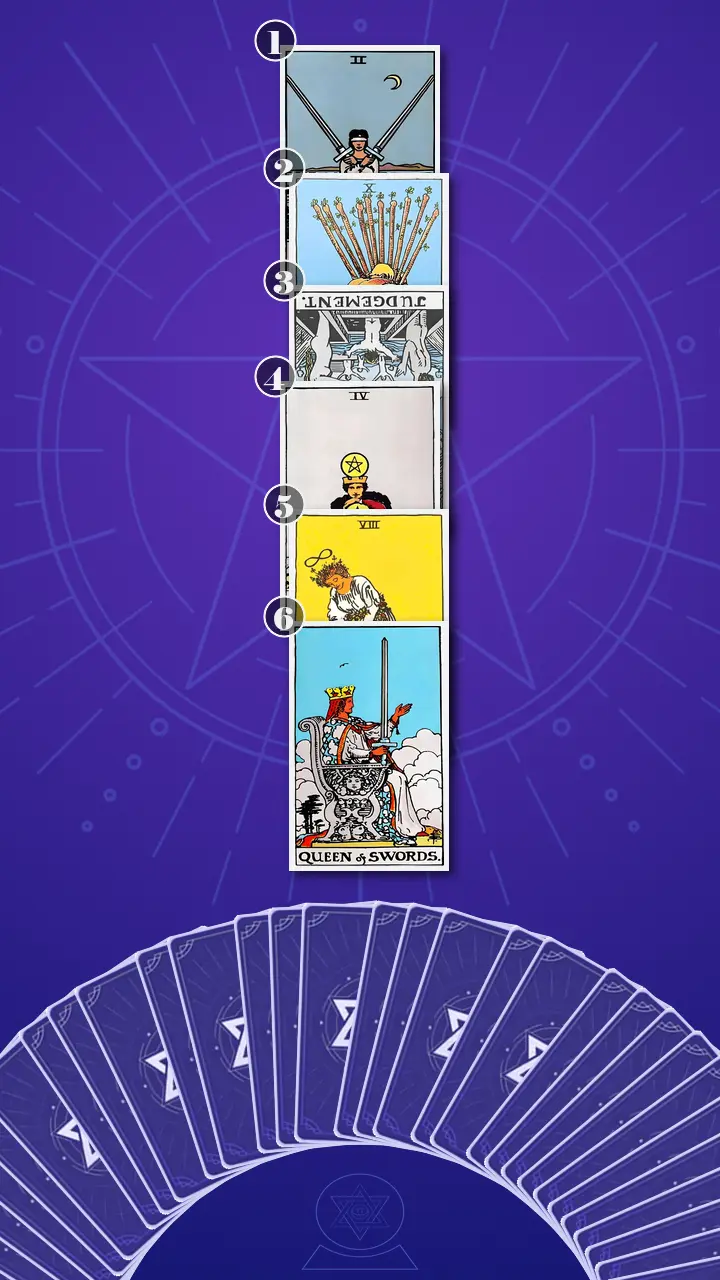
Here’s the map we’re using: the first card shows the surface behavior (what you’re concretely doing with the invite). The second reads your capacity signal (what your workload and nervous system are telling you). The third goes to the root block (the fear-story that makes visibility feel high-stakes). The fifth is the key reframe—the bridge. And the last card gives a practical next step: what you can say and do, without turning your boundary into a courtroom-level argument.
Reading the Map: The Pattern Beneath the Invite
Position 1: Surface behavior — the stall you can see
“Now we turn over the card that represents your surface behavior: what you’re concretely doing with the all-hands invite,” I said.
Two of Swords, upright.
This is the classic stalemate: the blindfold, the crossed swords over the chest, the still water behind her. In modern terms, it’s exactly this: Taylor has the all-hands invite open for the fifth time today. She doesn’t RSVP. She keeps the decision suspended because either option feels like it will say something about her worth. She tells herself she’s being ‘practical,’ but really she’s trying to avoid the spike of being evaluated.
Energetically, this is blocked Air: thinking used as armor. It looks neutral on the outside—no RSVP yet, no decision yet—but it’s an active choice that costs you. The tension doesn’t disappear; it just moves into your shoulders and throat and follows you around like a second backpack.
As I described the micro-behavior—hovering over “Maybe” in her head, toggling between tabs, rereading the agenda like it was evidence—Taylor gave a short laugh that had a bitter edge. “That’s… wow,” she said. “Accurate. It’s almost mean.”
“I’m not judging you,” I replied. “I’m naming the freeze. Because once we can see it clearly, we can stop calling it ‘just being responsible’ and start choosing on purpose.”
Position 2: Capacity signal — the limit data you’ve been ignoring
“Now we turn over the card that represents your capacity signal: what your workload and energy are telling you,” I said.
Ten of Wands, upright.
If the Two of Swords is the mind holding its breath, the Ten of Wands is the body carrying proof. The image is simple: a figure bent forward under a bundle so big it blocks their view. In Taylor’s life it looked like a week of wall-to-wall Zoom blocks, the Google Calendar week view like Tetris, context switching that never gives your brain a clean landing. The all-hands isn’t “just another meeting.” It’s another place you have to be coherent, presentable, and on—and her body was already sending overload signals.
I spoke it as a montage: blue light glare late at night, lukewarm coffee you keep forgetting to drink, the ping of another meeting, the habit of being the person who catches loose ends. Inner OS: “It’s just one meeting.” Body response: “No. It’s one more performance.”
Energetically, this is excess Fire—drive and responsibility burning hotter than your capacity can sustainably hold. Taylor’s shoulders dropped a fraction, like her spine was relieved to be believed. “Thank you,” she said quietly. “I keep telling myself I’m being dramatic. But I’m not. I’m just… full.”
“Exactly,” I said. “Capacity is real. It’s data, not a character flaw.”
Position 3: Root block — the story that turns visibility into a trial
“Now we turn over the card that represents the root block: the deeper fear-story about visibility,” I said.
Judgement, reversed.
In the Rider–Waite image, an angel blows a trumpet and people rise as if called to be seen. Reversed, that trumpet becomes a notification you flinch from. It’s the instinct to duck the call because attention feels like a final verdict.
In Taylor’s context: she treats all-hands like a company-wide report card. She assumes one imperfect update will stick to her reputation—like one messy sentence will get screenshot into her permanent record. So she postpones, over-scripts, and waits until she feels “ready,” but readiness has been defined as perfection. And if it has to be perfect to be said, it will never be said.
Energetically, this is deficiency of trust—not in your skills, but in your right to belong while human. The conflict underneath is brutal and specific: belonging vs. evaluation, contribution vs. exposure.
Taylor’s gaze went slightly unfocused, as if she was replaying the moment she’d seen leadership on the attendee list and her breath had turned shallow. “I always imagine them… noticing everything,” she admitted. “Like they’re watching for cracks.”
“That’s the reversed Judgement story,” I said. “It turns a normal workplace moment into a tribunal.”
Position 4: Shadow payoff — the protection that becomes armor
“Now we turn over the card that represents the shadow payoff: how self-protection works short-term, and what it costs over time,” I said.
Four of Pentacles, upright.
This card is the body holding on: a figure gripping a pentacle to the chest, pentacles under the feet, a posture that says, “Mine. Don’t take more.” In modern work terms, it’s camera-off culture used as battery saver mode: it helps in the moment, but if it’s always on, you never test what your system can actually handle.
For Taylor, it looked like this: she keeps her camera off, speaks only when directly asked, and protects her time with silence. That genuinely conserves energy today. But it also seals her in. Inner dialog: “If I give an inch, they’ll take a mile.” Counter-voice: “If I never show up, they’ll forget I’m here.”
The cost becomes visible after the meeting: you’re still exhausted, but now you’re also unseen. Protection bought with withdrawal is expensive in the long term.
I let the phrase land gently because it matters here: “A boundary isn’t an excuse—it’s a definition.”
When Strength Held the Lion: The Bridge to Finding Clarity
Position 5: Key reframe — separating fear from capacity
“Now we turn over the card that represents the key reframe: the inner shift that helps you tell fear from capacity and choose from self-respect,” I said. “This is the bridge.”
Strength, upright.
The room felt quieter as soon as the card hit the table—one of those small, unmistakable shifts, like when a library door clicks shut and the noise of the street disappears. Outside her window, traffic hissed over wet pavement; inside, her breathing finally had something to match.
Setup: Taylor was caught in the loop I see so often in career crossroads moments: it’s 11:30 p.m., laptop open on the couch, Slack on one side, the calendar invite on the other. She keeps rewriting a two-sentence RSVP while her throat tightens—like the “right” wording will finally make the decision feel safe.
Then I said the sentence I wanted her to borrow for the week ahead.
Not ‘prove yourself’ under the spotlight—tame the lion of fear first, then choose the amount of visibility you can hold with steady hands.
Reinforcement: Taylor’s reaction came in a sequence I’ve learned to watch for—because it’s the body that tells the truth first. (1) She froze for a beat, breath paused, fingers hovering over the edge of her mug. (2) Her eyes softened and slid off the card, as if she’d just remembered every time she’d used adrenaline as “confidence” and paid for it later. (3) She exhaled—lower this time, from somewhere beneath her ribs—and her jaw unclenched in a way that made her look slightly unfamiliar to herself, like she’d been holding a pose for years and finally stopped.
“So… it’s not brave versus weak,” she said, and there was a flash of irritation in it—an almost angry grief. “But if that’s true, doesn’t it mean I’ve been doing it wrong this whole time?”
“It means you’ve been surviving with the tools you had,” I said. “And now you’re updating the tools.”
In my own mind, I saw a dig site—layers of soil separated by centuries. As an archaeologist, I’ve watched people mistake a surface layer for the whole story. Strength is stratigraphy for the nervous system: it separates the impulse to hide from the reality of capacity, and it proves you can handle fear without letting fear drive.
This is where my work tends to go historical. Civilizations don’t collapse because they rest; they collapse because they confuse endurance with wisdom. And they don’t rise because they perform perfectly in one public moment; they rise because they build sustainable systems. That’s the Long-Term Value Assessment here: visibility that requires self-betrayal is a bad investment, even if it earns applause. And that’s the Civilization Pattern Recognition: hiding feels safe short-term, overextending feels heroic short-term—but both are early decline signals. Strength is the third option: regulated courage.
“Right now,” I told her, “your nervous system is not a performance metric. If your body is screaming, ‘I can’t,’ we listen. But we also don’t let fear disguise itself as ‘being responsible’ forever.”
I leaned in slightly. “Now—with this new perspective—think back to last week. Was there a moment when you almost spoke, or almost sent a message, and backed out? If you’d aimed for steady hands instead of ‘impressive,’ what would you have done?”
Taylor swallowed once, but her throat didn’t lock. “I would’ve sent the short version,” she said. “I would’ve stopped trying to sound… exceptional.”
That was the pivot: from visibility guilt and freeze-driven avoidance to paced, boundary-led visibility with self-respect.
Position 6: Next step — the sentence that ends the spiral
“Now we turn over the card that represents your next step: a specific way to communicate and act that honors limits without disappearing,” I said.
Queen of Swords, upright.
Her sword is raised—clarity, decisiveness. But her other hand is open—human, not harsh. This is the card that ends the draft spiral. In Taylor’s life it looked like this: she sends the message she’s been avoiding—simple, precise, and done. “I can join for the first 20 minutes and share one update.” Or: “I’m at capacity today; I’ll read the recap and follow up async.” No extra paragraphs. No apology spiral. Just a clean decision.
“One clean sentence beats ten anxious drafts,” I said, and Taylor nodded like she wanted to tattoo it onto her Notes app.
From Insight to Action: The Paced Visibility Protocol (Defined Contribution + Defined Limit)
I gathered the story the ladder had told, rung by rung. The surface freeze (Two of Swords) wasn’t laziness—it was self-protection under uncertainty. The Ten of Wands confirmed something Taylor had been trying to argue herself out of: her load was already high. Judgement reversed named the hidden engine: visibility had become a verdict story, so any audience felt like a trial. The Four of Pentacles showed the coping strategy—tight control, camera-off, silence—that brings short-term relief but long-term invisibility. Strength offered the bridge: regulate first, then choose. And Queen of Swords turned that inner steadiness into an external boundary you can actually send.
The blind spot, as I saw it, was this: Taylor believed she needed a perfectly defensible reason to justify her capacity. That’s why her messages turned into essays. But your limit doesn’t need prosecuting and defending. It needs defining.
So I offered her a way to act that matched her reality—small, specific, and sustainable. I framed it using one of my own tools, the Voyage Log Technique: ancient navigators didn’t cross oceans by waiting for perfect weather. They logged bearings, adjusted, and made progress in measured, survivable legs. Your career visibility can work the same way.
- The 1-Minute Strength Check-InBefore you RSVP (or before you decide to speak), do five rounds of inhale for 4, exhale for 6. Then reread the invite subject line and notice: does your throat tighten, do your shoulders lift, does your breath shorten?If anxiety spikes, don’t force a decision mid-spike. Ground first. Clarity comes from steadiness, not from white-knuckling.
- The 10-Minute “Paced Visibility Draft”Set a timer for 7 minutes. In Notes, write two versions: (A) capacity-first no/recap: “I’m at capacity today—will read the recap and follow up async if needed.” (B) paced yes with a limit: “I can join for the first 20 minutes and share one update.” Choose the version that makes your shoulders drop even 5%.Spend 3 minutes deleting extra apologies (“sorry!” / “I feel bad but…”). Keep it factual and kind. A limit doesn’t require a case file.
- Define Your Role Before the Room Defines YouIf you attend, pick one: listener only, or one 30-second update, or one sentence in chat. Write it on a sticky note and put it where you can see it during the meeting.This prevents mid-meeting renegotiation. Progressive overload works better than sudden maxing out—visibility is a practice, not a final exam.

Ownership, Not Certainty
A week later, Taylor messaged me a screenshot: one clean RSVP line sent, no paragraph attached. She wrote, “I still felt my throat tighten for a second. But I didn’t spiral. I joined for 20 minutes, shared one update in chat, then logged off and actually ate dinner.”
That’s what a Journey to Clarity usually looks like in real life: not a personality transplant, not sudden fearlessness—just a small, grounded choice that proves you can be seen without being consumed.
When an all-hands invite hits, it can feel like you’re choosing between being judged in public or disappearing to survive—so you hold your breath, clutch the “perfect” script, and call the freeze a boundary.
If visibility didn’t have to be flawless to be real—if it could be practiced with steady hands—what’s one small, specific way you’d let yourself be seen this week, without crossing your own limit?
This story is adapted from psychological research, written so that those in a similar struggle can see their own pattern in it — and find their next step clearly.These insights are not a substitute for professional psychological, medical, legal, or financial advice.
Learn more about our Journey to Clarity.
How did this insight land for you?
🫂 This Resonates Deeply
🌀 Living This Story
✨ Now I See Clearly
🌱 Seeing New Possibilities
🧰 Useful Framework
🔮 The Confirmation I Needed
💪 Feeling Empowered
🚀 Ready for My Next Step
Author Profile
 AI
AI“Having spent a lifetime at Cambridge and on archaeological digs, I’ve witnessed the rise and fall of countless civilizations. Please know that your current struggles are not a permanent fate, but merely a necessary fracture before rebuilding. I won't lecture you; instead, I invite you to sit with me in the ruins, using a patient, historical perspective to gently dust off the true, enduring value hidden beneath your temporary doubts.”
In this Choice Tarot Reading :
Core Expertise
- Historical Crossroad Matching: Contextualizing your dilemma by comparing it to macro-historical turning points, providing an objective bird's-eye view.
- Enduring Value Assessment: Evaluating competing options based on what will survive the test of time versus what is merely a short-term impulse.
Service Features
- The Time Stratigraphy Exercise: A mental time-travel protocol evaluating your current dilemma strictly from the perspective of your 10-year future self, instantly dissolving trivial anxieties.
Also specializes in :
Explore Related Patterns:
PerfectionismTaylor names the rule directly: if she says yes, she has to show up as the version of herself who has it together. The all-hands stops being a meeting and becomes a performance threshold, where one imperfect update feels like it could attach itself to her reputation. Perfectionism is the mechanism that turns visibility into a pass-fail test. You are not simply wanting to do well; you are waiting to be flawless enough to be seen. That makes readiness impossible to reach, because every draft has to solve both the workplace request and the deeper fear of being judged while human.
Visibility AvoidanceTaylor's protective strategy is concrete: camera off, speaking only when directly asked, keeping silence as a way to protect time and energy. It works in the short term because it lowers exposure, but the story is clear about the cost: she is still exhausted afterward, and now she is also unseen. Visibility Avoidance is not laziness or lack of ambition here. It is a defense against the feeling that being noticed will consume more capacity than she has. The pattern becomes expensive when every protective withdrawal also trains the workplace to receive less of her actual contribution.
Analysis ParalysisThe invite open for the fifth time, the Slack tab, the calendar, and the two-sentence Notes draft create a closed thinking circuit. Taylor keeps gathering tiny fragments of certainty because either RSVP feels like it will reveal something about her competence, so thinking becomes armor instead of a path to action. This is Analysis Paralysis because the problem is no longer lack of information. You already have the relevant facts: the meeting, the workload, the capacity signal, and the possible limits. The loop continues because the mind is trying to manufacture emotional safety through more reasoning, and the cost is that the decision stays suspended while the body carries the tension.
Boundary DiscernmentTaylor's central question is whether she is dodging visibility or honoring a limit, and the reading separates those signals instead of collapsing them into one moral verdict. Her workload, body cues, and fear-story are treated as different kinds of data. Boundary Discernment is the pattern that lets you say, this part is capacity and this part is fear. That distinction matters because it prevents two opposite errors: forcing yourself into exposure when your system is overloaded, or calling every fear spike a boundary. The result is a choice that can be communicated cleanly and lived with afterward.
Energy ConservationThe week of wall-to-wall Zoom blocks, late-night blue light, shallow breathing, and the sense of being full all point to a real capacity signal. Even the camera-off habit has a practical function: it saves battery in the moment when Taylor has been carrying too much. Energy Conservation becomes psychologically useful when it is conscious instead of automatic. You are not using depletion as a vague excuse; you are reading the load accurately and choosing a smaller, sustainable output. In the story, that turns into joining for 20 minutes, sharing one update, and logging off before the limit is crossed.
Freeze ResponseThe moment Taylor imagines speaking in the company-wide room, her body moves before her logic does: throat tight, breath high in her chest, shoulders pulled up. The stalled RSVP is not just indecision on a screen; it is her nervous system treating visibility as a threat cue and buying time by holding still. That freeze makes sense inside the story because the all-hands has become linked with evaluation. You are not being asked to label the body alarm as truth, but to audit it as data: when fear locks the body and the decision at the same time, the first move is regulation, then choice, rather than forcing a yes or hiding behind a no.
Spotlight EffectLeadership on the attendee list changes the emotional physics of the room for Taylor. She imagines people noticing everything, watching for cracks, and preserving one messy sentence like evidence in a permanent record. That is the Spotlight Effect at work: attention feels larger, sharper, and more unanimous than the story actually proves. You are responding not only to the meeting itself, but to an amplified internal audience, so a normal workplace moment starts to feel like a public verdict.
Strategic VisibilityTaylor's breakthrough is not sudden fearlessness; it is a defined version of being seen. She chooses a contained contribution, such as joining for the first 20 minutes or sharing one update in chat, instead of treating the all-hands as a demand for total performance. Strategic Visibility keeps agency in the room. You do not disappear to stay safe, and you do not overextend to prove yourself. You define the role before the room defines you, which turns visibility from a final exam into a paced practice.
Defensive OverexplainingThe two-sentence RSVP turns into repeated rewrites because Taylor believes her limit needs to be perfectly defensible. The story keeps returning to the courtroom logic: if she says no, she must prove it is a real boundary and not an excuse. Defensive Overexplaining turns a simple capacity statement into a case file. You start adding paragraphs, apologies, and preemptive arguments because you are trying to manage imagined judgment before it arrives. The cleaner move in the story is not colder; it is more boundaried: define the limit without prosecuting yourself.
Explore Related Struggles:
Boundary Ambiguity LockTaylor sits at 11:30 p.m. with Slack, the all-hands invite, and Apple Notes open, rewriting a two-sentence RSVP until the words stop feeling real. The choice is not only yes or no; every version forces her to name whether she is preserving capacity or disappearing from visibility. You get caught where a limit needs definition, but the act of defining it feels like self-incrimination. A no sounds like failing to cope, while a yes demands a polished self who can be coherent after already being full. The struggle is not a lack of responsibility. It is the locked place where your boundary cannot be trusted until it can survive imagined judgment, and clear action only becomes possible when a limit can be stated without turning it into a legal defense.
Performance-Worth FusionTaylor treats the all-hands like a company-wide report card, especially once leadership appears on the attendee list. One messy sentence is imagined as something that could attach itself to her reputation permanently. You can see how visibility stops being participation and becomes a verdict. The update has to be impressive, the RSVP has to be perfectly defensible, and readiness gets defined as a state where no crack can be noticed. The lock tightens because worth is being measured through performance under observation. When being seen requires flawlessness, the safest move starts to look like delay, over-scripting, or silence, even when a small honest contribution would be enough.
Protection-Progress SplitTaylor keeps her camera off, speaks only when directly asked, and protects time with silence. Those moves conserve energy in the moment, especially when her week has already stretched her past a clean landing. You can also see the cost collecting after the meeting: she is still tired, and now she is unseen. The same strategy that prevents overextension also blocks the evidence that she exists, contributes, and can be remembered without performing beyond capacity. The split lives between not giving an inch and not disappearing. Progress here does not require total exposure; it requires a defined amount of visibility that does not consume the limit it is supposed to respect.
Visibility-Execution SplitThe invite is opened for the fifth time, the agenda is reread like evidence, and the two-sentence message keeps being rewritten. The task is tiny on paper, but it carries the weight of entering a public room. You can feel execution stall the moment action would make Taylor visible. Sending, speaking, joining for twenty minutes, or writing one update in chat all become harder because each action could be observed. The struggle is the gap between knowing the next move and being able to take it while seen. A clean sentence works because it lowers the performance load enough for action to reattach to reality.
Capacity-Identity FusionThe all-hands lands after wall-to-wall Zoom blocks, context switching, and an evening where dinner is postponed while the laptop stays on her knees. Her throat, breath, and shoulders register that one more meeting is not just another item on the calendar. You are watching capacity get converted into character. Saying no feels like admitting Taylor cannot handle it, so the body’s limit has to fight the identity of being capable, reliable, and always able to catch loose ends. That is why the question feels heavier than scheduling. The real pressure comes from needing your energy level to prove who you are, when it is only information about what you can sustainably hold tonight.
Explore Related Emotions:
Boundary GuiltTaylor says she does not know whether she is setting a boundary or making an excuse, even while her body is giving clear signals: tight throat, lifted shoulders, shallow breath, and a day already packed beyond comfort. The limit is present, but she does not immediately feel allowed to trust it. You can see the guilt in the way the message becomes an argument before anyone has challenged it. A simple capacity statement starts to require evidence, defense, and apology, as if taking care of your bandwidth were something you had to win permission for. Boundary Guilt is the cleanest name for that pressure. The story is not asking whether limits exist; it is showing how hard it feels to claim one without turning it into a case file.
Imposter Exposure FearTaylor imagines leadership noticing every crack, as if one imperfect update could attach itself to her reputation permanently. She keeps quiet, speaks only when directly asked, and waits for a version of herself that looks completely together before entering the room. You are not just afraid of attention; you are afraid that attention will reveal a gap between how capable you need to appear and how stretched you actually feel. That gap makes ordinary participation feel like exposure. Imposter Exposure Fear fits because the story keeps returning to the same internal danger signal: if you are visible while human, someone may decide you do not belong at the level you have been trying to maintain. The emotion is sharp because it ties performance, belonging, and reputation into one high-stakes moment.
Performance FreezeThe invite sits open again, Notes hovers in the middle, and two simple RSVP sentences have been rewritten until they no longer feel real. Taylor is technically doing something, but the action never resolves into a decision. You can feel how the body and mind stall when the next move has to prove competence. The draft becomes a holding chamber for the fear of being seen imperfectly, and the delay starts to look like thoughtfulness even while it keeps the whole system braced. Performance Freeze names the specific lockup in the story: visibility is available, but only under the impossible condition of feeling fully ready. Since readiness has been defined as perfection, the choice cannot land until that standard is interrupted.
Verdict DreadTaylor stares at the all-hands invite while her throat tightens, her breath stays high in her chest, and leadership's presence on the attendee list turns the room into something larger than a meeting. The company-wide setting becomes a place where one sentence seems capable of carrying too much meaning. You are not reacting only to the logistics of attending. You are reacting to the feeling that visibility will become a verdict, that being seen will freeze a single imperfect moment into a reputation. That is why the RSVP holds so much charge: it appears to ask for attendance, but internally it asks whether you can survive being evaluated. Verdict Dread fits because the story repeatedly frames attention as judgment before any actual judgment occurs. The fear is not vague nervousness; it is the specific inner pressure of imagining yourself already on trial, trying to make the safest possible move before anyone has even called on you.
Choice Paralysis OverwhelmTaylor toggles between Slack, the calendar invite, and Notes, rereading the agenda as if it contains proof of the correct answer. Dinner disappears into a decision that should be small on paper but has become too symbolically loaded to touch cleanly. You are caught because yes and no both seem to accuse you of something. Saying yes risks overextending into a version of yourself who must have it together; saying no feels like admitting you cannot handle the room. The options stop being practical choices and start becoming identity statements. Choice Paralysis Overwhelm fits because the emotional weight has outgrown the actual RSVP. The freeze comes from too much meaning being packed into two buttons, leaving you suspended between self-protection and self-judgment.
Chronic OverwhelmTaylor receives the invite after back-to-back meetings, with a week of Zoom blocks, context switching, blue light, forgotten coffee, and another ping already pressing into the same limited evening. The all-hands is not experienced as one isolated item; it arrives on top of a system that has no clean landing left. You are trying to decide while already full. That matters because capacity is not a mood or a moral weakness; it is the real amount of attention, coherence, and presentation your body can sustain without turning every new request into a survival calculation. Chronic Overwhelm fits because the story shows pressure accumulating across the workday, the calendar, the body, and the decision itself. The question about visibility is tangled with a deeper saturation point: there may be room on the calendar, but not necessarily room inside you.
Grounded AgencyTaylor chooses a defined level of participation: one clean RSVP line, 20 minutes, one update in chat, then logging off and eating dinner. The action is not dramatic, but it is unmistakably hers. You are no longer waiting for the fear to vanish before you act. You are choosing a shape of visibility that respects the body's limit and still allows a real contribution to exist in the room. Grounded Agency fits because the story's resolution is ownership without overreach. You do not need to dominate the room or disappear from it; you define the terms clearly enough to stay present without self-erasure.
Clarity ReliefTaylor places both feet on the floor, takes one slower breath, and later sends one clean RSVP line without the paragraph attached. The shift is small, but it changes the texture of the whole decision. You can feel relief enter when the problem stops demanding total certainty. The body does not need a flawless identity statement; it needs enough steadiness to separate capacity from fear and enough clarity to choose the next honest sentence. Clarity Relief fits because the story resolves through precision, not performance. The relief comes from ending the internal courtroom and finding language that is factual, kind, and finished.
Fear of Being ForgottenTaylor keeps the camera off, speaks only when directly asked, and uses silence to conserve what little energy remains. That protection works in the moment, but the story names its cost clearly: she is still exhausted, and now she is also unseen. You are managing two risks at once. Being visible can feel consuming, but disappearing creates its own ache, the sense that if you never show up, the room may simply learn to move on without you. Fear of Being Forgotten fits because the story does not frame withdrawal as pure relief. It shows the quieter aftertaste of self-protection: the worry that saving energy today might slowly erase your presence from the places where you still want to matter.
Explore Related Contexts:
Conditional Belonging PressureTaylor says that if she says yes, she has to show up as the version of herself who has it together, and if she says no, it feels like admitting she cannot handle it. That framing turns a workplace RSVP into a belonging test, where ordinary limits are treated as evidence against her legitimacy in the room. Conditional Belonging Pressure names the external social rule she is responding to: visibility feels permitted only when it is polished, useful, and fully composed. You are seeing a workplace stage where being human with limits appears risky, so the decision becomes less about the invite and more about whether belonging can survive imperfection.
Evaluation Pressure LoopTaylor has the all-hands invite open for the fifth time, keeps the RSVP suspended, and rewrites two sentences until the words start to feel fake. The meeting has stopped functioning like a normal coordination event; it has become a reputational checkpoint where either yes or no seems to say something about her worth. Evaluation Pressure Loop is the structure underneath the freeze. You are seeing a routine workplace moment turn into a company-wide report card, where one imperfect update is imagined as something that could attach to reputation and keep repeating in the mind long after the meeting ends.
Executive Presence TestLeadership appears on the attendee list, and Taylor immediately imagines speaking in a company-wide room where every crack could be noticed. The all-hands asks for more than attendance; it asks her to perform composure, clarity, and professional polish in front of people who can shape reputation. Executive Presence Test fits because the pressure comes from a visible workplace stage. You are not looking at ordinary shyness or a simple scheduling conflict; you are looking at a moment where participation is tied to how competent, steady, and promotable someone appears under public attention.
Meeting OverloadTaylor gets a last-minute all-hands invite after a day of back-to-back meetings, with her week already described as wall-to-wall Zoom blocks and context switching that never gives her brain a clean landing. The invite is not just another calendar item; it is another place where she has to be coherent, presentable, and on when her usable capacity has already been consumed. Meeting Overload names the external pile-up that makes the RSVP question more than a preference. You are watching calendar density, late notice, and public participation demands converge until the real decision is not whether a meeting is technically possible, but whether another live room can fit inside an already saturated work system.
Safe Visibility TrialTaylor eventually sends one clean RSVP line, joins for 20 minutes, shares one update in chat, logs off, and actually eats dinner. The action is small, but it changes the structure of the problem: visibility no longer requires full exposure, and a limit no longer requires an essay-length defense. Safe Visibility Trial captures the viable third path between disappearing and overperforming. You are practicing a defined contribution with a defined limit, which lets workplace participation become paced, observable, and repeatable instead of a one-time test of whether you can endure the whole spotlight.
Work Life Boundary CreepTaylor is on her Toronto apartment couch at 11:30 p.m. with Slack open, the all-hands invite on one side, and Apple Notes in the middle instead of dinner. The physical scene matters: the workplace has crossed into the private room, and the decision is consuming the recovery time that would normally let the day end. Work Life Boundary Creep captures the external shape of that intrusion. You are not simply deciding whether to be visible; you are trying to draw a boundary after the work system has already occupied your evening, your attention, and your capacity to reset.