When Every Yes Feels Required
Explore Invitation-Obligation Fusion through its everyday tension, related tarot cards, and Tarot Reading Insights from people bringing choice and duty into readings.

Invitation-obligation Fusion

What does this feel like?
Invitation-Obligation Fusion is what it feels like when an invitation lands in your inbox and your body hears a requirement instead. You read 'come if you're free' and immediately start rearranging your evening, not because you have decided to go, but because declining already feels like a message about your character. You check the time, the train route, your workload, and the exact wording of your reply, while a small, persistent thought keeps asking, 'What would a considerate person do?' A weekend plan can make your chest tighten before you know whether you wanted it; a casual favor can sit in your calendar like an unpaid bill; even a nice opportunity can arrive with the weight of something you must prove yourself worthy of accepting. You say yes quickly to end the uncertainty, then feel your shoulders settle for one second before the resentment, fatigue, or blankness arrives. When you say no, you may keep reopening the chat, editing the explanation, imagining the other person's disappointment, and wondering whether your freedom has made you unreliable. Gradually, choice stops feeling like an open space and starts feeling like a test you are always taking. The cost is not simply a crowded schedule; it is losing contact with the quiet preference underneath the pressure, until you cannot tell whether your yes belongs to you or to the expectation around it, much like the figure in the Ten of Wands, carrying a bundle so large that it blocks the road ahead.
What's pulling at you?
I'll help you sort the pull: part of you wants to choose freely, while another part treats every invitation as a duty that must be accepted to keep the relationship steady. You are caught between protecting your time and preventing someone else's disappointment, so even a simple yes or no can feel less like a choice than a verdict.
How It Shows Up?
- On a Saturday morning, you open your calendar intending to protect a quiet day, then notice an old invitation you have not answered. Your shoulders lift and your chest grows tight; the empty hours feel less like rest than a question you might be failing. The blank space on the calendar has the still, watchful quality of The Hermit's lantern, illuminating everything you could be doing for someone else. For now, the open day can remain open while you notice what you actually want.
- A friend texts, 'No pressure, but would you come with me?' and you type yes before checking your energy or plans. Your thumb moves quickly while your stomach drops, and your hands stay still over the phone after the message sends. The invitation has already become a weight in your palm, like the bundle held close by the Ten of Wands. You can pause before turning a request into a promise.
- At work or in class, someone says, 'Could you take this on when you have a minute?' You feel your shoulders tighten and your breathing shorten as you open a new document, even though the task was offered as optional and your own deadline is already visible. One more responsibility settles onto the stack until the page in front of you looks like a row of wands blocking the path. You can let an optional request stay separate from the work already assigned to you.
- At a gathering, someone asks what you would like to do next, and you answer, 'Whatever works for everyone else,' before anyone has asked you to decide. You smile, nod, and keep your arms close to your body while your chest feels crowded by all the options you have quietly surrendered. The room takes on the suspended pause of The Hanged Man, where movement waits because no direction feels fully permitted. You may notice one preference without announcing it or acting on it yet.
- You are about to decline a plan, and the same tight band seems to gather across your shoulders before your fingers even reach the keyboard. You draft three versions, delete each one, then place your phone face down while your eyes keep returning to it. The choice hovers like Two of Swords: two messages in front of you, neither allowed to become final. You can leave the reply unfinished for a moment and let the decision be yours to make.
Invitation-obligation Fusion in Tarot Cards
Invitation-Obligation Fusion lives in the moment an optional request turns into a duty, when your shoulders tighten before you have even decided whether you want to go. From an existential perspective, the structural framework of this struggle is the pull between choosing freely and staying available enough to prevent disappointment. The Tarot Cards below mirror that outline through images of weight, suspended choice, and a road blocked by what you carry.
Invitation-obligation Fusion in Tarot Card Reading Insights
Invitation-Obligation Fusion can follow people into readings when an invitation has begun to feel like a duty and choice no longer feels open. The Tarot Reading Insights below turn from the card list to what surfaced when others brought this same tension into a reading.

DNA Match Contact Limbo: From Drafting and Deleting to Self-Trust
Topic:Choice Tarot Reading
Struggle:Capacity Misalignment
Context:Family Privacy Negotiation

Moving Money for Friends' Bachelorette Trip—Then Naming a Fair Limit
Topic:Friendship Tarot Reading
Struggle:Unseen Cost Bind
Context:Designated Organizer Burden
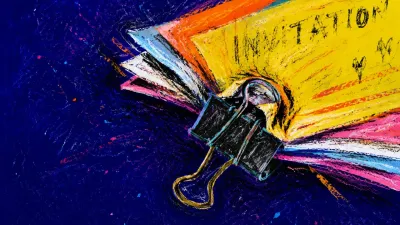
A Three-Hour Reply Turned Role Overload Into a Capacity Boundary
Topic:Direction Tarot Reading
Struggle:Opportunity-Compass Split
Context:Undefined Role Scope
FOMO-Driven Social Overcommitment: Letting Capacity Guide the Reply
Topic:Social Tarot Reading
Struggle:Unseen Cost Bind
Context:Social Performance Loop