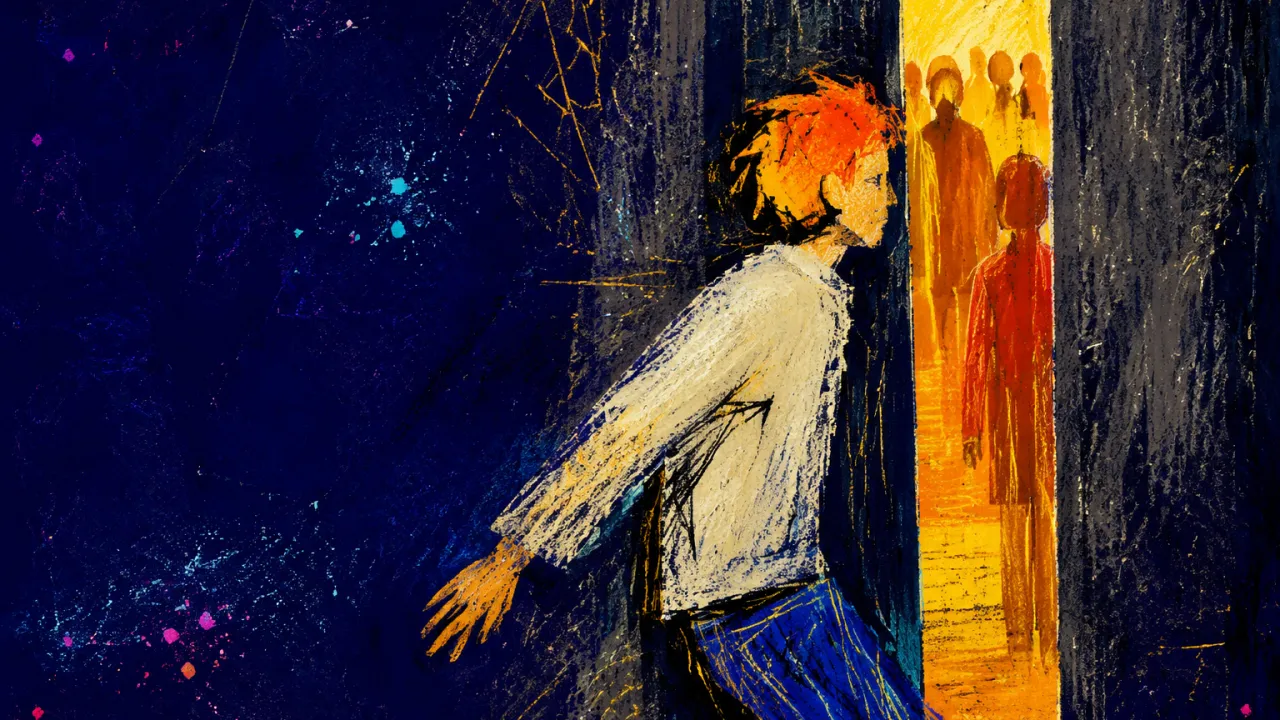
Who Feels Like Home Now?

Trace shifting support systems, matched tarot cards, and reading insights from people navigating chosen family in everyday life.

Chosen Family Transition

What is this situation?

Chosen Family Transition — you start noticing that the people who make your life feel held are not always the people listed in your family contacts. It may begin quietly: a roommate knows how you take your coffee after a rough call with home, a friend checks whether you got back safely, a partner sits beside you while you decide whether to answer a relative's message, a mentor remembers the version of you your family still talks over. At the same time, the old system keeps reaching in through group chats, holidays, comments about loyalty, and the casual line that friends are not the same as family. You find yourself moving between two rooms: one where belonging is assumed because of history, and another where belonging is being built through showing up, privacy, repair, rides, spare keys, shared meals, and the right to say no. The exhausting part is not that you care about the old ties; it is that they may still claim the authority to define what counts as real support while your daily life is proving otherwise. Your shoulders may drop on a friend's couch and tighten again when the family group chat lights up, because the transition is happening in calendars, housing, holidays, emergency contacts, and who actually notices when you go quiet. You are not replacing one script overnight; you are standing at a threshold with new companions forming beside you, much like The Fool at the cliff edge with the small white dog moving alongside him, not as a wall behind him but as a presence chosen in motion.

Why it's not you?

The tension here is not that you are disloyal, dramatic, or hard to please; it is that your support network is being renegotiated while older systems still claim the final word on belonging. When relatives, legacy circles, or default structures treat history as proof of care, the transition becomes harder to name. This is the shape of a social map changing under pressure, not a personal failure.

Chosen Family Transition in Tarot Cards

In a Chosen Family Transition, the way your shoulders drop on a friend's couch and tighten again when the family group chat lights up is part of the situation's visible pattern. This is an environmental, structural, and relational dynamic: support is being rearranged while older systems still claim the right to name what counts as belonging. The cards below do not decide who counts as family; they reflect the shape of chosen support, inherited pressure, and the threshold between them. These are the Tarot Cards that often mirror this kind of transition.

The Fool Upright
The small white dog beside the Fool is not a wall, a parent, or an institution; it is a companion presence moving alongside the threshold. The rose held outward and the open body show connection that is chosen in motion rather than assigned by origin. For family questions, this points to the fragile stage where support begins to reorganize outside the birth household. Friends, partners, mentors, roommates, or community may become the people who witness your growth, while the old family system still tries to define what real belonging is supposed to mean.
The Magician Upright
The roses, lilies, and arranged tools surround the Magician with more than decoration; they create a visible field of exchange where warmth, clarity, desire, and practical capacity can coexist. The figure does not vanish into that field, which matters because support is present without swallowing the operator's position. A chosen family transition often begins when origin-family contact becomes too conditional to carry the whole weight of belonging. Friends, partners, mentors, or community spaces start functioning as the support system where reciprocity and boundaries are easier to practice. The Magician connects to this context through selective arrangement. You are not replacing one household script with another; you are learning which relationships actually supply the tools needed for an adult life that does not run on guilt.
The Empress Upright
The garden around The Empress is not a public square. It is a cultivated private world: open air, flowing water, grain, forest, cushions, and a central seat that makes belonging feel embodied rather than declared. The scene carries warmth, but it also has a perimeter. That combination fits the moment when friends begin functioning as a core support network rather than casual company. The bond starts to hold rituals, care routines, emotional safety, and life-stage witnessing that may matter as much as any default social structure. You are looking at a friendship field that is becoming more central, not merely more pleasant. The card highlights the work of building a chosen circle without letting closeness erase boundaries, roles, or the right to remain separate inside the safety of the group.
The Lovers Upright
The garden is abundant, sheltered, and organized around two people who stand there by relational choice rather than by obligation. The scene gives care a voluntary architecture. For friendship, that points to a support-network transition. You may be moving away from default closeness, legacy circles, or friendships maintained mainly by history, and toward people who can meet the current version of your boundaries and values. The separate outlines of the figures matter because chosen family is not fusion. The card shows belonging that is selected, visible, and mutual enough to let each person remain whole inside the bond.
Strength Upright
The garland does more than decorate the scene; it visually binds two different kinds of force into one shared field. The woman and lion are close enough to influence each other, but the contact still has shape. Strength presents closeness as something made through repeated regulation, not through instant fusion. That is the social architecture of a chosen family transition. A friend group, queer circle, creative community, recovery-adjacent support space, or neighborhood network may start carrying the emotional weight usually associated with kinship, while still lacking fixed rules for access, responsibility, and repair. The card keeps the bond embodied rather than sentimental. The lion remains a lion, the woman remains herself, and the flowers create connection without erasing difference. The transition asks whether this circle can become a real support structure without turning care into obligation or intensity into ownership.
The Hermit Upright
The lantern does not flood the whole landscape; it sends a focused signal into the dark. The Hermit remains protected, but the light still creates the possibility of being recognized by the right people. For someone inside a strained family system, this becomes the transitional stage where support begins to move away from automatic blood ties and toward relationships that can actually meet the adult self. Friends, partners, mentors, and communities may start carrying functions the birth family cannot or will not carry. The card holds this transition carefully because it is not a clean replacement story. The old field is still present, but the signal is no longer aimed only at the people who first claimed authority over your belonging.
Death Upright
The distant boat and the sun held between two towers create a route beyond the fallen foreground. The card keeps a passage open even while older social signs lose their command. For friendship, this points to the difficult work of moving from default closeness into intentional support. You are not simply replacing people; the structure is asking which relationships can carry mutual care, privacy, and respect into the next stage. The threshold matters because chosen family is built through repeated evidence, not aesthetic language. The card frames the transition as a reallocation of trust toward bonds that can actually hold reciprocal presence.
The Star Upright
The two streams leaving the pitchers do not return to a single source. One enters the pool, one feeds the ground, and the figure keeps both channels active without forcing them to become the same system. That image fits the family moment when inherited support is no longer the only place emotional life can circulate. The clear sky and open landscape suggest a wider map, where care may come through friends, partners, mentors, or communities that are not organized by bloodline obligation. You are not being asked to erase your family context. The card points to a transition where support becomes plural, and the practical question becomes which relationships actually replenish you rather than simply claiming you.
The Sun Upright
The sunflower wreath on the child's head mirrors the flowers growing behind the wall, making the body and the garden part of the same living system. The child is exposed, but the exposure happens inside a scene structured by warmth, growth, and a boundary that still holds. That is the social architecture of a self-selected circle beginning to become real. You may be testing whether a new community can see you without requiring the old costume, and whether closeness can be built through recognition rather than obligation.
Judgement Upright
Two family-like groups rise from separate open coffins under the same trumpet call. The image keeps old containers in view while the bodies begin orienting toward a wider field, creating a social scene where belonging is no longer limited to the structure that first held you. That is the core of a chosen family transition. The card points to a stage where default ties, inherited roles, or old group identities still have physical weight, yet new bonds are forming around recognition, response, and shared orientation. You may be learning which people can hold your present self without requiring a return to an earlier version. Judgement makes this transition concrete by showing that new belonging is not instant escape; it is the slow public act of standing up while the old container is still visible around your feet.
The World Upright
The four figures around the wreath create a container of recognition rather than a single bloodline claim. The dancer remains centered while support is distributed around the frame, which maps cleanly onto the moment when care, holidays, and everyday reliance begin to reorganize beyond origin-family defaults. This context does not require family to disappear. It shows you testing which relationships can stand near the edge of your life without demanding control of the center, and which ones make adult safety depend on keeping the old hierarchy intact.
Ace of Cups Upright
The chalice is open, centered, and held with care above a pool full of living growth. Its water does not disappear into isolation; it joins a larger body where separate streams become part of one shared field. That visual structure fits the early architecture of chosen family: closeness is becoming more than casual friendship, but the container is still being formed. You may be learning which friends can hold real vulnerability without turning access into entitlement. Ace of Cups gives this transition its tenderness and its structural risk. A support network can become deeply nourishing only when the cup keeps a rim, the pool remains shared, and the flow does not erase the separate people inside it.
Three of Cups Upright
The three cups rise toward one another, and no single figure is placed above the others. The circle is built by mutual orientation rather than inherited rank, which gives the scene the quality of a social bond chosen in real time. In inner work, that can mark a transition from old scripts of who gets access to you toward a peer-made structure of trust. You may be learning that support can come from people who meet you as an adult, while still auditing whether this new circle can hold the parts of you that were previously edited out.
Five of Cups Upright
The two upright cups behind the cloaked figure are small compared with the visible spill, but they are not broken. Across the river, a dwelling gives the scene a social destination: a more protected structure exists, but it is not located inside the old field of loss. Chosen Family Transition belongs to this card when a broad circle has disappointed You and a smaller, steadier set of people begins to matter more. The bridge matters because this is not instant belonging. It is the stage where You learn which relationships still have a container, which ones can be crossed toward, and which ones no longer need to define the whole social map.
Six of Cups Upright
The flower-filled cups sit in a sheltered place where care appears resourced, intentional, and freely offered. The children are not negotiating status; they are participating in a small social world where gentleness has a visible form. In social terms, this is the architecture of chosen belonging. A person begins moving away from default proximity and toward connections that repeatedly demonstrate safety, memory, and mutual attention. You may be sorting which bonds are inherited by habit and which bonds are actively built through care. The card gives that sorting process a concrete image: a protected garden where belonging is not demanded, but offered and received in ways that can be observed over time.
Eight of Cups Upright
The solitary figure walks away from eight carefully arranged cups and toward terrain that has no welcoming crowd in sight. The old containers stay intact behind him, but the route ahead asks for a different kind of belonging than the one already built. For social life, this points to the stage where default circles, inherited friend groups, or proximity-based communities stop functioning as a real home base. You are not simply chasing novelty; the structure shows a search for connection that can meet the missing cup rather than asking you to keep performing inside a nearly complete arrangement.
Ten of Cups Upright
The figures in the Ten of Cups stand together in an open field, with the house close enough to matter but not enclosing the whole scene. Belonging here is shown as a living arrangement of bodies, movement, shared attention, and emotional exchange, rather than a fixed title stamped onto a relationship. Chosen Family Transition emerges when You are no longer using inherited belonging as the only map for safety. The card’s landscape gives that transition a real structure: the children move freely, the adults face a shared horizon, and the cups form an emotional canopy above a group that is defined by circulation, not coercion. For inner-world work, this context is powerful because the psyche often needs new witnesses before it can revise old scripts. The card connects to this transition by showing support as something that can be built, tested, and inhabited in the present, allowing You to separate genuine emotional shelter from the roles You were trained to keep playing.
Queen of Cups Upright
The crowned figure sits on a carved throne surrounded by water, shell forms, small guardians, and a protected shore. The space looks like a private harbor built around care, not a casual social stop. That visual structure fits a friendship becoming part of your core support network. The bond is moving from casual closeness into chosen-family territory, where affection needs role clarity so the support system can hold without quietly turning into obligation.
Ace of Pentacles Upright
The path through the flowered arch leads from open ground into a cultivated garden and toward the distant mountain. The image frames belonging as something built through repeated entry, care, and shared material reality, not just shared history. For a chosen family transition, you are crossing into a support network that has to prove itself through steady access and mutual protection. The manor is visible but not fully entered, so the new circle is promising, real, and still under construction.
Nine of Pentacles Upright
The garden is private, abundant, and clearly maintained, with the manor in the distance marking a home base rather than a temporary stop. The woman stands alone in the scene, but the space around her is not empty; it is a sanctuary with rules of entry. In friendship, this points to a stage where your core circle is becoming more intentional. Access is no longer based on history, proximity, or constant availability, but on whether someone can live inside the shared space without consuming it. The Nine of Pentacles makes chosen family less romantic and more structural. You are not simply looking for closeness; you are assessing who can respect the ecosystem you have built and contribute to it with care, steadiness, and privacy.
Ten of Pentacles Upright
Under the arch, three generations share space with dogs, a crest, a house, and ten pentacles arranged above them as a completed social structure. Belonging is not shown as casual proximity; it is organized through thresholds, roles, shared resources, and visible loyalty. That architecture maps cleanly onto a close friendship circle beginning to function like chosen family. You are not only asking whether people care about each other; you are watching whether the support system has enough structure to hold closeness without turning every bond into an inherited obligation.
Six of Swords Upright
The boat holds a small travelling unit rather than a crowd. Each figure occupies a distinct role inside the same vessel, and the shared crossing makes belonging look practical, mobile, and built through care rather than inherited status. This aligns with a chosen family transition because the card shows social belonging being rebuilt around who can travel with you through change. The structure is not fully settled; it is still a boat between shores, carrying history, protection, and the first shape of a new support system. For social tarot, the image names the shift from default circles to intentional kinship. You are not simply seeking more people; the card points to a smaller network capable of carrying real weight without turning care into performance.
Four of Wands Upright
Garlands of flowers and fruit stretch across the four pillars, turning an open patch of ground into a temporary home-like shelter. The distant house matters, but the immediate structure of welcome is built in the foreground through visible participation and shared signals. That is the social architecture of a chosen circle taking shape. You may be moving away from default ties and toward people who meet you through presence, invitation, and practical reciprocity; the card gives that transition a visible frame, showing belonging as something built on purpose rather than inherited by proximity.

Chosen Family Transition in Tarot Card Reading Insights

When chosen family starts carrying weight that older ties still claim, other people bring that same tension into readings: the group chat, the holiday invite, the friend who shows up, the relative who keeps calling the bond temporary. The pieces below shift from cards to how this situation appears in sessions. Tarot Reading Insights for Chosen Family Transition.

Psychological contexts related to Chosen Family Transition