FOMO-Driven Social Overcommitment: Letting Capacity Guide the Reply
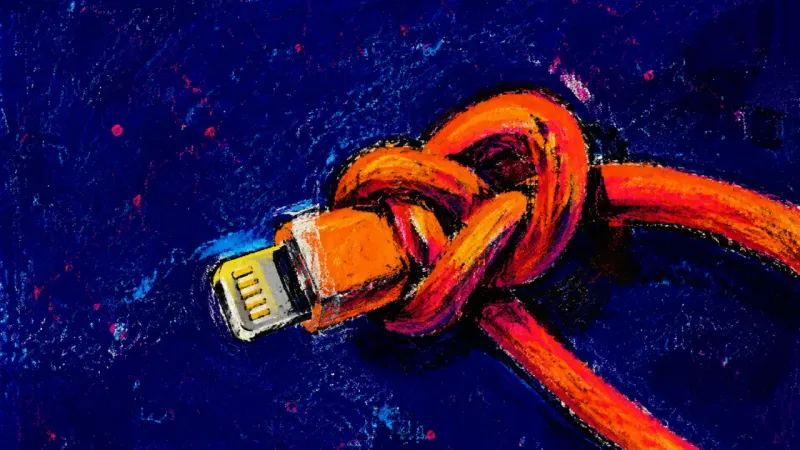
The 9:40 p.m. Yes: Finding Clarity Before Social Energy Returns
I recognised Maya (name changed for privacy) as the 27-year-old hybrid worker in Toronto who could survive a day of Slack, meetings, and commuting but still say yes to Saturday drinks from the sofa with heavy legs. I had seen this kind of social battery burnout begin before the event itself, in the tiny gap between a notification and a reply.
At 9:40 p.m. on a Tuesday, Maya lay across the sofa in her Queen West apartment, scrolling through a WhatsApp thread about Saturday plans. The radiator clicked behind her. Cold takeout smelled faintly of garlic, and her phone felt warm against her palm. She typed, 'I'm in,' added the drinks to Google Calendar, and only then noticed the tightness in her stomach and the weight in her legs. She had promised herself a quiet recovery weekend, but the instant relief of remaining included won the first round.
She looked at me over her coffee and said, 'I say yes before I even know whether I want to go. I do not want people to stop asking me.' Her question was simple: why did she keep accepting every invitation before her social energy had genuinely returned? The pressure seemed to live in her body like a full browser window with no close button: every new plan opened another tab, while the battery underneath kept dropping.
I told her that the tension was not sociability versus isolation. It was connection versus recovery, and both mattered. An invitation is a question, not a response deadline. We could make room for the answer before the reflex arrived. That was our Journey to Clarity: not asking the cards to decide her social life, but using them to organise the facts, fears, and choices already inside it.

Choosing a Compass for the Social Battery
I asked Maya to place both feet on the floor, take one slow breath, and name the question exactly as it was. Then I shuffled at an unhurried pace. I treated the ritual as a transition into attention, not as a test of fate. The cards could give us images and structure; Maya would decide what the images meant against the evidence of her own life.
For this reading, I chose the Transformation Path Grid · Context Edition. I explained to Maya, and to anyone reading along, that this six-card tarot spread is useful when a problem behaves like a system rather than a single argument with one person. Maya's pattern had a feedback loop: social pressure triggered an immediate yes, the yes produced more depletion, and depletion created guilt and more pressure to prove her availability. A Celtic Cross would add detail without necessarily showing that circuit, while a relationship spread would focus too much on other people's motives.
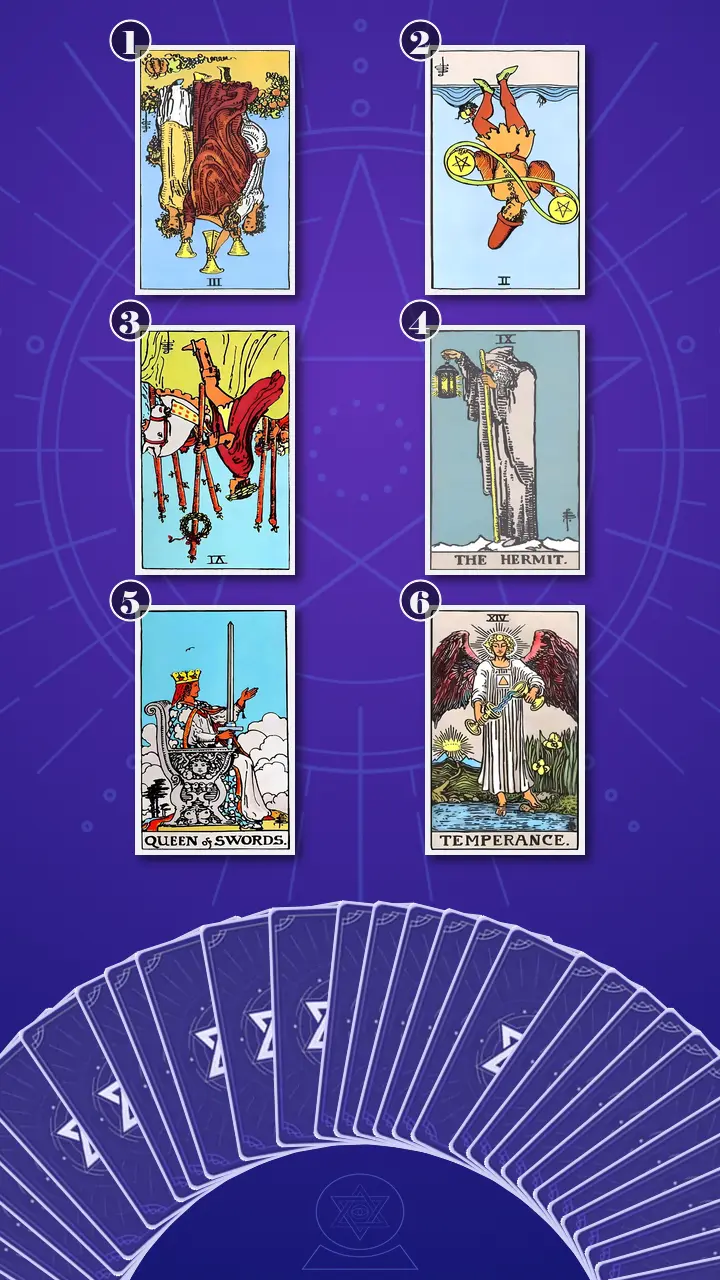
This was how tarot worked in this reading: card meanings in context, arranged as a practical sequence rather than a prediction. The first position would show the observable presenting problem. The second would reveal the capacity blockage beneath it. The third would touch the fear sustaining the pattern. The fourth would be the hinge, the resource capable of redirecting the energy. The fifth would translate insight into boundary language, and the sixth would describe an integrated rhythm in which connection and recovery could support each other.
I laid the six positions in two columns and three rows, like a small circuit board. The first three cards would show what kept the current loop running. The final three would show how the same desire for connection could move through pause, clear communication, and proportion. Nothing here would force a decision. The grid was a map, and Maya remained the person holding the steering wheel.
The Grid Where Availability Became a Signal
Position One: When Celebration Became Performance
The card I turned over for position one, which reveals the observable presenting problem, was the Three of Cups, in reversed position. This position asks where saying yes is producing visible participation without the emotional presence or enjoyment that made the plan worth accepting.
Upright, the Three of Cups speaks of friendship, celebration, and shared emotional enjoyment. Reversed here, its communal energy was in excess and its nourishment was blocked. Three cups raised at once mirrored several invitations asking for simultaneous access to one limited supply of social energy. The abundant harvest in the image became more stimulation than Maya could absorb. Her yes created a quick lift in the group chat, but the same yes could leave her checking the time, speaking less than usual, and wishing she were home.
I brought her back to the crowded Ossington bar she had described. She had raised a glass for a group photo while bass vibrated through the table and lime cut through the warm smell of the room. Under the table, she had checked the streetcar schedule. I asked what sentence had been moving through her mind at that moment. She stared at the Three of Cups and said, 'I wanted to be invited, so why do I want to leave?'
Maya did not nod in agreement. First, her breath paused and her thumb stopped rubbing the edge of her phone. Then her eyes moved away from the card and lost focus, as if the bar, the group photo, and the streetcar countdown were replaying in sequence. Finally, she gave a small, bitter laugh that softened into a long exhale. 'That is too accurate,' she said. 'It is almost rude.'
I smiled gently. 'The card is describing a condition, not judging a character. Wanting connection does not automatically create the capacity to enjoy every form of it. We can separate the wish to belong from the question of whether this particular evening fits.'
I let the three raised cups remain visible between us. The image did not ask Maya to reject the group. It asked her to notice when togetherness had become performance, and when accepting connection had stopped producing the feeling of being connected.
Position Two: The Calendar That Could Not Carry the Body
The card I turned over for position two, which shows the active capacity blockage created by Energy Diffusion, was the Two of Pentacles, in reversed position. This position asks which limited resources are being overcommitted and where calendar rearrangement is concealing a lack of physical or emotional capacity.
The Two of Pentacles usually shows adaptation, juggling, and the continuous movement required to manage changing demands. Reversed, the balancing energy had become overload. The infinity loop around the two pentacles resembled Maya's repeated calendar rescheduling, while the ships rising and falling on rough water showed the unstable work and energy conditions hidden behind a neat digital timetable. Her blockage was not a lack of organisational skill. It was a system with no protected recovery margin.
I placed the card beside the Line 1 scene she had given me. At 5:36 p.m., she had dragged Thursday drinks into the only blank square on Google Calendar. The train had shrieked around a curve, damp wool had pressed against her sleeve, and her jaw had tightened as she deleted the quiet evening she had created that morning. She had told herself, 'It fits if I move this, shorten that, and recover later.'
That was Google Calendar Tetris: proof that hours could fit together, but no proof that a tired person could fit inside those hours. Getting ready, travelling, anticipating the conversation, coming home, and recovering for the next workday had all been left outside the grid. A plan can fit your calendar and still not fit your life.
Maya looked down at her hands. I saw her jaw tighten once, then release. She opened her calendar as if she could already see the recovery block she had been deleting. 'I keep calling it poor time management,' she said. 'But the time is not the only thing being used.'
'Exactly,' I said. 'The useful capacity check is not only, Do I have a blank hour? It is also, What will this cost before, during, and after?'
Position Three: The Fear of Becoming Socially Invisible
The card I turned over for position three, which exposes the underlying fear that a delayed response or declined invitation could threaten recognition, relevance, or belonging, was the Six of Wands, in reversed position. This position asks what a boundary seems to say about Maya's place in the group.
Upright, the Six of Wands carries recognition, public success, and affirmation from a community. Reversed, its fire was searching outside itself for proof. The elevated rider and watching crowd became a modern feed of views, reactions, photos, and invitations. Maya was using availability as a belonging monitor. A quick, enthusiastic yes temporarily restored visibility, but it also overrode the capacity information her body had been offering.
I returned to Monday at 8:13 a.m. Maya had opened Instagram Stories before a client call and seen laughing photos from a dinner she had declined. Slack had pinged through her laptop speakers. Her coffee had gone lukewarm, and her stomach had dropped. She told me, 'Rest felt good until I saw everyone else making plans. Then it looked like I was disappearing.'
I said the sentence I use when the yes is carrying more than an invitation: 'Sometimes the yes is buying reassurance, not choosing the evening.' I did not mean that as an accusation. It was an attempt to make the transaction visible. The immediate yes purchased a few minutes of relief from the fear of being forgotten, and the later cost arrived as exhaustion, irritability, late cancellation, or the urge to overcommit again.
Maya's fingers closed around the coffee cup. Her breathing became shallow; then her gaze drifted to the rain-streaked window; then her shoulders lowered by a fraction. 'If I keep saying no, they will stop asking,' she said. 'If they stop asking, maybe I was never securely included.'
I asked her to distinguish imagined demotion from observable relationship evidence. Had a friend actually withdrawn after a timely no, or had Maya been reading a quiet group chat as a verdict? An invitation could be meaningful without becoming an entrance fee. The cards did not promise that every relationship would respond perfectly to every boundary. They did show that she could stop making attendance carry the entire burden of proving belonging.
When The Hermit's Lantern Answered the Group Chat
Position Four: The Private Light Behind the Notifications
I slowed down before turning over position four. This was the visual hinge in the grid, the key transformation: reclaiming intentional solitude as a source of self-knowledge and recovery rather than treating it as social failure. The card was The Hermit, in upright position.
The Hermit is not an instruction to withdraw from people or become a different kind of person. The solitary figure, staff, mountain, and single raised lantern describe a deliberate pause long enough to hear an internal standard. The lantern does not illuminate every future choice. It lights the next honest piece of information. In Maya's case, that meant stepping out of the group's momentum long enough to ask whether she wanted the plan and whether her body, attention, and calendar could support it.
Here I used my signature diagnostic lens, Social Clutter Sorting. I do not sort people into good and bad categories. I sort invitations by what they actually do in Maya's system: which ones feel core nourishing, which ones are energy draining, and which ones are simply uncertain until the notification rush fades. The distinction gave her something more objective than the question, 'What would a socially available person do?'
At 9:40 p.m., the chat was filling with Saturday plans while Maya's legs were still heavy from two nights out. She typed yes, felt included for one bright second, and only then remembered the quiet weekend she had promised herself. The old reflex had already answered before her capacity entered the room.
You do not have to prove belonging by staying constantly available; let The Hermit's lantern show you which invitations still feel true after a deliberate pause.
The room went quiet after I said it. Maya's fingers froze above her phone. Her eyes widened slightly, then moved toward the dark screen as though the unanswered messages had become a different kind of evidence. I watched her replay the sofa, the warm phone, the deleted recovery block, and the Instagram Stories. Her mouth opened, but no words came at first. Then her shoulders sank, not dramatically, but with the careful release of someone setting down a bag she had forgotten she was carrying. Her right hand unclenched against her knee. She drew in a breath that trembled on the way down, and the next sound was almost a laugh, almost a sob, mostly recognition. 'So being alone for an hour is not the same as losing my place,' she said. 'It might be how I find out what I actually want.' The relief did not erase the fear. For a moment, the new clarity left a blank space where the automatic yes had been, and that blank space made her feel exposed. I stayed with her there. 'Now, use this new perspective and think back to last week: was there a moment when this insight could have made you feel differently?'
Maya mentioned the Sunday invitation she had accepted while already planning an early night. She could imagine leaving the chat unanswered for ten minutes, putting the phone on Focus mode, and checking her body without treating the silence as social disappearance. This was the first step in the emotional transformation from FOMO-driven automatic availability to confident, capacity-based social choices. The Hermit's lantern belonged to her; I was only helping her notice that she already had it.
The Reply That Kept the Door Open
Position Five: The Sword Without a Speech
The card I turned over for position five, which translates the inner shift into an actionable boundary practice of pausing, assessing capacity, and communicating a clear answer without excessive justification, was the Queen of Swords, in upright position.
The Queen's upright sword represented clear perception and accurate language. Her open hand kept that clarity relational rather than punitive. This was not a cold no, and it was not a paragraph designed to persuade someone that Maya was still a good friend. It was a timely answer that did not ask another person to carry the work of proving Maya's belonging.
I asked Maya to imagine the next low-priority invitation. She opened her Notes app and drafted a long apology, complete with an invented work excuse and several exclamation marks. Then she deleted it. I watched her type, 'I am sitting this one out so I can recharge, but please keep me in the loop for next week.'
I call the reasoning behind that moment Obligation Decoupling. It separates actual responsibility from the guilt that appears whenever Maya imagines disappointing someone. Did she make a promise? Was there a real consequence? Or was she trying to prevent an imagined change in how visible or lovable she would be? Decoupling guilt from obligation did not make the feeling vanish. It stopped the feeling from writing the whole message.
A clear no protects the quality of your real yeses. I told Maya that a warm boundary could contain one relational cue without becoming an argument: thank you for asking, please keep me posted, I would be open to coffee next week. She did not need to disclose exhaustion, defend her calendar, or offer an immediate replacement plan.
Her hand hovered over the send button. First, she drew her lips into a line and held her breath. Then she reread the message as though testing whether warmth could survive brevity. Finally, she pressed send and leaned back. The silence afterward was uncomfortable, but it was clean. I asked her to wait forty-eight hours before deciding that the relationship had changed, and to record only observable evidence rather than the story her fear supplied.
Two Cups and a Weekend That Could Repeat
Position Six: The Rhythm That Did Not Borrow From Monday
The final card, which defines cognitive integration as a sustainable rhythm in which connection and recovery support each other instead of competing, was Temperance, in upright position.
Temperance showed measured exchange. One foot rested on land and one in water. Liquid moved carefully between two cups, neither side swallowing the other. This was not perfect balance, permanent calm, or a rule that Maya should attend fewer events forever. It was social rate limiting: connection remained available without every request being processed at once. Recovery became a real expense in the energy budget instead of whatever was left over.
I described a later weekend with one chosen dinner, one unbooked evening, and enough space to arrive at both work and friendship with attention. Maya listened, then said, 'I am not choosing between having friends and having energy; I am choosing a pace that lets both continue.'
I saw her shoulders soften. She glanced from the Queen's sword to Temperance's cups, making the sequence herself: pause, name, balance. The feeling was hopeful but not shiny. She knew the next notification could still trigger FOMO. The difference was that she could now treat the discomfort as information to observe, not an emergency that required an immediate yes.
Temperance gave us the integrated question: what pace would make both rest and friendship repeatable? The answer could change from week to week. Sustainable connection did not mean never revising a plan. It meant no longer borrowing blindly from the following week to make the current invitation look affordable.
The One-Page Social Capacity Gate
When I read the six positions together, I saw a clear circuit. The Three of Cups reversed showed Maya entering communal excitement before she had enough emotional supply to enjoy it. The Two of Pentacles reversed showed her disguising overload as scheduling competence. The Six of Wands reversed revealed the deeper fuel: the fear that a quiet weekend would become proof of social irrelevance. Then The Hermit gathered the scattered energy into one private signal, the Queen of Swords gave that signal language, and Temperance turned the new language into a repeatable rhythm.
The cognitive blind spot was not that Maya cared too much about friendship. It was that she treated every invitation as an emergency test of belonging and every blank calendar space as available capacity. The transformation direction was from automatic availability to paced choice, from social proof to self-trust, and from calendar fit to capacity fit. The goal was not to solve her whole social life in one reading. It was to create enough friction between notification and commitment for a more honest choice to become possible.
I gave her three small experiments. They were actionable advice, not commandments. She could adjust the timing, stop an exercise, or keep a plan when the facts supported it. The power remained with her.
- Pause before the RSVPFor the next seven days, when a non-urgent invitation arrives in WhatsApp, iMessage, or Partiful, wait at least 30 minutes before answering. Send, 'Got it, let me check my week and get back to you tonight.' Then open a Notes entry called Social Capacity Check and answer: 'Do I want this after the first rush of being included?' and 'What will I need before and after it?' Include sleep, travel, getting ready, and decompression.The first pause may feel more uncomfortable than the eventual answer. Maya could start with five minutes or two minutes if 30 felt too charged. The experiment was only to stop the automatic yes; no pause required a no.
- Reserve the recovery marginOn Sunday, Maya would look at the next seven days, mark one recovery block in Google Calendar as busy, and leave it in place when a new plan appeared. I added my VIP Section Strategy: for one week, her personal time would be reservation only. A social plan could enter that space only after a deliberate pause and capacity check. She would also aim for no more than one high-energy event in a weekend when possible.If a full evening was unrealistic, Maya could protect two hours, choose coffee instead of a late bar, or include a 30-minute decompression block. The calendar was information, not a perfection project, and a green or open slot was not public inventory.
- Send one clean boundaryMaya would choose one low-priority invitation that she had not promised to attend, use Obligation Decoupling to separate guilt from actual responsibility, and send one warm sentence: 'I am sitting this one out so I can recharge, but please keep me in the loop for next week.' If an apology paragraph appeared, she would set a 90-second timer and reduce the message to the decision, one warm cue, and an optional future point of contact.After sending the timely no, she would wait 48 hours before deciding that the relationship had changed. She could record observable evidence, such as a normal reply or another inclusion, without demanding that either outcome prove anything about her worth.
I asked Maya to use Social Clutter Sorting on invitations rather than people. A core nourishing plan might still require effort, while an energy-draining plan might occasionally be worth choosing. The point was to see the cost clearly. A boundary was a way to choose with more information, not a moral ranking of her friends.
I also reminded her that tarot could not promise a perfectly supportive response from every person. It could show the pattern she was participating in and help her test a different response. That distinction mattered. The cards were not taking control back from Maya; they were helping her practise taking it back herself.

A Quiet Proof, Not a Perfect Fix
Six days later, I received a message from Maya. She had waited through the first rush of a Saturday invitation, checked the recovery margin, and chosen one dinner instead of adding two more plans. She wrote, 'I did not disappear. I just had enough energy to actually be there.'
On Sunday night, she had chosen one dinner, kept Friday evening open, and slept through the night. At breakfast her first thought was, 'What if I got it wrong?' She smiled anyway, sent a normal reply, and let the question sit beside the evidence instead of driving the calendar.
I kept thinking about that small proof. Maya had not become certain, endlessly available, or permanently unbothered by FOMO. She had simply allowed her capacity to enter the conversation before commitment did. That was the quiet movement from pressure and comparison toward confident, capacity-based social choices.
For anyone who recognises this pattern, I would use the six-card Transformation Path Grid tarot spread for social energy, belonging fears, boundaries, and sustainable connection as a reflective map. I would ask the cards where visible participation has replaced presence, where the calendar is hiding the cost, what fear is demanding proof, and what small pause could return the decision to the person living it.
When your stomach tightens over a new plan while your limbs are still heavy from the last one, it can feel as though protecting your energy and protecting your place in the group are opposite choices. I have learned to treat that tension as a place to listen, not a verdict. The invitation can wait. The friendship can remain a relationship rather than an emergency. Your own signal can arrive.
If you let the next invitation wait long enough for your own signal to come through, what small answer might become possible, one lit by your own lantern rather than the group chat's momentum?