Can You Change And Still Be Known?

Explore Recognizability-Identity Fusion through its lived tension, related tarot cards, and Tarot Reading Insights from people who brought this question to a reading.

Recognizability-identity Fusion
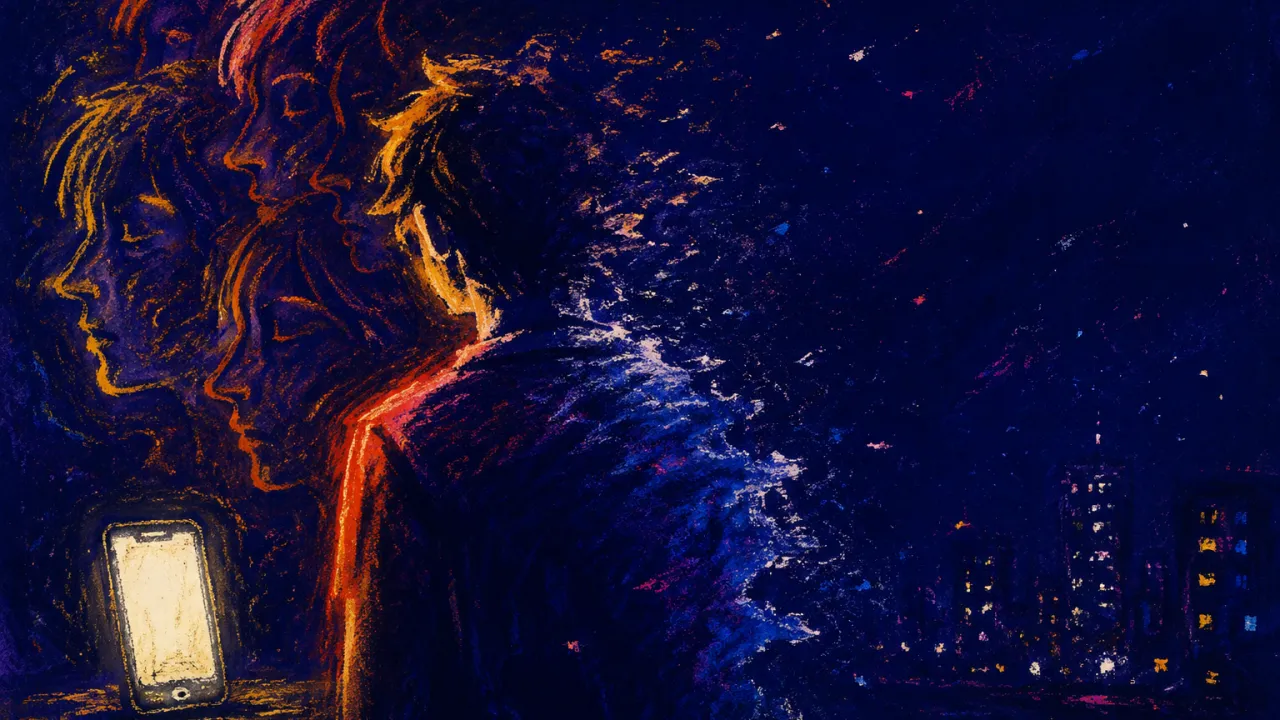
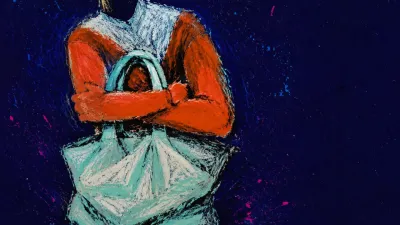
A dissolving figure stands before repeated portraits beside an unmarked phone screen, warm amber fading into cold indigo.

What does this feel like?

Recognizability-Identity Fusion is the feeling that the version of you other people can quickly name has become the version you have to keep being. It can show up when you open a group chat and pause before replying, editing a sentence until it sounds like the person everyone expects: funny, capable, chill, ambitious, dependable, whatever role has made you easy to place. You may have a private thought that does not fit the outline, then hold it back because changing the pattern feels more unsettling than staying inside it. At work or school, praise lands strangely when it is aimed at the polished version of you; you wonder whether people are seeing you or simply confirming a character you learned to perform. With friends or a partner, you can feel the pressure to remain consistent even when your interests, boundaries, or plans are shifting, as though every new choice needs to be explained against an old introduction. Your shoulders lift, your chest gets tight, and your mind keeps asking, 'Will they still know me if I stop being this person?' The cost is not simply tiredness. It is the gradual narrowing of your life around what can be recognized, until unfamiliar freedom feels less like possibility and more like losing the only outline you have. You stand between being known and being allowed to change, much like The Hanged Man, suspended upside down in a pause where the old view remains visible but no longer tells you where to place yourself.

What's pulling at you?

You are trying to hold two things at once: the comfort of being immediately understood and the freedom to change in ways that no longer fit the picture others have of you. The familiar version keeps you legible in the room, while the changing version asks for space before anyone knows what to call it, leaving you caught between being known and being allowed to become.

How It Shows Up?

  • On a Sunday afternoon, you open your closet and reach for the outfit that matches the version of you people already know, then put it back and choose something safer. Your shoulders rise, your chest feels oddly watched even in an empty room, and you stand in front of the mirror waiting for the familiar outline to return. The choice can remain unfinished for a while; you do not have to make yourself instantly recognizable.
  • Your partner or close friend asks what you want to do next, and you hear yourself give the answer that fits your usual role before you have checked what you want. A small pause opens in the room; your fingers hover over the message, your shoulders tighten, and the Hanged Man's suspended stillness seems to settle between the question and your reply. You can let the answer take shape more slowly, without explaining every change.
  • During a review, presentation, or class discussion, someone praises you for being consistent, and the compliment lands on a version of you that suddenly feels too narrow. Your eyes stay on the notes, your jaw sets, and your hands flatten against the desk while an old introduction seems to speak louder than the person in the room. You can notice the gap without deciding what it has to mean today.
  • At a dinner, party, or team hangout, someone describes you to a new person and everyone nods as if the description settles the matter. You smile on cue, feel warmth gather in your face, and notice your hands go cold beneath the table while a more complicated answer stays just behind your teeth. You can stay with the quiet mismatch for a moment without turning it into a performance.
  • At 1:47 AM, you scroll through old photos and saved posts, looking for a self you can still recognize, though each image makes the present feel less certain. Your eyes ache, your shoulders press into the mattress, and your thumb keeps moving past faces, outfits, places, and captions that once seemed to explain you. The distance between those images and tonight can simply be noticed; you do not have to resolve it before sleep.

Recognizability-identity Fusion in Tarot Cards

Recognizability-Identity Fusion is where being understood by others starts to feel inseparable from staying the same, even while your own choices keep moving. You can feel it in the shoulders that rise while you edit a reply, or in the chest-tight pause before saying what you want. An existential lens and structural framework bring that pull into view, and the Tarot Cards below mirror its outline.

The High Priestess
Upright
The High Priestess sits between black and white pillars with a veil behind her, holding a scroll while part of the inner space remains concealed. You may carry private thoughts, desires, or boundaries that do not match the public character people can name quickly, then keep them behind the veil because revealing them would revise the identity they recognize. The pillars create a visible split between the presented self and the knowledge held behind it. Upright, the card locates introspection in an identity that is not absent but selectively hidden: your inner complexity exists before it has a public vocabulary. The silence is a boundary between self-protection and self-erasure, not proof that the concealed material is unreal.
The Hierophant
Upright
The central figure sits between pillars in ceremonial robes while two smaller figures receive an inherited form of instruction. In a family system, you can occupy a role that has been rehearsed across years: the sensible one, the peacemaker, the ambitious one, or the dependable child. The role makes the family story coherent, but it can become difficult to revise. The keys and ritual gestures show identity being passed through an established structure. Upright, the card locates the pressure between family belonging and personal change: becoming unfamiliar may be experienced as violating the order that taught everyone how to understand you. The tension is not a failure of loyalty; it is the cost of being treated as a fixed position in a living system.
The Lovers
Upright
Two unclothed figures stand beneath an angel, separated by distinct trees while facing the same field of choice. In a romantic relationship, you may feel the pressure to remain the person your partner first recognized even as your desires, boundaries, or future plans begin to diverge from that introduction. The angel's position makes the relationship an arena for conscious identity rather than simple merging. Upright, the card holds the tension between intimacy and differentiation: being known creates connection, but love also exposes whether the bond can accommodate a self that keeps developing. The choice is how to remain connected without turning consistency into the proof of love.
The Hermit
Upright
An old figure stands alone on a snowy peak, holding a lantern whose small star lights only the next section of ground. You may need distance from the audience that names you so quickly, because constant recognition has made it difficult to hear what remains when no role is being performed. The staff and narrow light create an interior method of orientation rather than a public identity. Upright, the card locates introspection in the deliberate suspension of social feedback: you are not abandoning connection, but temporarily reducing the noise of other people's descriptions so a less familiar self can become perceptible.
The Hanged Man
Upright
The figure is suspended by one ankle, with a calm face and a halo that suggests a new understanding developing inside an old position. You are trying to evolve without making the people around you revise their picture of you, so growth feels like a threat to the continuity that has made belonging possible. The tree holds the old position while the inverted perspective opens another way of seeing. Upright, the card carries the tension between identity integration and identity foreclosure: the recognizable self is not erased, but it can no longer be the only frame for your development. Change is allowed to remain unfamiliar while it gathers its own shape.
Death
Upright
The skeleton's black banner passes a fallen crown while a child, a woman, and a distant figure confront the same irreversible scene. You can feel an old identity losing its authority even when other people still address you through it, creating a gap between the person being recognized and the person undergoing change. The rising sun beyond the figures gives the ending a direction without making it comfortable. Upright, Death shows identity shedding as a structural transition: the familiar outline is not destroyed by personal failure, but it cannot remain the sole container for a changing life. The discomfort belongs to the space between role loss and integration.
Temperance
Upright
An angel pours liquid between two cups while standing with one foot on land and one in water, a path and distant light extending behind the figure. You are trying to let the familiar self and the changing self coexist without forcing either one to erase the other or become immediately understandable to everyone around you. The mixed vessels and divided footing make integration a practical process rather than a finished identity. Upright, the card holds the tension between continuity and development: the old outline can be carried forward in altered form, while the emerging self gradually acquires its own proportions. Change is shown as modulation, not a demand for a dramatic new persona.
The Devil
Upright
The horned figure sits above two chained people while the dark pedestal and fixed gaze create a hierarchy around them. You can internalize the audience's expectation so thoroughly that the recognizable role appears to be your own nature, even when you privately experience it as a costume that has become difficult to remove. The loose chains give the conflict its exact shape: attachment is maintained through habit, belonging, and fear rather than absolute external force. Upright, the struggle is a fusion of identity with performance, where freedom feels like social disappearance. The card makes the cost observable without reducing the role to deception or demanding an abrupt rejection of it.
Judgement
Upright
Figures rise from open coffins as an angel sounds a trumpet above them, turning old enclosed forms toward a public call. You may feel that a former identity is being summoned to explain the person you are now, as though every change must answer for the version of you that others already know. The open coffins make revision visible and irreversible, while the trumpet creates an audience for the transition. Upright, the card names the pressure of identity re-evaluation: recognition can become a verdict when the past role is treated as the standard against which a changing self must be measured. The call is toward a fuller account, not a return to the old character.
Three of Cups
Upright
Three friends lift their cups together in a close circle, each figure contributing to a shared emotional rhythm. In a private friendship, you may be known through a familiar role such as the entertaining one, the dependable one, or the person who always understands, then feel pressure to keep supplying that version even as your needs change. The raised cups make mutual recognition visible, but the circle also shows how quickly a friendship can stabilize a character. Upright, the card carries a tension between real support and role repetition: the friendship can be genuine while its shorthand for you becomes narrower than your current life.
Eight of Cups
Upright
The figure leaves a carefully arranged stack of cups and walks into a landscape where the route is not clearly marked. You may understand that identity change requires distance from the role people can name quickly, but the empty space beyond that role can feel less like freedom than the loss of your only stable outline. The moonlit path makes the transition emotionally visible without promising immediate resolution. Upright, the card holds a deliberate departure from identity foreclosure: the old self is not denied, but it is no longer allowed to determine the full range of your life. Becoming less recognizable is shown as a real threshold with real relational cost.
Two of Pentacles
Upright
A figure juggles two pentacles inside an infinity loop while ships rise and fall on rough waves behind him. Your daily system can become a continuous performance of managing different recognizable selves: the efficient one, the social one, the ambitious one, and the easygoing one, each needing to appear on cue. The looping cord makes adaptation look active but repetitive. Upright, the card shows lifestyle strain when flexibility is used to preserve every existing identity at once; the routine keeps functioning, yet no space remains to discover which roles still fit. The problem is not poor organization alone, but the cost of making every change look seamless.
Three of Pentacles
Upright
A craftsperson works on a cathedral while two figures consult a plan, making learning visible through shared standards, observation, and contribution. In study, you may be recognized as the capable student who reliably produces the expected answer, then hesitate to explore a subject or method that would make your academic identity less predictable. The unfinished building gives competence a developmental shape. Upright, the card shows that recognition can support learning while also narrowing the role assigned to you: the institution knows how to reward the polished student, but may not yet know how to read your emerging interests. Your work remains in progress even when the label feels settled.
Ten of Pentacles
Upright
An older figure sits beneath an arch while a couple, child, dogs, and a richly patterned setting arrange several generations inside one visible household structure. You may occupy a family identity that carries history and status: the responsible child, the successful one, the stable one, or the person expected to continue a familiar pattern. The arch and repeated pentacles make belonging look durable and inherited. Upright, the card shows the tension between continuity and identity movement: the family story can offer real security while also treating your recognizability as part of its long-term architecture. A different choice can therefore feel like stepping outside a structure that has already assigned your place.
Two of Swords
Upright
The seated figure's arms cross the chest as firmly as the two swords, while the blindfold blocks the visible horizon. You may encounter a private thought or feeling that does not match your familiar character, then screen it through the imagined reaction of people who have learned to recognize only one version of you. The water behind the figure suggests emotional information that remains present but unconsulted. Upright, the card makes the inner lock visible: the self is not empty of knowledge, but access is interrupted by the need to keep the public outline coherent. The stillness protects continuity while quietly narrowing self-recognition.
Eight of Swords
Upright
The bound, blindfolded figure stands inside a ring of swords while the path out remains partially open behind her. Your life can narrow around whatever keeps you recognizable: the same clothes, answers, routines, ambitions, and social cues, repeated until unfamiliar freedom feels more dangerous than restriction. The crossed swords mark the boundaries of an identity maintained by anticipation. Upright, the card shows the structure locked from the inside by imagined social consequences, not a lack of possible selves. The struggle becomes visible as a shrinking range of action organized around avoiding the loss of a familiar outline.
Two of Wands
Upright
The figure holds a globe while one wand remains secured to the wall and the other stands in his hand, dividing the scene between an established position and an open horizon. Each option carries an identity consequence for you: one keeps you immediately legible, while the other asks you to tolerate being unfamiliar for a while. The elevated viewpoint makes the choice deliberate rather than impulsive. Upright, the card holds the friction between selecting what fits the old introduction and selecting what might reveal a more current self. The difficulty is not a lack of options; it is that every option seems to announce which version of you should remain visible.
Six of Wands
Upright
The laurel-crowned rider holds a staff above his head while a crowd frames his return as a visible success. At work, recognition can attach your identity to the skill or style that produced the praise, making a new role feel like a risk to your professional credibility rather than a normal transition. The public route and elevated rider show a reputation becoming a stage. Upright, the card holds the tension between achievement and identity flexibility: your competence is genuinely seen, but that visibility can narrow what colleagues expect from you next. The praised version is real, yet it is not required to be permanent.
Ten of Wands
Upright
The worker bends under ten bundled wands, carrying them toward a destination that is hidden behind the load. In a career system, your professional reputation can become another bundle: every successful performance adds evidence that you are the person who can absorb more, solve more, and remain consistent under pressure. The blocked view shows how role continuity can outlast genuine fit. Upright, the card makes the tension visible between being valued for a recognizable contribution and being permitted to change what contribution means. The workload is sustained by real competence, but the identity attached to it leaves little room for a different professional future.

Recognizability-identity Fusion in Tarot Card Reading Insights

People living with Recognizability-Identity Fusion have brought the gap between being known and being free to change into readings too. The Tarot Reading Insights below collect what surfaced when that question was placed before the cards.
Psychological Struggles Related to Recognizability-identity Fusion