Does Caring Mean Staying Available?

See why care can blur personal limits, then explore related Tarot Cards and insights drawn from readings on the same bind.

Compassion-access Fusion
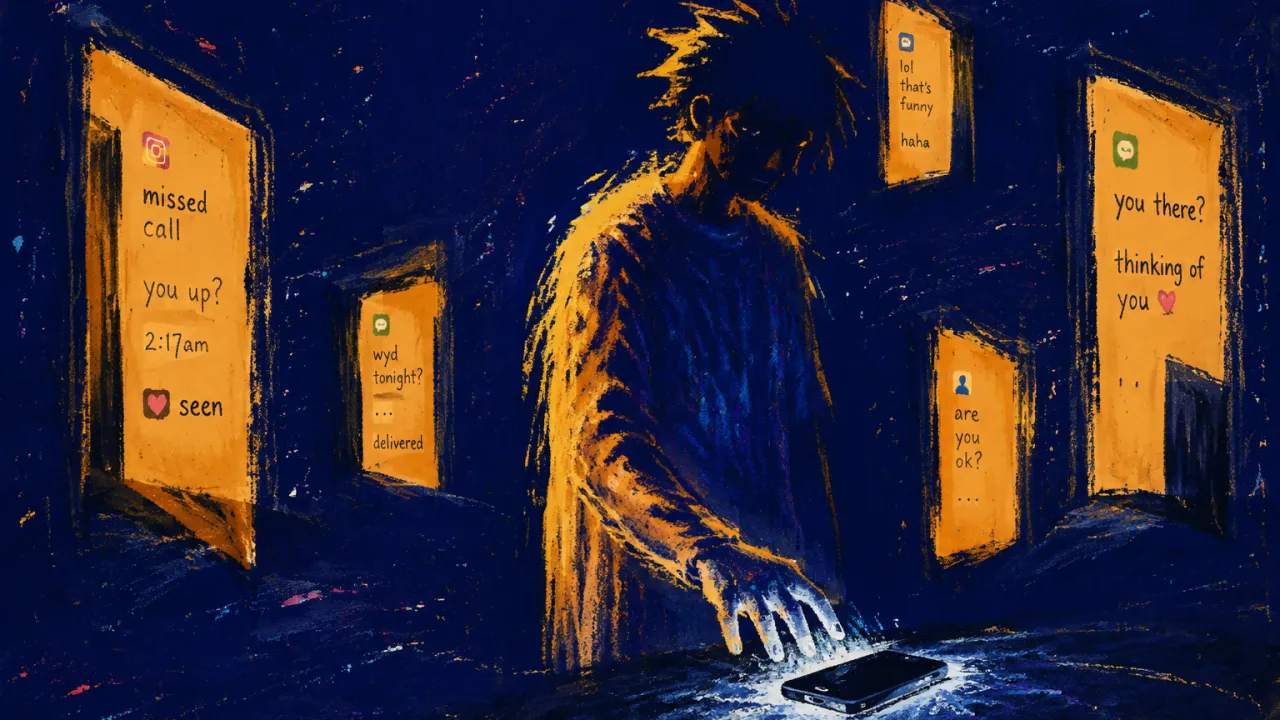
A figure enclosed by glowing message windows, one hand above a face-down phone, amber doorway light meeting indigo shadow.

What does this feel like?

Compassion-Access Fusion begins in the second after someone's name lights up your phone and before you decide whether to answer: you already know they're hurting, and that knowledge seems to turn their request into a claim on your evening. You are standing at the kitchen counter with dinner going cold, reading "Can I call?" while your shoulders rise and your hand stays wrapped around the phone. Part of you wants to be kind because their pain matters; another part notices the small drop in your stomach because the last "quick call" took two hours and left no room for anything you needed. Still, pressing Do Not Disturb can feel less like choosing a time and more like becoming uncaring. So you answer, soften your voice, keep listening after your attention has gone hazy, and say "of course" when they ask whether they can message tomorrow. Later, you may feel irritated with them and immediately argue yourself out of it: they were struggling; you understood; what kind of person keeps a door closed when someone needs comfort? The confusion follows you into work, dates, group chats, and quiet weekends. You edit plans around the possibility that they may reach out, then feel strangely absent from the life you were trying to preserve. Nothing about your compassion is false, and nothing about your need for privacy is false either; the trap is that they have become one decision, as though caring can only be proved by remaining reachable. Over time, kindness stops feeling chosen and your time stops feeling fully yours, much like the Queen of Cups at the water's edge, cradling an ornate closed cup whose contents remain contained.

What's pulling at you?

Two reasonable needs are being treated as if only one can survive: you want to respond to another person's pain, and you need control over when and how they enter your time. The bind forms when care starts to feel valid only if access remains open, so any limit can seem like a withdrawal of compassion while staying available makes your own life harder to inhabit.

How It Shows Up?

  • You're alone on a weeknight when your phone lights up with "Are you free?" You stop halfway through putting a plate in the sink, read the preview twice, and leave your hand suspended above the screen while your chest tightens and your shoulders creep upward; the whole room seems to narrow around that small rectangle of light. The message can remain unanswered while you notice what your body did.
  • A friend or partner asks to talk just as you say you need a quiet night, and you hear yourself reply, "Yeah, of course," before checking whether you mean it. Your smile holds a beat too long, your palms flatten against your thighs, and warmth drains from the evening as if the open doorway has taken up the whole room. Care and a delayed conversation can occupy the same relationship.
  • A coworker sends a last-minute request with "I'm completely overwhelmed," and the task moves onto your list before you've finished reading. Your jaw sets, a dull weight settles across your shoulders, and the tabs already open on your laptop begin to look like the Ten of Wands gathered into one narrow path. Taking a minute before replying is a valid part of the exchange.
  • In a busy group chat, someone posts that they're having a rough night, and while everyone else adds a heart reaction, you start composing the careful private message you suspect will open a longer conversation. Your eyes sting from the screen, your thumb goes still, and your stomach dips as concern and availability land on opposite sides of the same set of scales. A reaction, a later reply, and no reply are all possible responses to this moment.
  • On Saturday morning, a notification sound makes your shoulders jump even though the phone belongs to someone across the cafe. You check your own screen anyway, feel a pulse of pressure behind your eyes, and realize part of your attention has been standing watch for the next request, like a lantern kept burning at a door that never closes. You can let your hands return to the warm mug before deciding what anything requires.

Compassion-access Fusion in Tarot Cards

Compassion-Access Fusion lives in the bind where caring seems to require leaving your time and attention permanently open. You may notice it when a notification tightens your chest and lifts your shoulders before you have even opened the message. From an existential view, the structural framework here concerns whether care can remain intact when access has limits. The Tarot Cards below mirror the visible contours of that bind.

The Hierophant
Upright
Two acolytes kneel before a seated authority while crossed keys lie between them, placing access, instruction, and legitimacy inside a formal hierarchy. The scene shows how a rule can feel morally binding because it is inherited from a structure larger than any one interaction. You may have learned that good family members answer, listen, and make room regardless of timing, while privacy is coded as coldness or disloyalty. The card locates Compassion-Access Fusion inside the family doctrine itself: your guilt may be enforcing a transmitted care rule rather than measuring the actual compassion present in a particular boundary.
The Hanged Man
Upright
A figure remains suspended from living wood, his expression composed and his halo turning stillness into something that appears purposeful. Because the sacrifice carries visible meaning, its duration and personal cost can become difficult to question. You may pause plans, relationships, or recovery time whenever a family member needs emotional access, especially if your role has long been defined by understanding them. The card witnesses the family system's leverage point: compassion gives suspension a noble explanation, while the absence of an endpoint keeps your own life permanently adjustable.
Temperance
Upright
An angel pours water in a controlled stream between two separate cups while keeping one foot on land and one in water. Neither vessel is discarded and neither environment consumes the figure; distinction is what allows the exchange to continue. You may have built your identity around a false developmental choice between becoming more boundaried and remaining compassionate. The card names a different cognitive structure: care and access are separate vessels whose relationship can be calibrated, so growth does not require hardening the heart or leaving the channel permanently open.
The Devil
Upright
Two figures stand beneath a horned figure with loose chains around their necks, close enough to remain connected yet capable of seeing that the attachment has become a binding structure. The chains make an assumed relational rule visible: access feels compulsory even where some room to renegotiate still exists. You may answer a partner immediately, absorb their distress, or abandon your own plans because refusing the channel feels equivalent to refusing the person. The card does not frame compassion as the problem; it exposes the chain formed when compassion is used as proof that access must stay permanently open, making choice feel unavailable inside intimacy.
Eight of Cups
Upright
A cloaked figure walks away from eight carefully stacked cups, crossing uneven ground beneath a moon that appears both full and eclipsed. The cups are not smashed or denied; they remain standing as the figure creates distance from what still carries emotional significance. You may need to end a call, leave a draining exchange, or decline another round of contact while still caring about the person involved. The image separates departure from emotional erasure, revealing that the painful choice is not between compassion and cruelty but between continued access and a boundary that allows your life to remain inhabited.
Queen of Cups
Upright
The Queen gives sustained attention to a richly decorated cup that remains closed, even while she sits directly beside the sea. The image does not reduce emotional depth to unrestricted flow; it places compassion beside a vessel with a defined surface, lid, and edge. You may fear that stronger boundaries will empty your heart or make future relationships less humane. The card witnesses the developmental correction inside that fear: containment can give compassion shape, allowing care to remain chosen and specific instead of proving itself through permanent reachability.
Reversed
The Queen holds a closed, ornamented cup with both hands while sitting beside an expansive body of water. Reversed, her attention becomes so emotionally captured that the lid no longer functions as a felt permission to decide when the contents can be approached. You may answer every late-night message because being a good friend has become synonymous with being reachable. The image witnesses the resulting friendship bind: your care is authentic, but access stops being negotiated, so fatigue and resentment build beneath a role that still looks generous from the outside.
Six of Pentacles
Reversed
A standing giver uses one hand to distribute coins and the other to hold a scale between two recipients. Reversed, the measured exchange becomes unstable, making it possible for generosity to continue after mutuality and capacity have dropped out of view. You may keep giving a friend time you do not have because their immediate pain feels more valid than your quieter depletion. The card locates the friendship imbalance in the distribution itself: compassion is not false, but access repeatedly flows in one direction and the scale that should register your limits is overridden by guilt.
Two of Swords
Upright
A blindfolded figure holds two swords crossed over her chest while water and jagged rocks sit behind her under a crescent moon. Her closed posture turns two positions into a locked binary, while the emotional landscape remains present but inaccessible to direct examination. You may experience a request as offering only two choices: answer now and remain compassionate, or refuse access and become heartless. The crossed blades show why the decision freezes; compassion and timing have been placed on opposing sides even though a delayed reply, a shorter call, or another form of care could exist outside the imposed binary.
Eight of Swords
Upright
A blindfolded, loosely bound figure stands inside a partial ring of swords, with wet ground at her feet and open space not entirely sealed off. The restriction is real in her experience, but the image shows that the available field is wider than her current perception can register. You may feel unable to decline a call because the thought "a caring person would answer" closes off every other interpretation before choice begins. The card locates the internal lock in that rule: another person's pain becomes a sword around the decision, while delayed care, limited care, and private time remain present but psychologically inaccessible.
Seven of Wands
Upright
A figure stands on raised ground and holds one wand across his body while six more rise toward him from below. The uneven footing and mismatched shoes give the defence a rushed quality, as though the boundary had to be assembled only after multiple claims were already pressing upward. You may care about each person behind a message while still feeling besieged by the combined expectation that you should respond personally. The image makes the social tension visible without turning other people into enemies: the real pressure comes from having to defend time only after compassion has already granted everyone presumptive access.
Eight of Wands
Upright
Eight wands fly together across an open sky toward the ground, with no figure present to slow, sort, or receive them. Their shared trajectory creates an atmosphere in which arrival and required response appear to be the same event. You may read emotional urgency in a message and feel that any pause would convert compassion into neglect. The card isolates the timing distortion inside the fusion: another person's pain accelerates the channel, compressing the interval in which you could assess capacity, choose a form of support, or decide that the reply belongs later.
Nine of Wands
Upright
A wounded figure grips his wand and looks backward, while eight upright wands form a guarded line behind him. His body records previous demands in the present moment, keeping protection and anticipation active before anything new has actually crossed the boundary. You may flinch at a notification sound that is not even yours or rehearse how to respond before anyone has asked for help. The card witnesses the psychological residue of Compassion-Access Fusion: your attention remains stationed at the door because past access taught the nervous system that another person's need can reorganise your time without warning.
Ten of Wands
Upright
A single figure carries ten wands toward town, his back bent and his view obscured by the load gathered in front of him. No one wand explains the strain; the burden emerges because every piece has been accepted into the same pair of arms. You may absorb each family crisis because every need has a persuasive history and declining any one request feels unkind. The card exposes the cumulative structure: compassion grants repeated access to your labour and attention, while the family distributes responsibility by relying on the person least able to tolerate another person's distress going unanswered.

Compassion-access Fusion in Tarot Card Reading Insights

When compassion and access feel inseparable, other people have brought the same conflict into readings, wondering whether care still counts when availability has limits. The Tarot Reading Insights below collect what appeared when they pulled cards around that bind.

Psychological Struggles Related to Compassion-access Fusion