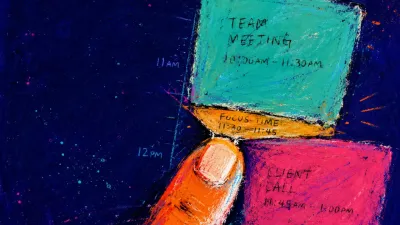
PTO Procrastination Under Deadline Pressure: Plan a Small Pause

Why I Wait Until I'm Running on Empty to Take PTO: The Red-Block Morning
“You’re a 29-year-old project coordinator in a hybrid Toronto workplace, staring at an open PTO form while the shared calendar fills with deadlines, then burying the request under one more task,” I said. “That is a very specific kind of PTO procrastination.”
Alex (name changed for privacy), a non-binary project coordinator, sat across from me with their phone face down between us. I asked them to walk me through the last Monday, and I could almost smell the scene: at 9:02 a.m. in their Toronto condo kitchen, the kettle clicked off, the coffee tasted burnt, and the blue request button glowed beside a Google Calendar crowded with red deadline blocks. Screen glare caught in their eyes. Their shoulders crept toward their ears. They closed the HR form, dragged “take time off” below the next deliverable, and opened Slack instead.
“I will take time off when things calm down,” Alex said. “If I pause before I am exhausted, people may think I am less committed.” I named the contradiction plainly: taking time off before running on empty versus waiting until running on empty before allowing a pause.
I saw guilt as more than a thought. It had turned PTO into a fire extinguisher behind glass, officially available but touchable only after the alarm became impossible to ignore. Heavy limbs, tight shoulders, low-energy mornings, and a restless urge to check messages kept showing up before the collapse. “Why does rest only feel legitimate after I have nothing left?” Alex asked.
“I don’t hear a lack of commitment,” I said. “I hear a rule that makes collapse the permission slip. We can use the cards as a clear mirror, not a verdict, and map the first place this cycle can be interrupted. Our Journey to Clarity starts with making rest visible before it becomes an emergency.”

Choosing the Transformation Path Grid for a Full Calendar
I asked Alex to place their phone face down, take three unhurried breaths, and hold the question without trying to solve it. I shuffled slowly. For me, this is not a performance of mystery; it is a transition from deadline bargaining into focused observation.
I come from a seventh-generation Highland healing family, and I carry sixty-seven years of lived seasons with me. That history does not make me the authority over another person’s life. It has taught me to notice rhythm, early signals, and the difference between forcing a change and creating conditions in which change can be noticed.
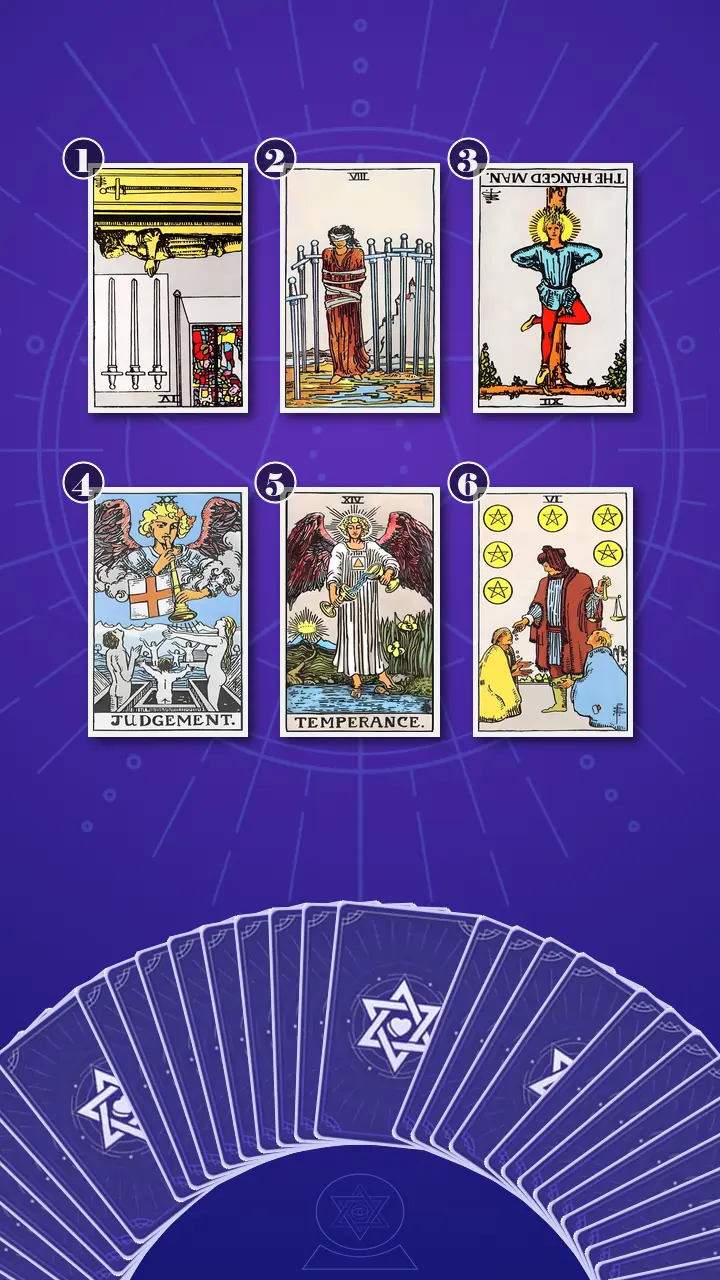
Today I used the Transformation Path Grid · Context Edition, a six-card spread designed for a self-reinforcing work-rest loop. The primary structure moves from present symptom to blockage and root, then drops into a catalyst, an action plan, and an integrated capacity. I considered a Celtic Cross, but its broad external and outcome positions would have added more layers than this question needed. A Decision Cross would have implied two outside options, while a Past-Present-Future spread would have made the pattern look too linear.
For anyone wondering how tarot works in a reading like this, I use each card as a structured cognitive prompt. The images give a visible shape to habits, assumptions, body signals, and choices that can otherwise blur together. The cards do not submit a PTO request or predict what a manager will think. They help me ask better questions about the evidence already present.
I told Alex that the upper row would show the present symptom, the mental blockage, and the root resistance. The lower row would show the key trigger that could interrupt the loop, the practical action plan, and the integration of rest into a fair resource system. The center card below the blockage would be the bridge between insight and behavior.
Reading the Map of Delayed Rest
Position 1: The Rest Tab I Could Not Enter
“Now turned over, representing the present symptom, the observable cycle of postponing PTO until depletion and the difference between formal permission and actual use, is the Four of Swords, in reversed position.”
The card showed the reclining knight’s effigy beneath three suspended swords, with a fourth sword set apart below. I saw the separate sword as the unused PTO tab: a designated place for rest sitting visibly apart from the active pressure, available but not entered.
In modern life, the reversed Four of Swords appeared as a PTO request open in one browser tab while the deadline calendar stayed open in another. Alex had a formal place to rest, but on Monday morning they closed the request, moved “take time off” below the next deliverable, and carried the buzzing inbox into the evening. The issue was not an absence of permission. It was the difference between having permission on paper and having psychological access to rest.
Reversed energy here was disrupted recovery, a blockage rather than a complete lack of rest. When Alex finally booked a large block of emergency leave, the first days could be spent answering messages, coming down from accumulated strain, and trying to remember how to stop. The card was not predicting failure. It was showing why a break entered at the last possible moment could feel less restorative than a smaller pause planned earlier.
I gave the inner monologue a voice. “I have a place to rest, so why am I still waiting for permission?” I asked. “The HR portal can be open while your mind remains surrounded by work.”
Alex did not nod. Their thumb froze above the edge of the phone, their breath paused, and their eyes went briefly unfocused. I could see the PTO tab and the red calendar blocks replaying behind that look. Then a small, bitter laugh escaped. “I have literally done this,” they said. “That’s too accurate. Almost rude.”
I let the laugh stay in the room. “Recognition is information, not a character judgment,” I said. “Rest is not a prize for surviving the week.” Alex’s shoulders lowered by a fraction, enough for the next card to be heard.
Position 2: The Calendar Wall
“The blockage, the belief or mental restriction that makes early time off feel unjustified, is the Eight of Swords, in upright position.”
The blindfolded figure surrounded by eight swords became Alex’s shared calendar turned into a wall of apparent vetoes. A stand-up, a client deadline, a teammate’s leave, and a handoff gap were all real entries. Yet each one seemed to say that an early pause was forbidden, even while the PTO request remained technically available beyond the narrowed view.
The upright energy was an excess of mental calculation compressed into a blockage. The bindings represented the thought, “If I ask now, people will read it as a lack of commitment.” The distant castle was the coverage conversation, the bounded alternative, or the simple request that Alex could not quite see while imagining every possible reaction in advance.
“Which part of this calendar is an actual coverage requirement,” I asked, “and which part is a prediction about how colleagues might interpret your absence?”
Alex looked down at their hands. “The client deadline is real,” they said. “But the part where people decide I don’t care? I’m rehearsing that before anyone has said it.”
I did not tell Alex that the workload was imaginary. That would have been another way to abandon reality. I asked them to separate one fact from one forecast. Their finger traced the edge of the card, tightened, then relaxed. The calendar was still full, but it was no longer the same thing as a verdict about their worth or belonging.
Position 3: The Pause That Became Another Task
“The root, the hidden resistance that keeps healing stagnation in place after work has technically stopped, is The Hanged Man, in reversed position.”
The figure hanging by one foot from the living tree showed a deliberate pause that could offer a new perspective. The crossed free leg suggested that Alex had one foot in recovery and the other in unfinished work. The halo around the head hinted at insight that could not arrive while every quiet moment was quickly converted into another assignment.
In daily life, the reversed Hanged Man was a planned thirty-minute break that became inbox cleanup, errands, career planning, or a Notion list with a definition of done. Alex could stop working physically while remaining mentally attached to the next useful thing. A pause treated as wasted time never became a pause at all.
“If this time does not produce something, was it really allowed?” I asked. I let the silence last for one full sentence. I wanted Alex to notice the impulse to fill it before either of us tried to improve it.
Alex’s mouth tightened. “I can turn a day off into errands before I even realize it,” they said. “If I don’t get anything from it, I feel like I wasted something.”
The reversed energy was resistance to surrendering control, not a diagnosis and not a personal failure. Alex had learned to make rest respectable by attaching an outcome to it. That strategy offered a brief sense of safety, but it kept recovery suspended. The root question was not whether Alex knew they needed time off. It was whether they could let a small portion of time remain unclaimed without using productivity to prove that it mattered.
Position 4: When the Pattern Became Audible
“The key trigger, the moment of honest recognition that can interrupt the cycle before PTO depletion becomes the only evidence, is Judgement, upright.”
The word can sound severe, so I explained that I was reading Judgement as awakening, not punishment. The angel’s trumpet represented a pattern becoming audible. The figures rising from the gray coffins showed a truth that had been buried under one more deadline becoming available for response while there was still room to choose.
I asked Alex to look back across the last three weeks. “What showed up before each delayed PTO request?” I asked. “Tight shoulders before stand-up, late messages after dinner, a low-energy morning, or a quiet weekend saved for later?”
Alex opened their notes app and made three short entries. “Tight shoulders before the Tuesday stand-up. Teams messages after dinner. I saved last weekend because I thought the next one would be worse.”
“This is a pattern, not a one-off bad week,” I said. “You do not need to wait until the trumpet is an alarm. You can answer the first repeatable signal.”
Alex stared at the list. Their eyes moved from one line to the next, and their breathing became easier without becoming dramatic. Judgement had not solved the workload. It had changed the question from “Am I exhausted enough?” to “What is this repeated signal asking me to schedule?” That was the first believable opening in the loop.
When Temperance Blended the Two Cups
The room grew quieter when I reached for the card beneath Judgement. Rain tapped once against the window, and the Toronto traffic seemed to move farther away. I turned the card slowly so Alex could see the angel standing with one foot on land and one in water.
Position 5: A Measured Pour Before the Deadline Cluster
“The action plan, the practical behavior that can turn crisis recovery into measured, repeatable rest, is Temperance, in upright position.”
Temperance was the key card and the spread’s strategic antidote. The two cups became work coverage and deliberate recovery. The angel’s balanced stance showed that Alex did not have to choose between being dependable and restoring capacity. One modest PTO block, a clear handoff, and a protected return boundary could exist in the same plan. The distant light did not promise a perfect balance; it suggested a path made through gradual practice.
The Body Before the Bargain
Here I used my signature Somatic Fatigue Diagnosis. Before I let the mind conduct another hearing about whether the week was objectively bad enough, I listened strictly for physical friction in Alex’s daily environment: shoulders tightening before a stand-up, a jaw held firm on the TTC, a warm phone in their palm after dinner, heavy limbs on a Monday morning. I treated those signals as usable information, not as a moral score or a medical label.
For a heartbeat, I remembered the Highland garden where the women in my family taught me to watch leaves before they curled. We did not call early watering weakness. I did not offer that memory as a command for Alex, only as a professional reminder that maintenance can be noticed before collapse. My Organic Routine Restructuring begins in the same place: rebuilding the rhythm of a week around biological needs and repeatable signals rather than an artificial social clock that says recovery starts only after every task is finished.
“Picture Monday at 9:02 a.m. in your Toronto kitchen,” I said. “The PTO form is open, the shared calendar is packed, coffee tastes burnt, and your shoulders are tight. You close the request, bury take time off under the next task, then call Sunday-night scrolling recovery.”
Healing stagnation is not solved by waiting until PTO depletion proves you need rest; interrupt procrastination with a measured rhythm, like Temperance blending two cups one deliberate pour at a time.
“You do not need to be running on empty to make time off legitimate. A measured pause is not evidence that you care less; it is a way to stop endurance from becoming your only proof of commitment.”
Alex did not answer. Their fingers froze at the edge of the card, and their inhale stopped halfway between a defense and a sigh. Their pupils widened; then their gaze lost focus, as if the red calendar blocks, the Slack green dot, and the emergency leave were replaying on the same small screen. Their jaw tightened, and their eyes reddened at the corners. “But does that mean I have been doing it wrong?” they asked, with anger arriving before relief. I let the question stand. “It means the old rule helped you avoid an exposed conversation,” I said. “It also made recovery harder. Both can be true.” A fist in their lap loosened one finger at a time. Their shoulders lowered, and a shaky laugh gave way to a long breath that reached their ribs. “Oh,” they said, softer. The clarity left a brief blankness behind it. Without collapse to authorize the pause, the next choice belonged to them. “Now use this new perspective to remember last week,” I said. “Was there a moment when this insight could have made things feel different?”
Alex named Tuesday dinner, when they had checked Teams while their food cooled. I offered a ten-minute experiment rather than a demand: write down one early sign that work was consuming recovery time, draft a private note for one bounded half-day or PTO day, and add one simple handoff sentence. Alex could save, send, revise, or delete the note. If the exercise felt too exposed, they could stop at the observation. The pause belonged to them.
That was the first movement from guilt-driven endurance and reactive leave to self-trusting, sustainable pacing with planned recovery before collapse. It was not proof that every future week would be easy. It was a small change in ownership: Alex could notice a signal, test a response, and decide what happened next instead of waiting for depletion to make the decision.
Position 6: The Scales Beside the Leave Balance
“The integration, the lesson that can carry into calendars, workload, and self-worth, is the Six of Pentacles, in upright position.”
The standing figure held scales while distributing six coins to two kneeling figures. I read the scales as the PTO balance and workload plan, and the coins as time, coverage, and energy that could circulate instead of being given outward until nothing remained.
The upright energy was fair exchange. PTO was not a prize Alex had to earn by overgiving, and it was not a moral scoreboard that became legitimate only after a breakdown. “A PTO balance is a resource, not a moral scoreboard,” I said. “How could rest enter the same practical plan as deadlines, coverage, and pay?”
Alex moved their phone beside the spread and opened the calendar. “If I put the day off beside the handoff,” they said, “it looks like part of the work plan instead of an apology for needing one.” I watched the idea settle into something practical. Receiving was no longer being framed as a failure to contribute. It was part of resourcing the contribution.
From Insight to Action: A Small Pause Before the Deadline Cluster
When I laid out all six cards, the story was coherent. The reversed Four of Swords showed a rest space that existed but was never entered. The Eight of Swords built a wall from real deadlines and imagined judgment. The reversed Hanged Man showed why recovery stayed suspended even after the laptop closed. Judgement made the repeated signal audible. Temperance offered a measured rhythm, and the Six of Pentacles grounded that rhythm in the material reality of leave balances, coverage, and fair exchange.
The core metaphor was simple: PTO had been treated like a fire extinguisher behind glass, useful only after the alarm was loud. If exhaustion was the only permission slip, the pause arrived carrying the work Alex had been trying to escape. That answered the presenting problem without blaming Alex for it. A demanding week triggered delay, delay brought temporary relief from a visible coverage conversation, and the resulting depletion made future leave feel too valuable to use early.
I named the cognitive blind spot carefully. Alex was not failing to see the workload. They were treating every calendar block as a veto and every imagined reaction as a fact. Beneath that was the belief that being able to function meant rest was optional, while asking for rest early might expose a lack of worth or belonging. The transformation direction was to move from waiting for depletion to authorize PTO toward scheduling a modest, preplanned pause at the first repeatable sign that work was consuming recovery time.
My Organic Routine Restructuring did not ask Alex to build a perfect morning routine or abandon genuine responsibilities. It meant placing recovery where the body repeatedly showed it was needed, rather than obeying an artificial clock that made rest permissible only after the inbox was empty. I offered these next steps as bounded experiments. Alex could adapt them to workplace policy, real coverage needs, and their own capacity.
The Small Experiments I Put on the Calendar
- The Early-Signal PTO CueOnce this week, when Alex first notices work consuming recovery time, they can open a private Notes entry and spend thirty seconds recording the signal, such as checking Slack at dinner, waking with heavy limbs, or feeling their shoulders tighten before a stand-up. At the end of the week, they can circle the signal that appeared more than once and add a reminder to review one bounded pause before the next deadline cluster.Keep it to three short notes and ordinary language. If the week is too full, record only one signal. The notes are private unless Alex chooses otherwise; they are for noticing a cue, not proving worth to a manager or team.
- The Boundary-First Time-Off TestBefore the next cluster of deadlines, Alex can choose one half-day or single PTO day allowed by workplace policy, place it tentatively in the HR portal and shared calendar, and send a three-line handoff to the relevant manager or teammate: what is complete, what can wait, and who owns anything genuinely time-sensitive. They can also protect the first hour after returning from immediate catch-up.Draft the handoff before debating whether the pause is deserved. Use the smallest realistic version if a full day feels too exposed. A tentative request can be revised around genuine coverage needs, and committed does not have to mean continuously available.
- The No-Catch-Up Block and Grounding Disconnect ProtocolFor thirty minutes this week, or five minutes if that is the honest starting point, Alex can close the laptop and avoid errands, inbox clearing, career planning, and other productivity targets. On a condo balcony, a short walk near Toronto street trees, or beside an open window, they can feel their feet meet the ground, name five natural details, lengthen one exhale, and release their jaw and hands before returning to a low-demand activity.This is my nature-based Grounding Disconnect Protocol, a somatic way to physically discharge accumulated daily stress and help a nervous system in hyperarousal begin to downshift. The phone can stay nearby if necessary. Alex can stop whenever they choose; the pause does not need to produce an outcome.
“You do not have to send a request simply because the card suggested one,” I told Alex. “Save it, revise it, or delete it. The important change is that you can notice and choose before collapse. The cards can reflect the pattern, but you are the one who decides how your life is resourced.”
That was the actionable advice and the real next step: schedule the pause while you can still notice what restores you.

A Week Later, the Quiet Proof
Four days later, I received a message from Alex. “I logged the tight shoulders before stand-up, put Friday afternoon on the calendar, and wrote the handoff,” they wrote. “I wanted to cancel at 9:02, so I waited ten minutes and walked around the block instead. I came back and left the request there.”
In the update, Alex described a clear but fragile Friday: they took the afternoon and left the laptop closed. On Saturday, “What if I got it wrong?” arrived before coffee; they smiled, felt the question, and kept the request in place. The change was small, and that was exactly why I trusted it.
I call that the first quiet proof of finding clarity. The tarot did not grant Alex permission, predict a workplace reaction, or solve the calendar. Alex noticed, drafted, chose, and practiced. The journey had moved from guilt-driven endurance and reactive leave toward a sustainable rhythm in which planned recovery could coexist with dependable work.
I leave the Transformation Path Grid as a mirror, not a verdict: a way to connect a tight shoulder, a red calendar block, and a repeated choice before they become another emergency. The querent remains the author of the next card in the story, whether that card is a saved draft, a sent request, or a deliberate pause that no one else gets to grade.
When you keep checking Slack with heavy limbs and tight shoulders, rest can feel more dangerous than depletion: pausing while you still have energy may seem to risk proving that your worth and belonging depend on how long you can endure.
If you notice the first repeatable sign that work is eating into your recovery time, what small, bounded pause might you feel curious enough to place beside the next red deadline block?