New Place, Same Unfinished Feeling?

A clear definition of travel escapism, the tarot cards that mirror it, and reading insights showing how it enters a spread.

Travel Escapism
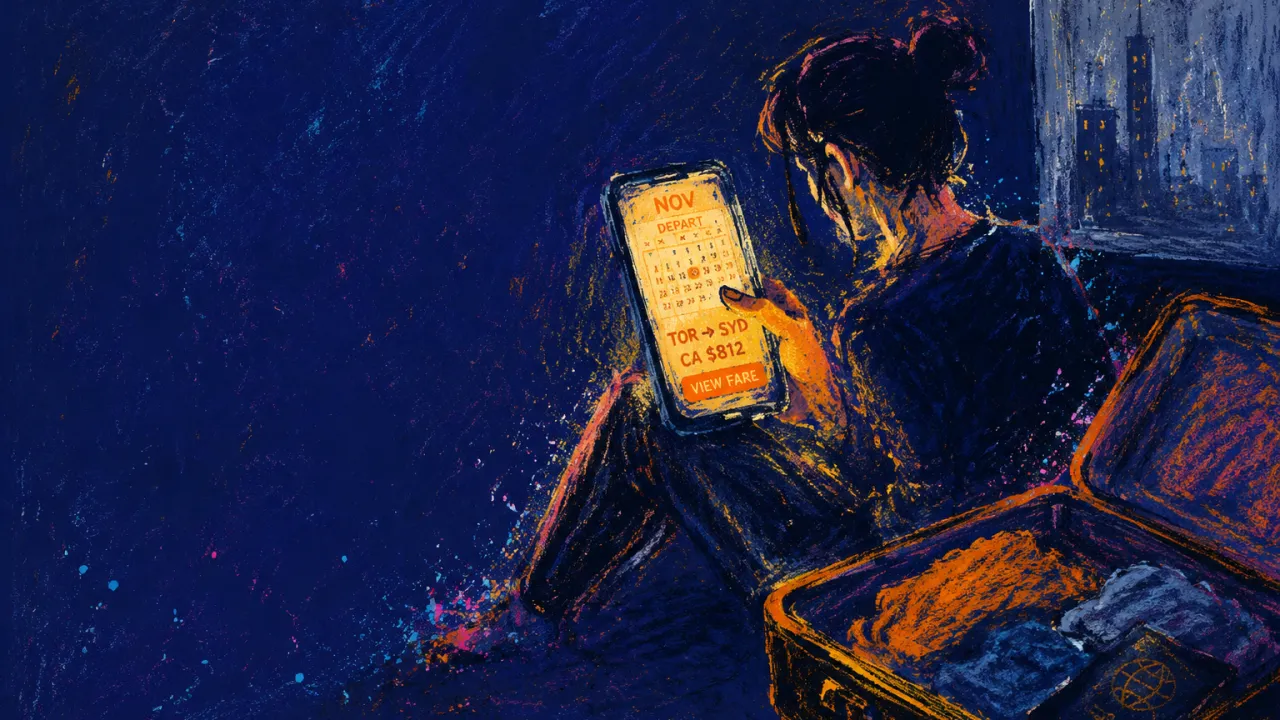
A side-turned figure scrolls a glowing flight calendar beside a half-unpacked suitcase as amber light fades into blue-grey.

What is this really?

You keep flight-search tabs open, build detailed itineraries when daily life feels boxed in, and treat the next departure as the point when you will finally feel clear. A new place offers novelty and distance from the decision or conversation in front of you, so the quick relief reinforces an avoidance loop. Yet each return can put you back beside the same unopened email and unfinished conversation, now with a flatness in your chest as you realise that changing the view did not change what followed you, much like the Six of Swords crossing to quieter water while all six swords remain standing in the boat.

Why did it happen?

At a time when your days felt crowded by expectations or stuck on repeat, leaving town gave your body room to unclench and restored a sense of choice. Now that subconscious loop can start a countdown whenever an awkward message, stalled decision, or quiet evening appears: browsing routes brings a quick lift, while the unfinished matter remains in place and leaves you mentally drained when the trip ends.

How does it feel?

  • After a difficult Slack message, you minimize the thread, open a flight site, and flick through departure dates before replying. As the calendar fills the screen, your shoulders drop and your breathing deepens; when the tab closes, pressure gathers behind your ribs again. You can let that brief shift be information without needing to act on it.
  • During an awkward dinner pause, you brighten your voice, tilt your phone toward the other person, and suggest a weekend away before the unfinished sentence resumes. In that beat, your jaw releases and a fizzy lightness rises in your chest; when the table goes quiet again, the heaviness settles back. It is okay to notice both sensations without choosing between them yet.
  • At 1 a.m., you pinch-zoom across a map, save five cafés, and compare train times with one eye half-closed. Your eyes feel gritty and your fingertips keep tapping even as the rest of your body grows heavy. Uncertainty can sit beside the open map for now.
  • On the trip, you photograph breakfast, check transit times while walking, and add another neighbourhood to the day whenever an empty hour appears. Your feet ache while your chest stays keyed up; in the quiet hotel room, the sudden stillness feels hollow before your hand reaches for the phone. A pause can remain only a pause.
  • Back home, you leave the suitcase half-unpacked, upload a photo carousel, and check next month's fares with your coat still on. Your shoulders sink, the room sounds muffled, and your thumb keeps scrolling before you decide to. That automatic motion can be observed without turning it into a verdict.

Travel Escapism in Tarot Cards

Travel escapism appears in the reflex to open departure dates before replying to the difficult message already on your screen. Your shoulders drop and your breathing deepens as the calendar fills the screen. Jungian archetypal theory offers a framework for understanding this pattern without turning it into a verdict. The Tarot Cards below mirror the unconscious dynamics beneath that reflex; here are the cards connected to it.

The Fool
Upright
The Fool has already packed a small bundle and leans toward the cliff, carrying the energy of an immediate beginning without visible preparation for the consequences below. The scene compresses anticipation, risk, and departure into one bright physical impulse. A countdown to the next flight can make waiting feel intolerable and action feel automatically regulating. You may launch into route searches whenever a difficult moment appears, using urgency to bypass the slower work of judging whether this is actually the right time to leave.
Reversed
The figure steps toward the cliff with a small bundle over one shoulder, a white dog at their heels, and a white rose held loosely in one hand. In the reversed position, the open edge and light luggage can portray a departure made for immediate relief before the consequences of the leap have been considered. A trip then becomes a dramatic way to exit a choice instead of staying with its uncertainty. The pattern is energised by the feeling that a clean beginning is available elsewhere. The leap may interrupt pressure, but it does not automatically process the conversation or decision left behind, so the freedom associated with leaving can become a repeated substitute for choosing what the next step actually is.
The Chariot
Reversed
The armored figure remains seated before the black and white sphinxes, with the vehicle facing outward and a city behind it. In the reversed position, the contrasting forces suggest a pace that is not fully coordinated, even though the vehicle visually promises immediate movement. Booking travel during a stressful moment can turn that promise of forward motion into a way to outrun the pressure of the present. The pattern confuses urgency with timing discernment. The departure can reduce activation quickly, but the unresolved message or conversation has not been brought into alignment with any actual plan, so the same impulse to leave can return whenever the next difficult pause appears.
Wheel of Fortune
Reversed
The large wheel turns above a rising sphinx, a descending serpent, and the figures placed around its outer frame. The image makes cyclical change visible, but the motion itself does not guarantee that the rider has chosen a destination. In the reversed position, the rotating structure can mirror a repeated escape sequence in which a new departure feels like a new phase while the same unresolved issue keeps returning. The pattern binds relief to the next timing node, such as a long weekend, a cheaper fare, or a fresh month. Each external shift briefly interrupts the loop, yet the return of the original discomfort shows that the cycle is being moved through rather than understood.
The Devil
Upright
The horned figure sits above two human figures whose necks are linked to the pedestal by chains, while the loops appear large enough to be lifted away. The image makes attachment and automatic repetition visible without making the restraint absolute. Repeated fare checking can function in the same way, with the phone and the imagined departure becoming a fast regulator whenever an avoided feeling rises. The pattern is maintained by the immediate reward of relief, novelty, and perceived choice, not by a lack of intelligence or will. Because the chain reconnects the person to the same structure after the pleasurable search, the return home exposes the loop's cost and creates a useful point for observing the urge before it becomes another itinerary.
The Moon
Upright
A winding path runs between two towers under a large moon, with a dog, a wolf, and a crayfish occupying different edges of the scene. The route is visible but its destination is not, and the animals respond differently to the same uncertain light. Travel fantasy can borrow that ambiguity, making a distant place feel more legible than the unclear emotional terrain immediately in front of you. The pattern uses imagined geography to organise feelings that have not yet been named. A map can create the impression of certainty because it displays roads and dates, while the underlying uncertainty returns when the trip removes the distraction and the path at home still requires interpretation.
The World
Reversed
A dancing figure moves inside an oval wreath, with four figures watching from the corners and the frame suggesting a completed cycle. Reversed, the enclosing shape can show completion that has not been psychologically absorbed, with the journey's outer milestone failing to settle the inner transition. A finished trip may therefore be treated as evidence of change even while the same emotional pattern remains active at home. The pattern turns the next destination into a promised completion point and then experiences disappointment when arrival does not close the loop. The image supports a distinction between collecting movement and integrating its meaning, so the return can be read as information about the unfinished process rather than as a demand for another dramatic departure.
Four of Cups
Upright
The seated figure folds their arms beneath a tree while three cups sit in front of them and a fourth is offered from a cloud. The closed posture and fixed gaze show attention withdrawing from the immediate environment, while the unexpected cup introduces a small opening that the figure does not yet engage. A new destination can occupy that same opening, offering stimulation before the flatness of home has to be felt. The pattern converts ordinary boredom or emotional dullness into a countdown toward somewhere else. Browsing fares gives the evening a lift, but it also keeps attention away from the quieter question of what the current life is missing, so returning home can reproduce the same disengagement.
Seven of Cups
Upright
The figure faces a cloud of cups containing a veiled face, jewels, a wreath, a serpent, and other striking images, with no visible movement toward any of them. The visual field is saturated with projection, so inner discomfort can be converted into an absorbing catalogue of imagined experiences. You may plan travel whenever feeling, boredom, or uncertainty begins to surface, using the route as a mental object that keeps attention away from the emotion itself. The temporary brightness is information about what your system needs, not proof that another place will complete the unfinished processing.
Eight of Cups
Upright
The cloaked figure leaves the cups behind without looking back, and the moon illuminates a route whose destination is not yet visible. The posture gives the psyche a strong exit image, allowing movement to interrupt the contact that difficult feelings would otherwise require. You may reach for a map or flight search as soon as sadness, emptiness, or irritation becomes noticeable in your body. The route gives the feeling somewhere to go, but it can also turn emotional awareness into a departure signal before you have learned what the feeling is pointing toward.
Reversed
The figure's back is turned toward eight cups while the mountain path rises into the dark sky, placing departure at the centre of the image. Reversed, the visual loses a stable sense of completed forward passage, and the abandoned cups can become a scene of circling around an emotional threshold rather than moving through it. A return home after travel can reactivate the wish to leave because the underlying transition was never integrated. The pattern treats the next trip as proof that change is still available, even when repeated departures have not altered the internal decision. The return impulse can be observed as a learned response to unfinished growth, separating the genuine need for renewal from the assumption that distance must do the psychological work.
Two of Swords
Upright
The blindfolded figure sits beside the water with two swords crossed tightly over the chest, holding the body in a deliberate pause. The covered eyes and symmetrical grip show a protective refusal to let either side of the conflict become fully visible. Opening a flight search at the moment of an unanswered message can reproduce that pause while providing the physical sensation of moving toward an exit. The pattern is not simply indecision; it is a state-regulation strategy that lowers immediate tension by shifting attention to a destination. The crossed swords remain in place after the tab closes, so the decision can return with added fatigue and with the false impression that more distance, rather than clearer contact, is required.
Six of Swords
Upright
The boat crosses a boundary between rough and calm water, carrying six swords in its narrow body as the old shoreline falls behind. The transition is real, but the visual refuses the fantasy that a changed view automatically means changed contents. You may treat every trip as evidence of personal evolution because departure briefly interrupts familiar reactions and gives you a different vantage point. The return can then expose a gap between environmental change and cognitive change, making the next trip seem necessary before the current lesson has been integrated.
Seven of Swords
Upright
The figure carries swords away from the camp while leaving part of the set behind, his attention divided between escape and the people he has not faced. The scene gives physical form to a partial withdrawal that avoids the full emotional weight of the exchange. After a friend raises a hurt, asks for clarity, or leaves an awkward silence, you may introduce a trip or quietly make yourself unavailable. The distance reduces the pressure of being seen in the moment, but it can leave the friendship carrying the same unanswered tension.
Eight of Swords
Upright
The blindfolded figure is hemmed in by eight swords, with a winding strip of ground and distant water visible beyond the enclosure. The image externalises the sensation of having no usable option even though the boundaries are not fully sealed. A destination search can become a mental doorway that briefly loosens the felt constraint without requiring contact with the belief that made the present seem unmovable. The pattern is maintained by confusing relief from pressure with evidence that escape is necessary. When the trip ends, the same thought habits and avoided decisions are still available for attention, so the mind returns to maps and departure dates whenever inner confinement becomes uncomfortable again.
Nine of Swords
Upright
A person sits upright on a bed with their face in their hands while nine swords line the wall behind them. The dark room and fixed row of blades give repetitive mental pressure a concrete nighttime setting, much like searching fares at one in the morning while the body grows tired. Travel research offers a narrow stream of novelty that interrupts contact with the thought waiting underneath. The pattern is reinforced when the search produces a brief drop in tension, even though the fatigue and unfinished issue remain. The image supports an audit of the sequence rather than a verdict about you, allowing the late-night urge to leave to be recognised as an attempt to regulate mental pressure.
Two of Wands
Upright
The figure holds a globe against a stone wall and looks over a distant landscape, with two wands marking a choice between the secure vantage point and the wider world. The image captures the pleasure of surveying possibilities without yet crossing the threshold. Travel planning can preserve that suspended position, giving you the lift of options while protecting you from the discomfort of selecting one. The pattern turns comparison into a form of avoidance when every destination remains a possible escape from the decision at hand. A full itinerary may feel like progress, but the deeper loop is keeping choice safely projected into the future so that no present option has to be accepted, rejected, or emotionally owned.
Three of Wands
Upright
The figure stands on high ground with three wands planted around them, watching ships move across the open water toward the horizon. The ships turn waiting into a visible future event, making distance feel active even before departure occurs. A countdown to travel can perform the same function when the present moment feels crowded, stalled, or too emotionally close. The pattern places regulation in anticipation, so the calendar itself becomes a source of relief. Because the figure is still standing on the shore, the image also records the gap between expecting a change in state and engaging the matter that remains unresolved before the departure date.
Ten of Wands
Upright
The figure bends under ten wands while walking toward a town that remains visible but distant. The load obscures the face and narrows the field of vision, showing how professional responsibility can consume the capacity to assess what is actually urgent. A future holiday can then become the only imaginable place where the body will be allowed to stop carrying the role. The pattern gives career overload a geographic solution and creates relief through the promise of an upcoming departure. Because the burden is still being transported toward the town, the image also shows the delayed cost of the loop, with the same expectations, unfinished tasks, or workplace decisions waiting after the break.
Knight of Wands
Upright
The horse rises beneath the knight instead of moving with measured steadiness, and the raised wand gives the image a charged, forward-thrusting rhythm. The body appears to experience motion as proof that something is happening now. You may let an upcoming departure set the pace of your emotional life, becoming restless whenever a decision or difficult exchange requires a slower interval. The urge to leave can feel like timing discernment, but its speed may be serving relief from the present rather than a clear reading of the moment.

Travel Escapism in Tarot Card Reading Insights

The reflex to open departure dates before replying to the difficult message has also appeared when others brought this pattern into card readings. Below are Tarot Reading Insights in which travel escapism surfaced alongside the cards.
Psychological Patterns Related to Travel Escapism