Why Does Starting Feel Exposing?

Explore the exposed feeling of being new, the tarot cards that mirror it, and readings shaped by that first-step tension.

Beginner Shame
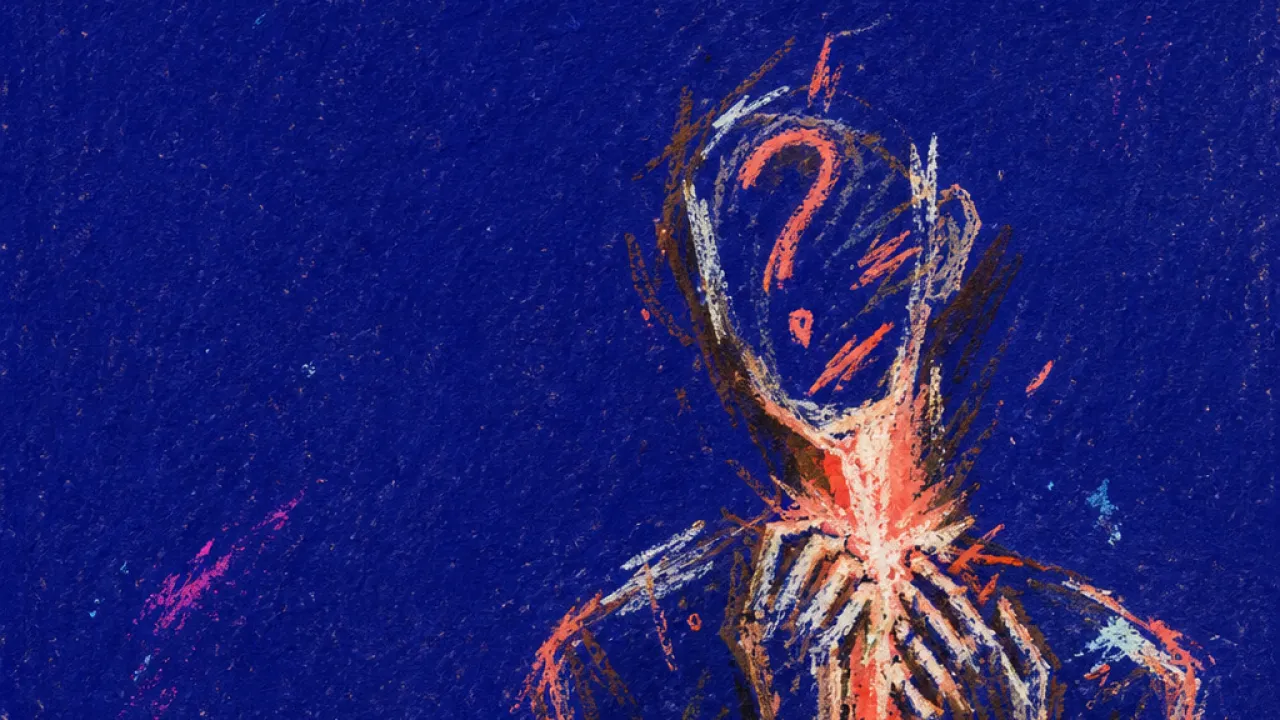
A solitary figure with stiff hands and a tight throat under raw coral light against deep indigo space

What does this feel like?

Beginner shame — it starts as heat in your face, a tightness in your throat, and the sudden sense that everyone else somehow got a manual you missed. You sit with the new thing in front of you, a lesson, a tool, a group chat, a first attempt, and your body reacts like being seen is the danger: shoulders up, hands stiff, breath held, eyes scanning for proof that you're already behind. Even small questions feel loud in your mouth. You rehearse them, delete them, reword them, then decide maybe you should just figure it out alone. Beginner shame makes the room feel too bright, as if every hesitation is under a spotlight, and it turns not knowing into a private embarrassment instead of a normal starting point. Inside, the voice is sharp but quiet: Why don't I get this yet? Why is this easy for everyone else? Maybe I should have known before I showed up. So you hover at the edge, wanting to learn but afraid your first messy steps will reveal too much, much like the young figure on the Page of Pentacles, standing alone in an open field, staring at one coin with total focus, as if holding it correctly might decide whether he belongs there at all.

Why you're feeling this?

Beginner shame isn't proof that you're behind or out of place. It's the sting that can appear when a part of you wants to learn while another part wants to avoid feeling exposed. There is nothing wrong with needing a first step to be a first step.

Beginner Shame in Tarot Cards

That hot, tight feeling in your face when you don't know where to start is beginner shame taking shape in the body. This is a universal emotional experience: the mind tries to stay open while the body reads being new as exposure. Tarot can hold that awkward in-between place without turning it into a verdict. Here are the Tarot Cards that tend to mirror beginner shame.

The Fool
Reversed
A young traveller carries only a small bundle as he reaches a cliff edge, while the bright sky and white dog keep the scene charged with movement. Reversed, that physical openness loses its flow and becomes a frozen self-conscious moment in which not having everything packed feels equivalent to being fundamentally unready. You may postpone a growth practice until you can perform its first step without looking like a beginner, creating a requirement that experience must exist before experience begins. The reversed Fool exposes that loop as a shame-based entry barrier: awkwardness is treated as identity evidence, and the possibility of development remains stranded behind the need to appear already developed.
The Hierophant
Upright
A robed teacher sits between two pillars while two initiates face him, with crossed keys and an established ceremonial structure organising the space. The hierarchy is unmistakable: knowledge appears codified, the authority already speaks its language, and the learners enter after the rules have been formed. You may sit in a formal class and assume that everyone else understands the vocabulary, etiquette, or method that has not yet become familiar to you. Upright, the Hierophant contains the shame within a real teaching relationship; the knowledge gap is visible, but the presence of initiates in the image confirms that entering without mastery is part of the institution's learning structure.
Three of Pentacles
Upright
An artisan's developing work remains visible beneath three pentacles while two figures compare it with an open plan. The scene places imperfection, observation, and shared standards inside the same structure rather than hiding development until it looks complete. You may want growth to happen privately so nobody witnesses the stage before fluency, turning feedback into an emotional threat to identity. Upright, the Three reveals a more integrated pattern: the shame can remain present while outside perspective helps distinguish a trainable gap from the global story that you are inherently incapable.
Eight of Pentacles
Upright
A seated craftsperson works on one pentacle while earlier pieces remain mounted in a visible sequence and another rests near the bench. The repeated forms make learning cumulative, but they also expose every stage through which the hand has had to pass. You may interpret the need for drills, revision, or repeated explanations as evidence that you are slower than everyone else. Upright, the Eight keeps repetition connected to absorption rather than humiliation; the shame may still heat the learning process, but it does not have to redefine practice as failure.
Page of Pentacles
Upright
A young figure studies a single pentacle while the field behind him shows cultivation already underway and the mountains signal development still ahead. The visual scale places one modest beginning inside a much longer process, even as his intense attention makes that beginning feel decisive. You may approach growth with a cognitive rule that says improvement should look competent from its first visible moment. Upright, the Page holds a different structure: shame can be acknowledged without becoming proof of incapacity, and the imperfect first contact remains part of growth rather than a contradiction of it.
Eight of Swords
Upright
A blindfolded figure stands bound among eight upright swords, with wet ground beneath her feet and a distant stronghold behind her. The restricted arms, obstructed sight, and surrounding blades turn anticipated judgment into a bodily enclosure even though the space between the swords is not fully sealed. You may become so occupied with avoiding the wrong question, awkward attempt, or visible gap that your inner options disappear from awareness. The Eight names beginner shame as a self-reinforcing psychological bind: the fear of being seen not knowing produces silence, and that silence then feels like proof that you cannot safely participate.
Page of Swords
Upright
A young figure holds an upright sword with both hands while his body turns one way and his gaze checks behind him; wind bends the trees and drives clouds across the sky. The divided posture, raised blade, and restless atmosphere make thought and speech feel alert before either has found ease. You may mentally edit a basic question until the class has moved on, using vigilance to protect yourself from sounding uninformed. Upright, the Page preserves the live edge of curiosity inside that self-consciousness: the mind is activated and watchful, but the sword of language remains available rather than fully silenced.

Beginner Shame in Tarot Card Reading Insights

Beginner shame often follows people into readings as that quiet fear of looking unprepared or behind. Others have brought the same exposed, tight feeling to the cards when they were trying to start from zero. Tarot Reading Insights from sessions where being new felt hard to carry.
Leaving the Lamp Crooked: Self-Trust Begins with Four Bullet Points

Leaving the Lamp Crooked: Self-Trust Begins with Four Bullet Points

Topic:Study Tarot Reading

Struggle:Perfect Readiness Trap

Context:Attention Economy Study Trap
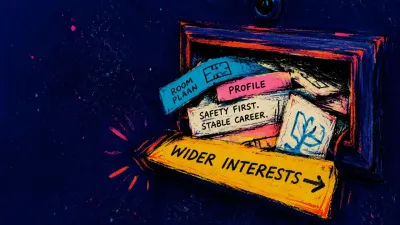
LinkedIn Headline Anxiety Becomes a Snapshot, Not a Contract

LinkedIn Headline Anxiety Becomes a Snapshot, Not a Contract

Topic:Direction Tarot Reading

Struggle:Self-Integration Strain

Context:Safe Visibility Trial
Resume Rewrite Spiral—and How to Move From Optics to Evidence

Resume Rewrite Spiral—and How to Move From Optics to Evidence

Topic:Direction Tarot Reading

Struggle:Performance-Worth Fusion

Context:Values Alignment Crossroads

Blank-Page Paralysis Under 'Gifted Kid' Pressure: Practice Over Proof

Blank-Page Paralysis Under 'Gifted Kid' Pressure: Practice Over Proof

Topic:Career Tarot Reading

Struggle:Grade-Identity Fusion

Context:Productivity Theater
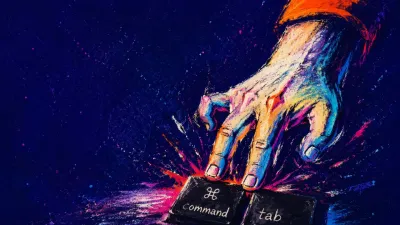
Hiding the UX Tab at 8:43 PM—and Learning to Leave It Open

Hiding the UX Tab at 8:43 PM—and Learning to Leave It Open

Topic:Study Tarot Reading

Struggle:Visibility-Safety Split

Context:Career Transition Fog

Stuck in Self-Improvement Shopping—and Starting With What You Own

Stuck in Self-Improvement Shopping—and Starting With What You Own

Topic:Personal Growth Tarot Reading

Struggle:Aesthetic Self-Management Trap

Context:Life Admin Backlog

Beginner Shame at Checkout—and Turning Class One into Practice

Beginner Shame at Checkout—and Turning Class One into Practice

Topic:Personal Growth Tarot Reading

Struggle:Social Self-Judgment Lock

Context:Commitment Cliff Edge

Stuck in Setup Mode? A 7-Day Draft Week to Start Using One Notebook

Stuck in Setup Mode? A 7-Day Draft Week to Start Using One Notebook

Topic:Study Tarot Reading

Struggle:Aesthetic Self-Management Trap

Context:Productivity Theater

The Cap-and-Gown Portal Tab Switch—and the 15-Minute Reset Plan

The Cap-and-Gown Portal Tab Switch—and the 15-Minute Reset Plan

Topic:Study Tarot Reading

Struggle:Threshold Disorientation

Context:Post-Graduation Limbo

From post-grad fog to grounded momentum: letting the student label end

From post-grad fog to grounded momentum: letting the student label end

Topic:Personal Growth Tarot Reading

Struggle:Internal Authority Collapse

Context:Post-Graduation Limbo

From Promotion Anxiety to Self-Directed Momentum: Work Anniversary Jolt

From Promotion Anxiety to Self-Directed Momentum: Work Anniversary Jolt

Topic:Career Tarot Reading

Struggle:Inner Tribunal Lock

Context:Skill Underutilization Trap

From First-Week Impostor Syndrome to Learning Out Loud at Work

From First-Week Impostor Syndrome to Learning Out Loud at Work

Topic:Career Tarot Reading

Struggle:Feedback Disconnection

Context:Hidden Curriculum Gap

Psychological Emtions Related to Beginner Shame