Leaving the Lamp Crooked: Self-Trust Begins with Four Bullet Points
The Perfect Study Setup and the Blank Document
I recognized the pattern immediately: a final-year student balancing coursework with paid shifts, with the first forty-five minutes at a tiny city desk disappearing into lighting, playlists, and folder names.
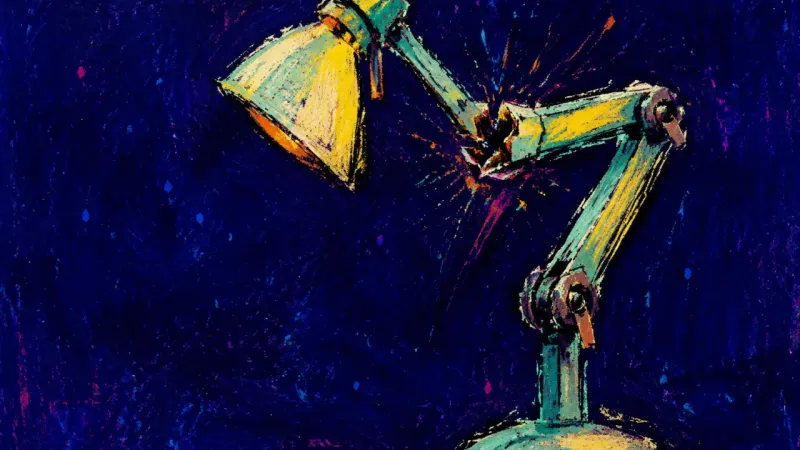
Jordan settled into my chair and held their phone face down against their knee. At 7:32 p.m. in their compact Toronto bedroom, they had opened an assignment on the laptop, then renamed Week 6 and Week 06 folders, nudged the lamp two inches to the left, and tested a third focus playlist. The laptop felt warm beneath their wrists; traffic hissed over wet pavement outside, and the lamp threw a sharp white glare across the keyboard.
I watched their fingers keep moving even when the assignment tab stayed untouched. Jordan gave me a tired half-smile and said, "Why do I keep perfecting my study setup instead of starting? I can start once the desk feels less distracting." They wanted real academic progress, but beginning with an imperfect setup felt too much like producing evidence that might be judged inadequate.
To me, their apprehension looked like a runner repeatedly retying their shoes while the race was already underway: determined, sincere, and using preparation to delay the first visible stride. Frustration sat on the surface, with shame and a fierce longing for control underneath. This was productive procrastination through study-setup perfectionism, not a shortage of effort or care.
I did not call Jordan lazy, unserious, or undisciplined. I said, "I can see how much work you are already putting into trying to study well. Let us look at what the setup is protecting you from, and what it might be possible to begin before you feel completely ready. Our Journey to Clarity starts by drawing a map of the loop, not by judging you for being inside it."

A Ladder Through the Study-Setup Loop
I invited Jordan to put both feet on the floor, take one slow breath, and name the question in plain language. Then I shuffled the cards slowly, using the movement as a practical transition from scattered attention to deliberate observation. Nothing about the shuffle was a promise about the future; it was simply a way to make one question visible.
I chose the Four-Layer Insight Ladder tarot spread for this reading. For a focused question about why someone keeps organizing instead of studying, it is more useful than a broad spread packed with unrelated context. This structure follows the causal chain from the present behavior to the hidden rule beneath it, then to the leverage point that can change the pattern and the small action that makes the change real. That is how I use tarot as a psychological and objective reflection tool: the cards give us images to test against lived evidence.
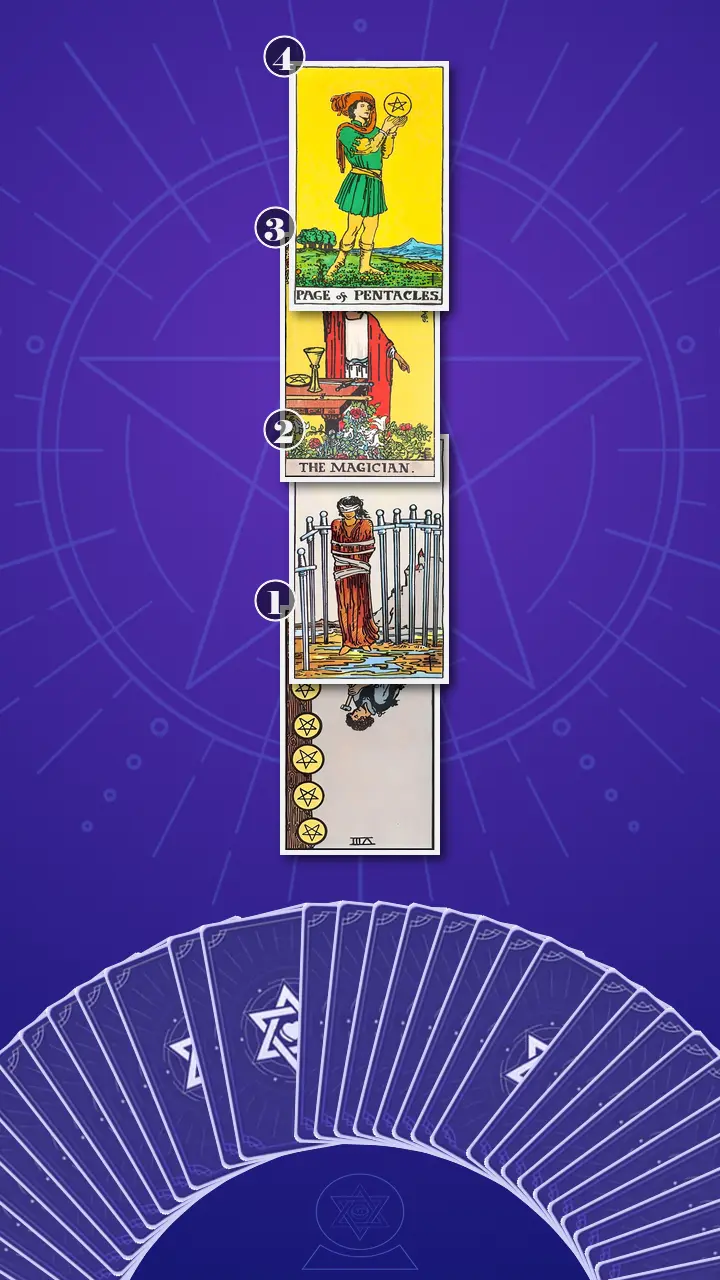
I explained the four positions to Jordan and, through them, to anyone recognizing this kind of study procrastination. The first card would show the visible study-setup behavior: the desk, apps, folders, and timetable consuming the session. The second would reveal the limiting belief and underlying fear that made imperfect conditions feel unsafe. The third, our transformational pivot, would show how to direct existing resources toward one concrete study output. The fourth would translate that insight into a beginner-sized learning practice.
I added, "We are not asking whether the cards can decide your academic future. We are asking whether their symbols help us notice a pattern you can examine, revise, and choose differently. You remain the person with the authority to decide what happens next."
Reading the Map, Not Judging the Student
The Craftsperson Who Kept Polishing the Container
Now I turned over the card representing the visible study-setup behavior: reorganizing the desk, tools, and timetable until the available study period is consumed.
The card was the Eight of Pentacles, in reversed position.
I first looked at the hammer and chisel in the craftsperson's hands, the row of finished pentacles beside the workbench, and the distant city separated from the scene. Upright, this is diligent practice and skill built through repetition. Reversed here, the energy was not absent; it was excessive and detached from its intended object. The craftsmanship had migrated from the assignment to the container around the assignment.
I connected it directly to what Jordan had described: at 7:30 p.m., they opened the assignment, noticed inconsistent folder names, and spent forty minutes standardizing files, adjusting the lamp, testing fonts, and refining the planner. The effort was careful and sincere, but its object had shifted. No required reading had been annotated, no paragraph had been drafted, and no question from the brief had been answered.
I brought the scene closer. I imagined Jordan's hands aligning a notebook, switching between three playlists, changing a Notion cover, and transferring the same task list from Notion to Google Calendar to a paper planner while the document waited behind the tabs. The inner sentence was familiar: "I am doing a lot, so why is nothing getting done?" The setup kept getting better while the assignment stayed untouched.
Jordan gave a short, rueful laugh. "I have spent an hour getting ready to do twenty minutes of work." Their fingertips froze above their phone; their eyes moved to the blank document; then the laugh disappeared into a slow breath that sounded almost like recognition arriving before comfort. I saw frustration and embarrassment together, but I did not treat either as proof of a character flaw.
I said, "This card respects the effort. It only asks whether the effort is reaching the work it is meant to develop. Before changing a tool, define one study output that can be completed with the setup already available. A rough heading, five annotations, or three bullet points would give your effort somewhere real to land."
The Rule Hidden Inside the Readiness Ritual
Now I turned over the card representing the limiting belief and underlying fear that imperfect conditions will produce inadequate work and expose insufficient personal worth.
The card was the Eight of Swords, in upright position.
The blindfolded figure, the loose bindings, and the incomplete enclosure made the psychological mechanism clear without making it dramatic. The swords did not form an unbroken wall, but the figure experienced them as one. I saw the same pattern in Jordan's study life: a functional laptop, an open assignment, and a short window of time were present, yet the mind had mentally fenced them off with prerequisites.
I named the prerequisites as I had heard them: the lighting had to be right, the folder system had to be consistent, the room had to be quiet, the best note-taking method had to be chosen, and a full uninterrupted hour had to be available. I told Jordan, "A preference can feel like a rule when beginning feels exposing." This was an air blockage: thought generating more conditions for action instead of one clear intention.
I used my signature diagnostic lens, Draft Paralysis Deconstruction, at this point. I explained that perfectionism can sometimes work as a subconscious defense against academic criticism: if the draft never exists, no lecturer, mentor, classmate, or internal evaluator can see its gaps. The technical problem about apps and furniture then becomes a safer substitute for the emotional risk of producing rough work. I was not diagnosing Jordan or declaring that every environmental concern was imaginary. I was separating genuine requirements from optional conditions that had quietly become compulsory.
I asked, "When the sentence in your mind is I cannot start until blank, is the blank genuinely necessary for the first five minutes, or is it a preferred condition that postpones the moment your work becomes visible?"
Jordan went quiet. First, their breath caught and their hand tightened around the edge of the chair. Then their eyes lost focus, as if they were replaying the lamp, the playlists, and the folder names from the previous evening. Finally, they released a long breath and said, "I technically could begin, but not until everything feels like evidence that I am taking it seriously."
I let the silence remain kind. "Taking the work seriously does not require making the beginning impressive," I said. "We can test one condition without removing your right to rest, move rooms, protect your access needs, or stop when the environment is genuinely unsuitable. The point is not to force yourself through discomfort. The point is to find out which rule is real and which rule is buying temporary safety through delay."
When The Magician Cleared the Screen
The room became very still when I reached the transformational card. Even the traffic beyond the window seemed farther away, and the laptop fan softened as if the machine had also paused to listen.
The Table Already Held a Beginning
Now I turned over the card representing the key shift from acquiring perfect conditions to directing existing resources toward one concrete study output.
The card was The Magician, in upright position.
One hand rose toward the sky while the other pointed toward the earth. On the table were the cup, sword, wand, and pentacle: different kinds of resource already available, waiting for deliberate use. Above the Magician's head, the infinity symbol suggested continuity rather than a single heroic burst. I saw focused agency, practical resourcefulness, and trust in learning through action. This was the antidote in the reading, not a prediction imposed from outside.
I translated the four emblems into Jordan's actual evening: the existing assignment document, the course materials, a phone timer, and enough emotional tolerance to let one sentence be awkward. The modern version of the Magician was not downloading another productivity app. It was closing the template store, putting one document in full-screen mode, and choosing one result before acquiring or optimizing anything else.
This is where I used my signature skill, Performance Anxiety Decoupling. I separated Jordan's core self-worth from exam results, peer comparisons, mentor evaluations, and the quality of a first draft. A rough line could show what the assignment needed next; it could not deliver a verdict on Jordan's value or future. I told them, "Your first rough line is task data, not a verdict on your worth."
As I watched the cursor blink, I thought about what traveling across cultures had taught me: people often search for an external object that will make them feel authorized to begin, as though readiness were a passport another person must stamp. My Jungian lens brings the search back to the relationship between the conscious intention and the protective pattern underneath it. Here, Jordan did not need a magical missing quality. They needed to recognize what became possible when an existing capacity was used.
At 7:30 p.m., the assignment was open, but Jordan's hands were renaming folders and moving the lamp. The setup kept getting cleaner while their jaw grew tighter, because starting one rough paragraph felt more exposing than preparing for it.
I said, "The Magician does not ask you to solve studying. The card asks you to use one tool for one output. Let the actual task tell you which resource is useful next."
You are not waiting for perfect tools; you are building self-trust by using what is already on the Magician's table.
I let the sentence sit between us, then added, "You do not need to feel ready before you study. Readiness becomes self-trust when one tool already within reach produces one visible, imperfect piece of work."
For a moment, Jordan froze completely. Their pupils widened, their fingers hovered above the phone, and the cursor's small blink seemed unusually loud. Then their gaze went unfocused; I could see the mind moving through the previous week's lamp adjustments, productivity videos, colour-coded planners, and blank pages. Their jaw tightened as if the old rule had returned to defend itself. When the meaning finally reached them, their shoulders dropped. Their fist opened against their knee, their eyes grew slightly wet, and a shaky exhale left their chest. The expression was not pure relief; there was a brief, dizzying emptiness in it, the vulnerable space left when a familiar protection no longer has to work so hard. "I could close the tabs," Jordan whispered. "I could use the document I already have for three bullets."
I asked, "Now, use this new perspective to remember whether there was a moment last week when this insight could have made the situation feel different. What might you have learned from one rough line instead of from another hour of preparation?"
That was the movement from contracted apprehension about beginning imperfectly toward grounded self-trust built through visible study progress and repeated practice. Not a complete transformation, and not a demand to feel fearless. It was the first believable sense that action could create information without putting self-worth on trial.
The Apprentice and the Single Pentacle
Now I turned over the card representing the embodied next step of beginning one short, bounded learning task with the current setup and a beginner's willingness to produce rough work.
The card was the Page of Pentacles, in upright position.
The Page held one pentacle at eye level while the wider landscape remained quiet. I read this as balanced earth energy: patient attention, practical curiosity, and a modest commitment to developing skill. The Page was not trying to master an entire semester in one sitting. They were willing to study one object closely.
I connected the image to a Wednesday before dinner. I asked Jordan to picture leaving the desk as it was, opening one reading in full-screen mode, and defining the whole session as five annotations in fifteen minutes. The semester, missed blocks, and classmates' polished notes could remain outside the frame. For the next fifteen minutes, this was the whole task.
Jordan's shoulders lowered by a fraction. Their hand stopped reaching toward the imagined stack of papers, and they said, "Five annotations feels serious enough to count, but not so big that I need a new life plan first." I heard the pressure drop in their voice. The Page's lesson was not perfect routine over chaos; it was one completed repetition over another invisible promise to start tomorrow.
I told Jordan, "Approach this as an apprentice, not as a finished scholar proving mastery. A short study output can be rough, private, unfinished, and still real. You can continue, stop, revise, or choose again when the timer ends."
The One-Output Study Block
The Story the Four Cards Told Together
When I placed the four cards back into their vertical line, I could see the full story. The Eight of Pentacles reversed showed that Jordan's effort had been sincere but displaced into folders, lamps, templates, and schedules. The Eight of Swords explained why: a readiness rule had turned preferences into requirements, protecting Jordan from the shame of visible imperfection while leaving less time to discover their actual competence. The Magician offered the leverage point, directing an existing document, course brief, timer, and emotional tolerance toward one concrete result. The Page of Pentacles grounded that shift in a repeatable learning unit.
The pattern reminded me of the runner who keeps retying their shoes while the race is already underway. Jordan was not refusing the race. They were trying to guarantee that the first stride could not be criticized. The trouble was that preparation could never provide the evidence they were waiting for; only beginning could reveal what the assignment actually required.
The cognitive blind spot was the assumption that preparation could manufacture certainty before practice began. In reality, another planner could only generate another decision, another app could become another object to perfect, and another reset could postpone evaluation again. The direction of change was clear: move from optimizing the entire study environment to completing one fifteen-minute, clearly defined study output with the tools already available.
I also named the boundary around this advice. Genuine accessibility, safety, rest, deadlines, health, and environmental needs matter. I was not asking Jordan to dismiss them. I was asking them to test optional preferences that had become automatic prerequisites, using a reversible experiment rather than an all-or-nothing rule.
For the next week, I gave Jordan three small actions. Each one was designed to produce evidence without turning progress into another rigid performance.
- The Existing-Tool StartOn the next study evening after a hospitality shift, Jordan will leave the compact desk unchanged, open the assignment document already on the laptop, set a fifteen-minute phone timer, and produce one rough paragraph or five bullet points. The goal is one tool, one visible output, fifteen minutes.If fifteen minutes feels too exposing, use the minimum version: one heading plus three rough bullets. Put every lamp, playlist, folder, or app idea in a note called Later. Stopping when the timer ends still counts.
- The Inner-Critic Mute ProtocolBefore opening YouTube, TikTok, a StudyTok desk-reset video, a template store, or an app comparison, Jordan will take sixty seconds to write: "The first rough line is task data, not a verdict on my worth. The critic can review after this short block." Then they will type one task-relevant sentence in the current assignment before deciding whether any extra resource is genuinely needed.This is a pre-study cognitive exercise, not a command to silence every concern. If the sentence feels too strong, use: "I can collect information before I evaluate myself." The aim is objective focus, not a perfect mood.
- The Necessary-Now CheckWhenever the thought "I cannot start until blank" appears, Jordan will write the missing condition in a phone note and label it either necessary now or preferred. They will test one preferred condition for five minutes without fixing it, then record what was actually possible. If the environment is genuinely unsuitable, they will choose one specific alternative location or time.Cap the check at sixty seconds so the check does not become a new audit. A manageable discomfort is information, not an emergency, and a real access or safety need is allowed to change the plan.
I said, "You do not have to earn the right to begin by building a perfect system. Let one visible output become evidence that the system can be used, rather than evidence that you should keep collecting systems." Self-trust is built from used tools, not collected ones.

A Week Later, One Quiet Proof
A week later, I received a message from Jordan while I was making tea. They had left the lamp slightly crooked, ignored the new note-taking comparison in their browser history, and opened the assignment after a late shift. In fifteen minutes, they wrote a rough heading and four uneven bullet points. The work was not beautiful, but it showed them what the next section actually asked for.
Jordan added, "I still wanted to fix the folders. I put it in Later and kept going." That detail mattered to me more than a dramatic productivity streak. They had noticed the protective impulse, created distance from it, and made a choice without needing the discomfort to disappear first.
The plan was clear but still vulnerable. Jordan slept through the night, then woke with the familiar thought, "What if this is still not enough?" This time, they smiled, opened the document, and read the four bullet points before deciding what came next.
I saw the first evidence of the journey I had hoped the cards would illuminate: from contracted apprehension about beginning imperfectly to grounded self-trust built through visible study progress and repeated practice. The Four-Layer Insight Ladder had not rescued Jordan from uncertainty. It had helped them see the bargain inside the setup loop, and Jordan had chosen what to do with that knowledge.
When your assignment is open but your hands keep moving everything around it, the tightness in your jaw may be carrying a painful bargain: if the setup can stay imperfect, your work does not yet have to become visible before you know whether it is good enough. Recognizing that bargain is already a moment of being understood, not a verdict.
If one tool already within reach were enough for the next ten minutes, what small, imperfect piece of the assignment would you be curious to make visible: a rough heading, three bullets, or two annotations that could remain task data rather than a verdict?