When Everything Cannot Ship at Once

See how phased delivery pressure unfolds, which tarot cards reflect it, and what surfaced in related reading insights.

Phased Delivery Negotiation
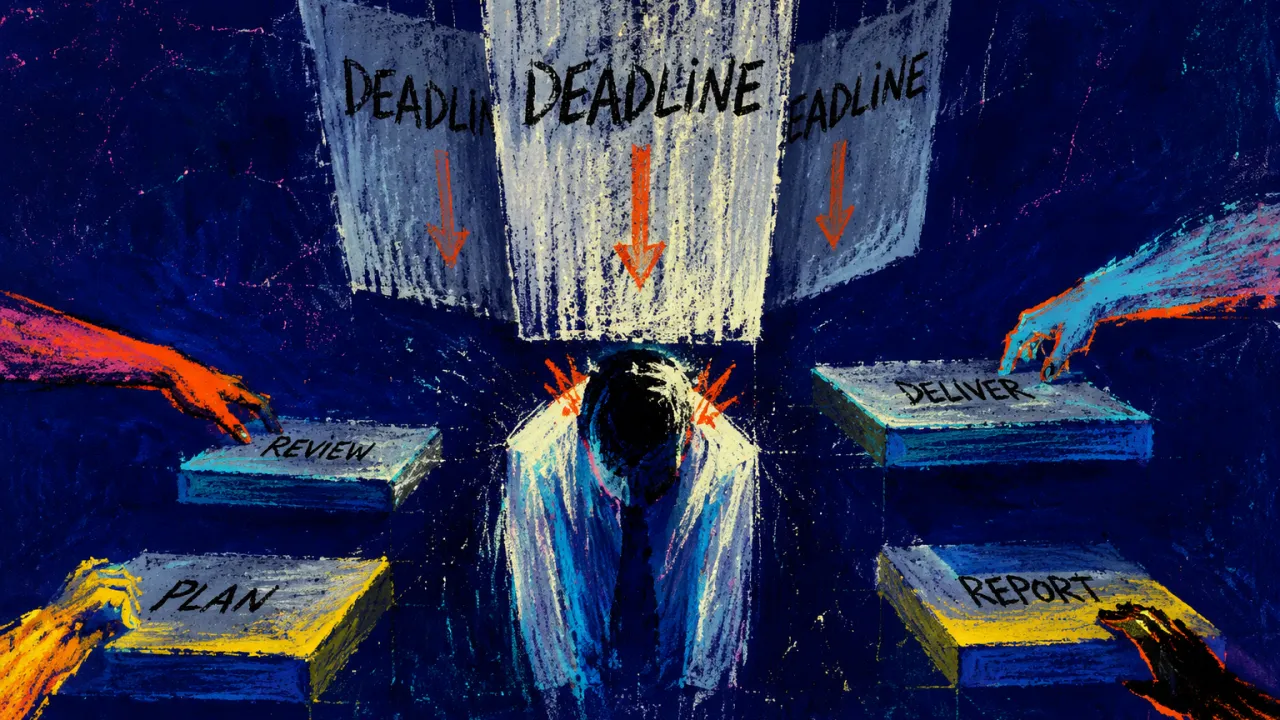
A figure stands between staggered platforms, shoulders beneath descending panels as outside hands shift each platform stage.

What is this situation?

Phased Delivery Negotiation is the stretch where everyone agrees a project cannot land all at once, yet each stakeholder still argues that their part belongs in the first release. You enter it on a planning call with a roadmap open, a fixed launch date on screen, and a list of dependencies that will not fit inside it. Product wants the core experience protected, sales has a client promise, leadership wants a visible win, and the delivery team is naming the work, testing, approvals, and handoffs each phase requires. You propose a sequence: what ships now, what follows, and what must wait. The room appears to agree, but the next email adds an exception, the next status meeting moves a feature forward, and a late approval pushes something else back. People with the most influence can reopen the plan, while you remain responsible for making the revised timeline credible. Soon the roadmap is less a plan than a live bargaining table: dates are presented as fixed, scope is treated as flexible only when someone else's priority is delayed, and every compromise needs a new explanation for the person whose item moved. Your calendar fills with alignment calls, versioned decks, dependency checks, and carefully worded updates; your shoulders tighten as you redraw the same phases and prepare to defend them again. By the time a release is approved, the next phase has already inherited the work, expectations, and unresolved trade-offs pushed out of the first, much like the Two of Pentacles, where a figure keeps two coins moving inside an infinity loop while ships rise and fall on rough waves behind him.

Why it's not you?

This is not evidence that you planned badly or failed to communicate clearly. The problem sits in a process where influential stakeholders can reopen settled scope, dates remain fixed despite changing inputs, and the person sequencing the work is also made responsible for absorbing every conflict.

Phased Delivery Negotiation in Tarot Cards

In Phased Delivery Negotiation, the roadmap keeps being reopened until your shoulders tighten over yet another revised sequence. This environmental pressure comes from a structural decision-making dynamic in which urgency can override capacity and previous agreements. The Tarot Cards below reflect the visible shape of competing priorities, fixed deadlines, and work that cannot all ship at once.

The Emperor
Reversed
A crowned ruler sits in armour on a rigid stone throne, holding the symbols of command while barren mountains close the background. Reversed, this concentration of authority maps onto a workplace where influential leaders can reopen scope from above while the delivery owner remains exposed to the consequences below. The throne still identifies where formal power resides, but the reversed structure blocks that power from carrying proportional accountability. You are not failing to control the plan; the project has separated the right to override sequencing from the obligation to absorb the resulting timeline, dependency, and credibility costs.
The Chariot
Upright
A charioteer stands above two opposing sphinxes with no visible reins, framed by a city behind him and a route ahead. The image reflects a delivery role expected to align product, sales, leadership, and implementation around one launch even though each group is pulling its own priority toward the front. The vehicle is assembled and the driver faces forward, so the upright card shows that coordination capacity is present. You can also see the career-level constraint: being made the public driver of the project does not automatically grant the decision controls required to keep contradictory stakeholder demands moving as one system.
Justice
Reversed
A seated adjudicator holds level scales in one hand and an upright sword in the other between two pillars. Reversed, those instruments remain present but fail to produce an even process: dates are treated as fixed, scope becomes flexible according to influence, and accountability falls on the person translating other people's exceptions into a credible plan. The visible scales and sword show that criteria and decision mechanisms exist in principle, yet the reversed orientation marks their blocked application. You can identify the unfairness precisely as unequal trade-off ownership, rather than absorbing it as a vague belief that you should have communicated better.
Temperance
Upright
Liquid moves in a controlled stream between two cups while the angel keeps one foot on land and one in water; a path runs toward a distant light. The transfer resembles phased delivery through development, testing, approval, and handoff, where each container has to receive work at a rate the next stage can actually absorb. The stream remains unbroken because flow is moderated rather than forced, making integration and sequencing the upright card's available resource. You can read rushed additions and late approvals as interruptions to a real delivery system, not as minor exceptions that can enter any phase without changing its timing.
Two of Pentacles
Upright
Two pentacles move through an infinity loop as the figure continually adjusts his stance and ships pitch on rough water behind him. The whole scene mirrors a delivery professional keeping multiple releases credible while stakeholder requests, approvals, and dependencies repeatedly change position. Both coins remain in play, making adaptive sequencing an available professional skill rather than evidence of chaos. At the same time, the endless loop shows why competence can become a workplace trap: because you keep the roadmap moving, the organisation can avoid resolving who owns the recurring scope conflict.
Three of Pentacles
Reversed
Three people gather around architectural plans inside a structure that is still being built, with the craftsperson positioned beside the work itself. Reversed, the shared plan no longer binds the participants: the meeting produces apparent agreement, but later emails, exceptions, and status calls redraw what the delivery team is expected to construct. The plans and specialised roles remain visible, yet the reversed arrangement blocks them from becoming durable coordination. You can distinguish a lack of enforceable cross-functional agreement from a lack of planning skill; the project has expertise and documentation, but stakeholder alignment does not survive contact with workplace power.
Four of Pentacles
Upright
A crowned figure clamps one pentacle to his chest, balances another on his head, and pins two beneath his feet while the city remains at a distance. The grip mirrors stakeholders protecting their own feature, promise, or visible win as non-negotiable while expecting flexibility to come from someone else's share of the release. The pentacles are fixed and countable, so the upright image makes guarded allocation visible rather than disguising it as universal urgency. You can see that the workplace negotiation is constrained by positional ownership: each party treats release capacity as something to secure, leaving the delivery plan to absorb the collective mismatch.
Six of Pentacles
Reversed
A standing giver holds scales while distributing coins to two kneeling figures, placing resource allocation and status difference in the same scene. Reversed, the scales do not neutralise the hierarchy: first-release capacity is distributed through stakeholder influence, and less powerful teams receive delay even when the roadmap was supposedly agreed. The coins, recipients, and allocator remain identifiable, but access to them is structurally uneven. You can name the career friction as unequal control over scarce delivery capacity, especially when you must justify allocations that someone else has the power to revise.
Seven of Pentacles
Upright
A worker leans on his tool and studies pentacles growing on a vine, while one pentacle sits separately near his feet. The uneven maturity of the crop reflects a roadmap where some value can be released now and other work needs another cycle of development, testing, or approval. The visible growth means waiting is not the same as inactivity; the upright card makes readiness evidence available for the timing decision. You can separate a defensible later phase from indefinite delay, even when stakeholders treat anything outside the first release as if it has been discarded.
Two of Swords
Upright
A blindfolded figure holds two crossed swords before a rocky shoreline and restless water. The crossed blades reproduce a release decision locked between incompatible priorities, while the blindfold reflects missing or politically filtered criteria about which commitment should move and who is authorised to decide. The seated figure still holds both swords at equal height, making the conflict visible rather than prematurely resolving it. The upright image lets you identify a genuine decision deadlock: the project cannot produce a credible phase boundary while stakeholders demand incompatible outcomes but leave the final trade-off unowned.
Five of Swords
Upright
One figure gathers swords while two others walk away beneath torn clouds, making the outcome of the contest visibly unequal. The scene mirrors a zero-sum release negotiation in which one stakeholder's visible win is created by delaying someone else's priority, leaving you to manage the fallout and explain the loss. The upright image does not hide who retained the resources or who absorbed the consequence, which makes the workplace cost available for inspection. You can identify when a supposed alignment process is producing tactical winners but weakening shared ownership of the project roadmap.
Seven of Swords
Upright
A figure carries five swords away from a camp while looking back, leaving two swords standing behind. The image closely matches scope returning through side channels after the planning room appears aligned: an exception enters by email, a feature advances through influence, and the formal roadmap is left incomplete. The two remaining swords make the bypass visible rather than perfectly concealed, giving the upright scene an audit trail. You can examine the workplace pattern without assuming malicious intent: the structural problem is that stakeholders can route changes around the shared decision process while delivery must reconcile the fragments afterward.
Eight of Swords
Upright
A bound and blindfolded figure stands inside an uneven enclosure of swords, with a distant structure behind her and a gap remaining in the surrounding barrier. The enclosure reflects a delivery role constrained by fixed dates, inherited promises, approval dependencies, and stakeholder overrides, while the blindfold captures the limited visibility that follows when decisions happen elsewhere. The gap prevents the upright image from becoming a claim of total impossibility; it shows that the constraints can be mapped and distinguished. You can locate the career trap in responsibility without authority, where the credible path depends on changing who owns decisions rather than demanding more personal effort inside the same enclosure.
Two of Wands
Upright
A figure holds a globe between two wands while looking from a fortified wall toward distant terrain. The globe resembles a roadmap held at decision scale, while the fixed wand and open horizon capture the tension between a date that will not move and a delivery path that still has to be divided into credible stages. The elevated view makes long-range sequencing available even though the wall marks a real boundary. You are not choosing an abstract ambition; you are trying to preserve a coherent project direction while stakeholder interventions keep changing what must travel first and what remains behind.
Three of Wands
Upright
A figure stands between three wands and watches ships occupy different points on the water. Their separation provides a direct timing image for work that ships now, dependencies still in transit, and commitments assigned to a later release. The ships have room to travel, making staged progress available when each phase is allowed to keep its place on the horizon. You can see why pulling every promised outcome toward the nearest date compresses distinct delivery times into an expectation the roadmap cannot honestly support.
Five of Wands
Upright
Five differently dressed figures raise intersecting wands without forming a shared line of movement. Their crowded contest resembles a planning room where product, sales, leadership, and delivery each argue that a different priority belongs in the same first release. Because the conflict is visible and no figure has fully defeated the others, the upright scene preserves the possibility of naming the competing claims directly. You can recognise that your professional workload is being generated by unresolved stakeholder rivalry, not by an inability to draw a sufficiently persuasive roadmap.
Seven of Wands
Upright
One figure holds the high ground against six wands rising from below, his stance active and his footwear visibly mismatched. The image matches the repeated defence of an approved phase plan as new stakeholder exceptions arrive from several directions and force you to respond before conditions are fully stable. The elevated position gives the upright figure a defensible boundary, even though maintaining it requires effort. You can treat the roadmap's agreed constraints as legitimate professional ground rather than assuming every renewed challenge proves the original sequence was inadequate.
Nine of Wands
Upright
A bandaged figure grips one wand before a barrier of eight others, watching for the next challenge rather than relaxing behind completed work. The scene mirrors the posture created by repeated roadmap revisions: each meeting may appear to settle the phase, yet experience teaches you to prepare for another exception or escalation. The figure remains standing and the wand barrier still exists, so the upright card preserves accumulated knowledge and a visible boundary. You can recognise your guarded preparation as a response to an unreliable approval process while also seeing the career cost of a system that keeps one person permanently on defence.
Ten of Wands
Upright
A worker carries ten bundled wands toward a visible town, but the load bends his body and blocks his forward view. The bundle resembles the first release's delivery work combined with its meeting overhead, stakeholder explanations, and the deferred commitments already being carried into the next phase. The town remains reachable and every wand is visible, so the upright image allows the total load to be named rather than normalised as ordinary ownership. You can see how the workplace has concentrated both execution and conflict absorption in your role, making the burden a design feature of the delivery process rather than a personal capacity defect.

Phased Delivery Negotiation in Tarot Card Reading Insights

Others have brought the same phased-delivery deadlock, with full-scope demands, fixed dates, and a repeatedly reopened release order, into their readings. The Tarot Reading Insights below gather what surfaced in those sessions.

Psychological Contexts Related to Phased Delivery Negotiation