When Every Boundary Becomes a Joke

Explore a family banter boundary through its everyday pattern, related Tarot Cards, and Tarot Reading Insights from people who brought it to the cards.

Family Banter Boundary
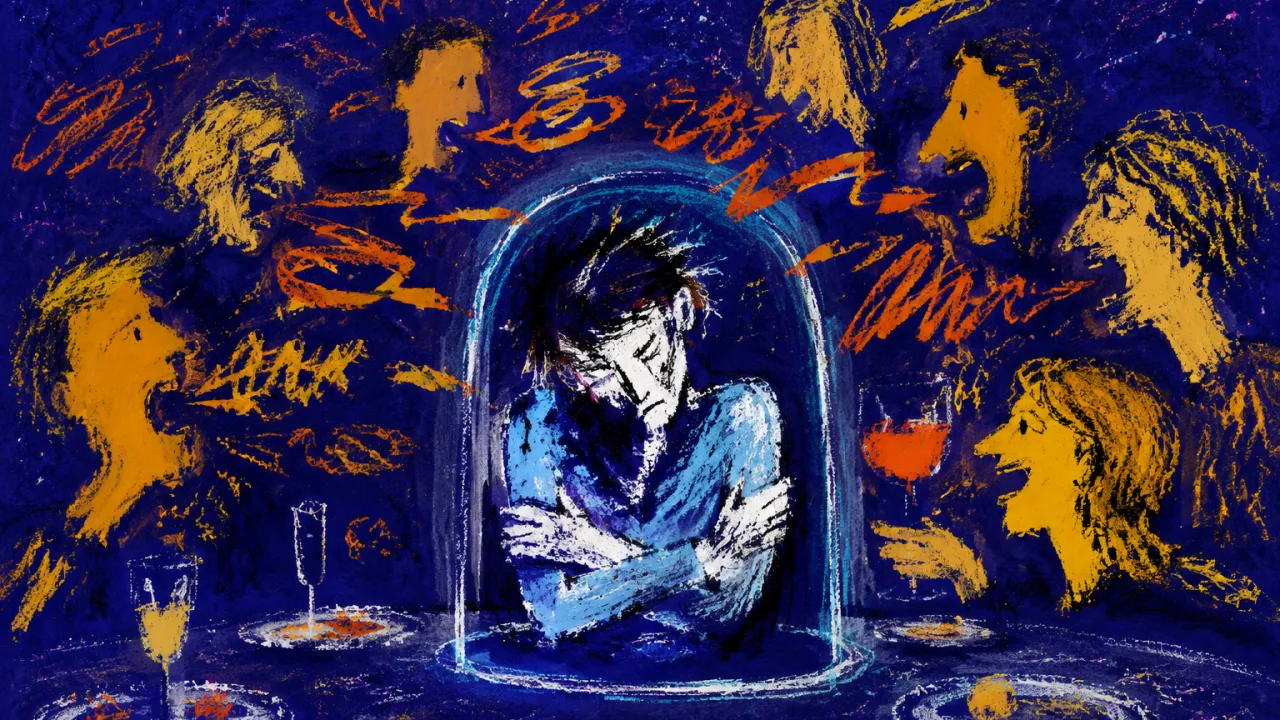
A solitary figure with crossed arms at a dinner table as overlapping speech bubbles encroach past a boundary line

What is this situation?

Family Banter Boundary: you sit down for a Sunday dinner, a holiday visit, or a group video call, and someone turns a personal detail into the evening's running joke. They comment on your dating life, your body, your work, your clothes, or a decision you have already said you do not want discussed; when you ask them to stop, another relative laughs and says they are only teasing. The conversation moves on, but the same line returns later, usually when other people are watching and the person making it has the room's attention. If you go quiet, they call you sensitive; if you answer back, the focus shifts to your tone; if you leave the room, your exit becomes another detail for the group to repeat. Family members who would not tolerate the same joke aimed at themselves still expect you to play along, and the people with the most influence set the rules for what counts as harmless. You start editing what you share before gatherings, watching for the first smirk, and keeping your shoulders tight while everyone else treats the boundary as entertainment. The cost is not one awkward comment but the daily effort of protecting private ground in a room that keeps stepping over its line, much like the Seven of Wands, with one figure standing on high ground while several wands rise toward them from below.

Why it's not you?

The problem is not that you lack a sense of humor; the problem is that the group has made your private limits part of the entertainment. When a clear request to stop becomes another punchline, that is a boundary-crossing pattern, and its responsibility stays with the people who keep restarting it.

Family Banter Boundary in Tarot Cards

Family Banter Boundary is the situation where a personal line is repeatedly turned into group entertainment, while your shoulders stay tight at the table. This is an environmental and structural dynamic: the people holding the room's attention decide what counts as harmless, and your request is folded back into the joke. The cards reflect the visible shape of that exchange without assigning fault or instructions. Here are the Tarot Cards for this kind of situation.

The Hierophant
Reversed
A robed hierophant sits between two acolytes, with a raised hand, formal symbols, and crossed keys anchoring the ritual. In reverse, the same ceremony shows how inherited rules can become enforcement without earning consent. Family banter often runs on a script: teasing proves closeness, laughing proves loyalty, and anyone who objects is accused of breaking the mood. The authority in the image maps onto relatives who decide what counts as harmless, especially when the group repeats their ruling. The reversed structure gives the family script a name without treating it as natural law. Your private limit is being measured against a tradition of access and group compliance, not against a fair exchange of humor.
Justice
Upright
A seated figure holds an upright sword and balanced scales beneath a square crown, placing conduct and consequences in the same frame. The scales create a direct counterweight to the claim that intent alone makes a family joke harmless. Family members can point to intention while ignoring repetition, audience, and your clear request; Justice keeps those facts on the record together. The sword separates a boundary violation from the later debate about your tone. The image supports an accountability structure for the gathering: the issue is not whether the group can label the joke harmless, but whether the exchange remains reciprocal after you say stop. Your experience becomes evidence about the interaction, not a verdict on your sense of humor.
Ten of Cups
Reversed
Ten cups arc above a couple, two children, and a bright home landscape; the image advertises togetherness as a complete picture. In reverse, the same visual harmony no longer guarantees a safe relational climate. At family gatherings, the smiling tableau can function as a performance standard: everyone must laugh to protect the image of a happy family, so your stop request becomes the disruption. The group can preserve the celebration's appearance by making your discomfort the one thing not allowed to count. The reversed scene names the gap between belonging as a public display and belonging with privacy. The person making the joke receives attention while you carry the cost of keeping the family picture intact.
Four of Pentacles
Upright
A seated figure clutches one pentacle to the chest, pins two beneath the feet, and keeps another on the head while a walled city sits behind. Every part of the pose turns possession into defense. Mapped onto family privacy, the pentacles become details about dating, work, body, or plans that you stop handing over because the room has not shown it can handle them. Relatives' demand for access is treated as normal family exchange, while your grip is recast as withholding. The card makes privacy a visible resource with a boundary around it. You can distinguish the practical act of limiting disclosure from the group's claim that participation requires total availability.
Two of Swords
Upright
A blindfolded figure crosses two swords over their chest with water behind and a moon above. The closed posture holds several exits in suspension. At the family table, going quiet, confronting the speaker, and leaving all carry a penalty because the group has preloaded each response with a new accusation. The choice is shaped by a social double bind: the issue is not a lack of options, but that the audience converts every option into proof against you. The card makes the no-win architecture visible while keeping the decision external and concrete. Family banter has become a decision environment in which continuing the interaction protects the gathering's script and exiting protects your privacy, with neither route receiving neutral treatment.
Five of Swords
Upright
One figure gathers swords while two others walk away beneath a hard grey sky. The scene centers social victory on who controls the aftermath, which fits a relative turning your objection into a second round of entertainment. The family defense of only teasing resembles the figure holding the weapons: the exchange is treated as successful because the room's attention was won, even though the people leaving carry the cost. When you answer back, the swords shift from the original remark to your tone, preserving a winner-loser frame. Family banter here is not mutual play; it is a repeated status move performed before witnesses. The card exposes why a joke can be called harmless by the person benefiting from the imbalance.
Eight of Swords
Upright
A blindfolded figure stands bound among eight swords, with water and open land visible beyond the enclosure. The image fits the shrinking set of permitted moves at the family table: silence is labeled sensitivity, pushback is judged through tone, and leaving creates new material. The swords are not only the remarks themselves but the social consequences arranged around every response. The room remains physically open while the family's rules make ordinary participation feel conditional. That structure explains why you pre-edit what you share and watch for the first smirk. The card locates the constraint in the interactional setup, where the group preserves its freedom to joke by narrowing yours.
Seven of Wands
Upright
A lone figure stands on high ground with one wand raised while six wands press upward from below. The uneven elevation mirrors a family room where several relatives can keep returning to one subject while you have to defend it one exchange at a time. The defensive posture is active rather than helpless: you have already named the limit, and the pressure comes from a group that treats access to your private life as collective property. Laughter gives the lower wands social cover, while the raised ground represents the small but real authority of a clear boundary. For family life, the scene makes the cost visible. You are not failing to join the celebration; you are spending the gathering protecting a line that other people keep testing.
Nine of Wands
Upright
A bandaged figure grips a wand in front of a row of eight wands, looking toward the next encounter. The improvised fence reads like a private perimeter built after repeated family comments, not after one awkward exchange. The guarded figure reflects accumulated boundary work: each joke may be small, but its return keeps the interaction alert and the disclosure threshold narrow. The remaining wand shows that a usable line still exists, even while the group expects you to keep performing ease. For the family system, this is the point where resilience becomes a resource other people assume is unlimited. You can see why editing what you share is a structural response to repetition, not evidence that you lack humor.

Family Banter Boundary in Tarot Card Reading Insights

Family Banter Boundary can also be carried into a reading when the same jokes, interruptions, and crossed lines keep repeating at family gatherings. Other people have brought this kind of exchange to the cards; below are Tarot Reading Insights from those readings.
Psychological contexts related to Family Banter Boundary