Three Seconds Before the Laugh: Choosing One Family Boundary Sentence

When Family Jokes Cross the Line and the Laugh Arrives First
I have learned to look twice when someone can calmly reset a client's expectations at a London agency but laughs the second a relative turns her personal life into banter. When Maya, a 27-year-old account coordinator, appeared in my consultation window from her shared Zone 2 flat, that mismatch was the first thing I noticed: she could be warm and direct at work, yet one familiar family joke turned her body into an auto-reply.
She took me back to 7:36 on Sunday evening. Her laptop had been balanced on the coffee table while the blue webcam grid filled the screen. The kettle clicked off behind her, traffic hissed across wet pavement outside, and an older relative turned her dating life into a punchline. Her throat tightened. Her stomach dropped. Before she had decided whether the joke was funny, a bright smile appeared and she added an even harsher joke about herself.
“Everyone laughed, so the call moved on,” she told me. “Then I muted myself. They thought I was joining in, but I was actually trying to get through the moment. I don't want a dramatic confrontation over one joke. I just want them to stop treating that topic like public material.”
What I saw was not a lack of confidence. It was apprehension behaving like a smoke alarm wired directly to the muscles around her mouth: the instant the room went quiet, the smile sounded before she could check whether there was a real emergency. Later came the gritty-eyed Notes app draft, edited from a boundary into an apology and finally deleted. The moment stayed easy for everyone else; Maya carried the embarrassment, resentment, and family boundary guilt home alone.
“I don't hear your laugh as proof that you agreed,” I said. “I hear a fast belonging strategy that is now hiding information you want your family to have. We are not here to predict whether everyone will like a boundary. We are here to slow the scene down, understand why your response feels automatic, and find the smallest place where the pen returns to your hand. Let's draw a map through the fog.”

Choosing a Map for the Approval Loop
I asked Maya to place both feet on the floor, take one ordinary breath, and hold the question in mind while I shuffled. I treat this preparation as a transition for attention, not a supernatural test; it helps us stop rehearsing the preferred answer long enough to examine the actual pattern.
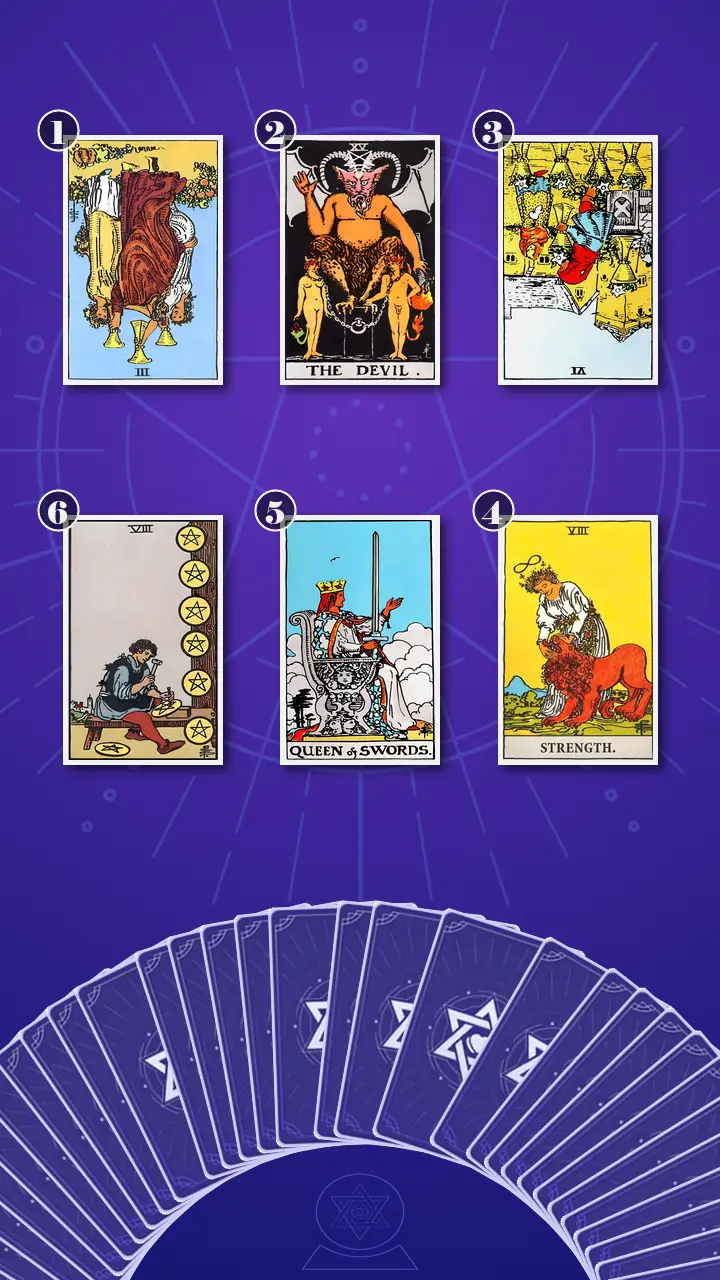
I chose the Transformation Path Grid · Context Edition, a six-card tarot spread for understanding family boundary patterns. I use this spread when a problem behaves like a feedback loop. A relationship spread might tempt me to speculate about what relatives secretly feel, while a purely predictive reading could pull Maya's attention toward outcomes she cannot control. This grid keeps the focus on observable behaviour, the belief maintaining it, the inherited role beneath it, and the responses available to her now.
I arranged the cards in a two-by-three switchback. The upper row would show the visible symptom, the central blockage, and the historical root. The lower row would begin with the smallest transformation trigger, continue into one practical communication choice, and end with the skill Maya could build through repetition. The structure mattered: it let me explain why she kept laughing without confusing explanation with destiny.
The Upper Row: What the Laugh Is Protecting
Position 1: The Toast That Misreports the Mood
The first card I turned over represented the diagnosis-level behaviour Maya could observe: laughing, becoming self-deprecating, and displaying group enjoyment after a family joke had crossed her boundary. It was the Three of Cups, reversed.
Upright, the three raised cups suggest reciprocal celebration. Reversed, that Water energy was not absent; it was misaligned. The social exchange still looked warm, but Maya's visible reaction and private experience were flowing in opposite directions. Participation had become proof of enjoyment, even when the participation was designed only to close an uncomfortable moment.
I linked the card to the Friday afternoon Maya had described in her agency kitchen. Burnt espresso hung in the air, the fridge hummed, and a private detail had become a meme in the family WhatsApp chat. Three laughing reactions were already stacked beneath it. She added a fourth, supplied a sharper punchline about herself, and locked her phone with her shoulders near her ears. Like Fleabag using the quickest joke to keep the vulnerable sentence off-screen, Maya looked funniest at the exact moment she felt most exposed.
“The inner line sounds something like this,” I said. “If I react quickly, nobody will notice that this hurt. If nobody notices, the moment can stay normal.”
I made an important distinction: automatic nervous laughter can be a social reflex, but it is not always considered agreement. I was not telling Maya to distrust every laugh or become cold at family gatherings. I was asking her to notice whether a laugh expressed enjoyment or merely ended the silence. Retaliating with a cutting joke about another relative would reproduce the same dynamic; the goal was accuracy, not counterattack.
“Your laugh hid the boundary; it did not erase it,” I said.
Maya gave one short, bitter laugh and looked away from the screen. “That's so accurate it feels a bit brutal.”
“Then let's use the accuracy to reduce shame, not add to it,” I replied. “The card is showing us what the room could see. It is not making a moral judgment about what your nervous system did.” Her fingers stopped worrying the rim of her mug, although her shoulders remained raised.
Position 2: The Loose Chain of Immediate Approval
The next card represented the psychological mechanism blocking a different response: the belief that compliance was required to preserve family belonging and prevent immediate tension. I turned over The Devil, upright.
I told Maya that The Devil did not prove that any relative was evil, nor did it diagnose her family. In context, it pictured a binding bargain: belonging in exchange for instant compliance. Its energy showed attachment in excess and choice in blockage. The collars around the two figures were visibly loose, yet the figures remained beneath the elevated presence. That image asks an exacting question: what feels compulsory because it has been repeated, rewarded, and left unexamined?
I slowed the Sunday call down to the two seconds after the joke. The webcam faces waited. Someone could have said, “Come on, it's only banter.” In a WhatsApp version, typing bubbles might have appeared. Maya knew a boundary sentence existed, but possible disapproval in the next few seconds felt more urgent than the resentment she would carry for the next few hours. Her working instruction became: “Just make it funny and we can all move on.”
The loop worked like an algorithm trained on immediate relief. Each quick laugh ended the awkward pause, so the system learned to recommend the same response next time. The family received visible approval rather than usable feedback, similar jokes continued, and their continuation seemed to confirm that Maya had no way out. The chain felt external, but part of its grip came from the speed at which the bargain renewed itself.
As an artist, I flashed to an editing room. A laugh track can tell an audience how to interpret a scene even when the character living through it is not amused. Maya had been pressing that button before checking the emotional footage. The sound preserved the genre of “easy family banter,” but it could not change what had happened in her throat or stomach.
“What does the laugh buy you immediately?” I asked.
“Nobody thinks I'm difficult,” she said.
“And what does it cost later?”
Her breath caught. Her eyes went still as if she were scrolling through several old exchanges at once, and then she pressed her palm to her sternum. “They think the topic is still available. And I get angry that they don't know, even though I haven't told them.”
“That is the bargain,” I said. “Brief tension is not a final verdict on belonging. It is simply the first price the old pattern has taught you never to risk.”
Position 3: The Family Role With No New Audition
The third card represented the underlying root: inherited family roles, old banter rules, and the association between being easygoing and remaining included. It was the Six of Cups, reversed.
The card's reversed Water pulled attention backward. In the Rider-Waite-Smith image, a larger figure offers a flower-filled cup to a smaller one inside an old courtyard. Reversed in this position, the familiar exchange had become uneven and outdated. Something that once signalled closeness could still assign Maya the younger, more compliant part before her adult judgment entered the scene.
I contrasted two situations she had given me. In a quiet meeting pod, Maya could tell a demanding client that a last-minute request required a revised deadline. Her hands stayed loose, her voice remained even, and she did not turn herself into the punchline. Ten minutes later, an older relative's teasing voice note made her stomach contract, and she sent a laughing emoji. Her communication skill had not disappeared. A familiar family cue had loaded an older profile first, like a cached login opening the teenage version of the relationship before her current settings could appear.
I used my Family Casting Analysis to name the role without mistaking it for her identity. Maya seemed to have been cast as The Easygoing One, with a side job as comic relief whenever the room risked discomfort. Family roles do not require a formal meeting or a malicious director. They can emerge through thousands of tiny cues: warmth when the line is delivered correctly, surprise when the character changes, and the familiar instruction to “take a joke.”
“The role says your value in the scene is keeping everyone comfortable,” I told her. “But a role you learned is not a contract you must keep renewing. Which cue puts you back in costume fastest?”
Maya's mouth opened, then closed. She exhaled through her nose and lowered her shoulders by a fraction. “It's the tone. That bright, teasing voice. The second I hear it, I feel about fifteen. At work I can be direct, but with them I start performing before I know I'm doing it.”
I let that sit without turning her whole family history into a case against her relatives. Understanding an inherited role can create choice without requiring anyone to reinterpret every old joke as intentional harm. The point was narrower and more useful: a response that once helped Maya stay connected was now preventing an adult boundary from becoming visible.
When Strength Holds the Laugh at the Door
Position 4: The Three-Second Choice Gap
The fourth card represented the smallest internal trigger capable of interrupting the loop: tolerating the urge to laugh long enough to regain deliberate choice. As I turned over Strength, upright, a bus exhaled at the stop beneath Maya's window. Then the room seemed to become unusually quiet.
I pointed to the woman's gentle hands around the lion's jaws. No chain. No weapon. No attempt to pretend the lion was not powerful. Strength brought balanced, Fire-like courage into Water that had been flowing backward. It did not ask Maya to crush her social instinct or force herself into a dramatic confrontation. It asked her to stay in contact with the impulse without letting it make the decision.
I asked her to return to 7:36: the joke landing, the webcam faces waiting, her throat narrowing, and the smile appearing. She added the harsher punchline, muted herself, and only then realised that nobody had heard the answer she actually wanted to give.
“Your laugh may be a learned bid for belonging, not your verdict on the joke,” I said. “Strength begins in the three seconds where you hold that reflex without shaming it and let your boundary have a voice.”
Here my Family Casting Analysis became an intervention rather than a label. In the old family production, The Easygoing One received her line and delivered it on cue. Strength did not require Maya to storm off the set or persuade the rest of the cast to rewrite themselves. It gave her three unclaimed seconds in which she could ask, “Do I want to play this response today?” The lion was not her family. The lion was the rush of heat, the tightening throat, and the almost irresistible urge to restore the room's comfort.
You do not have to feed the laugh reflex to stay connected; hold it as gently as Strength holds the lion, then choose the response that protects your boundary.
I watched Maya go completely still. Her inhale stopped high in her chest, and her fingers stayed suspended above her mug. Then her eyes moved away from the screen and lost focus; I could see her replaying Sunday, the agency kitchen, and the unsent train draft. Her pupils widened, her lower lip pressed flat, and the practised smile disappeared. A clipped laugh started, but it broke into a long exhale. Her shoulders dropped. She unclenched one hand, then the other, and rubbed her jaw as though discovering how hard she had been holding it.
“But doesn't that mean I've been getting it wrong for years?” she asked. The words came out sharper than anything she had said so far, while the last syllable trembled.
“No,” I said. “It means you learned a fast way to get through a difficult social beat. We don't shame an old strategy for being effective; we update it when its cost becomes clear. The cards are not assigning blame. They are showing you where choice can re-enter.” The relief in her face was not simple. Her eyes shone, but she also looked briefly unsteady, as though the room had become larger and she had just realised she would have to choose where to stand.
“Now, using this new perspective, can you recall a moment last week when this insight might have made you feel different?” I asked.
“The WhatsApp meme,” she said after a pause. “I thought my only options were react or make it obvious I was upset. I could have done nothing for three seconds. I could have put the phone down. Even that would have been different.”
I heard the hinge of the reading in that answer. This was not instant confidence or the removal of fear. It was a first movement from apprehensive approval-seeking and delayed resentment toward calm choice, clear self-expression, and steadier self-respect within family connection. Discomfort had stopped being a command and started becoming information.
The Sentence With a Full Stop
Position 5: A Sword in One Hand, an Open Hand in the Other
The fifth card represented the practical, ethical action Maya could control: one concise sentence naming the unwelcome joke or off-limits topic without apologising, retaliating, or diagnosing her family. I turned over the Queen of Swords, upright.
The Queen held her sword perfectly vertical while extending her other hand. I read that as balanced Air: precise language paired with continued openness. A boundary did not require Maya to prove that somebody was a bad person. It required her to distinguish intention from impact and give the relationship information it had not previously received.
I placed a sentence on the table between us: “I know it's meant as banter, but please do not joke about that topic.”
Then I stopped speaking. The silence was part of the card meaning. No “sorry.” No self-deprecating emoji. No five-minute closing argument designed to make disagreement impossible. The sword was the accurate sentence; the open hand was Maya's willingness to remain in communication without surrendering her judgment.
“One accurate sentence can do what ten apologetic explanations cannot,” I said. “It can make the boundary usable.”
Maya tested the words under her breath. The first time, she automatically added, “I know you don't mean anything by it.” She caught herself, pressed her lips together, and tried again: “I know it's meant as banter, but please do not joke about my dating life.” This time she stopped at the full stop. Her eyebrows lifted at the quiet that followed, part relief and part alarm.
“The alarm does not mean the sentence is wrong,” I told her. “It means the sentence is out of character for the role you have been playing.”
Position 6: One Rep, Not a Final Exam
The final card represented integration: repeated boundary practice and self-evaluation based on aligned behaviour rather than immediate family approval. It was the Eight of Pentacles, upright.
The card showed a craftsperson working on one pentacle while earlier pieces remained visible. Its Earth energy grounded the reading. Strength had created the pause; the Queen had supplied language; the Eight made both into a skill. Each family exchange could become one manageable repetition, not a referendum on Maya's courage or her family's entire future.
I suggested a three-column note: Trigger / What I chose / Next small rep. After one interaction, Maya might write: “Dating joke / paused and looked away / use the sentence next time.” After another: “Appearance voice note / sent no reaction / follow up later if I choose.” Some entries might say only, “Noticed it.” Awareness still counted because it identified the next practice point.
“This interaction is one attempt, not the final grade on your courage or your family,” I said. “Practise the sentence, not the perfect family outcome.”
Maya nodded slowly. I watched her save the three-column title in Notes without drafting a long explanation beneath it. For the first time in the consultation, the phone in her hand looked more like a tool than a courtroom.
Rewriting the Scene Without Rewriting the Whole Family
I drew the cards back into one coherent sequence. The Three of Cups reversed showed the visible laugh track: performed amusement keeping the group scene smooth while concealing Maya's actual response. The Devil revealed the approval bargain beneath it: a few seconds of possible disapproval had been treated as more dangerous than hours of later resentment. The Six of Cups reversed traced that urgency to The Easygoing One, an inherited role activated by familiar family tones. Strength created a pause, the Queen of Swords turned the pause into accurate language, and the Eight of Pentacles made that language repeatable.
The cognitive blind spot was painfully simple: Maya had been waiting for her family to notice a boundary that every visible cue had edited out. Her silence after the call, shorter replies, muted microphone, and unsent Notes draft all carried meaning for her, but none gave relatives a clear request. That did not make the jokes acceptable or make their impact her fault. It only located the part of the feedback loop she could change without taking responsibility for anyone else's reaction.
The direction of change was equally specific. Maya did not need to become fearless, stop being funny, or deliver a complete family reckoning. She needed to move from reflexive laughter to a three-second pause, then choose one prepared boundary sentence when a joke felt intrusive. Tarot had helped us separate the scene into observable components; Maya would decide what to do with them. The cards could illuminate the edit point, but they could not write or perform the next line for her.
The Ten-Minute Rewrite
I gave Maya two deliberately small practices. Neither required her to disclose personal history, remain in an unsafe conversation, or confront the whole family at once.
- Create the Three-Second Choice Gap. Five minutes before the next family call, set a phone reminder reading “Pause. Feel. Decide.” Then spend no more than ten minutes imagining one low-stakes teasing comment. Keep both feet on the floor, allow the urge to smile to appear, take one full breath, and count three seconds before choosing any response. Speaking is optional for the first repetition. If three seconds feels painfully conspicuous, practise one exhale or a single beat. Keep the camera off, step away, or end the exercise whenever more space is needed; the pause creates an option, not an obligation.
- Use the Script-Flipping Rehearsal. In Notes, name one topic that is not available for family banter and write one line: “I'm not joining in on that one,” or “I know it's meant as banter, but please do not joke about that topic.” Mark the ending with a full stop. Rehearse for five minutes with a trusted flatmate: the flatmate delivers a low-stakes joke, Maya pauses, and she gives the deliberately out-of-character response once. A later text such as “About earlier, please leave that topic out of the jokes” is an equally valid version. The rehearsal is not preparation for a flawless confrontation. It lets the body encounter the new scene before it happens. Leave out “sorry,” “maybe,” and the laughing emoji; either person can stop the role-play immediately.
I call the second practice a script flip because established dynamics depend partly on predictable lines. When Maya changes her line, she gives the relationship new information. That does not guarantee a respectful response or permanently fix the power dynamic. It does prove that the old role is no longer the only one she can perform.
“Your measure is not whether everyone approves,” I reminded her. “Your measure is whether you noticed, paused, and made a choice that matched your boundary. Their reaction belongs to them. The pen for your response stays with you.”
A Week Later: The Quiet Proof
A week later, Maya messaged me: she had paused, said, “I'm not joining in on that one,” heard a brief “Okay,” and let the subject change. She slept through the night, then woke thinking, “What if they think I'm difficult?” This time, she smiled and got up.
I did not read that “Okay” as a grand resolution, and neither did she. One relative might respect the request immediately; another might test it; Maya might laugh automatically again next month. The quiet proof was smaller and more durable: for one social beat, she felt the reflex, tolerated the silence, and did not abandon herself to rescue the room.
That was her Journey to Clarity. The tarot did not reveal a fixed future or grant her a boundary she had lacked. It helped her see that her nervous laugh was a learned belonging strategy rather than a verdict on the joke, and that one conscious pause could reopen choice. Maya kept the pen.
For me, this is how a six-card Transformation Path Grid tarot spread earns its place: it turns a vague feeling of being stuck into a sequence that can be observed, questioned, and practised. It offers actionable advice without pretending to control another person's behaviour.
If your throat tightens and the smile arrives before your answer, the hardest part may not be the joke alone. It may be the fear that one honest no could cost you your place in the room. Noticing that fear means the old script is no longer invisible.
If belonging did not have to be proved in the next three seconds, what one honest line would you let replace the laugh track the next time your boundary needs a voice?