More Work, Same Title?

Recognize how uncredited responsibility expands, see its matching tarot cards, and browse reading insights shaped by the same workplace pattern.

Quiet Promotion
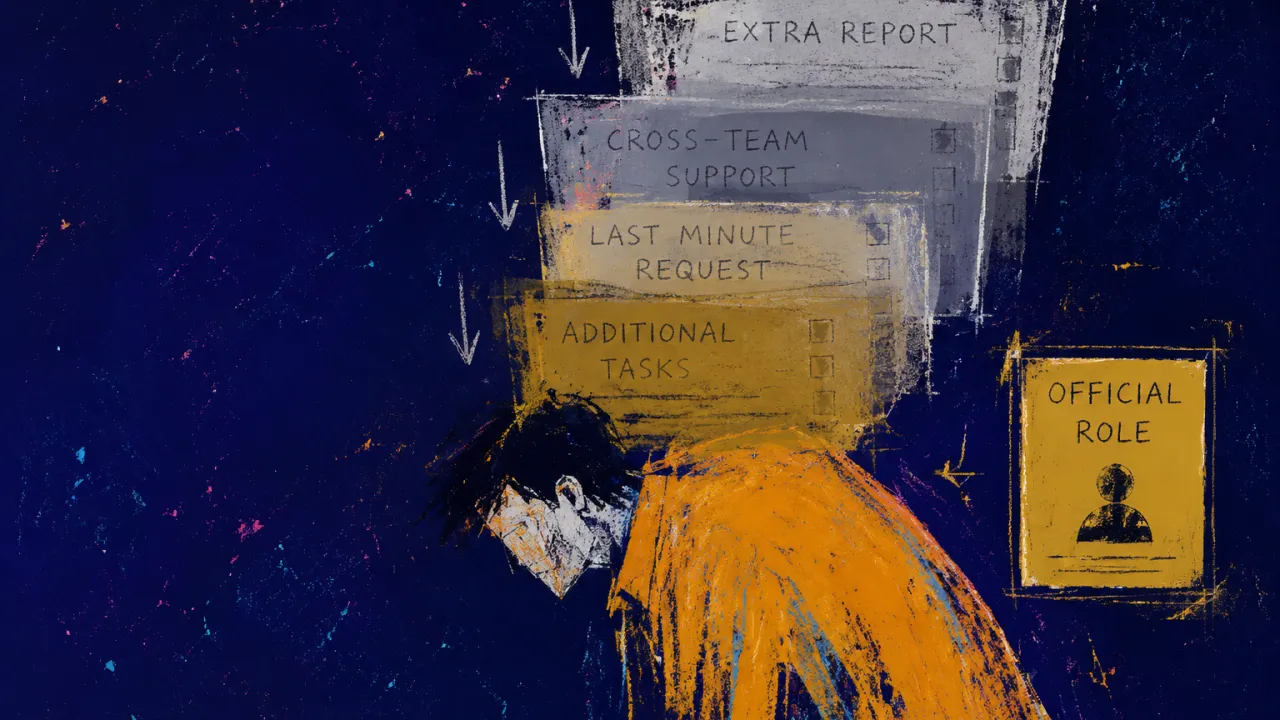
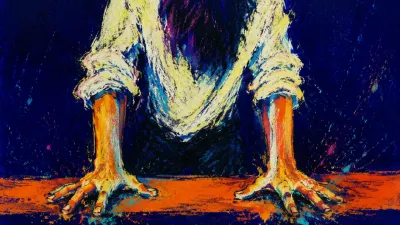
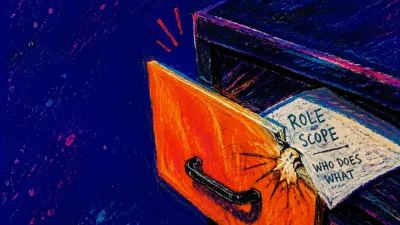
A solitary figure under stacked task panels, shoulders lowered as cool grey layers settle above an unchanged title badge

What is this situation?

Quiet Promotion — your job expands before anyone formally admits it has changed. It often starts when your manager asks you to cover a few senior tasks, lead a meeting, train a new hire, or keep a project moving while someone is away. The temporary requests become routine: colleagues bring decisions to you, clients expect answers, and urgent problems land in your inbox because everyone knows you will handle them. You are held responsible for outcomes but may still need approval from people doing less of the work, and the title on your email signature gives you none of the authority the role now requires. When you raise the mismatch, the conversation shifts to budgets, timing, proving readiness, or waiting for the next review cycle. Meanwhile, your calendar fills, your work stretches into the evening, and your shoulders tighten each time another message arrives marked urgent. The organisation increasingly depends on your higher-level output while your pay, title, and recognition remain fixed, leaving you to carry a role that officially does not exist, much like the figure on the Ten of Wands, moving toward town with a bundle so large that the road ahead is barely visible.

Why it's not you?

This is not a failure to advocate clearly enough; the workplace is transferring higher-level responsibility without matching it with title, pay, or authority. The mismatch is built into the arrangement: the organisation receives senior-level output while keeping your role formally unchanged.

Quiet Promotion in Tarot Cards

In a Quiet Promotion, the role keeps expanding while title, pay, and authority stay fixed, and your shoulders tighten as each new request lands. This environmental and structural dynamic places higher-level accountability on you without formally changing the role. The Tarot Cards below reflect the visible shape of that mismatch.

The Emperor
Reversed
The Emperor sits on a stone throne framed by rigid architecture, armored body, and ram-headed arms that make authority look formal and immovable. Reversed, the same symbols show a power structure that has lost alignment: the institution keeps the throne and its permissions while routing higher-level accountability through you. You can lead the meeting, train the replacement, and keep the project moving, yet the final decision still belongs to someone whose title carries the authority you are exercising informally. The mismatch is not a gap in effort. It is a hierarchy distributing responsibility downward without moving the seat of power.
The Hierophant
Reversed
The Hierophant sits between two pillars while two figures kneel before him, making formal teaching, hierarchy, and institutional recognition part of the scene. Reversed, the same ceremony shows its limits: the organization retains the language and ritual of advancement while the actual higher-level work is being performed outside the official category. You may train the new hire, guide decisions, and carry the practical authority of the role, yet the institution can still ask you to wait for the correct title, budget line, or review ritual. The image identifies the mismatch between lived workplace function and formal organizational identity.
Justice
Reversed
The red-robed figure holds a sword upright and a scale between two pillars, presenting judgment as a visible institutional procedure. Reversed, the same apparatus remains in place while balance fails: the process can measure performance, yet the result does not match the responsibility you have actually carried. You are asked to prove readiness through senior output, but the standard for recognition can move to timing, budget, or the next review cycle once the output is delivered. The image identifies the structural problem as an evaluation system that records your accountability selectively, allowing the workplace to benefit from the work without granting the status it implies.
The Hanged Man
Upright
The figure hangs by one foot from a living tree, with the other leg bent and a calm halo around his head. The fixed position directly mirrors a role held in suspension: you remain available and productive, but the normal movement from expanded responsibility to formal advancement has been paused. The organization can continue drawing on your sacrifice because the work still moves through you, while the title and decision remain somewhere in the future. The image does not erase your evidence of readiness; it shows how a suspended process can make your willingness to wait part of the operating model.
Two of Pentacles
Upright
The figure keeps two pentacles circling through an infinity loop while ships rise and fall on the rough water behind him. The moving coins resemble the original job and the unofficial senior role, while the unstable sea shows why every new request forces another adjustment to your calendar. You may be competent enough to keep both in motion, but the image does not show a third hand, a larger vessel, or a stable shore. The workplace therefore makes adaptability carry the cost of role expansion: you preserve the workflow by repeatedly reshuffling your own time, meals, rest, and attention.
Six of Pentacles
Reversed
The well-dressed figure holds a scale in one hand and distributes coins toward two kneeling figures with the other. Reversed, the scene makes the exchange look conditional and uneven: access to money and recognition remains in the giver's hand even as the recipients carry the practical need. Your workplace is making the same imbalance operational. Higher-level output flows from your desk to the team, clients, and project, while the organization retains control of the title, salary, and approval rights. The image names the cost as a distribution problem built into the arrangement, not as a failure to be grateful for added responsibility.
Seven of Pentacles
Upright
The figure leans on a hoe beside seven pentacles that have already grown from the soil, surveying the result of sustained labor. The field represents your accumulated senior-level output, while the pause shows that producing value and receiving a changed career position are separate institutional events. You can point to the work, the people trained, and the projects kept alive, but the formal role may remain planted in its original place. The image identifies the career bottleneck as an unconverted return: the workplace benefits from what has grown while the title that would acknowledge the growth is kept for a later harvest.
Eight of Pentacles
Upright
The craftsperson sits at a bench, carefully working on one pentacle while completed pentacles line the wall above. The repeated objects show a record of reliable output, and the single focused worker shows how that record can turn one person's skill into the workshop's default capacity for higher-level tasks. You keep delivering, troubleshooting, and teaching because the evidence of competence is already visible. Yet each finished piece can become a reason to assign the next responsibility without changing your position. The card makes the competence tax concrete: your consistency is functioning as an unofficial promotion, while the institution continues to call it ordinary performance.
Six of Wands
Reversed
The rider raises a wand topped with a laurel while a crowd follows behind, creating the physical image of achievement being publicly recognized. Reversed, the procession loses its clean connection between victory and status: the work succeeds, but the person carrying it does not receive the title, pay, or acknowledgment that should identify the change. You may be the person colleagues approach for decisions and clients trust for answers, yet the formal story of the workplace can still leave you as the same employee on paper. The reversed image exposes recognition as an institutional act, not an automatic consequence of performing well.
Ten of Wands
Upright
The bent figure's face disappears behind ten heavy wands, and every step toward town requires carrying the full bundle alone. The image directly presents responsibility expanding into a single worker's arms: senior tasks, project continuity, training, and urgent decisions have been added without creating a corresponding role. You are producing the evidence of advancement while remaining formally positioned below the work you perform. The road is still passable, but your view and leverage are restricted by the load. That is the career structure of a quiet promotion: the organization receives senior-level outcomes while title, pay, and decision rights remain fixed.

Quiet Promotion in Tarot Card Reading Insights

Others have brought the same Quiet Promotion pattern into readings: more responsibility, unchanged recognition, and accountability without matching authority. The articles below collect Tarot Reading Insights from those sessions.
Psychological Contexts Related to Quiet Promotion