Unpack the breakup crossroads, see matching tarot cards, and browse reading insights from people facing similar post-split choices.
Post-breakup No-win Decision
What is this situation?
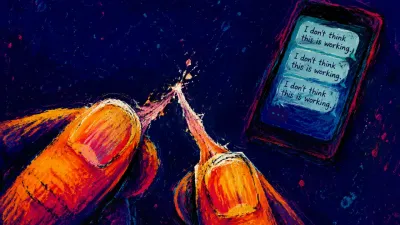
Post-Breakup No-Win Decision — the breakup is over on paper, but the decision in front of you refuses to stay clean. It starts in the ordinary hours after the split: you are standing in your room with their hoodie on a chair, your phone face-up, a half-written message sitting in the text box while your thumb hovers and your chest tightens. One option says send it and risk reopening the conversation; another says stay silent and let the ending harden without being fully understood. Their messages arrive just often enough to keep the door from closing, but not clearly enough to tell you where you stand. Mutual friends ask whether they should invite both of you, photos sit in shared albums, a box of belongings waits by the door, and every practical detail seems to carry a second meaning. If you agree to meet, you may walk back into the old rhythm; if you refuse, you may look like you are making it bigger than it is. If you mute them, it feels final; if you keep watching, the breakup keeps happening in small updates across the day. The decision is not one clean fork in the road but a hallway of doors that all scrape something on the way through, much like the Two of Swords: a still figure blindfolded between crossed blades, with water behind them and no easy path visible ahead.
Why it's not you?
The problem is not that you cannot make a simple choice; the setup is built so every option carries a social, practical, or relational cost. Mixed contact, shared belongings, mutual friends, and unfinished logistics create a decision field with no clean exit. That pressure belongs to the situation, not to a flaw in you.
Post-breakup No-win Decision in Tarot Cards
In a Post-Breakup No-Win Decision, the chest-tightening pause over a draft message is part of the scene, not a private failure. The pressure comes from an environmental and structural dynamic: shared people, unfinished logistics, and mixed contact keep pulling choices in opposite directions. The Tarot Cards below reflect the shape of that crossed-pressure moment without telling you which option to pick.
Two unclothed figures remain visible to one another while a mountain divides their ground and an angel hovers above the scene. Reversed, the image holds exposure without dependable alignment: you can still exchange intimate messages or meet face-to-face, but the relationship no longer provides a shared framework for what those gestures mean. You may experience every contact decision as a referendum on the breakup itself. The blocked alignment explains why warmth can reopen expectation, distance can feel punitive, and practical communication can acquire romantic subtext even when you intend none.
Black and white sphinxes sit before a stone chariot while the driver holds no visible reins. Reversed, the opposing pulls cannot be translated into forward motion: one part of the post-breakup system keeps contact available, while another requires enough distance for a new direction to become real. You may know that you need movement without having a route that avoids collateral cost. The stalled vehicle reflects a direction problem created by competing relational signals, practical loose ends, and social overlap, not a simple absence of willpower.
A balanced scale and an upright sword frame a seated figure facing the consequences directly. The scale does not promise an option without pain; it makes the competing costs visible, while the sword separates what is materially required from what is being communicated through the act. You can be deciding when to return belongings, whether to answer, or how to handle a shared invitation while knowing that every move will be read relationally. Justice offers a usable decision structure in that field: the path opens through explicit criteria and accountable trade-offs, not through waiting for a choice that feels innocent.
A figure hangs by one foot from a living wooden frame, motionless but illuminated by a clear halo. The suspension makes waiting materially visible: you are neither returning to the relationship nor fully entering the next phase while messages, belongings, and possible meetings remain unresolved. You may be treating each delay as evidence that you have failed to decide, yet the upright image also shows pause as an available resource. A deliberate interval can expose which pressures are genuinely time-sensitive and which are produced by the discomfort of letting the breakup remain unfinished for a while.
A skeletal rider advances past a fallen authority figure while a narrow sun rises between two distant towers. Reversed, the procession loses its stable horizon: the breakup has been declared, but recurring contact and incomplete logistics prevent that declaration from reorganizing everyday life. You can therefore experience the ending as a series of repeated micro-endings whenever a message arrives, a photo surfaces, or a shared object changes hands. The inverted scene locates the timing drag in an interrupted transition process, where the old role has ended formally but has not yet lost all of its access points.
Moonlight falls unevenly across a path bordered by towers, while instinctive figures respond to what they can sense but cannot fully verify. That partial visibility mirrors the mental workload created when a breakup is followed by intermittent messages, shared-album updates, and online traces that invite interpretation without resolving your status. You may find your attention repeatedly returning to tiny details because the external information system is genuinely incomplete. The path through the card remains open, but it begins by separating observable events from the meanings the post-breakup ambiguity keeps asking you to supply.
A central figure is enclosed by a laurel wreath while four witnesses hold the corners of the scene. Reversed, the wreath no longer functions as a settled boundary: the relationship is complete on paper, yet shared objects, social witnesses, and digital archives keep its perimeter operationally open. You may be trying to choose a new direction while still being assigned small tasks inside the old chapter. The inverted enclosure explains why moving forward can feel premature and remaining available can feel regressive; the transition lacks a socially and practically completed edge.
Two figures extend cups toward each other beneath a caduceus and winged lion. Reversed, the reciprocal exchange is destabilized without erasing the visible channel between them: you may still talk, meet, or return possessions, but neither person can safely assume that the gesture carries the old mutual agreement. You can feel caught between responding warmly and protecting the reality of the breakup. The inverted exchange shows why contact is costly in both directions when access survives reciprocity: engagement can imply renewed availability, while refusal can turn an ordinary interaction into a second rupture.
Three companions stand shoulder to shoulder with raised cups, forming a compact support circle. Reversed, the circle cannot remain uncomplicated when two friends have ended a relationship: confidences, invitations, and updates may travel through the third position, making even well-intended support structurally uneven. You may hesitate to ask close friends for accommodation because doing so could sound like a demand for allegiance. The inverted group image reveals a friendship system under coordination pressure, where neutrality is not always practically possible even when nobody wants a conflict.
A cloaked figure walks away from eight carefully arranged cups, leaving a visible gap in the display beneath an eclipsed moon. The path is open, but departure does not repair the missing piece or prove that the cups held no value; you can choose distance while still carrying unanswered questions and relational cost. You may be deciding whether to mute, decline a meeting, or stop trying to extract a clean explanation from mixed contact. The upright movement frames leaving as an available route rather than a painless one, separating the ability to exit from the fantasy that a valid exit must feel fully resolved.
A figure loops an infinity-shaped cord around two pentacles while ships rise and fall on waves behind him. The active juggling keeps several unstable tasks in motion at once: answering logistical texts, arranging a belongings exchange, managing shared albums, and deciding which social plans remain workable. You may appear functional while the breakup repeatedly enters ordinary hours through small administrative decisions. The upright figure has enough coordination to keep the system moving, but the loop also exposes why maintenance is not resolution; handling each incoming task without an overall boundary can make the ending recur throughout the day.
Two blades cross over the seated figure's chest while a blindfold separates her from the emotionally charged water behind her. The posture contains the immediate exchange, but it cannot establish whether renewed contact would produce reconciliation, explanation, or another round of ambiguous intimacy. You may hold silence because any message would carry more relational meaning than you can control. The upright card preserves a temporary boundary and makes the real constraint visible: love has ended as an agreement, yet communication still has the power to reactivate its expectations.
One figure gathers swords while two others turn away toward the water under a jagged sky. The apparent winner remains inside a damaged relational field, making the cost of being technically right as visible as the loss itself; a final message can secure the last word while destroying the possibility of a workable ending. You may face choices where defending your account, refusing contact, or demanding clarity each risks escalating the same conflict you want to finish. The upright scene exposes the hidden win condition behind the exchange, giving you a path to recognize when the decision has been framed as victory versus surrender rather than as boundary versus consequence.
A boat carries two passengers and six upright swords across divided water toward a distant shore. The vessel is moving, but the swords travel with it, showing that transition does not require every painful fact or unfinished question to be removed before you can enter a different phase. You may need a direction that accommodates shared belongings, mutual friends, or one final practical exchange without treating those loose ends as proof that the relationship is still active. The upright crossing offers a passable route: forward movement can coexist with managed residue, even when no departure feels emotionally clean.
A bound and blindfolded figure stands inside a loose enclosure of swords, with wet ground below and a distant structure behind her. The enclosure is not a single locked wall; it resembles the accumulated restrictions created by mixed messages, belongings, mutual friends, and the knowledge that any movement will be noticed and interpreted. You may feel trapped because every available action changes more than one part of the post-breakup system. The visible gaps between the swords do not erase those costs, but they make the constraint mappable: a path can be built through one defined boundary at a time instead of requiring one decision to solve contact, closure, logistics, and social perception simultaneously.
No cards available for this filter.
Post-breakup No-win Decision in Tarot Card Reading Insights
When a Post-Breakup No-Win Decision keeps turning silence, contact, and closure into competing costs, other people bring that same post-split pressure into readings. The entries below move from the cards into how these decisions appeared during readings. Tarot Reading Insights for this situation.