Named Without Being Named

A grounded look at indirect online conflict, related tarot cards, and tarot reading insights from similar social fallout.

Vagueposting Fallout
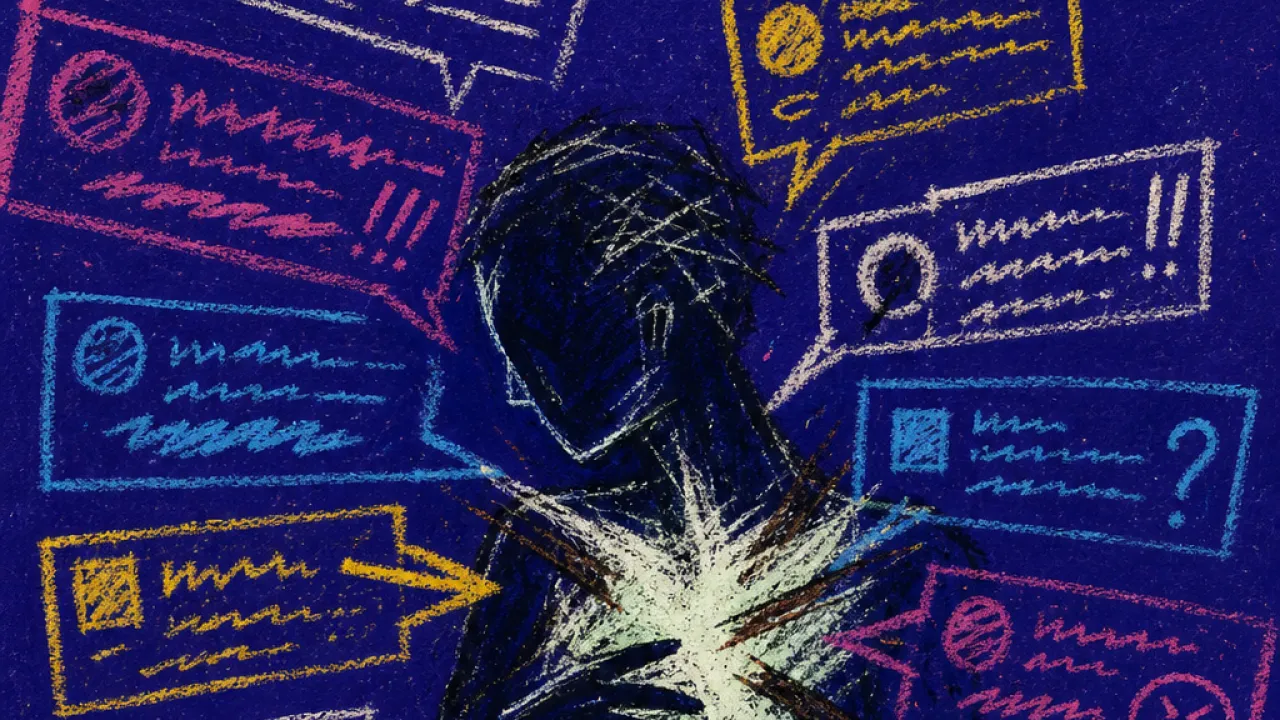
A solitary figure surrounded by floating screens and pointed threads pressing inward, pale marks tightening across the chest

What is this situation?

Vagueposting Fallout — you open your phone and see a post that does not use your name, but every detail points close enough that your stomach drops before you finish reading it. Maybe it is an Instagram Note, a TikTok repost, a caption about “some people,” or a thread that sounds casual until the replies start filling in the blanks; by the time you realise it might be about you, other people have already seen it, guessed, reacted, screenshotted, or messaged you with “is this about what happened?” The hardest part is that nothing was said to you directly, so there is no clean conversation to enter and no clear sentence to answer; instead, you are pushed into a public fog where defending yourself can make you look guilty, staying quiet can look like agreement, and asking for clarity can turn into more content for everyone else to watch. Friends go quiet, mutuals hover, group chats move faster than you can track, and the person who posted gets to keep the wording loose while you are left carrying the weight of its impact. Your day becomes a loop of checking who viewed, who liked, who unfollowed, who is suddenly distant, and whether your own response will calm things down or pour more fuel on it. What started as someone else’s indirect post becomes a social clean-up job you never agreed to take on, much like the Five of Swords, where one figure stands with the blades while others are left walking away under a heavy sky.

Why it's not you?

This is not happening because you are too sensitive or because you failed to read the room. The problem is the indirect setup itself: public hints, loose wording, screenshots, and audience reactions create pressure without giving you a direct place to respond. When conflict is made visible but kept unclear, the fallout becomes something the environment produces around you.

Vagueposting Fallout in Tarot Cards

Vagueposting Fallout puts you in the middle of a public-facing conflict that was never brought to you directly. The tightness in your chest when the notifications start stacking is not separate from the environment; it belongs to an environmental, structural, and dynamic setup where indirect posts make other people into witnesses before you even know what has happened. The cards below do not decide who is right or wrong; they reflect the shape of being pulled into a mess made through implication. These are the Tarot Cards that often mirror this kind of fallout.

Justice
Reversed
Justice sits between pillars with scales in one hand and a straight sword in the other, but reversal disrupts the image's promise of balanced evidence and a clearly stated decision. That disruption mirrors a public hint that invites judgment while denying you the basic procedural resource of knowing exactly what has been alleged. The scales and sword remain visible, making the missing standards easier to identify. The card helps you audit the process itself: who set the frame, what evidence was actually shared, who had access to context, and why audience reaction began before any direct exchange took place.
The Hanged Man
Upright
The suspended figure hangs by one ankle while his free leg forms a deliberate angle and a halo surrounds his composed face. The scene mirrors the forced pause between seeing a vaguepost and deciding whether a rapid response will clarify the conflict or simply feed the platform another piece of content. Upright, suspension creates a usable vantage point rather than an empty delay. The image gives you room to separate platform-generated urgency from the actual timing of the interpersonal problem, so the pace of likes, screenshots, and messages does not automatically become the pace of your response.
The Devil
Upright
Two figures stand chained beneath a dominant pedestal, with the loops around their necks visible enough to show the mechanism holding the scene together. The arrangement mirrors the internal checking cycle created by vagueposting: you refresh reactions, track unfollows, and inspect mutuals because each signal seems capable of resolving the threat. The visible looseness of the chains turns the loop into something observable rather than permanent. The card helps you name how ambiguity, platform metrics, and anticipatory checking reinforce one another, reducing the authority of each new signal to define the whole situation.
The Moon
Upright
A moon hangs above a winding path while a dog, a wolf, and a creature emerging from the water respond to the same uncertain light. The layered scene mirrors the inner afterlife of vagueposting, where one ambiguous signal activates instinctive alarm, social interpretation, and repeated attempts to decode what was never directly stated. The path remains visible without becoming fully illuminated. The card helps you hold uncertainty as unresolved information rather than as proof against you, making room to distinguish what the post actually contains from what repeated exposure and audience reactions have trained you to anticipate.
Judgement
Reversed
A trumpet sounds above people rising from open coffins, turning one broadcast into a simultaneous collective response. Reversed, the call loses a clear and accountable direction, matching a vaguepost that mobilises mutuals, replies, and group chats without naming who is being addressed or what answer is being requested. The scale of the audience explains why the event feels larger than one person's caption. The card helps you separate collective activation from collective knowledge, showing how many people can react to the same signal while still lacking the context required for a grounded judgment.
Three of Cups
Reversed
Three figures lift their cups in a closed circle, their bodies forming a compact unit above a shared harvest. Reversed, the circle's support becomes unavailable, mirroring close friends who whisper in side chats, exchange screenshots, or preserve group comfort by keeping you outside the conversation about you. The shared cups clarify that the issue is not simply how many friends remain. The card helps you inspect what the friendship network is circulating, who has access to direct context, and whether closeness is functioning as support or merely as privileged access to the fallout.
Ace of Swords
Reversed
A hand emerges from a cloud gripping a crowned sword, with the blade normally joining raw information to a clear, articulated point. Reversed, the instrument of clarity is present but cannot hold its intended direction, mirroring a vaguepost built from recognisable fragments that never become an accountable claim. The blocked crown shows that access to clean interpretation has been disrupted by the communication structure, not by a lack of intelligence on your part. You can examine how quickly hints, engagement metrics, and social distance are being assembled into conclusions before the underlying facts have been named.
Two of Swords
Upright
A blindfolded figure crosses two swords over her chest while rocks break the water behind her. The posture captures a choice made without direct access to the facts: you can answer and appear defensive, stay quiet and be read as conceding, or ask for clarity and risk generating another screenshot. The stable seat and balanced blades show that the pause contains information rather than emptiness. The card separates the actual decision from the false urgency produced by the audience, allowing you to see that the bottleneck is not indecisiveness but an indirect setup in which no response has been granted a neutral meaning.
Five of Swords
Upright
One figure holds the gathered swords while two others turn away toward the shoreline beneath a tense sky. Within friendship, the scene captures how an indirect public win can leave the wider group fragmented: one person controls the framing, while close friends retreat, take sides, or avoid you rather than risk becoming involved. The distance between the figures makes the relational cost visible instead of treating the post as a self-contained piece of content. The card helps you examine which friendships were damaged by the original disagreement, which were damaged by audience participation, and which were already unable to support direct conflict.
Seven of Swords
Upright
A figure carries five swords away from a camp while two remain planted behind him, and he looks back toward the people he is leaving. The selective removal of the blades mirrors a vaguepost that takes chosen details into public circulation while leaving out names, context, and the direct conversation that could make the claim accountable. The remaining swords expose the incompleteness of the public version rather than erasing its impact. The card helps you recognise that the post's ambiguity may serve a social function, giving the poster audience reach and deniability at the same time, without requiring you to treat that partial account as the whole record.
Eight of Swords
Upright
A blindfolded and bound figure stands among eight swords, yet the fence is uneven and does not fully close the surrounding ground. The scene reflects the mental replay that follows a vaguepost, where you test every possible reply against imagined screenshots, hostile readings, and changing reactions until the audience seems to occupy every route. The gaps in the enclosure make the structure available for inspection. The card helps you separate real constraints from the expanded internal task of preventing every possible misreading, showing how the latter can keep the post active long after no new information has appeared.
Nine of Swords
Upright
A figure sits upright in bed with their face covered while nine swords line the dark wall above them. The image captures the point at which a public post has become private overnight labour: you reopen the app, imagine who has seen it, and anticipate messages even when the external situation has supplied no new information. The patterned quilt and defined row of swords give form to what otherwise feels limitless. The card helps you identify the specific recurring thoughts produced by the event, separating the observable post and reactions from the scenarios your mind is generating to prepare for further exposure.
Page of Swords
Reversed
The Page holds a sword high while turning his attention sideways, surrounded by visibly restless weather. Reversed, that watchfulness becomes an unstable friendship pattern in which someone tracks your posts, shares indirect screenshots, or asks mutuals for information while avoiding a direct exchange with you. The figure's alertness is real, but alertness is not the same resource as trust. The card helps you evaluate how information moves through the friendship, showing where ordinary access has become monitoring and where curiosity has replaced the mutual risk of speaking plainly.
Five of Wands
Upright
Five figures swing crossed staffs in a crowded field, each moving from a different position without a shared line of coordination. The scene resembles a vaguepost spreading through comments, reposts, and group chats, where multiple people add interpretations until you are no longer dealing with one person's wording but with an entire network's competing versions. No single staff controls the field, which makes the escalation structural rather than purely personal. The card helps you see how the platform turns ambiguity into participation, allowing the volume of reactions to grow even while the underlying facts remain unchanged.
Seven of Wands
Upright
A lone figure braces on uneven ground against six staffs rising from below, with no full opponent visible in the frame. The composition mirrors the experience of answering an unnamed claim: you become publicly identifiable through your defence while the people interpreting, forwarding, or challenging you remain dispersed across comments and chats. The elevated position provides perspective as well as exposure. The card helps you map which challenges are concrete and which are projections from an audience you cannot fully see, preserving your ability to define the actual issue without accepting every incoming interpretation as an equal demand.
Eight of Wands
Upright
Eight staffs cut across an open sky above a river and distant buildings, with no visible person controlling their flight. The scene mirrors how an indirect post moves through likes, reposts, screenshots, and group chats before you have a direct conversation to enter, producing a sharp gap between circulation speed and response time. The clear trajectory makes the network dynamic visible without treating speed as truth. The card helps you recognise that being slower than the feed is not the same as losing the facts, and that the platform's acceleration is itself part of the pressure shaping your timing decision.
Ten of Wands
Upright
Ten staffs crowd the figure's field of vision as he carries the entire bundle toward a town, turning movement through ordinary life into overloaded transport. The image mirrors how someone else's indirect post hands you a stack of secondary tasks: checking who has seen it, answering private messages, monitoring unfollows, and calculating whether each response will add fuel. The town remains reachable, so the card does not reduce you to the burden. It makes the workload countable and separates the original post from the clean-up labour now consuming your day, giving you a clearer view of which demands are genuinely yours and which were socially transferred to you.

Vagueposting Fallout in Tarot Card Reading Insights

When Vagueposting Fallout turns one indirect post into screenshots, DMs, and group-chat speculation, people often bring that same public pressure into readings. The shift from cards to readings shows how others sit with the aftermath of being named without being named. Tarot Reading Insights from sessions involving this kind of online fallout.

Psychological Contexts Related to Vagueposting Fallout