Why You Reread a Friend's Vaguepost, Then Separate Fact from Story

The 12:40 a.m. Vaguepost That Would Not Close
If you have ever inspected punctuation, timestamps, likes, and reply order after a cryptic post, you know how a friend's vague sentence can become an unpaid second shift. Casey, a 27-year-old account coordinator at a London digital agency, came to me asking, 'Why do I keep rereading a friend's vaguepost for closure when I know the words have not changed?'
Casey described the previous night in their Zone 2 flatshare. At 12:40 a.m., they had been lying in the dark with the same Instagram Story screenshot glowing blue-white above the duvet. A late bus hissed across wet pavement outside while their thumb moved from the timestamp to WhatsApp, then into an older chat where they searched for a matching phrase. The phone had grown warm against their palm. Their jaw hurt from holding their teeth together.
'I don't want to make it about me,' they said, turning the phone face down during our video session and then turning it over again. 'But it went up right after that awkward exchange. Mutuals reacted to it. Asking if we're okay could make me look possessive, and staying quiet makes me feel powerless.'
I heard the contradiction beneath the checking. Casey wanted reassurance that the vaguepost did not signal betrayal, but accepting ambiguity felt like leaving a relational threat unattended. Their uncertainty was not a soft fog. It was more like a phone vibration trapped beneath the sternum, repeatedly signalling an alert that could neither be opened nor dismissed.
'The words have not changed; only the case against you has become more detailed,' I said. 'I am not going to use tarot to guess what your friend secretly meant. We are going to look at why this loop keeps recruiting your attention, what it is trying to protect, and which part of the situation is actually yours to choose. Let's make a map of the fog without pretending the fog is evidence.'
Choosing a Map for the Screenshot Loop
I invited Casey to take one ordinary breath and notice where their body met the chair. I shuffled slowly while they held the question in mind. I treat this small ritual as a transition of attention, not as a supernatural performance: it gives a busy mind a clear threshold between repeating the problem and observing it.
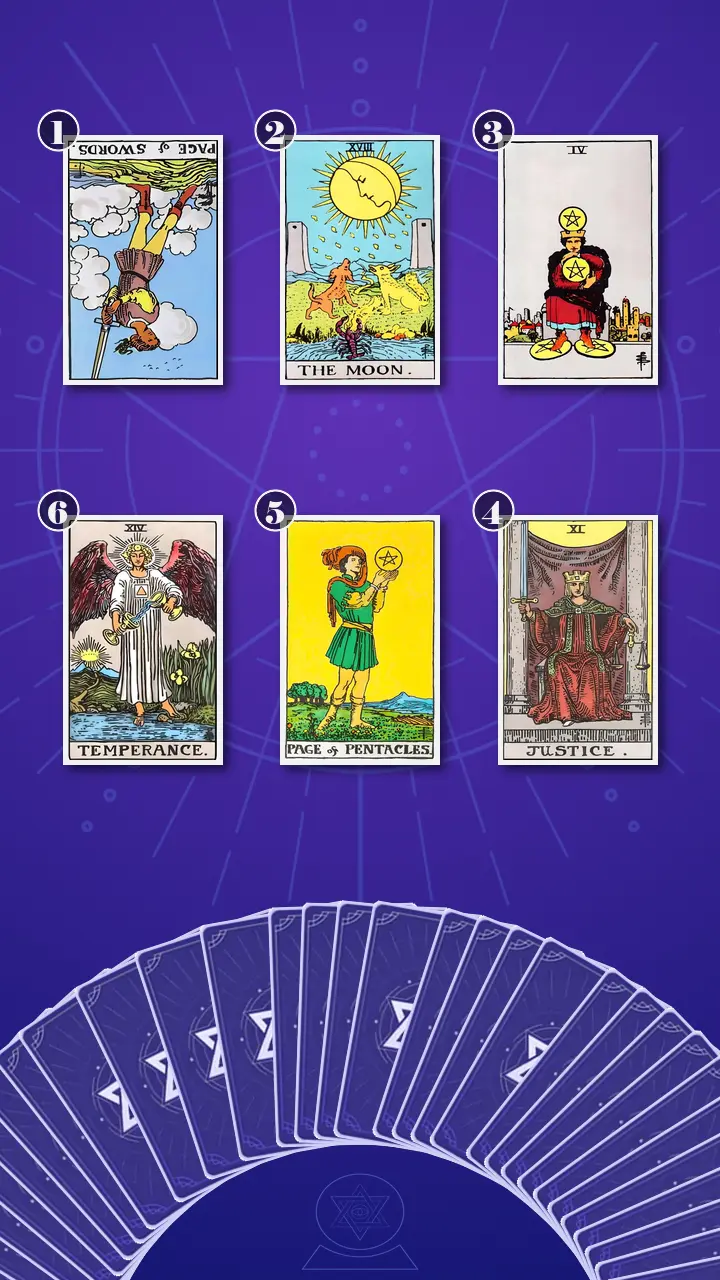
I chose the Transformation Path Grid (6) · Context Edition, a six-card tarot spread designed to trace a self-reinforcing pattern. I arranged three cards across the top and three beneath them in a counterflow. The upper row would show the visible symptom, the immediate blockage, and the psychological root. The lower row would reveal the catalyst, one practical action, and the capacity Casey could integrate over time.
I selected this spread because the consultation was not really asking me to read the absent friend's private intention. It was asking why closure checking kept sustaining itself: cue, reread, brief relief, more ambiguous detail, renewed suspicion. A relationship spread would have placed too much emphasis on someone who was not present. A larger Celtic Cross would have introduced future and contextual layers that the question did not need. This compact grid could show the whole circuit and the point where Casey could reroute it.
This is how tarot works in my practice. I use card meanings in context as structured psychological prompts. The cards externalise a pattern that can feel shapeless when it stays inside the mind. They do not issue a verdict. They help me ask cleaner questions, compare instinct with evidence, and return authorship to the person sitting with me.
I pointed to the first three spaces. 'The first card will put the checking behaviour on camera. The second will show why the post cannot provide the certainty you want. The third will ask what feels endangered when you stop investigating. Then we will turn to the lower row and look for a proportionate way forward.'
The Watcher, the Moonlight, and the Grip
Position 1: The Watcher Behind Another Tab
'The card I am turning over now represents the observable symptom,' I said, 'reopening the vaguepost, scanning unchanged details, and remaining mentally on alert for proof.'
I revealed the Page of Swords, in reversed position. In the image, the Page's body appears ready to move forward while the head looks behind. The raised sword remains prepared for a threat carried through language. I saw Casey's workday in that visual split before I said a word.
'At 11:16 a.m., you are editing a client deck at the agency,' I said. 'The screenshot is waiting behind Slack. A notification flashes, and you switch to Instagram, then the reaction list, then yesterday's WhatsApp messages. The inner line is, “I am not spiralling; I am just checking one detail.” But the sequence ends where it began: back at the unchanged post, with no clearer question and no decision.'
The Page's mental air was both excessive and blocked. There was an excess of scanning, comparison, and readiness, but a deficiency of usable information. Curiosity itself was not the problem. Useful curiosity gathers something new and eventually supports a question or choice. Threat surveillance keeps collecting angles because ending the search feels unsafe.
Casey gave one short laugh, but there was no humour in it. Their shoulders lifted, their mouth tightened, and then they looked away from the screen. 'That is so accurate it feels a bit brutal.'
'Then we slow it down without shaming it,' I replied. 'This checking began as an attempt to protect a friendship that matters. I am not asking you to mock the protective part of yourself. I am asking whether it is still providing protection.'
I asked what the most recent check had postponed. Casey rubbed a thumbnail across the edge of their phone. 'Sending the client deck. Sleeping. And deciding whether I actually wanted to ask my friend anything.'
Position 2: The Moon Changed the Lighting, Not the Facts
'The next card represents the immediate blockage,' I said. 'It asks why inherently ambiguous online material cannot produce factual certainty, especially when fear is supplying possible meanings.'
I turned over The Moon, upright. Its path winds between two towers and disappears into uncertain distance. A dog and a wolf react beneath changing light while something instinctive rises from dark water. I did not read the card as proof of deception. I read it as a precise image of partial visibility.
'At 12:40 a.m., you read the same sentence under the phone's blue-white light,' I said. 'The first time it sounds like general frustration. The second time it sounds disappointed. After you see a mutual friend's reaction, it feels aimed directly at you. No verified detail has been added. The emotional lighting has changed.'
The Moon was upright, but in the blockage position its water had flooded the available evidence. There was an excess of emotional plausibility and a deficiency of factual support. Each theory could feel convincing because vague material is flexible enough to host several incompatible stories. The mind then mistakes the most painful interpretation for the most perceptive one.
I described it as a recommendation algorithm trained almost entirely on Casey's fear of exclusion. Every reread told the algorithm what held their attention, so it served a sharper version of the same theory. The output became more personalised, not more verified.
'Your hurt is real. Your theory is still unverified,' I said. 'The first deserves care. The second needs evidence.'
Casey's chest rose and stayed raised for a beat. Their eyes moved back to the card, then to the phone, as if replaying the different versions of the post. The breath finally left them in a slow stream. 'I keep thinking that if one version feels that convincing, it must mean something.'
'It means the friendship matters and your nervous system has registered possible exclusion,' I said. 'That is meaningful information about your impact. It is not yet reliable information about your friend's intent.'
Position 3: When Holding the Clue Feels Like Holding the Friendship
'The third card represents the psychological root,' I said. 'It asks what you fear you would lose if you stopped saving, checking, and reconstructing the post tonight.'
I revealed the Four of Pentacles, upright. The figure presses one pentacle against the chest, balances another above the head, and pins two beneath both feet. The posture protects what is valued, but it also prevents movement.
'You saved the screenshot and preserved the timestamp because deleting or muting it felt like surrendering your ability to recognise betrayal,' I said. 'Old messages and mutual reactions became part of the record. But the deeper grip is not on a file. It is on the hope that complete possession of the clues can guarantee your belonging.'
The earth energy of the Four had become excessive and rigid. Stability had turned into immobilisation. Holding the screenshot close produced a brief sensation of preparedness, but it also kept Casey physically and mentally positioned around the possible threat. Protecting the friendship had begun to look like trying to possess certainty about another person's private meaning.
I kept my voice gentle. 'What would putting the screenshot away seem to say about you?'
Casey's fingers tightened around the phone, paused, and then slowly opened. Their gaze went unfocused before returning to me. 'That I chose not to notice. That if everyone else understood and I didn't, I would be naive. Replaceable, maybe.'
I felt the room become quieter around that word. Even the radiator behind Casey seemed to stop ticking for a moment.
'Then the monitoring makes emotional sense,' I said. 'It is trying to prevent the pain of being the last person to know. But releasing an investigation is not the same as releasing a friendship. Care and control can feel identical when belonging is threatened, yet they ask very different things from your attention.'
When Justice Put the Screenshot on the Scales
Position 4: The Catalyst That Interrupts the Reread
'The fourth card represents the key catalyst,' I said. 'It introduces the distinction that can interrupt the cycle and help you choose a response proportionate to what is actually available.'
I turned over Justice, upright. The composition changed the atmosphere immediately. After the Page's backward glance, the Moon's shifting path, and the Four's contracted body, Justice faced forward between symmetrical pillars. One hand held balanced scales. The other held a single sword vertically upright.
I saw the same symbolic instrument from the first card, but transformed. The sword of thought and language had not been the enemy. In the reversed Page, it was scattered vigilance. In Justice, it became disciplined discernment: one clear comparison followed by one deliberate choice.
For a moment, I remembered misunderstandings I had watched harden across languages and cultures during years of travel. Impact could be undeniable on both sides while neither person possessed the other's inner meaning. Fairness had never required emotional numbness. It required keeping experience, evidence, and intention in their proper categories.
I reached for a diagnostic lens I call Guilt-Trip Deconstruction. I use it without assuming that another person is deliberately manipulating anyone. The lens asks how an ambiguous expression can become an unpaid emotional assignment inside the listener. Had Casey's friend made a direct request, named a harm, or invited a conversation? Or had uncertainty written Casey a hidden job description: monitor my mood, identify what you did, defend yourself, and repair the situation before I exclude you?
'You may have appointed yourself investigator, defendant, and emotional processor before anyone clearly told you there was a case,' I said. 'That does not mean you invented your hurt. It means the vaguepost cannot fairly tell you which job, if any, belongs to you.'
I named the trap as plainly as I could. At 12:40 a.m., the screenshot was still glowing in the dark. Casey had checked the timestamp, reread the group chat, and drafted a message they could not send, yet the post contained exactly the same information it had contained an hour earlier.
'Closure is not hidden in another reread. It begins when you stop asking an unchanged post to produce new facts, separate impact from inferred intent, and choose how much access the uncertainty gets to your attention.'
Closure is not hidden in another reread; it begins when you place facts on Justice's scales and use the upright sword to make one clear, proportionate choice.
I let the sentence sit between us.
Casey's breathing stopped first. Their thumb hovered above the edge of the phone, motionless, while their eyes lost focus as though the whole night were replaying behind them. Then their brows drew together and colour rose along their cheeks. 'But doesn't that mean I made the whole thing up?' they asked, sharper than before. 'Doesn't it mean I was wrong for being hurt?'
'No,' I said. 'It means your hurt is evidence of impact, not proof of intent. Justice is not an acquittal for your friend or a conviction of you. It is the structure that lets you take yourself seriously without turning a theory into a verdict.'
The anger left Casey's face in stages. Their fingers uncurled. Their shoulders dropped, and their eyes shone before they blinked hard and looked down. A shaky breath escaped them, half relief and half the slight dizziness that can follow when a familiar burden is finally set down. 'If I can't solve it,' they said quietly, 'then I have to choose what I do anyway.'
'Yes,' I said. 'But you only have to choose one proportionate thing. Now, with this new perspective, think back to last week. Was there a moment when this insight could have made you feel different?'
Casey thought of standing outside a Tesco Express in the rain, watching another mutual like the post. 'I could have said, “That like is a fact. The idea that everyone knows I'm being pushed out is a story.” I still would have felt sick, but I might not have spent the whole walk home building a social timeline.'
I opened a blank note and invited Casey to do the same. We set a six-minute timer and made three headings: KNOWN, IMPACT, and INFERRED. Under KNOWN, Casey wrote: 'The post names no one. It appeared after an awkward exchange. Mutual friends reacted.' Under IMPACT: 'I feel excluded. My jaw is tight. I want reassurance.' Under INFERRED: 'My friend intended a public attack. Everyone else understands it. I am being replaced.'
'Impact deserves care; intent still needs evidence,' I said. 'You do not have to contact anyone, defend your friend, or prove your theory wrong. You can wait twenty minutes, mute the Story for twenty-four hours, or save one neutral check-in for later. If writing starts another round of evidence collection, close the note. The method belongs to you, so you decide whether and when to use it.'
I named the movement I was witnessing: a first step from betrayal-focused digital hypervigilance toward evidence-based self-trust and tolerance of relational uncertainty. It was not complete certainty. It was the quieter ability to recognise what Casey knew, honour what they felt, and leave another person's intent unresolved until better information existed.
One Grounded Experiment and Two Open Cups
Position 5: The Page Who Tries One Thing Once
'The fifth card represents the practical action,' I said. 'It translates the Justice distinction into one bounded experiment: a fact-versus-story note, one neutral check-in, or one timed no-check interval.'
I revealed the Page of Pentacles, upright. This Page studies one pentacle while standing on cultivated ground. Instead of scanning many unstable signals, the figure gives sustained attention to one observable task.
'When the urge returns, you set a twenty-minute timer before opening the post,' I said. 'You write one known fact and one inference, place the phone face down, and finish one email. Later, you might extend the experiment to a twenty-four-hour Story mute or draft a neutral check-in. The goal is not to force detachment or secure a particular response. It is to discover what happens when an urge becomes data instead of an instruction.'
The Page offered balanced earth energy: modest, specific, and testable. The Four of Pentacles had used earth to freeze around uncertainty. This Page used the same element to create a small patch of ground beneath Casey's feet. No dramatic confrontation was required. In fact, the absence of Wands across the spread suggested that more heat and impulse were not the missing ingredients.
'I don't have to solve the friendship tonight,' Casey said, testing the words. 'I only have to choose what I do for the next twenty minutes.'
I watched them save the blank three-heading template in Notes. The motion was tiny, but their hand no longer moved with the urgent twitch I had seen at the beginning of the session.
Position 6: Temperance and the Right to Care in Proportion
'The final card represents integration rather than prediction,' I said. 'It shows the capacity you can practise: caring about the friendship while allowing uncertainty, separateness, and a limit on the post's access to your attention.'
I turned over Temperance, upright. Water moved freely between two open cups. One foot rested on land and the other in water. I placed the card directly beneath the reversed Page so Casey could compare the opening vigilance with this slower, regulated movement.
'An ordinary evening might look like this,' I said. 'You acknowledge that the post hurt. You keep open the option of one limited conversation. You mute access to the Story and return to dinner with your housemates. The friendship still matters, and the intent is still unknown. What changes is the pacing. Feeling can move, evidence can remain limited, and neither has to take over the whole room.'
Temperance represented balance, not deficiency or excess. It did not demand total trust, total withdrawal, or instant calm. Its two cups allowed care and boundaries to remain distinct while still participating in the same life. It was a dimmer switch rather than an on-off command.
'You can care without giving a vaguepost unlimited access to your attention,' I said.
Casey looked at the Four of Pentacles and then at Temperance. Their palm opened beside the phone. 'The first one is me trying to keep the friendship safe by gripping it,' they said. 'The last one is me letting the friendship be separate from me without pretending I don't care.'
'Exactly,' I replied. 'The aim is not to care less. It is to stop making total access to another person's meaning the price of caring.'
The Justice Check for the Next 24 Hours
I read the full spread back to Casey as one connected story. An unresolved exchange had made the friendship feel unstable. The reversed Page of Swords showed attention turning into surveillance. The Moon explained why more analysis produced more emotionally vivid possibilities rather than reliable answers. The Four of Pentacles revealed the belonging fear beneath the grip: releasing the clue felt dangerously similar to releasing the bond.
Justice then separated evidence, impact, and inferred intent. The Page of Pentacles turned that distinction into one small behavioural trial. Temperance showed the sustainable direction: care plus separateness, emotion plus evidence, uncertainty plus an attention boundary.
The cognitive blind spot was not that Casey cared too much or lacked intuition. It was the equation of vigilance with protection. Repeated checking felt responsible because it promised to prevent unnoticed rejection, yet it was closer to refreshing a dashboard whose data source had not updated. Each refresh changed Casey's reaction, not the underlying information.
I offered another image. The rereads were side corridors in a labyrinth. Justice was not a complete map of every corridor; it was Ariadne's thread. It gave Casey a reliable method and a direction out. They did not need exhaustive knowledge of the maze to choose the next step.
I also adapted my Compassionate Detachment Protocol for the possibility of direct communication. Detachment, as I use the word, is not coldness. The protocol has three moves: acknowledge that the relationship matters, invite direct communication, and decline the unpaid job of decoding an indirect signal. It lets Casey remain open to a friend's clearly expressed feelings without absorbing responsibility for every possible hidden meaning.
- The Six-Minute Justice Note At the next urge to check, open Notes before Instagram and set a six-minute timer. Write one bullet under KNOWN, one under IMPACT, and one under INFERRED. Before sending any message, reread only KNOWN and ask whether the response is proportionate to those facts. Start with the smallest possible version: 'The post names no one,' 'I feel left out,' and 'I think it was aimed at me.' Stop if the note turns into another evidence hunt.
- The Grounded No-Check Experiment The first time the urge appears this week, set a twenty-minute timer, place the phone face down, and complete one visible task such as making tea or finishing one email. Record the urge from 0 to 10 at the beginning and end. If that feels manageable, mute the Story for one twenty-four-hour window. The number is information, not a score. If you check before the timer ends, record it neutrally. Restart only if you choose; imperfect practice still produces useful data.
- The Compassionate Detachment Check-In If the known facts support asking, draft two or three sentences in Notes: 'Hey, our last exchange has been on my mind. Are we okay, or is there anything between us you want to clear up? I care about you and I'm open to a direct conversation, but I'm going to stop trying to read between the lines.' Wait twenty minutes, then send, revise, or delete it. Do not attach the screenshot or present inferred intent as fact. Decide the boundary before sending: no second message and no investigation through mutual friends for twenty-four hours. The check-in is optional, and your attention boundary remains valid whether or not the friend replies.
I asked Casey which option felt small enough to try without turning it into a test they could fail.
'The twenty-minute delay,' they said. 'Then maybe the twenty-four-hour mute. I want to write the message, but I don't want sending it to become the new way I demand certainty.'
'That is a proportionate answer,' I said. 'You are not deciding the whole future of the friendship. You are deciding how much access one ambiguous post receives today.'
A Week Later: The Quiet Proof
Six days later, I received a message from Casey. 'I did the twenty-minute timer at work and finished the client deck before checking anything. Then I muted the Story for twenty-four hours. I still wondered what it meant, but I didn't turn every mutual's emoji into evidence.'
They had also drafted the neutral check-in. After reading the KNOWN column, they decided not to send it that night. Two days later, they sent the shorter relationship question without mentioning the vaguepost. The friend had not replied by the time Casey wrote to me, and I appreciated that Casey did not turn the silence into a new verdict.
That night, Casey slept until morning. Their first thought was still, 'What if I'm wrong?' This time, they noticed the thought, gave a tired half-smile, and made coffee before touching the phone.
The post was still unclear. The relationship had not been wrapped in a neat ending. That slight ache mattered because it showed the change was real rather than theatrical. Casey was learning that self-trust does not require never feeling suspicious again. It requires responding to suspicion with a fair method and a choice they can own.
I did not know what the friend intended, and the cards had never claimed to know. Tarot had made the loop visible, but Casey created the change: they wrote the note, set the timer, muted the Story, and chose a bounded question. Their closure began as an act of attention governance rather than a meaning extracted from someone else's post.
I know how jaw-tightening it can feel when putting down the phone seems less like rest and more like risking proof that you never belonged. If that is where you are tonight, noticing the silent pull between care and control already means you are no longer standing at the exact beginning of the loop.
If you let the post stay unclear for tonight, what tiny choice could you place on your side of Justice's scales, a six-minute note, a twenty-minute pause, or a muted Story, so your attention can begin to feel like yours again?