Feeling Left Out and Vagueposting: Make One Clear Ask to a Friend

The Lit Window on Line 1: Feeling Left Out and Vagueposting
I met Alex, a 27-year-old Toronto junior communications coordinator who could make a campaign brief sound effortless but, after a group chat made weekend plans without them, posted "I guess I know where I stand" instead of asking one friend directly whether there was room. I recognized the polished language: easy to publish, difficult to answer.
At 8:47 p.m. on a Tuesday, Alex was riding north on the TTC Line 1 after work, scrolling through Instagram Stories of friends at a rooftop bar. Fluorescent lights buzzed above them, the phone warmed their palm, and the brakes squealed at each stop. Their fingers refreshed the viewer list again and again, searching for one particular name, while the bright photos on the screen looked like a room with a lit window that Alex could see but could not enter.
When Alex finally looked up at me, they said, "I want someone to ask what is wrong without me having to ask them to ask. But if I say it plainly and they do not respond, I will have proof that I am not really part of this." I heard the central contradiction clearly: they were asking to feel inside while vagueposting from the outside, hoping an audience would decode a request they had not made usable.
The longing in their chest had the texture of a hand pressed against warm glass. Shame heated their face, loneliness pulled downward through their stomach, and resentment kept their restless fingers reaching for the phone even after checking had made everything worse. I did not call the pattern immature or manipulative. I told Alex, "The need is real. The signal is simply carrying too much of the message by itself. Let us draw a map through the fog and find the clearest way for you to participate in connection."
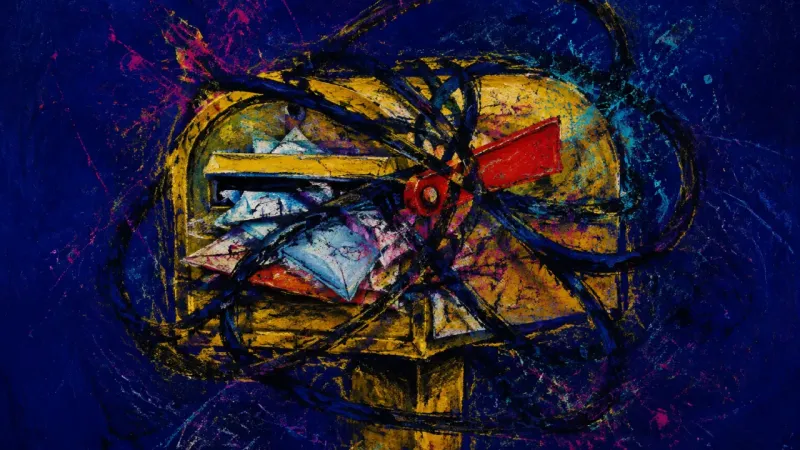
A Ladder Through the Social Noise
I invited Alex to place the phone face down, take one slow breath, and name the question underneath the post without trying to make it sound reasonable. Then I shuffled the cards slowly. For me, this is not a supernatural test or a prediction machine. It is a deliberate transition from reacting to observing, a way to give a charged experience enough structure to be examined.
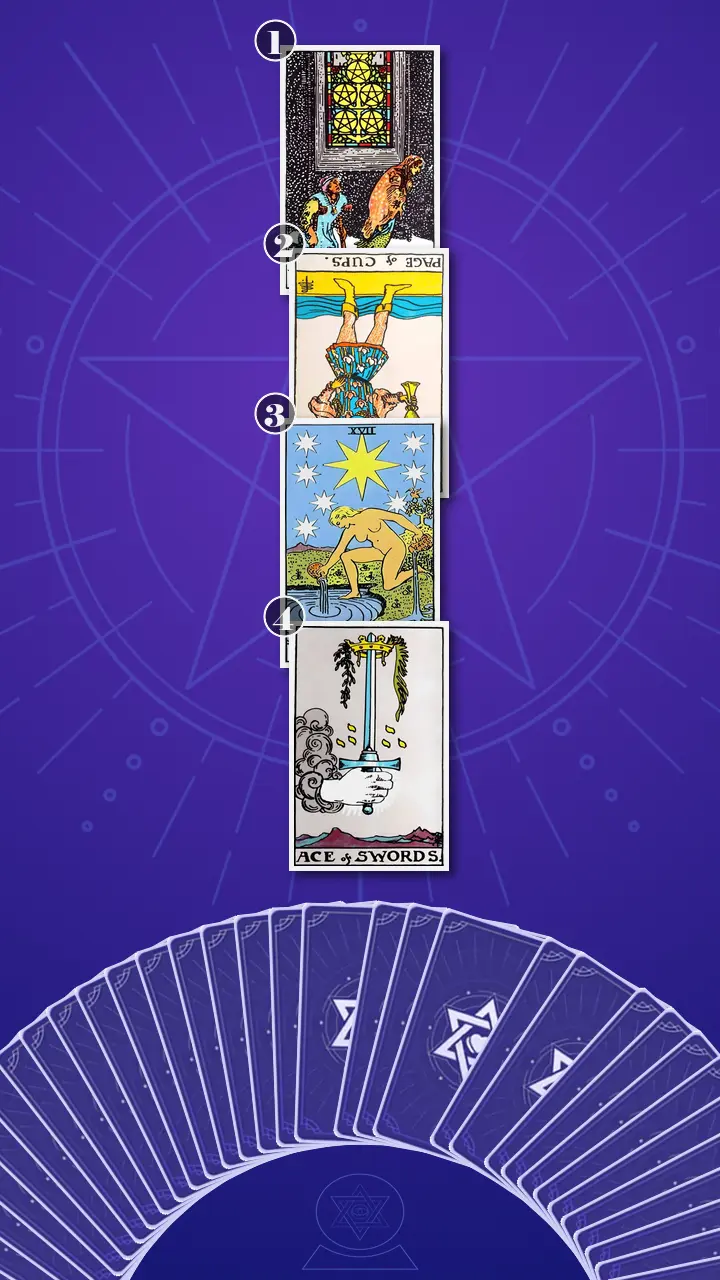
I chose the Four-Layer Insight Ladder, Context Edition, because Alex's question was about an inner communication loop rather than a binary decision, a timeline, or a full analysis of another person's intentions. A broad Celtic Cross would have introduced more positions than this focused question needed. This Four-Layer Insight Ladder tarot spread follows the minimum useful chain: present symptom, hidden mechanism, transformative opening, and practical action.
I explained the method to Alex and to anyone who has searched why they vaguepost when they feel left out. The first card would show the observable exclusion loop after an outside cue. The second would reveal the need and protective pattern beneath it. The third would offer the bridge from testing an audience to making one honest feeling visible. The fourth would turn clarity into a small, bounded next step. The cards could not decide whether another person would respond warmly, and they would not turn a delayed reply into a verdict on identity.
The Cold Window in the Viewer List
The Five of Pentacles and the Social Threshold
Now I turn the card for Position 1, the present state: it shows the observable exclusion loop after an outside cue, including vagueposting, checking views or replies, and remaining unsure whether anyone understood the actual request.
Five of Pentacles, in upright position.
I pointed to the two figures moving through the snow beneath the illuminated stained-glass window. I told Alex, "This is you on the Line 1 train, watching friends' photos from a gathering you were not included in. The cold is the tight chest, the hot face, and the restless phone-checking. The lit window is the group chat, the Story, and the hope that someone will notice. You are not asking for abstract popularity. You are standing outside one specific social moment and trying to work out whether you want comfort, an explanation, or a place at the next plan."
The upright energy was contracted. It showed attention narrowed around the visible warmth of other people's plans and the physical evidence of distance, not a permanent condition of Alex's relationships. The crutch and wrapped bodies suggested depleted social confidence, while the window suggested that the desire for contact was still alive. I asked, "After the last missed invitation or group-chat silence, what did you actually do in the next ten minutes? Did you draft a Story, check the viewer list, delete the post, or wait for one person to reach out?"
Alex gave a short, bitter laugh and rubbed the side of their thumb. "That is painfully accurate. Almost rude." I let the reaction stand. "The card is naming the sting, not predicting more of it," I said. "One exclusion cue can be meaningful information about one interaction without becoming evidence that you have no place anywhere." Their shoulders remained high, but their gaze moved from the phone to the card, which was the first small separation between the event and the identity story.
The Message With Its Subject Line Removed
Page of Cups Reversed and the Hidden Request
Now I turn the card for Position 2, the underlying mechanism: it reveals the hidden need for recognition and belonging, together with the protective pattern that expresses feeling indirectly and tries to avoid a direct no.
Page of Cups, in reversed position.
The fish emerging from the cup became the feeling that surfaced unexpectedly, while the reversed Page showed that feeling arriving sideways. I connected it to the posts Alex had described: "I guess I know where I stand," or, "Some people only remember you when they need something." The modern version of this card was Alex composing a coded caption instead of sending one friend, "I felt left out and would like to see you." The feeling was not fake. Its delivery was indirect, and that difference mattered.
I compared the reversed Page to a help request with its subject line removed. The emotional signal was real, but the recipient had to guess whether Alex wanted comfort, an apology, an explanation, an invitation, space, or nothing. Its energy was blocked, not absent. I said, "The inner operating system sounds like this: I need them to notice, but if I say what I need, their answer could hurt more. So the post protects you from direct exposure while also making the contact you want harder to offer."
Alex's fingers stopped moving. Their eyes went slightly unfocused, as though they were replaying several old captions at once. Then they exhaled through their nose and said, "I can make a whole post about being left out and still avoid inviting one person in." I answered, "That sentence is not a confession against you. It is useful data. A vaguepost can be emotionally honest and still be impossible to answer clearly." Alex looked down at the Page, their mouth tightening with recognition and a small, exposed sadness.
I asked Alex what they had hoped the person would offer when they wrote the hint. They named all four possibilities, one after another: reassurance, an explanation, an invitation, and proof that they mattered. The room became quieter around that list. What had looked like an audience problem was beginning to look like an unassigned request, one that nobody could reliably pick up because Alex had been forced to hide the assignment from themselves.
When The Star Opened the Sky
The Unclothed Figure, the Open Message, and the Bridge
Before I turned the third card, I slowed down. The radiator clicked once, and the last blue light from Alex's phone slid across the table before they switched it off. The quiet was not ominous. It was the kind of quiet that lets a sentence become audible.
Now I turn the card for Position 3, the transformative opening: it identifies the shift from testing whether others can decode a public hint to making one honest feeling and one specific request visible, directly addressing the drift that follows social exclusion.
The Star, in upright position.
The unclothed figure pouring from two pitchers gave me the most precise image for Alex's next possibility. One foot was on land and one in water, holding personal truth and relational openness at the same time. I connected the card directly to the modern scene: Alex notices the urge to post, puts the phone down, and tells one trusted person, "I felt left out, and I would like to see you this week." This is honest disclosure without turning honesty into a performance or a test.
The Star's energy was balanced and spacious. It did not promise that the friend would say yes, answer quickly, or repair the whole group dynamic. It offered hopeful self-trust, the willingness to remain grounded while another person's response stayed outside Alex's control, and a larger field of possible connection than one viewer list could display. I asked, "What would you say if you wanted to be understood rather than decoded?"
As a perfumer, I have spent fifteen years noticing how scent crosses a room before anyone has decided to invite it in. I use that experience through a reflective tool I call an Aura Permeability Diagnosis. It asks where a person's boundaries have become too porous to the surrounding atmosphere, allowing every silence, typing bubble, reaction, and selected photo to enter as if it were a personal message. It is a metaphor for attention, not a supernatural diagnosis.
With my Sensory Overload Management lens, I could see how a crowded digital audience had become a physical crowd for Alex: the warm phone in the palm, the constant vibration, the imagined faces behind every view, the work-trained instinct to interpret audience data. Their system was absorbing chaotic social cues long after the original event had ended. The Star offered a different boundary. Alex could feel the sting without allowing the entire crowd to decide what the sting meant.
Alex was still trying to solve the wrong question: if they said plainly that they wanted to see someone, would the reply decide whether they belonged? The old loop offered control through ambiguity, then charged them in restless checking. A direct sentence felt like stepping out from the lit window.
The hidden request is not only, "Did anyone notice my post?" It is, "Do I matter here, and can someone make room for me?" A vague signal protects you from a direct no, but it also makes a clear yes harder to give to the need underneath.
Stop using a public hint to test whether you are inside; let The Star's open, unclothed figure model one honest sentence and one clear request, so belonging becomes a conversation you can participate in rather than evidence you must extract.
For a second, Alex's thumb froze above the dark phone, their breath paused and their pupils widened. Then their gaze went past the card to the rain-streaked window, as if the Line 1 scene had returned and the glowing viewer list were being replaced by a private message window. Finally, their jaw loosened. A quiet "Ah" rose from their chest, followed by a shaky exhale. Their shoulders dropped, and the hand that had been gripping the phone opened against the table. Relief arrived with a thin dizziness, the vulnerable blankness of realizing that the next sentence now belonged to them. I set a ten-minute timer and invited three private lines: "What happened," "What I feel," and "What I am asking for." The smallest version could be one honest sentence saved in Notes.
I asked, "Now, use this new perspective to revisit last Tuesday. Was there a moment when this insight could have changed what you did next?" Alex nodded slowly, not with certainty, but with enough room to imagine deleting the audience test without deleting the feeling.
I named the shift carefully. This was the first movement from testing whether an audience would decode a vaguepost to grounded, direct participation through one honest feeling and one specific request. The Star was not giving Alex a guaranteed belonging certificate. It was returning the choice of how to show up, what to ask for, and what boundary to keep if the answer felt disappointing.
The Sword's Clean Edge
Ace of Swords and a Request Someone Can Answer
Now I turn the card for Position 4, action and integration: it translates clarity into a one-week experiment involving one private direct message or concrete invitation, while separating communicated facts from the story attached to them.
Ace of Swords, in upright position.
The upright sword gave the openness of The Star a clean edge. I connected it to a message Alex could actually send: "I saw the plan after it happened, and I felt left out. Would you be up for coffee this week?" The crown at the blade's tip represented discernment, not superiority. The task was to separate the observable event, the feeling it stirred, and the specific contact Alex would welcome.
The Ace's energy was clear and available, but it needed to stay bounded. Direct communication was not a demand for a particular outcome, and it was not a new way to pressure the friend into proving anything. I said, "Clear asking does not guarantee a yes; it gives the real request a chance to receive a real answer. One response is information about an interaction, not a final ruling on your identity."
Alex picked up a pen and wrote two lines. On the first, they wrote the exact event: "They made Saturday plans in the group chat and I saw them after." On the second, they wrote the conclusion that had rushed in behind it: "This proves I am peripheral." They circled the first line, then drew a small question mark beside the second. Their face still held uncertainty, but their hands had stopped searching for another post.
From the Viewer List to a Clear Request
The Story the Four Cards Told Together
I laid the four cards in their descending line and let the visual sequence speak. The Five of Pentacles showed the cold, concrete sting of seeing warmth through a lit window. Page of Cups reversed showed the feeling surfacing as a message with its subject line removed. The Star opened the sky and made room for honest self-trust. The Ace of Swords gave that openness a usable sentence. The movement was from Earth, where exclusion was felt in the body, through Water, where the need was coded, into the Star's spacious field and finally into Air, where the request could be spoken.
Alex's professional fluency had taught them to manage audiences, tone, and analytics. A Notion content calendar or Slack thread could be revised until every message had a clear purpose, yet a personal request felt dangerously exposed. A busy work schedule, Toronto rent, and limited social energy also made existing friendships feel like the only available doorway, so each missed plan carried more weight than one event could safely hold. None of that made Alex broken or guaranteed that the group had acted well. It explained why the phone became a doorway and an interrogation room at once.
The cognitive blind spot was the belief that vagueness reduced risk. It did reduce the risk of hearing a direct no, but it also made a clear yes difficult for anyone to give. By leaving the request hidden, Alex turned other people's imperfect guesses into more evidence for the original fear. The transformation direction was therefore precise: move from testing whether people will decode a public hint to stating one honest feeling and one specific request in a private conversation.
Before we moved to the next steps, I used my Scent Bubble Protocol. I described it as a visualization and somatic anchoring practice for entering a draining social ecosystem. Alex placed both feet on the floor, noticed the cool edge of the chair beneath their legs, and chose the faint citrus scent of hand cream from my desk. I asked them to imagine an impenetrable energetic perimeter around their attention, like a clean, breathable scent bubble.
I made the boundary clear: the bubble would not control the group, force an invitation, or predict whether a friend would respond. It was a sensory cue that said, "I can notice the social atmosphere without letting every reaction enter my sense of self." When the phone stayed face down, Alex's breathing became easier. From there, I offered three small experiments as actionable advice and next steps.
- The 10-Minute Vaguepost PauseThe next time Alex drafts a line such as "I guess I know where I stand," they will save it instead of publishing immediately, put the phone face down, activate the Scent Bubble Protocol, and set a ten-minute timer. During the pause, they will finish the private sentence, "What I wish one person would understand is..."No viewer-list checking during the ten minutes. If the exercise becomes too activating, stopping at one honest sentence in Notes still counts.
- Private Bid Before Public HintAfter the pause, Alex will choose one real person, not the full audience, and send a three-clause message: "When I saw [specific event], I felt [one feeling]. Would you be up for [a 20-minute call, coffee after work, or another specific contact] this week?"Keep the request small and concrete. Remove explanations about what the reply will prove, and remember that a delayed or uncertain answer is information about this interaction.
- The Facts-vs-Story CheckAfter a missed invitation or delayed reply, Alex will open a two-column note titled "What I know" and "What I am adding." They will write no more than three observable details in the first column, then place the identity conclusion in the second and decide whether a direct question would create better information than another Story.The exercise does not require Alex to excuse poor communication or deny feeling excluded. It only keeps one interaction from becoming a final ruling on who they are.

A Little More Air Around the Answer
A week later, I received Alex's message: "I sent the private version. They could not meet until next Thursday, but they gave me a time." Alex had slept through the night, then woke thinking, "What if I read it wrong?" They smiled, left the message sent, and made coffee.
That was the micro-proof I had hoped for, not a perfect social ending. Alex had named an event, a feeling, and a request. The friend had provided a clear answer, though not an immediate one, and Alex had allowed the delay to remain a detail rather than turning it into an identity crisis. The lit window had not magically opened for everyone. Alex had knocked on one door clearly and kept enough boundary around their own attention to hear the answer.
I do not believe the cards created that change. The Four-Layer Insight Ladder gave Alex a structured way to observe the pattern, translate the hidden need, test a clearer form of communication, and choose what to do with the information. Tarot worked here as a reflective recognition tool, not a verdict. The authority remained with the person who could feel the sting, name the request, and decide which relationships deserved further participation.
That is what finding clarity looked like in this reading: not certainty that every group would make room, but a little more room inside Alex to breathe. The emotional transformation had begun with one small act, moving from testing whether an audience would decode a vaguepost to grounded, direct participation through one honest feeling and one specific request.
If a group photo has ever left you outside, I know the chest-tightening around the phone: asking directly for a place can expose the fear that you were never really in it, so a hint can feel safer than a knock. I hope that recognition meets you gently. A viewer list can show attention; it cannot tell you where you stand.
If you could let one honest feeling exist without making the reply prove your place, what small sentence would you want one trusted person to hear, one that opens the lit window instead of asking the viewer list to decide whether there is a seat?