Still Employed, Still Stuck

A grounded look at reduced shifts, related tarot cards, and reading insights for the work-and-money decisions that follow.

Reduced Hours Crossroads
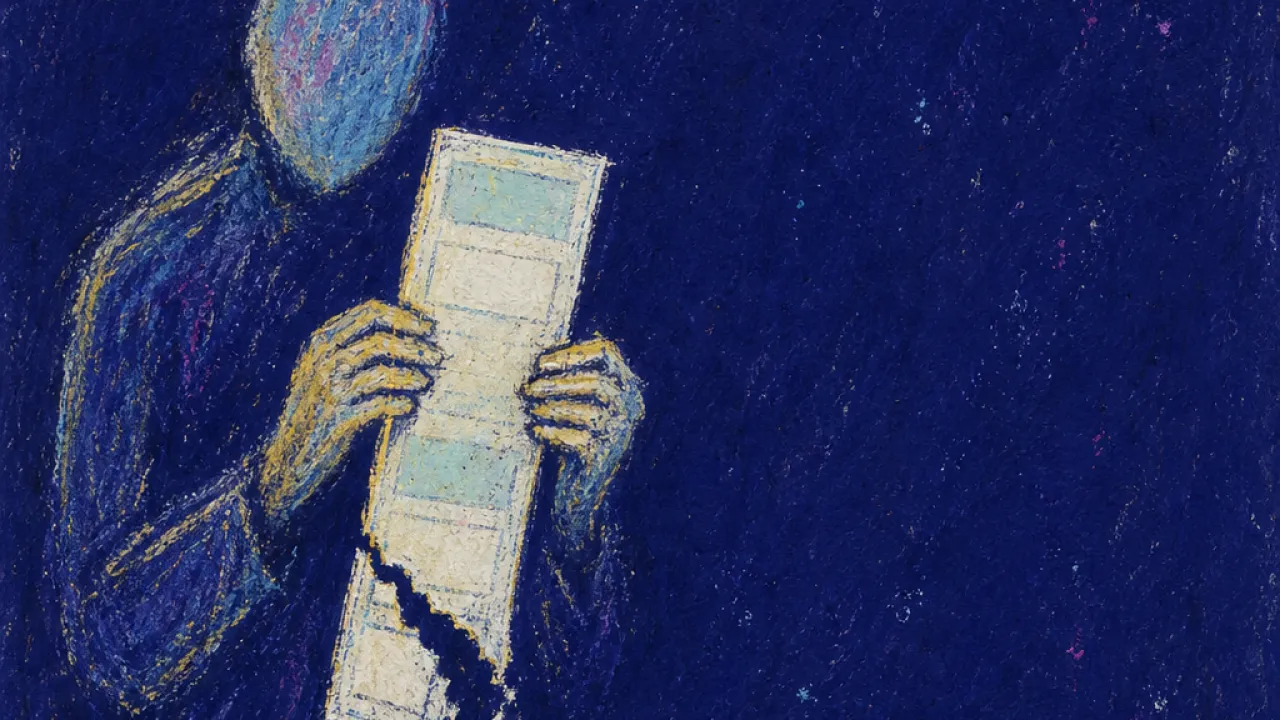
A solitary figure holding a thin weekly schedule as empty shift blocks pull at their hands in pale gaps against deep indigo

What is this situation?

Reduced Hours Crossroads — you open the scheduling app, the rota, or the weekly email and see that your shifts have quietly shrunk. No one says you have been let go; your manager says business is slow, the budget is tight, or they are “spreading hours around,” but your rent, groceries, phone bill, transport, and plans with friends still expect the version of your income that existed last month. You start doing the math in public and private places: on the train, in the break room, at the kitchen counter with your banking app open, wondering whether to ask for more hours, pick up a second job, start applying elsewhere, or hold on because leaving too quickly could make things messier. The power sits with the schedule maker, the payroll system, the shift allocation, the company forecast you do not get to see, while the cost lands in your calendar one empty block at a time. Coworkers compare who got what, group chats turn into quiet calculations, and every small purchase begins to feel like a decision that has already been made for you. What makes it exhausting is the in-between state: you still have the job, but it no longer fully holds the life it was supposed to support, much like the figure on the Two of Pentacles, trying to keep two coins moving while the waves behind him refuse to settle.

Why it's not you?

This is not a personal failure of planning or resilience; the pressure comes from a workplace decision that changed the ground under your budget. Reduced hours create a specific kind of bind because the employer keeps you attached while transferring the uncertainty onto you. The crossroads is built by the schedule, not by a lack of effort on your part.

Reduced Hours Crossroads in Tarot Cards

The Reduced Hours Crossroads is the moment your schedule stops feeling like a plan and starts feeling like a set of missing pieces. That tightness in your chest when the rota drops is a physical record of an environmental, structural dynamic: someone else controls the hours, and you are left to absorb the gap. The cards below are not here to tell you whether to stay, quit, wait, or scramble for another shift. These Tarot Cards reflect the outline of what this kind of pressure puts in front of you.

The Emperor
Reversed
A ruler sits in armour on a stone throne, holding the symbols of formal authority within a hard, elevated structure. Read reversed, that concentrated control resembles a schedule maker who can reduce access to paid work without offering reciprocal transparency, negotiation, or a dependable income floor. The throne remains structurally powerful while the reversed orientation blocks its stabilising function. The card reveals how managerial authority can preserve organisational flexibility by making workers absorb uncertainty, leaving you responsible for consequences produced by decisions you were not empowered to shape.
Wheel of Fortune
Reversed
The great wheel lifts and lowers figures around its rim, placing individual positions inside a larger movement they do not control. Read reversed, that rotation resembles a downturn or demand cycle whose instability is passed into your rota, while the company forecast remains inaccessible and your bills continue on a fixed timetable. The wheel still turns, but the reversed orientation blocks any assumption that the next cycle will automatically restore your position. The card exposes a timing mismatch between variable business demand and non-variable living costs, making repeated patterns more informative than assurances that conditions will eventually improve.
Justice
Reversed
Scales are held in one hand and a raised sword in the other, placing distribution and decision inside the same formal seat. Read reversed, their alignment becomes unreliable, mirroring a rota in which hours are reduced or spread among coworkers without visible criteria, consistent explanation, or equal access to challenge the outcome. The symbols remain present, so the issue is not an absence of rules but uncertainty about whether the rules are transparent and consistently applied. The card reveals the gap between an administratively valid scheduling decision and a process that workers can recognise as materially fair.
The Hanged Man
Upright
A worker-like figure remains attached by one foot to a structure that prevents normal movement. The suspension closely reflects employment limbo: your name remains on the rota and your availability may still be expected, but too few paid hours arrive to support career momentum or a stable income. The upright halo preserves insight and perspective inside the standstill. The card exposes the hidden employment cost of being kept available without adequate work, including the way partial attachment can occupy time and delay a move toward a role with firmer terms.
The Devil
Upright
Two workers stand visibly chained to a raised central structure, with collars loose enough to show that the attachment is powerful without being physically permanent. The scene mirrors economic dependency on a job that supplies too few hours but still controls access to partial wages, references, schedule status, and the possibility of future shifts. The upright chains expose the employment bargain rather than moralising it. The card reveals how fear of a complete income gap and the hope that hours will return can preserve employer leverage long after the role stops offering a workable level of security.
The Moon
Upright
A narrow path crosses an uncertain landscape between two towers under light that changes what can be clearly seen. The image resembles the internal monitoring created by vague manager explanations, shifting rota patterns, and the absence of a clear statement about whether your hours will return. The upright path remains continuous despite the partial visibility. The card reveals that your recurring doubt is being fed by an objective information vacuum, allowing the mental noise to be separated from the facts that are visible and the company data that remains unavailable.
Eight of Cups
Upright
A cloaked figure leaves eight upright cups and moves into uneven terrain. The cups resemble the parts of the job that remain intact, including experience, coworker ties, occasional wages, and organisational familiarity, while the visible gap reflects the loss of enough paid hours to make the role professionally sustainable. The upright path allows departure to coexist with acknowledgement of what the job has provided. The card frames a career exit as a response to structural insufficiency, not a claim that every part of the workplace was worthless or that leaving carries no practical difficulty.
Two of Pentacles
Upright
Two pentacles are kept moving by one worker while rough waves and unstable ships occupy the background. The image directly reflects a job that now requires you to manage the employer's fluctuating demand inside your own budget, calendar, and career planning, even though you do not control the conditions producing the instability. The upright figure remains capable and both coins remain accessible, preserving room for negotiation, parallel income, or transition. The card separates your adaptive labour from the company's responsibility for the unstable rota, making visible how much unpaid coordination is now required to remain employed.
Four of Pentacles
Upright
One pentacle is held tightly against the chest, another rests on the head, and two pin the figure's feet in place. That closed posture resembles the defensive compression of your physical life after shift cuts, when every pound or dollar acquires another obligation and preserving cash begins to limit movement, spontaneity, and access to the city around you. The coins remain physically present in the upright image, so this is not a picture of having nothing. It shows how reduced and unpredictable income can turn the resources you still possess into a protective barrier, making a narrower routine structurally understandable without treating scarcity management as your identity.
Five of Pentacles
Upright
Two people pass beneath an illuminated window of pentacles while remaining outside in the snow. The scene mirrors the contradiction of still belonging to a workplace on paper while being excluded from enough paid hours to access the material security that employment is supposed to provide. The upright figures remain in motion and the light remains present, preventing the shortfall from becoming a fixed identity. The card exposes reduced hours as partial economic exclusion within an ongoing employment relationship, where the title and uniform may remain while the usable benefit of the role contracts.
Six of Pentacles
Reversed
A standing figure holds scales while distributing coins to people positioned below him. Read reversed, the scales and descending resources lose their dependable alignment, closely matching a workplace where the schedule maker controls who receives paid hours while workers have little access to the criteria behind that distribution. The coins remain visible, but the reversed flow makes access conditional and unequal rather than reliably reciprocal. The card reveals how statements about 'spreading hours around' can conceal a power structure in which management retains allocation authority while each worker privately absorbs the shortfall.
Seven of Pentacles
Upright
A worker pauses beside a pentacle-bearing plant and examines the return produced by sustained labour. The image mirrors your need to evaluate whether availability, reliability, and time already invested in the job are being met with enough paid hours to justify continued commitment. The upright crop is real but not yet automatically sufficient. The card makes the employment exchange measurable, revealing the difference between valuing past investment and allowing that investment to determine how long you accept an inadequate future yield.
Two of Swords
Upright
A blindfolded figure holds two crossed swords while a rocky sea sits behind her. The blocked sightline mirrors your lack of access to forecasts, payroll plans, and allocation criteria, while the crossed blades capture the defensive standstill between waiting for shifts to return and acting before your income falls further. The upright posture remains balanced, so the image preserves the capacity to hold the decision without pretending the missing information is available. The card locates the deadlock in an opaque employment structure, showing why neither staying nor leaving can yet feel fully defensible.
Seven of Swords
Upright
A figure carries swords away from a camp while looking back, leaving part of the set behind. The scene mirrors the quiet removal of paid hours from your working arrangement: nothing is formally announced as an ending, yet a material part of the job disappears through scheduling decisions made beyond your view. The upright image foregrounds avoidance, selective disclosure, and action occurring around rather than through direct conversation. The card reveals why vague explanations can feel destabilising when the rota communicates a reduction more clearly than management does.
Eight of Swords
Upright
A blindfolded figure stands bound inside an uneven ring of swords, surrounded by wet ground and separated from a distant structure. The image captures the mental enclosure formed when each possible response to reduced hours carries a practical penalty: staying risks deeper shortfall, quitting removes partial income, and adding work creates another scheduling conflict. The gaps between the upright swords remain physically visible even though the blindfold restricts perception. The card reveals how repeated exposure to employer-controlled uncertainty can compress your internal map of available routes, while keeping that compression anchored to real material constraints rather than personal inadequacy.
Nine of Swords
Upright
A figure sits awake in bed beneath nine horizontal swords, with the darkness containing every thought in one compressed space. The scene mirrors late-night rent calculations, repeated banking-app checks, and mental projections of what another short rota would remove from your life. The swords hang on the wall rather than entering the body, keeping the upright image focused on accumulated mental pressure rather than inevitable catastrophe. The card reveals how an unresolved external income threat continues running after the workplace day ends, while separating the intensity of that internal rehearsal from certainty about what will happen next.
Two of Wands
Upright
A figure stands within an established structure, holding one wand and a globe while another wand remains fixed to the wall. The image places your current job beside a wider employment market, showing how reduced shifts can turn ordinary career maintenance into active comparison between retained access and external opportunity. The upright horizon preserves strategic range even though the immediate income loss creates pressure. The card reveals that the workplace's reduced capacity is career information: it changes the value of staying anchored and makes the scale of possibilities outside the current rota materially relevant.
Five of Wands
Upright
Five figures raise crossing staffs in a crowded field where everyone's movement interferes with everyone else's. The scene resembles coworkers comparing rotas, competing for extra shifts, and trying to secure hours from a pool that management has made scarce. No single figure controls the whole field in the upright image, which exposes how structural scarcity can be experienced laterally as worker-against-worker friction. The card reveals that the visible competition among colleagues may be produced by an allocation system above them, rather than by inherent hostility within the team.

Reduced Hours Crossroads in Tarot Card Reading Insights

When reduced hours leave you standing between staying, searching, and cutting back, other people have brought that same work-and-money pressure into readings. The pieces that surface there often come from the same place: a schedule that changed before your life had room to adjust. Tarot Reading Insights from sessions with this kind of crossroads are gathered below.

Psychological Contexts Related to Reduced Hours Crossroads