"It Worked" Is an Outcome: Testing Whether the Shortcut Was Sound
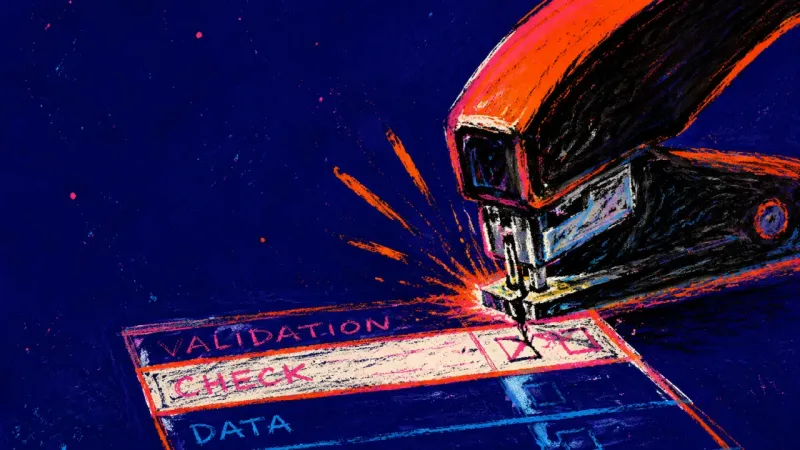
The 4:42 p.m. Shortcut That Kept Working
I knew the pattern before I touched the deck. Alex (name changed for privacy) was the late-twenties product ops person everyone Slacked when they needed a “quick one.” They joined my video call from a Toronto condo with their work laptop still open, a stale mug of coffee beside it, and rain ticking against the window hard enough for their microphone to catch it.
They took me back to 4:42 that afternoon. I could picture the laptop fan humming as they duplicated last month’s spreadsheet, replaced the visible figures, and watched the headline cells turn reassuringly green. The validation tab sat one click away. Their jaw tightened. Their hand had already started moving toward Send.
“It worked last time, so why add steps now?” Alex said. “I’m being efficient, not careless. No one has complained about the result. I just don’t want my job taking more of my evening because a process page says so.”
There was the real contradiction: Alex wanted to protect scarce personal time from low-value bureaucracy, yet they were using a run of acceptable outcomes to decide that slower verification had no value. Whenever a task entered its checking phase, I saw impatience move through their body like the closing-door alarm on Line 1: jaw locked, fingers speeding up, every extra second insisting that the train was leaving without them.
“I don’t hear laziness,” I told them. “I hear a reasonable refusal to donate your evening to unnecessary work. I also hear an evidence rule that may have become too loose. We’re not going to assume every formal step deserves to survive. We’re going to find out what each step protects, and whether skipping it is a deliberate choice or just a habit rewarded by luck. Let’s make a map of that fog.”
Choosing a Map for a Loop, Not a Timeline
I asked Alex to place both feet on the floor, take one slower breath, and hold the question in mind while I shuffled. I use that small ritual as a transition for attention, not as a supernatural performance. It gives the mind a clean edge between defending an old conclusion and examining it.
I explained how tarot works in my practice: I don’t use it to issue verdicts or predict punishment. I use its symbols as an objective reflection tool, a way to place an invisible reasoning pattern where both of us can inspect it. Card meanings in context can reveal the structure of a habit without pretending the cards control what happens next.
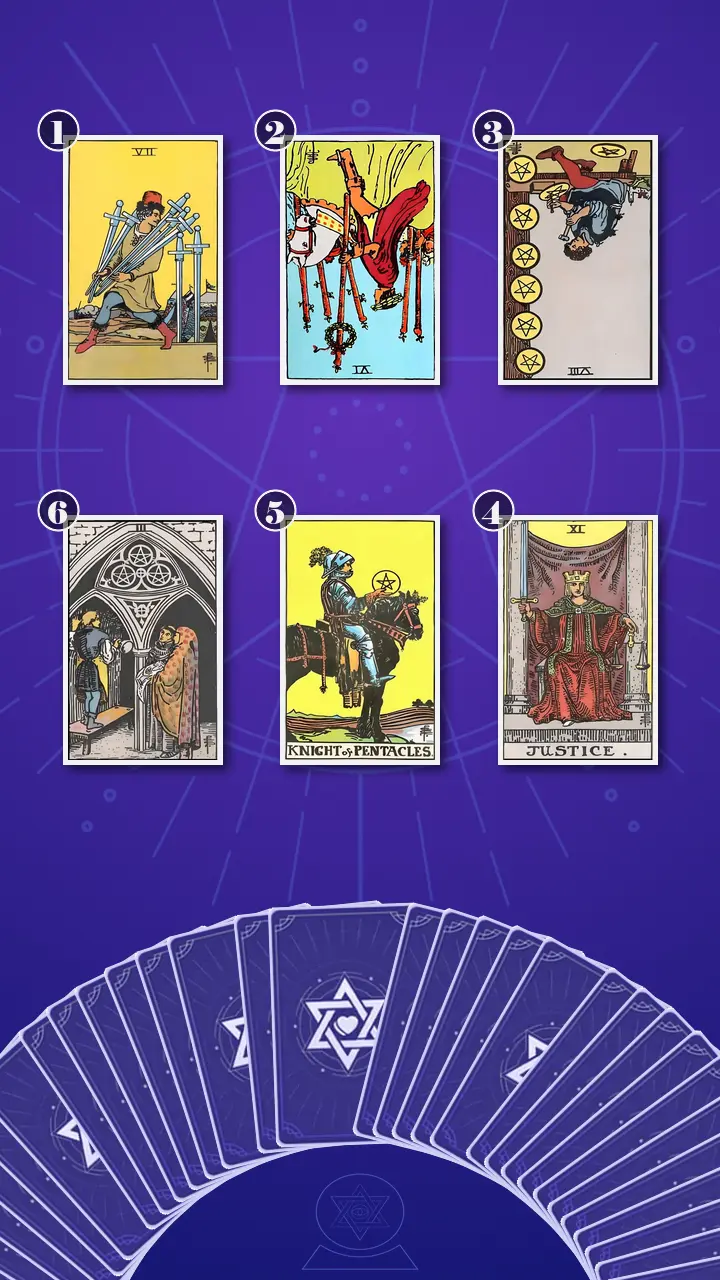
For this reading, I chose the Transformation Path Grid · Context Edition, a six-card tarot spread arranged in two rows of three. A past-present-future line would have flattened Alex’s problem into a timeline, while a Celtic Cross would have introduced more context than the question required. Alex’s shortcut habit was recursive: omit a check, save time, receive no complaint, count that silence as proof, and omit the next check more easily. I needed a spread shaped to expose that loop and redirect it.
I told Alex that the first position would show the visible shortcut behaviour, the third would uncover the belief sustaining it, and the fourth would introduce the catalytic standard capable of interrupting it. The remaining lower cards would ground that insight in a practical quality floor and a shared way of testing whether an efficiency was genuinely sound.
Five Swords, One Slack Reaction, and the Craft Left Behind
Position 1: The Work That Made It to Done
I turned over the card representing the observable shortcut behaviour: selectively completing visible work and omitting checks once the output appeared acceptable. It was the Seven of Swords, upright.
I pointed to the figure carrying five swords while two remained planted behind him. I didn’t read the image as an accusation of dishonesty. I read it as tactical intelligence operating with incomplete accountability. At 4:42, Alex had updated the visible cells in last month’s spreadsheet, noticed the validation tab, closed it without testing the formulas, and sent the polished file before five. They knew part of the task’s protective function had been left outside the submitted frame.
The Seven’s Air energy showed excess in fast strategy and a deficiency in full visibility. Alex was highly capable at solving for the deliverable people could see. The blockage appeared when visible completion became interchangeable with complete responsibility. It was like moving every presentation ticket to Done while leaving two validation tickets buried in the backlog.
Alex gave one dry laugh. Their fingers stopped tapping the desk, then folded tightly around the coffee mug. “That’s so accurate it feels kind of brutal.”
“Precise doesn’t have to mean punitive,” I said. “The card is preserving your intelligence. It’s asking whether that intelligence protected everything the task was responsible for protecting.”
I asked them to name the thought that appeared when they saw the untouched tab. Alex looked away from the screen and answered, “The deliverable is done, so the rest is probably process theatre.”
That answer mattered. I could now separate a reasonable desire to remove useless process from the untested assumption that whatever remained invisible must also be useless.
Position 2: The Laurel Wreath Made of Slack Pixels
I moved to the card representing the immediate blockage: using praise, silence, or the absence of visible failure as proof that the shortcut itself was sound. I turned over the Six of Wands, reversed.
I showed Alex the raised laurel wreath and elevated rider, then described what the reversal did to that victory. In their workday, the wreath was the manager replying “Amazing, thanks!” less than a minute after receiving a rushed deck. Because no correction followed, Alex privately scored both the output and the shortcut as a win. They carried that score into the next task, even though nobody had observed the skipped source check or formula validation.
The reversed Fire energy showed blocked recognition and distorted self-evaluation. The praise was real, and speed could genuinely be useful, but the signal was informationally thin. It confirmed delivery and immediate usefulness. It did not confirm the accuracy of hidden assumptions.
“Silence is not a quality metric,” I said. “If nobody examined the hidden part of the work, their silence can’t validate it.”
Alex’s thumb rubbed once across the mug handle. Their gaze lost focus for a moment, as if they were replaying a series of Slack reactions. Then their shoulders lowered by a fraction.
“I’ve definitely treated ‘no follow-up’ as ‘good work,’” they said. “But sometimes it probably only means everyone moved on.”
I nodded. I wasn’t asking Alex to stop valuing quick recognition. I was asking them to stop making recognition answer a question it had never measured. That was outcome bias at work: an accepted result being promoted into proof that an unseen process was sound.
Position 3: Repetition That Improved Speed but Not Judgment
I turned over the card representing the reinforcing root: disengagement from deliberate practice because thorough effort seemed unnecessary while outcomes remained acceptable. It was the Eight of Pentacles, reversed.
I traced the row of repeated pentacles and the unfinished piece beneath the craftsperson’s tool. The modern scene was painfully ordinary. Each month, Alex duplicated the same operations report and completed it faster. They updated the visible figures but didn’t compare assumptions, test whether inputs had changed, or record what the workflow had missed. Repetition was improving completion speed, but it wasn’t deepening judgment.
The reversed Earth energy revealed a blockage in craftsmanship and a deficiency in attentive repetition. I was careful not to prescribe the opposite extreme. Eight of Pentacles reversed can also warn against perfectionistic overcorrection: rebuilding every file, performing every optional check, and turning a two-minute safeguard into unpaid overtime. The answer was not maximum effort. The answer was meaningful practice at the right scale.
Alex’s shoulders rose toward their ears. Their lips pressed together, and I watched a small pulse move in their jaw before they spoke.
“If I spend longer checking and the answer is exactly the same, what did I prove?” they asked. “That I can lose twenty minutes and still get the result I already had?”
I heard the fear beneath the arithmetic. If more effort produced no visible improvement, Alex worried that effort itself would become uncontrollable, and that speed might be the only clear evidence of competence available to them.
“That’s why we’re not going to worship the checklist,” I said. “But a safeguard can be invisible precisely because it worked. Until its purpose is explicit, neither keeping it nor removing it is an evidence-based decision.”
When Justice Put the Send Button on the Scales
Position 4: The Difference Between Accepted and Sound
I dropped from the root card to the position representing the key cognitive shift: evaluating each omitted step through evidence, proportional risk, impact, and responsibility. I turned over Justice, upright. At that moment, the radiator in Alex’s condo clicked once and fell quiet. Even the rain seemed to separate into slower, individual drops.
I placed Justice’s single upright sword in visual conversation with the scattered blades of the Seven of Swords. The earlier card had shown Alex collecting the evidence that supported speed while leaving inconvenient information behind. Justice held one clear standard in full view. Its scales asked for four things: the purpose of the step, the minutes saved by removing it, the impact if it failed, and the person who would absorb that impact.
Justice brought the energy of balance: evidence-based discernment, proportional accountability, and confidence that did not depend on immediate validation. It did not declare that every process was legitimate. It required the shortcut and the safeguard to face the same test.
At 4:42 p.m., the spreadsheet looked finished, the validation tab was untouched, and Alex could almost hear the quick Slack thank-you. I watched them recognize that the urge to send protected more than eighteen minutes; it protected the identity of being the fast one.
I translated the card without drama: “A shortcut is not validated by a quiet outcome; it is validated when you can explain what was removed, what could fail, and who would carry the cost.”
A lucky outcome is not proof that the process was sound; use Justice's scales to weigh saved time against hidden cost before you cut a step.
For one beat, Alex stopped breathing. Their index finger hovered above the desk as though it had paused over Send. Then their gaze drifted beyond the cards, unfocused, and I could see them replaying an older forecast meeting. Their brow tightened. Their chin lifted. “But doesn’t that mean I was wrong every time I skipped something?” they asked, their voice suddenly sharper.
I didn’t rush to turn the discomfort into reassurance. “No,” I said. “Some of those shortcuts may have been excellent. Justice is saying the outcome didn’t test what you thought it tested. ‘It worked’ is an outcome. ‘It was sound’ is a process claim. We’re gathering the missing evidence.”
The anger left Alex’s face in stages. Their eyes brightened slightly; their shoulders dropped; their hands opened on the desk. A long breath came out with a faint tremor. Then there was a brief, almost dizzy blankness. I recognized it as the vulnerable moment when clarity stops being a verdict and becomes responsibility: the old defence no longer chooses automatically, but the new standard still has to be practised.
“Now, with this new perspective, think back to last week,” I invited. “Was there a moment when this insight could have made you feel different?”
Alex remembered a Slack request marked “quick one.” They had duplicated an old forecast and nearly skipped review because the deadline felt immediate, although nobody had actually named one. “I could still have moved fast,” they said slowly, “but I could’ve asked what I was asking speed to risk.”
Seeing Justice, I felt the familiar internal click I get when two charts that appear contradictory resolve once I separate their scales. I reached for a diagnostic lens I call Career Cycle Phase Identification. I normally use it to distinguish a personal skill bottleneck from an industry-wide macro contraction, because I never want to blame someone for a low tide that belongs to the wider sky.
I drew two small circles on my notepad. In the first, I wrote team orbit: quick Slack requests, rising workload, visible praise for speed, and preventive work that received little recognition. In the second, I wrote operator orbit: self-created urgency, selective recall of successful submissions, and no consistent test for an omitted safeguard.
I asked concrete questions before drawing a conclusion. Alex’s team really did reward fast responses, but many of the tasks they rushed had allowed five minutes for checking. The environment reinforced the pattern; it did not make every individual omission inevitable. Alex had not created the organizational tide, and they did not need to treat that tide as a personal moral failure. Their controllable bottleneck was a calibration gap: matching the depth of checking to the impact of the task.
That distinction became the first real movement from impatient certainty based on acceptable outcomes toward grounded confidence in proportionate, evidence-based safeguards. The cards had not demanded that Alex become slower. They had helped Alex locate where choice was still available.
When the Ground Finally Held
Position 5: A Quality Floor That Ends on Time
I turned over the card representing the practical response: a repeatable minimum quality standard instead of automatic corner-cutting or exhaustive checking. It was the Knight of Pentacles, upright.
I pointed to the stationary horse, the pentacle held carefully in both hands, and the cultivated field behind the Knight. Unlike the moving figure in the Seven of Swords, this figure paused long enough to protect the value being carried. The pause was purposeful, not passive.
In Alex’s workplace, the card translated into a two-minute pre-submission routine for one recurring report: test one consequential formula and record the current data source and date. Alex would complete that defined quality floor and then send the file. They would not reopen every assumption, rebuild the spreadsheet, or turn the evening into an audit.
The Knight’s Earth energy expressed balance through bounded consistency. It converted Justice’s reasoning into something small enough to repeat. Proportionate rigor protects time better than blind speed because it prevents a high-impact miss without allowing verification to expand indefinitely.
Alex frowned. “Two minutes is how the twenty-minute rabbit hole starts.”
“Then the timer is part of the standard,” I replied. “One key formula. One source date. When the timer ends, stop. If there’s a serious signal, make a new decision. If there isn’t, send. The boundary protects your evening as deliberately as the check protects the work.”
Their hand loosened around the mug. I saw the practice become believable when it gained an exit condition.
Position 6: The Shortcut That Can Survive an Explanation
I turned over the final card, representing integration: preserving resourcefulness while making efficiency explainable, testable, and open to focused collaborative feedback. It was the Three of Pentacles, upright.
I widened the frame around the card. Instead of Alex alone at a laptop privately deciding whether a shortcut had worked, the image showed a craftsperson consulting with two people who held plans. In modern terms, I saw Alex documenting which checks could safely be removed, stating the evidence, and asking one colleague to stress-test a high-impact assumption. The lean standard could then live in the team’s existing Notion workflow instead of remaining in Alex’s memory.
The Earth energy here reached balance through integration. Collaboration was not a surrender of autonomy. It added external information to a decision Alex still had the authority to propose. Nor did it give colleagues permission to transfer unlimited checking work onto them. The request could be bounded to one assumption, one comment, or five minutes.
“Make the shortcut explainable before you make it repeatable,” I said. “If it’s genuinely efficient, visibility should strengthen it.”
Alex leaned closer to the card. Their expression held recognition and a trace of reluctance. “I could ask, ‘What changed since last time that could make this unsafe?’ That feels less like asking someone to review my whole life.”
“Exactly,” I said. “You’re inviting evidence, not asking for permission to be competent.”
A Quality Floor Small Enough to Survive Friday
I looked across the completed grid and gave Alex the story in plain workplace terms. Past acceptable outcomes had trained the Seven of Swords strategy: finish the visible work and leave safeguards outside the frame. The reversed Six of Wands rewarded that move with quick praise or silence. The reversed Eight of Pentacles showed the deferred cost: repetition improved speed while opportunities to sharpen judgment, document reasoning, and notice changed inputs became thinner. Justice introduced an explicit decision rule. The Knight made that rule repeatable, and the Three of Pentacles made it visible enough to test with other people.
The spread moved from quick Air, through unstable Fire, into disrupted and then restored Earth. I read that sequence as a shift from clever control to accountable mastery. Alex did not need to discard the resourcefulness that made them valuable. They needed to stop treating every run of green lights as proof that the next intersection no longer required checking.
I named the cognitive blind spot directly: Alex had been treating an absence of visible consequences as evidence that the omitted safeguard had no purpose. The transformation direction was equally direct. Before skipping a step, they would name what it protected, estimate the effect if it failed, identify who would absorb the cost, and omit it only when the evidence supported doing so.
I also adapted my Micro-Orbit Observation, a thirty-day tracking strategy I use to detect subtle organizational blueshifts and redshifts. A blueshift can be an opportunity moving closer: increased decision ownership, useful feedback, or a chance to automate a sound process. A redshift can be support moving away: thinner review coverage, changing scope, budget pressure, or handoff risk. I made one boundary explicit: this was not a layoff prediction system. It was a way to observe patterns without catastrophizing, distinguish organizational pressure from a personal habit, and spend checking time where the evidence said it mattered.
- Run the Purpose-Impact-Owner Pause. Before sending one recurring report this week, set a two-minute timer and write four one-sentence labels in a phone note: Step Purpose, Minutes Saved, Failure Impact, and Cost Owner. Use those answers to decide whether the omission has evidence behind it; do not redesign the entire workflow. If two minutes feels excessive, write only the purpose line. Stop if the exercise becomes punitive or starts extending your available work time.
- Set a Two-Item Minimum Quality Floor. Add two checks to one recurring Google Sheet for the next three runs: “Test one key formula” and “Record the current data source/date.” Block five minutes before the delivery time, then note how many minutes the checks used and whether they caught anything. Cap the standard at one verification and one documentation action. A check that catches nothing still produces evidence that can support keeping, automating, or eventually removing it.
- Track One Micro-Orbit for 30 Days. No more than twice a week, log three short fields after a recurring task: Visible Outcome, Quality Signal, and Orbit Signal. For one high-impact handoff, ask a colleague, “What changed since the last version that could make this unsafe?” Record only the answer that affects the shortcut decision. Keep each entry under sixty seconds. Treat a blueshift or redshift as a clue, not a forecast, and use repeated signals to decide where documentation, peer review, or a career conversation deserves time.

A Week Later, the Quiet Proof at 4:56
A week later, Alex sent me a message from the same kitchen counter. At 4:42, they had again felt their hand move toward Send. This time, they opened the two-item checklist. The formula test revealed that a copied range ended one row early. They fixed it, recorded the current source date, and sent the report at 4:56.
What mattered to me was what Alex did next. They didn’t declare every validation step sacred because one check caught an error. On the following report, the check found nothing, so they logged that result too. Then they wrote a one-line handoff: “I reused the existing structure, verified the source range, and didn’t rebuild the archived tabs because the inputs were unchanged.” A colleague replied with a suggestion for automating the range test.
I recognized that reply as a small blueshift. Alex’s judgment, not just their turnaround time, had become visible. The shortcut had survived explanation and started improving through collaboration.
That evening, Alex shut the laptop on time. The quiet felt almost exposed without the usual hit of speed. Their first thought the next morning was, “What if I missed something else?” They told me they smiled, because the question no longer had to choose the process for them.
I saw the real Journey to Clarity in that modest change. The tarot had not caught the spreadsheet error or rescued Alex from a fixed future. It had externalized a reasoning loop, offered a proportional standard, and returned the decision to the person who would live with it. Alex remained fast. They were simply no longer asking luck to perform quality control.
I know that when the final check begins and your hand already hovers over Send, that restless rush can feel like efficiency and like a private test of whether speed is the thing making you competent. Noticing that test means you are already outside the automatic loop.
If one brief pause did not have to become a whole new process, which step could you place on Justice’s scales next, just long enough to learn whether it is dead weight or an invisible safeguard?