Was it smart, or lucky?
A clear definition of judging by results, the tarot cards that mirror it, and reading insights where this pattern appears.

Outcome Bias
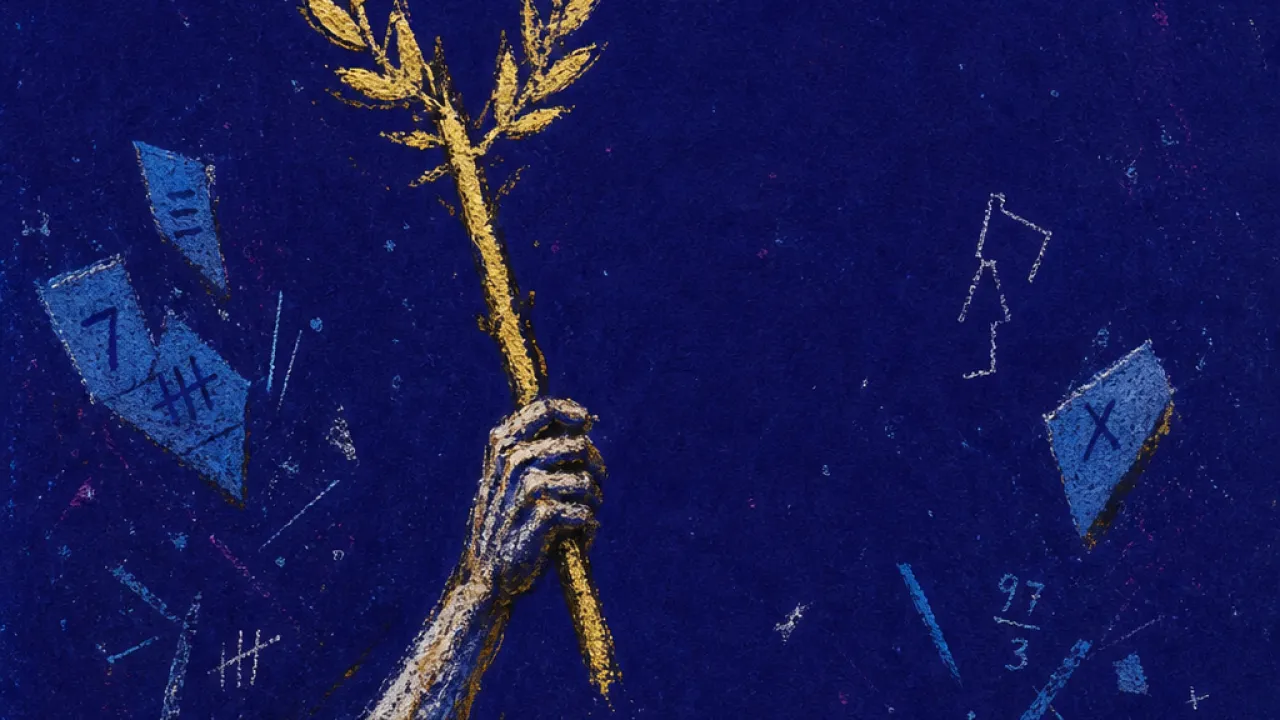
What is this really?
You judge a choice by what happened after it: the grade, the reply, the promotion, the clean ending, the public win. Your mind does this because outcomes give fast closure when the actual decision was full of probability, incomplete information, timing, and trade-offs. Yet the result starts rewriting the whole audit, so a lucky win can look like wisdom and a careful choice can feel like failure, much like the Six of Wands, where the laurel crown and raised wand pull every eye to the victory while the earlier risk disappears behind the parade.
Why did it happen?
At some point, judging by the result may have helped you move on instead of replaying every uncertain choice in your head. Now the same inner pattern can turn visible success into a shortcut, making your body relax before the process has been fully checked and leaving you mentally tired when the next decision needs a clearer audit.
How does it feel?
- You get a good grade back, skim past the feedback, and immediately save the study method as proof that it works... that moment, your shoulders may loosen before your mind has checked what you actually retained. It can be enough to simply notice the relief without turning it into a rule.
- After a project lands well, you reopen the final deck or document and barely glance at the rushed parts that almost broke under pressure... afterward, there may be a bright lift in your chest with a thin layer of unease underneath. Letting both sensations exist gives the result more room to be read clearly.
- When a friend says a decision worked out, you nod quickly and say, 'See, it was the right move,' before asking what they had to ignore to get there... you might feel your jaw set around the sentence, as if the clean ending needs to stay clean. Uncertainty can stay present without needing to spoil the whole outcome.
- You compare two past choices by pointing to the one that got applause, money, or recognition, then swipe away the memory of timing, help, or luck with a quick hand movement... your stomach may dip for half a second when the missing details come back. That pause can be allowed without forcing a new verdict.
- Alone at night, you replay a choice that ended badly and stare at the ceiling as if the ending proves you were careless... your breathing may turn shallow, and the thought can feel heavier than the facts you had at the time. It is okay to hold the result and the original uncertainty separately for a moment.
Outcome Bias in Tarot Cards
That reflex to let the visible win rewrite the whole audit is the center of Outcome Bias. You can feel it in the tiny lift of your chest when a result looks clean, followed by the stomach drop when you remember how little of the process you actually checked. From a Jungian perspective, archetypal theory gives this pattern a way to be seen as an image, not just a mental shortcut. The Tarot Cards below reflect the unconscious dynamics behind trusting the trophy more than the route that produced it.
Outcome Bias in Tarot Card Reading Insights
For anyone who has let a clean ending make the whole decision feel smarter than it was, others have brought this same pattern into readings. Here is how the cards appeared when the focus shifted from the result to the route behind it. Below are Tarot Reading Insights that speak to this pattern.

From Impatient Rewrites to One Question and a Mentee's Revision
Topic:Career Tarot Reading
Struggle:Urgency-Compass Fusion
Context:Mentorship Trial

At 10:47 p.m., Revision Fatigue Turned Toward One Testable Change
Topic:Study Tarot Reading
Struggle:Feedback Disconnection
Context:Thesis Research Bottleneck

"It Worked" Is an Outcome: Testing Whether the Shortcut Was Sound
Topic:Career Tarot Reading
Struggle:Freedom-Structure Conflict
Context:Work Life Integration Trial

A Work Win Felt Wrong—Then Four Columns Put Cost Beside Reward
Topic:Career Tarot Reading
Struggle:Unseen Cost Bind
Context:Hustle Culture Trap