When honesty needs editing?

Name the urge to polish your honesty, see related Tarot Cards, and browse reading insights shaped around the pattern.

Authenticity Perfectionism

Figure at a desk with hands over a marked page, shoulders back, amber revisions fading into blue-grey space.

What is this really?

You rehearse a text until its warmth is gone, revise a post after it is already clear, and hold back a preference until you can present it without a rough edge. You are not merely trying to impress people; you are trying to make being known feel predictable, so that a casual reaction cannot seem to define what your openness was worth. Yet the more carefully you polish proof that you are being yourself, the more the finished version can feel like a display piece you have to protect, while your unedited response waits offstage, much like the Eight of Pentacles, where a solitary craftsperson keeps shaping one pentacle after another.

Why did it happen?

Earlier on, being careful about how you came across may have helped you avoid a sharp reaction, an awkward correction, or the feeling of being misunderstood. Now that inner pattern can start running before you have chosen it: each small edit brings a moment of relief, then leaves you mentally tired and still unsure whether it is safe to be seen.

How does it feel?

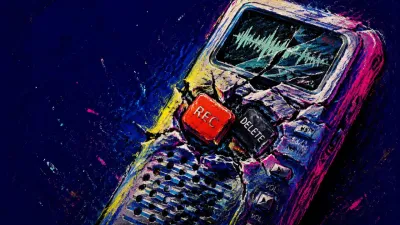
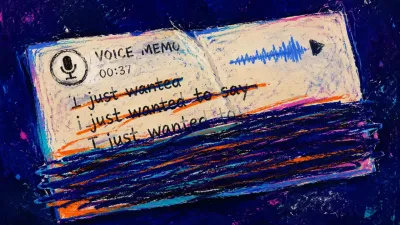
  • In a group chat, you type a direct reply, delete it, add a softer opening, then reread it with your thumb hovering over send. Your shoulders may stay slightly raised and your eyes keep returning to one sentence. It can remain unfinished for a moment.
  • At work, you reopen a slide deck to align a heading that nobody mentioned, nudging the spacing by a few pixels before closing and reopening it. You may feel your jaw set while the rest of the task fades from view. You can notice the pause without needing to name it.
  • Before meeting someone, you change an outfit, check the mirror, then return to adjust one small detail that was already fine. Your chest may feel busy and your breathing may become shallow while you decide. Not deciding right away is allowed.
  • When a friend asks what you want to do, you begin with “I’m good with anything,” then search their face before offering your own choice. Your hands may go still in your lap as the answer waits. Your preference can exist before it is perfectly phrased.
  • Alone with a personal project, you rename files, revise the first paragraph, and postpone showing anyone the version on your screen. You may feel a hollow drop after another round of edits, even though the work looks more finished. That hollow feeling can be there without becoming a verdict.

Authenticity Perfectionism in Tarot Cards

Authenticity Perfectionism can show up in the reflex to revise an honest word until it feels safer than speaking. You may notice your shoulders staying raised while your cursor hovers over the send button. Jungian archetypal theory offers a way to recognize the distance between the polished version and the response waiting offstage. These Tarot Cards mirror the unconscious dynamics beneath that pattern:

Judgement
Reversed
A trumpet sounds over unclothed figures who rise with empty hands, answering before they have assembled credentials or protective costumes. The physical exposure suggests a self that must respond as it is rather than as a finished exhibit. In the reversed expression, you can hear the demand for authenticity but route it through harsh quality control, delaying action until the response matches an ideal image of your evolved self. Growth then becomes contingent on passing an internal verdict. A new interest, boundary, voice, or direction may be genuine but still rejected for arriving awkwardly or contradicting an earlier identity. The image separates the call from the judgment placed around it, revealing that an imperfect response can carry real developmental information even when it does not yet look coherent.
The World
Reversed
A nude dancer holds two batons inside an oval wreath while four watchful figures occupy the corners of the scene. The image contains exposure, framing, completion, and an implied audience within one carefully bounded composition. In the reversed expression, the wreath can become a display frame that is almost ready but never quite safe to release, because the represented self still seems vulnerable to one final imperfection. A message, project, profile, or decision can therefore remain at the threshold after its practical work is complete. You postpone the public moment in the hope that another adjustment will make reception predictable, but the standard moves because the real uncertainty belongs to being seen, not to the remaining detail. The unfinished feeling identifies a completion defense rather than reliable evidence that the work is unready.
Four of Pentacles
Upright
A rigid figure secures pentacles against his head, heart, and feet, physically organising the whole self around not losing what has been acquired. The distant city underscores how control can reduce contact with the wider field. You may hold tightly to a polished account of who you are because allowing a contradictory or awkward response into awareness feels like losing coherence rather than gaining information. The curated self then becomes mentally expensive property. New feelings must either match it or undergo enough editing to preserve it, and ordinary inconsistency can trigger another round of internal correction. The audit here concerns attachment to the finished representation: the tighter it must be held, the less space remains for the unedited response waiting underneath.
Eight of Pentacles
Upright
A craftsperson sits apart from the town, shaping another pentacle beneath a display of already finished work. The repeated symbols suggest a self-concept assembled through continual proof: each polished expression is expected to confirm that you are finally being authentic in the correct way. You can become more skilled at presenting yourself while becoming less willing to let an unedited response count as part of who you are. Growth then becomes another production standard rather than an expansion of psychological range. The polished identity requires maintenance, and every rough preference threatens to look like regression or inconsistency. The deeper shift becomes visible when authenticity is recognized as contact with experience, while perfection is recognized as the control system trying to determine what that contact is allowed to look like.
Two of Swords
Upright
A blindfolded woman braces two swords across her chest as the moon hangs over difficult water behind her. Her posture suggests that not seeing and not choosing have become part of the same protection. You may suppress a family preference until you can express it without inviting correction, disappointment, or a familiar argument about what your choice says about you. Family history can make rough self-expression feel unusually consequential because a casual remark may reactivate an established role. The resulting silence looks like indecision, but its deeper function is to prevent your unedited position from entering a system where it might be redefined by others. Recognising that function separates the real preference from the elaborate presentation standard placed around it.
Seven of Swords
Upright
A figure removes selected swords from a camp while looking back toward the people he is leaving, his hands occupied with managing sharp and potentially risky material. The scene mirrors the careful selection of which opinions, quirks, or uncertainties are allowed into a professional setting. You can polish your personality alongside your work so that colleagues receive a coherent and strategically acceptable version of your authentic self. The defensive gain is predictability: fewer loose edges are available for criticism or misunderstanding. The professional cost is sustained divided attention, because part of you performs the task while another part monitors whether the chosen persona is holding. The image helps distinguish useful discretion from a curation process that makes ordinary workplace visibility feel like an operation that must never go off-script.
Eight of Swords
Upright
A bound figure stands among upright swords with her eyes covered, while an elevated castle represents a more spacious position beyond the immediate enclosure. The scene shows how a mental framework can become physically convincing even when openings remain. You may define authentic growth so narrowly that only polished, consistent, and socially intelligible expressions qualify as progress. That standard turns the ideal self into part of the restraint. Rough experiments, changing preferences, and unfinished language are filtered out, so the experiences that could update your identity never enter the evidence base. The image locates the growth barrier in the rules surrounding visibility, allowing the rule that authenticity must look perfect to be examined separately from authenticity itself.

Authenticity Perfectionism in Tarot Card Reading Insights

For people who revise an honest word until it feels safer than speaking, others have brought the same pause into readings. Below are Tarot Reading Insights shaped around this pattern:
Psychological Patterns Related to Authenticity Perfectionism