Mapping the Future, Missing the Move?

Explore Strategic Foresight as a mapped decision pattern, with tarot cards and reading insights that reflect its pause before action.

Strategic Foresight
What is this really?

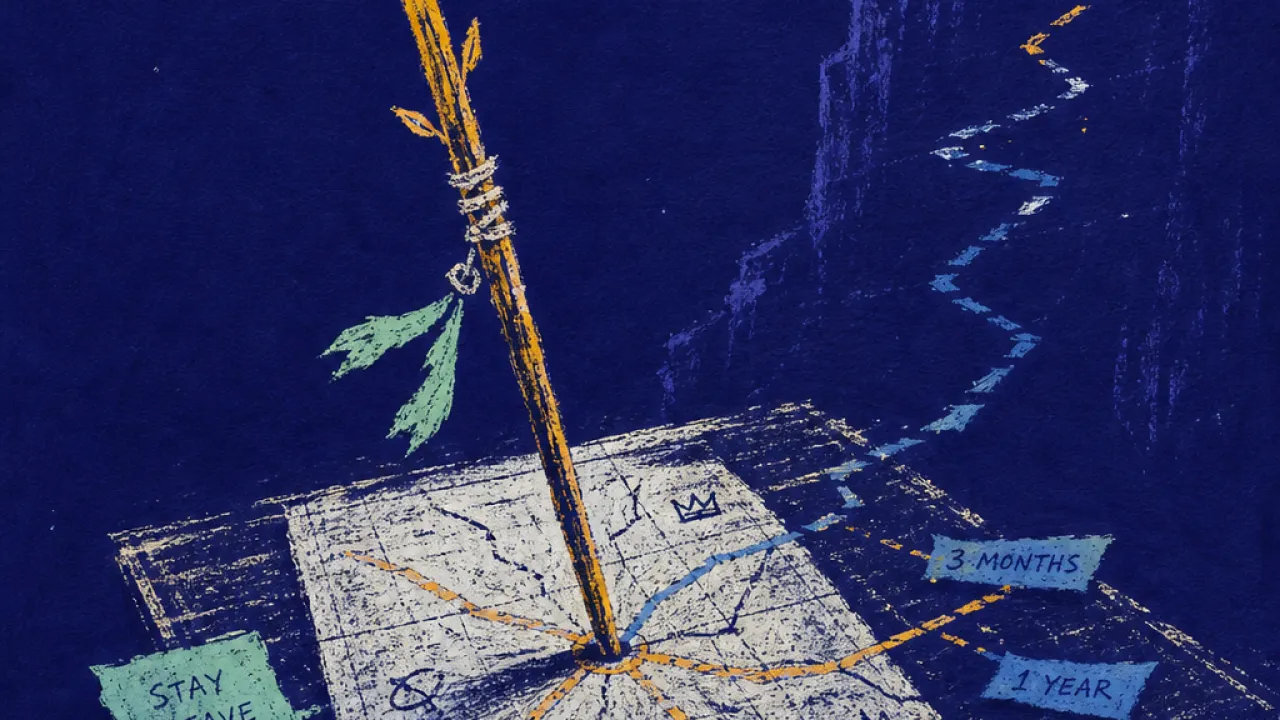
You scan the field before you step: you compare timing, resources, people, risks, and possible consequences, often turning a decision into a working map before anyone else has noticed the terrain. This is your way of protecting your energy from false urgency, impulse pressure, and the cognitive dissonance of choosing a direction that does not actually fit what you want. But the map that steadies you can quietly become a wall between you and the road, leaving you looking at the future instead of entering it—much like the figure in the Three of Wands, hand resting on a planted wand, watching the ships move across the water from high ground.

Why did it happen?

At some point, slowing down before you moved may have helped you stay steady when the room changed fast, when other people expected quick answers, or when rushing left you cleaning up consequences afterward. Over time, your body learned to create distance first: look from above, gather signals, rehearse the path, then act. Now that inner pattern can become a subconscious loop where every opening has to be surveyed from every angle before it feels safe enough to enter, leaving you mentally spent before the first step is even taken.

How does it feel?

  • You open a blank doc before making a decision, title it something like “options,” and start building columns for timing, money, people, risks, and possible fallout; your cursor pauses between rows while your jaw tightens and your breathing gets a little shallow. Let the map exist without requiring it to settle everything tonight.
  • In a meeting, you stay quiet for a few extra seconds, eyes moving between the speaker, the notes, and the calendar invite, waiting to see where the pressure is really coming from; in that pause, your shoulders may lift slightly, as if your body is holding the room at a measured distance. That stillness can be allowed without turning it into a demand for instant certainty.
  • Before sending a message that could change the tone of a relationship, you type one version, delete the edge from it, then type another version with more context and fewer openings for misunderstanding; afterward, your chest may feel held in, like you have been bracing around one careful sentence. It is okay for the first draft to be a holding place, not a final verdict.
  • When you are alone at night, you replay the next few months as if moving pieces across a table: deadlines, rent, applications, travel, friendship dynamics, sleep, and the one thing you actually want; your eyes may stay fixed on the ceiling while your mind keeps scanning, and your body feels tired even though you have not moved. You can notice the scan without forcing yourself to solve the whole horizon at once.
  • At work or school, you read the brief twice, check the deadline against your calendar, and quietly identify where the project could snag before anyone else names it; there may be a small pressure behind your eyes, a focused compression that makes the rest of the room blur for a moment. That early read is information, and it can sit beside uncertainty without needing to become control.

Strategic Foresight in Tarot Cards

The impulse to build a map before you move is the core signal of Strategic Foresight. You may recognize it in the shallow breath over an options doc, or in the focused compression behind your eyes when the room briefly blurs. From a Jungian archetypal theory perspective, this pattern can be understood as the psyche trying to give distance, desire, and risk a visible form. The Tarot Cards below mirror the unconscious dynamics of that mapped pause before action.

Two of Wands Upright
The man stands above the coastline with a globe in one hand and a wand in the other, looking outward before he moves. The height of the battlement gives him distance from the terrain below, while the globe condenses the wider world into something he can hold, inspect, and mentally organize. That visual structure mirrors a mind using distance as a cognitive regulation strategy. Instead of reacting impulsively to every academic pressure, the pattern pauses, maps options, and compares possible routes before committing energy. For study, this becomes Strategic Foresight when You can hold a future academic direction without needing to rush into the first available path. The card links this pattern to the disciplined moment before action, where clarity is built through perspective rather than panic.
Three of Wands Upright
The figure stands on high ground with one hand resting on a planted wand, his body turned away from the viewer and toward ships moving across the water. The three wands do not scatter around him; they create a stable frame that lets the eye travel from present ground to distant movement without losing orientation. Strategic Foresight grows from that physical arrangement: desire is not being chased impulsively, but held inside a wider map. You may recognize this pattern when personal growth stops feeling like random self-improvement and starts becoming an audit of timing, resources, and direction. The horizon matters because it gives the psyche a future without demanding immediate proof. The card links this pattern to the capacity to hold a long-range vision while still staying grounded enough to make the next move real.
Seven of Wands Upright
The figure is not standing on flat ground; he is raised above the six lower wands on a rough ledge, with a clear sky opening behind the conflict. The elevation gives him perspective, but the uneven terrain makes that perspective something he must actively maintain rather than passively enjoy. Strategic Foresight grows from that exact tension. You may need altitude before choosing because the visible fight is only part of the decision field: hidden costs, timing risks, and third-route possibilities sit below the first layer of pressure. The card links this pattern to the ability to hold a difficult vantage point long enough to see more than the loudest option.
Eight of Wands Upright
The eight wands do not scatter; they hold spacing, angle, and timing across a large open field. Below them, the river, banks, green land, hill, and distant house remain distinct, so the eye can read both speed and terrain at once. Strategic Foresight emerges when momentum is placed inside a map. You are not only reacting to movement; the psyche is tracking layers, distance, and arrival, turning fast change into a pattern that can be read before it becomes irreversible.
Nine of Wands Upright
Every wand touches the ground, and the row behind the figure creates a visible system of preparation. The scene is not chaotic; it is organized, grounded, and built from repeated vertical supports. Even the wounded figure has arranged his environment so the next challenge will not arrive unmeasured. Strategic Foresight is the pattern that turns previous impact into practical navigation. It does not erase fear, but it gives fear a structure so the future can be scanned without collapsing into panic. The wound becomes information, not destiny. For a direction question, this card supports an audit of what your experience has already taught you. The next path does not have to be chosen from fantasy or social pressure. It can be mapped through the stable signals that remain after exhaustion, disappointment, and false urgency have been separated from the real long-range trajectory.
Knight of Wands Upright
The distant pyramids sit beyond the horse's lifted hooves, turning the scene into a visible route rather than a random burst of motion. The knight is fired up, but the reins and open desert insist that the terrain has to be read before the charge can begin. Strategic Foresight is the psychological mechanism that keeps ambition from collapsing into immediacy. It does not deny desire; it places desire inside a larger field of timing, distance, resource, and consequence. For timing questions, this pattern names the part of you that can sense both the spark and the season. You are not only asking whether you are ready to move; you are asking whether the road ahead can receive the kind of movement you want to make.
Queen of Wands Upright
The Queen's wand is held upright like a living instrument of intention, while the sunflower in her other hand gives her attention a clear visual target. Her body does not slump into indecision; it organizes energy through posture, gaze, hand position, and throne alignment. That visual structure translates into a decision mechanism where intuition and agency work together rather than competing. The card does not show blind impulse; it shows directed vitality, the ability to hold desire in one hand and executive force in the other. For you, Strategic Foresight names the moment when a choice stops being an abstract maze and becomes a mapped field of consequences. The pattern is not about predicting everything; it is about seeing enough of the hidden cost, motive, and timing to move without surrendering your judgment to panic or fantasy.
King of Wands Upright
The throne faces an open desert, and the King's eyes do not collapse into the object in his hand. The wand is grounded, but his attention is already moving across distance, using the empty field as a place to scan rather than a void to fear. This is fire held in a strategic container. The card does not show frantic movement; it shows the pause before movement, when direction becomes more important than speed. You meet Strategic Foresight when personal growth stops being a string of upgrades and starts becoming a designed route through uncertainty.

Strategic Foresight in Tarot Card Reading Insights

For anyone who builds a map before they move, others have brought that same tension into readings: the need to see timing, risk, and desire in one frame. Below are Tarot Reading Insights where this mapped pause before action becomes visible through the cards.
Psychological patterns related to Strategic Foresight