Can You Hear Yourself Again?

Explore the quiet inner shift, the tarot cards that mirror it, and related reading insights from sessions.

Solitary Clarity
What does this feel like?

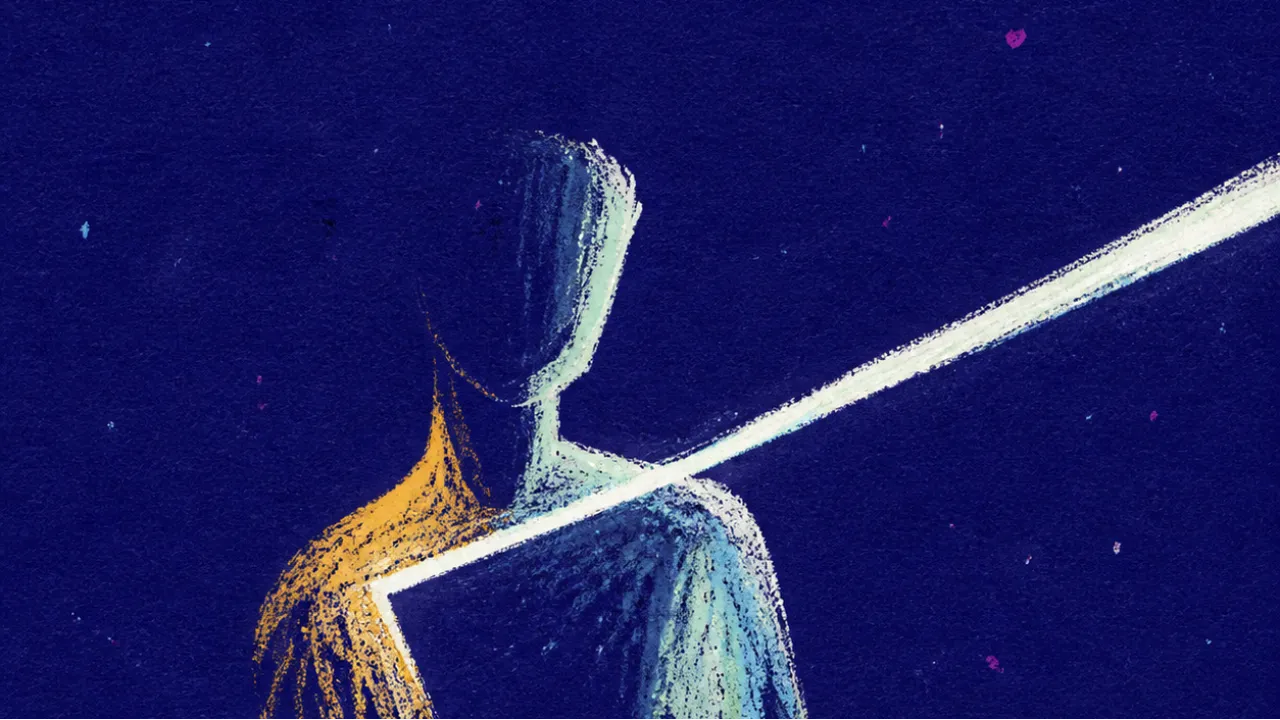
Solitary Clarity: you feel it in the tiny pause after the noise drops, when your shoulders lower by a fraction and your chest stops bracing for another demand. It is quiet, but not empty; more like the lights in your head narrowing from a blur of tabs, messages, opinions, and other people's urgency into one clean beam. You may still be alone at your desk, on the train, or lying in bed with your phone face down, but the aloneness no longer feels like being left out; it feels like getting your hearing back. Your jaw loosens, the space behind your eyes cools, and the question that kept smearing itself across everything starts to show an edge. You stop rehearsing how to make the insight sound acceptable to everyone else and hear a smaller sentence instead: I know enough to take the next step. Solitary Clarity can feel strangely private because it does not arrive with applause, certainty, or a full map; it arrives as one usable patch of light in a wide dark field, much like The Hermit holding his lantern over the mountain, not flooding the whole night, only revealing the next edge clearly enough to move by.

Why you're feeling this?

Solitary Clarity is allowed to feel quiet, even a little set apart, because not every kind of knowing arrives while your attention is crowded. Nothing is wrong with you for needing distance before your own signal becomes audible. Some parts of you can only speak when the volume around them finally drops.

Solitary Clarity in Tarot Cards

That moment when your shoulders lower and your chest stops bracing is the body of Solitary Clarity. This is a universal emotional experience: the private shift from blur to one usable line of sight. The cards below hold that narrow beam without turning it into performance. Here are the Tarot Cards that tend to mirror Solitary Clarity.

The Hermit Upright
The bowed head, hooded cloak, and raised lantern place the Hermit inside a narrow field of chosen attention. The outer world is present as cold darkness, but the visible center of the card is the lamp: a small, deliberate light held close enough to guide without becoming spectacle. That visual structure turns isolation into a container for discernment. In personal growth, the card does not glorify withdrawal; it shows the moment when distance from other people's noise allows a cleaner internal signal to surface. The staff keeps the body grounded while the lantern keeps the mind oriented, so the insight is not abstract escape but a usable inner reference point. Solitary Clarity arises when you stop asking every framework, feed, mentor, or trend to authorize your next self. The card mirrors the private lucidity that appears when your attention becomes quiet enough to tell the difference between genuine evolution and another borrowed performance of growth.
The Hanged Man Upright
The yellow halo around the upside-down head makes clarity appear in an unusual position. The figure sees from a reversed angle, yet the frame stays centered and the expression remains undisturbed. For social life, that visual structure points to the insight that often arrives only after stepping outside the group’s tempo. You may read people, expectations, and hidden energy exchanges more accurately when you are not trying to participate at full volume. Solitary Clarity is the quiet precision that comes when distance restores your perception. It does not reject connection; it lets you see which connections still leave room for your own mind.
The Star Upright
The figure is alone beside the pool, and the sky above her is clear enough for distant points of light to remain visible. Nothing in the scene crowds her attention; even the water reflects without muddying the field. Solitary Clarity is the social afterglow of stepping outside the noise and seeing the pattern plainly. You are not rejecting connection; you are recovering the quiet distance needed to tell aligned community from ambient obligation.
Four of Cups Upright
The figure sits under the tree with enough space between himself, the three cups, and the offered cup to let perception settle. His stillness can read as refusal, but it also creates a contained interior room where immediate reaction is suspended. Solitary Clarity belongs to the side of the Four of Cups that audits feeling before accepting the next emotional demand. In a family system, this pause can be the only place where your own response separates from inherited guilt, reflexive compliance, or automatic resistance. You are not required to know your answer while everyone else is waiting for one. The card gives form to the private interval where your real signal becomes distinguishable from family noise.
Eight of Cups Upright
The lone figure does not argue with the cups or turn back for confirmation; the body chooses distance, staff, and higher ground. The clean separation between foreground, river, and mountain creates a private corridor where perception can sharpen without an audience. Inside the work of self-inquiry, this emotion is the clear air that comes after stepping away from noise, roles, and inherited reactions. The card frames solitude as an observational chamber, where you can finally hear which inner signals are yours and which ones were only being rehearsed.
Nine of Pentacles Upright
The woman stands alone, but the scene is not empty. The open sky, framed trees, visible house, and cultivated vines give her solitude a defined environment, separating her inner field from the noise beyond the garden. For growth work, this becomes the feeling of hearing yourself again. You are not withdrawing from life; you are stepping into enough quiet to sort signal from performance, so the next version of you can be chosen from clarity rather than comparison.
Ace of Swords Upright
A single sword stands in a vast, nearly empty sky, with the barren hills kept low beneath it. The card gives the blade room to be seen without crowding it with figures, scenery, or competing symbols. Inside a social ecosystem, that space becomes the inner condition where your own perception can separate from the group's emotional weather. You may feel most honest when you step back, not because connection has no value, but because silence lets the real shape of connection become visible.
Four of Swords Upright
The closed eyes, stone wall, and chapel enclosure remove the knight from ordinary noise. Nothing in the scene asks for performance; even the swords are arranged into stillness, turning sharp mental material into something that can be observed from within a protected interior. For personal growth, this points to the clarity that appears only when the external feed goes quiet. You can start to tell the difference between a real inner signal and the borrowed urgency of other people’s timelines. Solitary Clarity belongs here because the card’s solitude is precise rather than empty. The retreat creates enough mental distance for your next step to be seen without forcing it into immediate action.
Queen of Swords Upright
The Queen sits above the low clouds with her sword held upright, her face turned away from the viewer and a single bird moving through the open sky. The image gives thought a clean vertical line and places the body in a separate, elevated seat, so clarity arrives with space around it rather than warmth around it. For personal growth, that structure maps to the moment when your inner filter finally sharpens and the noise drops away. You can see the limiting belief, the false rule, or the wasted loop with unusual precision, but the view is private enough to feel like standing on a high ledge with no one else fully inside the insight.
King of Swords Upright
The wide sky, low horizon, and open space around the throne leave the King visually alone without making the scene collapse. His attention stays on the sword while the distant trees remain present but small. That spacing mirrors the moment when social distance gives you a clearer read on your own signal. You can want belonging and still need enough room to notice which circles sharpen your voice and which ones blur it.
Two of Wands Upright
The figure stands above the land, sea, houses, and hills, using the height of the castle to turn the whole scene into a readable map. The globe in his hand echoes that same movement inward: the world is not being chased, but studied from a place of deliberate distance. Solitary Clarity emerges from that visual distance. The card holds the clean feeling of finally being able to see the shape of your inner life without being swallowed by it. You are not outside your feelings; you are standing far enough from them to notice their pattern. In introspection, this clarity can feel quiet rather than celebratory. It may reveal what has been driving you, what has been protecting you, and what no longer belongs in your inner operating system, all without needing immediate performance or confession.
Three of Wands Upright
Seen only from behind, the figure faces the sea without turning back toward the viewer. The high ground, open sky, moving ships, and faint hills create a long sightline that removes immediate social noise from the frame. Solitary Clarity appears when distance becomes a tool for perception rather than a withdrawal from life. In introspection, the card reflects the private altitude where you can finally see the pattern without performing your reaction for anyone else.

Solitary Clarity in Tarot Card Reading Insights

For anyone who knows Solitary Clarity as the moment your own signal becomes audible, others have brought that same set-apart quiet into readings. The articles below shift the focus from cards to readings where this clean, private feeling is present. Tarot Reading Insights for Solitary Clarity.

Psychological emtions related to Solitary Clarity