Why Does Rest Feel Risky?

Explore the tight, buzzing pressure of academic performance anxiety through tarot cards and reading examples shaped around this feeling.

Academic Performance Anxiety
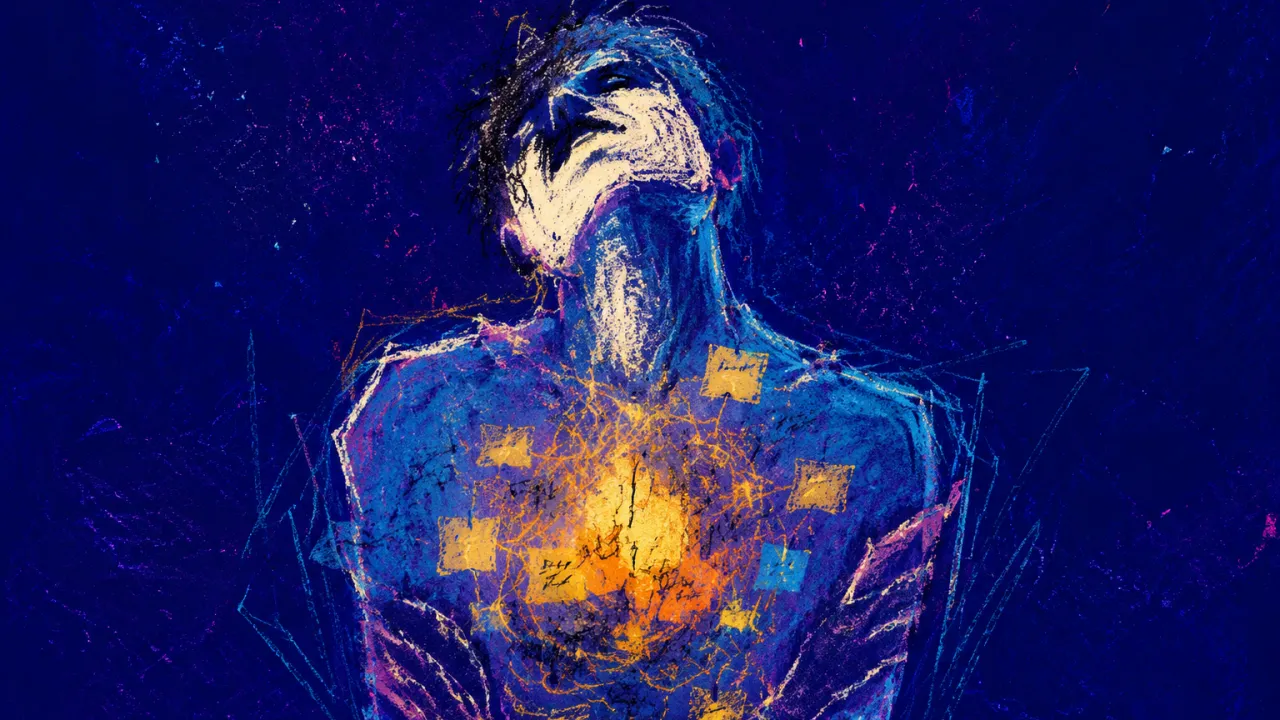
A solitary figure with raised shoulders, amber haze across the chest, and cool blue space narrowing around it.

What does this feel like?

Academic Performance Anxiety — you wake before your alarm with a tight chest and your shoulders already lifted, as if the day has arrived before you are ready for it. You open your notes, reread the same line, and feel your attention buzzing around the page without landing; a simple question can suddenly feel like a test of your entire worth. Your hands hover over the keyboard, your breathing turns shallow, and every unfinished task seems to glow louder than the one in front of you. Even when you have prepared, a hollow doubt keeps asking, "What if I blank? What if this grade says something about me?" You may check the deadline again, compare your progress with everyone else's, or keep working past the point where the words stop sinking in, caught between needing rest and fearing that rest will cost you. The pressure is not always loud; sometimes it is a quiet heaviness under your ribs, a buzzing behind your focus, and the feeling that you are being measured before you have had time to arrive, much like the figure on the Nine of Swords, awake in bed beneath a wall of swords while the dark makes each unanswered question feel close.

Why you're feeling this?

Academic Performance Anxiety does not need to be loud to be legitimate; the tightness, buzzing, and doubt are experiences you can acknowledge without arguing with them. You are not required to earn the right to feel unsettled by proving that you prepared enough.

Academic Performance Anxiety in Tarot Cards

Academic Performance Anxiety can feel like a tight chest before the day has even begun, with your attention buzzing around the page without landing. It is a universal emotional experience, and these cards give its felt outline a visual language without reducing it to a verdict. Here are the Tarot Cards that mirror the shape of this feeling.

The Devil
Upright
Two figures stand chained to the Devil's pedestal beneath an inverted torch, their restraints close enough to look almost voluntary. The chains mirror a performance contract in which grades, rankings, or praise become external proof of worth, so studying feels compulsory even when the work has stopped feeding understanding. The upright structure makes the attachment visible: fear tightens the link between achievement and identity, and relief depends on the next score. You can see the difference between commitment to learning and a self-worth system organized around avoiding judgment, giving the pressure a name without granting it authority.
Eight of Pentacles
Reversed
A solitary craftsperson hammers one pentacle after another while the finished coins line the wall behind them. Reversed, the repetitive workshop becomes a performance loop: rereading, polishing, and extending the session create visible effort, but your attention no longer settles and each unfinished detail feels like evidence against you. The inverted pattern links diligence with diminishing return rather than with grounded practice. You can recognize the difference between learning that is landing and labor used to quiet evaluation fear, without turning reduced output into a statement about your capability.
Four of Swords
Reversed
A stone knight lies in a tomb beneath three swords while a fourth sword waits beside the resting figure. Reversed, the still chamber becomes interrupted recovery: your body needs a pause, but the pending exam or unfinished reading keeps the mind on watch, making rest feel like lost academic ground. The inverted stillness shows a broken rhythm between effort and restoration. You can observe rest guilt and deadline vigilance as part of the performance system, rather than using the inability to fully switch off as proof that you need to push harder.
Eight of Swords
Upright
A blindfolded figure stands bound among eight swords, hemmed in by a field that looks impossible to cross. The image mirrors the moment a question becomes a test of identity: your working memory narrows, choices feel blocked, and the attempt to avoid a mistake makes it harder to begin. The upright enclosure shows how academic pressure can become a cognitive trap without requiring an actual lack of preparation. The fear is real as an experience, but the swords also distinguish the mental boundary around performance from the full range of knowledge and options still available to you.
Nine of Swords
Upright
A figure sits up in a dark bed beneath nine swords, with the night giving the mind no visual distance from its questions. The swords become an inner archive of unfinished tasks, imagined mistakes, and rehearsed judgments, so the academic threat keeps replaying after the notes are closed. The upright pattern makes the hidden self-audit observable: bodily alarm, mental looping, and compulsive checking are all part of one pressure system. You can witness the fear of being measured as an internalized standard rather than treating its intensity as proof that the feared outcome is true.
Page of Swords
Reversed
A young figure grips a raised sword while wind unsettles the landscape and pulls at their clothes. Reversed, that alert posture reads as mental overactivation without a stable target: your attention jumps between notes, deadlines, and imagined questions, turning study into frantic checking rather than absorption. The inverted Page preserves the sword's quick intelligence but shows it losing regulation. You may keep gathering information or reopening the same page because movement feels safer than pausing, while the underlying fear remains that one lapse will expose you as unprepared.
Ten of Wands
Upright
A worker bends beneath a bundle of ten wands, carrying so much that the road ahead is almost hidden. The narrowed view resembles a crowded academic workload in which every deadline competes for attention, and the body keeps moving because putting anything down feels dangerously close to falling behind. The upright burden gives the anxiety a concrete cost: lifted shoulders, shallow breathing, and effort that continues after comprehension has thinned. The pressure is not a character verdict; it is the felt weight of too many obligations being carried as though each one must be completed perfectly.

Academic Performance Anxiety in Tarot Card Reading Insights

When Academic Performance Anxiety follows you into a reading, the same tight chest and unfinished questions can sit beside the cards. The readings below show how others have carried this feeling into a session; explore these Tarot Reading Insights.
Psychological Emtions Related to Academic Performance Anxiety