When Showing Up Is Mandatory

See presenteeism pressure in everyday workplace demands, the tarot cards that mirror it, and selected reading insights from related sessions.

Presenteeism Pressure
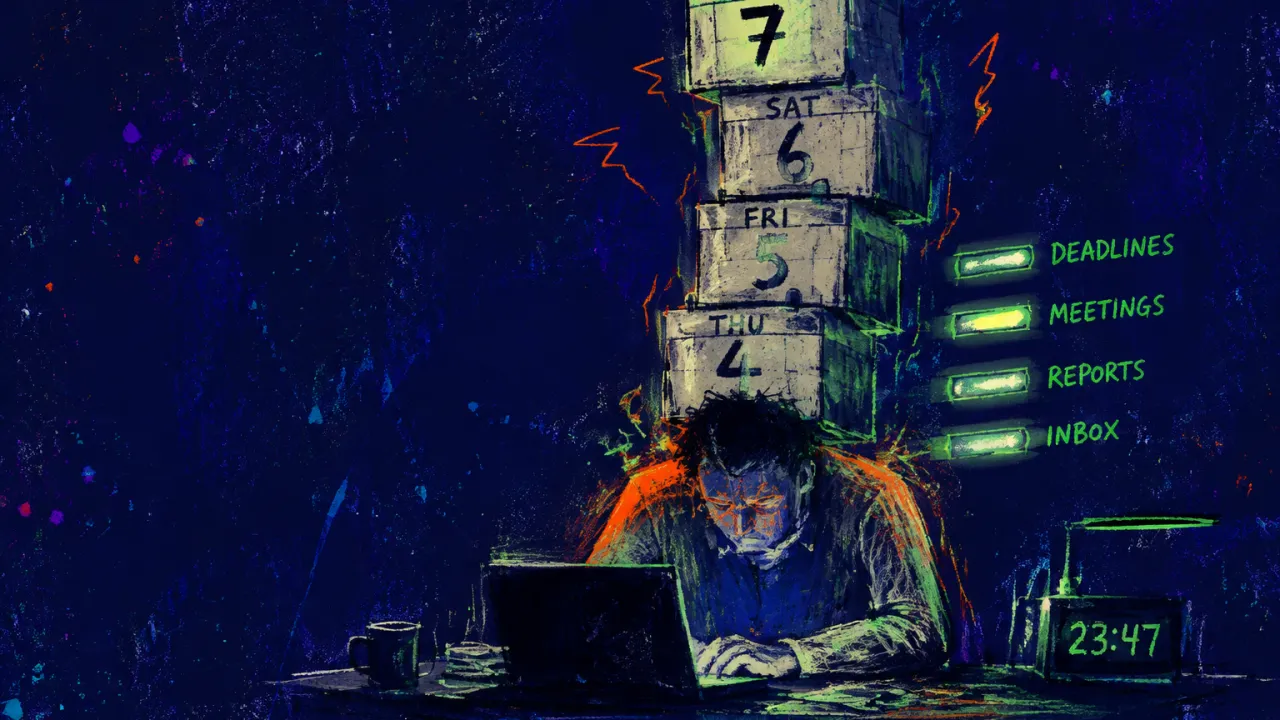
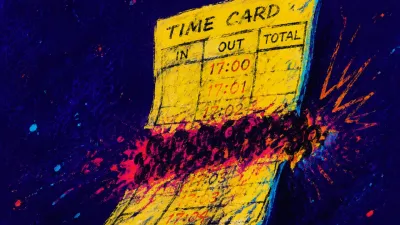
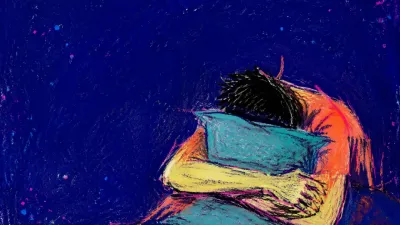
A seated figure with lowered shoulders under stacked calendar blocks, green status lights enclosing the rigid desk space.

What is this situation?

Presenteeism Pressure is the workplace expectation that you remain visibly available even when you are unwell, running on very little rest, or supposed to be off the clock. It starts on a morning when your eyes feel gritty and your body moves slowly, but before you decide whether to take leave, you check Slack, Teams, or email to see what is already waiting and whether anyone else is available. A manager may say there is no pressure, then immediately ask who will cover your meetings, mention a deadline, or remind everyone how stretched the team is. You log in from bed, turn your camera on, or make the commute because the green status dot, occupied desk, and quick reply have become evidence that you are committed. Throughout the day, new messages land before old tasks are finished; lunch happens beside the laptop, and your shoulders stay drawn upward while you keep your voice steady in meetings. The policy may offer sick days and PTO, yet the daily signals say something else: people who answer after hours are praised, those who take time away return to a backlog, and workloads are arranged as though nobody will ever be absent. No single instruction has to say keep working; the schedule, praise, staffing, and unanswered cover requests do it together. By evening, you have been visible for hours without having had the space to properly stop, much like the figure on the Ten of Wands, bent forward beneath a bundled load while the town still waits ahead.

Why it's not you?

This is not a personal failure to manage your limits; the workplace is making visible attendance stand in for commitment. When managers reward constant availability, leave work uncovered during time off, and organize deadlines as though absence never happens, the pressure is produced by the environment itself.

Presenteeism Pressure in Tarot Cards

Presenteeism pressure is the demand to stay logged in, on-site, and responsive when you are unwell or meant to be off the clock. The gritty eyes and shoulders drawn upward at the desk mark where an environmental, structural dynamic lands: visible attendance is treated as commitment. The Tarot Cards below reflect the contours of that demand without telling you whether to remain at work or take time away.

The Emperor
Reversed
The rigid stone throne, the armor worn beneath formal robes, and the barren mountains behind the authority figure present leadership organized around control, endurance, and limited softness. Reversed, that authority becomes inflexible management: a boss can acknowledge illness verbally while using deadlines, cover questions, and staffing scarcity to override the practical legitimacy of leave. You receive mixed signals because the managerial structure protects output more consistently than it protects recovery. The reversed throne locates the pressure in a misuse of positional authority, clarifying why an apparently optional request can still carry the force of a command.
The Hierophant
Upright
The enthroned authority, the two followers positioned below him, and the crossed keys at the base of the institution show norms being transmitted through hierarchy and ritual. Presenteeism works in the same way when workers learn that quick replies, occupied desks, and attendance while unwell are the accepted signs of professional seriousness. You may never receive a direct order to work through illness because the culture teaches the rule through praise, imitation, and access to approval. The upright structure makes that unwritten curriculum visible, allowing the expectation to be recognized as an institutional convention rather than a universal standard of commitment.
Justice
Reversed
The scales held in one hand, the upright sword in the other, and the official seated between institutional pillars present a system that claims to balance rules with consequences. Reversed, those instruments no longer align: written sick-leave policy remains visible, but informal penalties, praise patterns, and unequal coverage produce a different workplace rule in practice. You are asked to trust the stated entitlement while adapting to evidence that using it may damage how commitment is judged. The reversed scene locates the contradiction in organizational enforcement, not in your ability to interpret or manage a supposedly neutral policy.
The Devil
Upright
The elevated authority, the downward torch, and the chained pair below create a workplace-like hierarchy in which access to security is tied to continued attachment. Constant availability becomes the visible contract: the worker stays connected because recognition, belonging, pay, or future progression may appear to depend on it. You can see that the collars are not identical to an explicit command, which is precisely how this career pressure operates. The upright scene names coercion carried by incentives and dependency, exposing why a manager can deny applying pressure while the surrounding system still makes disconnection costly.
Two of Pentacles
Upright
The two pentacles circulate inside an infinity-shaped ribbon while the juggler keeps moving and ships rise and fall on rough water behind him. The image captures a day in which meetings, messages, meals, and physical recovery must all be kept in motion because the workplace has supplied no stable pause. You are visibly adapting, and the upright figure still has enough coordination to reveal how the system operates. The endless loop also shows the limit of that resourcefulness: successful juggling can conceal that sick leave has been converted into another multitasking day.
Three of Pentacles
Reversed
The craftsperson on the bench, the two stakeholders holding the plan, and the unfinished cathedral structure portray work that depends on coordinated roles and shared design. Reversed, that coordination fails: responsibilities remain concentrated, cover is unclear, and the project continues to depend on the person who should be allowed to step away. You may log in while unwell because the team has no functioning handoff rather than because your presence is uniquely virtuous. The reversed collaboration scene identifies inadequate staffing and knowledge distribution as the mechanism turning illness into a professional attendance test.
Five of Pentacles
Upright
The injured figures moving through snow, the uneven physical support between them, and the illuminated pentacles in the window show hardship unfolding beside an institution whose resources remain difficult to access. The scene reflects workers who continue showing up while unwell because leave, security, and organizational care feel formally present but practically distant. You may treat visibility as protection against exclusion when employment or belonging already feels precarious. The upright light confirms that support exists somewhere in the structure, while the cold street makes the access gap impossible to dismiss as a personal reluctance to rest.
Four of Swords
Reversed
The carved resting figure, the swords hanging above, and the enclosed sanctuary depict a formal pause that should be protected from ordinary demands. Reversed, the sanctuary becomes permeable: a leave policy may exist, yet meetings, unanswered cover requests, and performance concerns keep professional obligations inside the period of absence. You are left with the appearance of leave but not its practical function. The reversed image reveals a career system that records time away administratively while continuing to depend on your availability operationally.
Eight of Swords
Upright
The bound worker, obscured vision, and eight-sword perimeter depict a role surrounded by restrictions that are real even when they are not completely sealed. In career terms, those restrictions are the uncovered meetings, response metrics, staffing shortages, and ambiguous managerial consequences that make using sick leave feel professionally unsafe. You are not being shown as incapable of setting limits; you are being shown inside a badly scaffolded employment environment. The upright gaps preserve the possibility of movement while directing attention to the organizational barriers that must be seen before the pressure can be accurately understood.
Nine of Swords
Upright
The figure sitting upright in bed, the hands covering the face, and the nine swords aligned across the dark wall turn the sleeping space into a mental extension of daytime pressure. The image matches the afterimage of an always-available workplace: unanswered messages, morning meetings, and the risk of appearing offline continue to occupy attention after the laptop closes. You are not inventing the pressure simply because its night-time form is internal. The upright scene shows the mind carrying forward an external monitoring system, making it possible to distinguish personal self-criticism from the workplace cues that repeatedly loaded the psychological cache.
Page of Swords
Upright
The Page turns watchfully across elevated ground, holds the sword ready in both hands, and stands beneath fast-moving clouds and wind-bent trees. That alert posture mirrors a digitally monitored workday in which Slack status, response time, calendar activity, and camera presence are continually checked for signs of commitment. You may keep scanning channels even when no message explicitly orders you online. The upright alertness remains a usable professional capacity, but the surrounding weather reveals how a workplace can capture that capacity and convert it into continuous self-monitoring.
Six of Wands
Upright
The elevated rider, the laurel wreath attached to his staff, and the surrounding crowd make recognition publicly visible. In a presenteeism culture, the same reward structure appears when after-hours replies, attendance while unwell, and uninterrupted availability are celebrated as exceptional commitment. You learn what the organization values by watching which behaviors receive applause. The upright procession exposes recognition as an accessible but conditional resource, showing how praise can normalize overextension and quietly redefine healthy absence as insufficient ambition.
Nine of Wands
Upright
The injured guard remains upright at the perimeter, one staff held defensively while the other eight form a barrier behind him. This turns persistence into a public role: the workplace sees the occupied post and ongoing readiness, while the bandage records the strain required to keep that signal visible. You may be recognized as dependable precisely because the role leaves no room to become unavailable. The upright figure still has awareness and footing, which makes the pattern open to scrutiny: resilience is present, but the organization is converting it into an expectation of endless professional coverage.
Ten of Wands
Upright
The bound bundle of staffs blocks the carrier's forward view, bows his shoulders, and must still be delivered to the town ahead. That composition captures a workplace where excessive assignments, uncovered meetings, and constant response expectations obscure any practical route to taking leave. You remain visibly productive, but the upright motion exposes what that performance costs. The pressure does not originate in insufficient commitment; it comes from a role designed to keep advancing only when one person continues carrying every demand, including those that should have been redistributed during an absence.

Presenteeism Pressure in Tarot Card Reading Insights

When presenteeism pressure makes being seen at work matter more than having time away, others have brought that same workplace demand into their readings. The articles below collect Tarot Reading Insights from those sessions.
Psychological Contexts Related to Presenteeism Pressure