Closing Teams at 6:30: From PIP Overwork to Specific Evidence
Overworking During a PIP: The 10:45 p.m. Case for Being Worth Keeping
I heard the pattern in Alex (name changed for privacy) before they had finished their first sentence: one vague line in a performance note, and before their coffee was cold, they were already planning the extra hours that would make their response impossible to question. At 29, they were working as an operations coordinator in Toronto while navigating a formal performance improvement plan, or PIP. Every ordinary task had begun to feel like evidence that might later be examined.
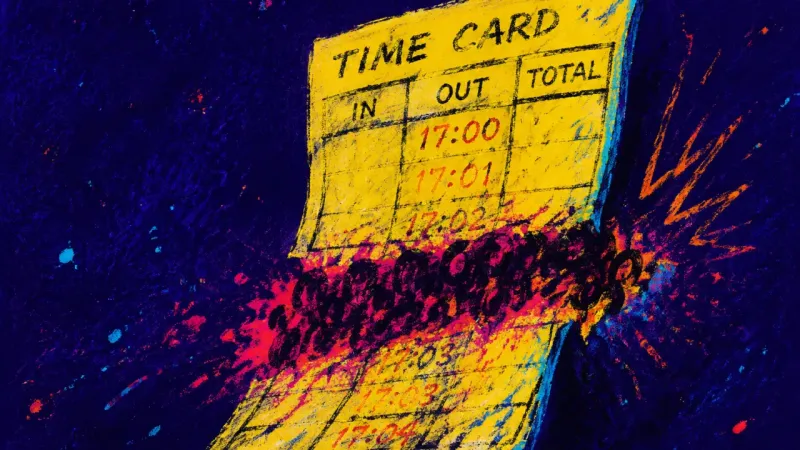
They described the previous Tuesday at 10:45 p.m. The laptop fan hummed against the quiet of their apartment, the phone screen warmed their palm, and a completed task sat open in the tracker for the third time. Their shoulders had climbed toward their ears. Their eyes stung as they added another paragraph that nobody had requested. On the calendar, a reminder for an actual break remained unanswered.
“I can rest after I have made the case,” Alex said. “But the case keeps getting longer. I do not know whether I am improving or just staying visible.”
I watched their thumb rub the edge of the phone while they asked the question beneath the question: “What am I trying to prove by overworking during my PIP?”
The conflict was painfully precise. Alex wanted job security and a fair record of their effort, but recovery felt dangerous because it might make that effort look insufficient. The fear of being judged had become like a smoke alarm wired directly to the Teams notification sound: every small signal sent their chest tight and their attention running toward the nearest task. They told themselves they were documenting progress, but their shallow breathing and wired exhaustion were already recording a different cost.
“This is scary because the process matters,” I said. “I am not going to pretend a boundary can guarantee the outcome, and I am not going to use tarot to predict what your employer will decide. What we can do is examine the loop objectively. Let us draw a map of what your extra hours are trying to accomplish, what they can genuinely demonstrate, and what they can never be asked to prove.”

Choosing the Transformation Path Grid in PIP Limbo
I asked Alex to place both feet on the floor and take one unforced breath before I shuffled. I treat this preparation as a transition of attention, not a mystical test. It gives the mind a moment to stop arguing its case and notice the question it has actually brought into the room.
I chose the Transformation Path Grid (6) · Context Edition, a six-position tarot spread designed to trace a repeating system. For anyone wondering how tarot works in a situation like PIP anxiety, I use the cards as structured prompts rather than verdicts. Their symbols externalize a pattern so we can inspect its parts without confusing the pattern with the person.
I did not choose the broader Celtic Cross. Alex was not asking for a sweeping forecast about every force around their career. The problem was a tight recursive loop: feedback triggered more visible effort; visible effort briefly reduced guilt; exhaustion blocked recovery; and blocked recovery made the next piece of feedback feel even more threatening. The Transformation Path Grid was the smallest map that could hold that entire chain without pretending to know the PIP's external result.
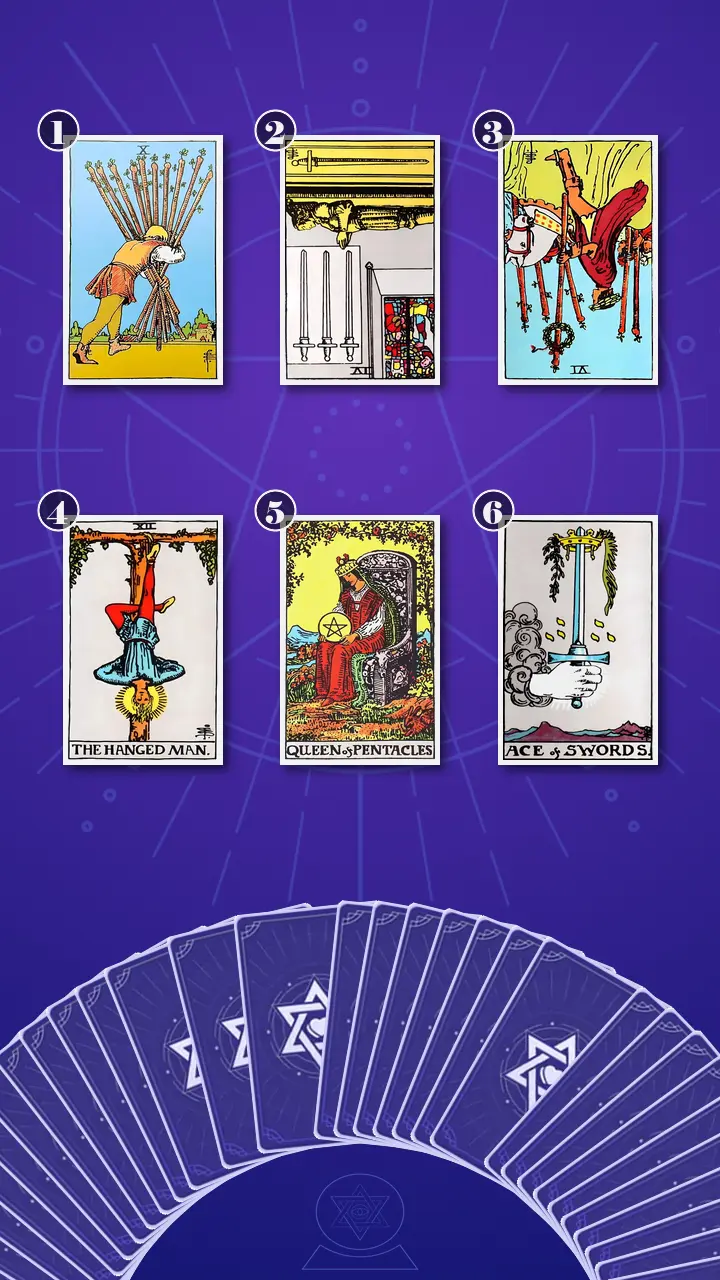
I laid the cards in two rows of three. The top row would show the present behavior, the recovery blockage, and the recognition need at the root. The lower row would begin with the key trigger, then move through a practical action plan and into integration. I explained that the fourth position was our hinge: the place where frantic proof-seeking might become a different kind of evidence gathering.
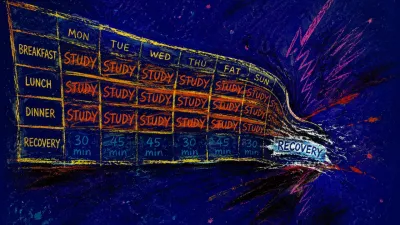
The arrangement resembled a crowded work queue being reorganized into a usable path. I invited Alex to follow three questions across it: What am I carrying? What changes when I pause? What can I state plainly?
The Bundle, the Open Laptop, and the Missing Applause
Position 1: The Work-Evidence Burden
I turned the card in the position representing the present situation: the observable PIP behavior in which Alex stayed online late, added extra tasks, and treated overwork as proof of commitment. It was the Ten of Wands, upright.
The figure was bent beneath ten bundled wands. The load blocked most of the road from view, even though a town waited in the distance. I asked Alex to notice that the destination had not disappeared. The carrier simply could not see it clearly through everything they had decided to hold.
In Alex's working life, the image was almost literal. After completing the two deliverables named in a PIP check-in, they would add another process note, another tracker update, and another optional revision. By 10:45 p.m., the proof-of-work looked abundant, but the abundance obscured the acceptance criteria. The question had shifted from “What demonstrates progress?” to “How much can I carry before nobody is allowed to doubt my commitment?”
I read this as Fire in excess. Effort and responsibility were not the problem by themselves. Their useful energy had been pushed past its limit until motion replaced discernment. Every extra task made Alex feel briefly safer while narrowing the attention needed to identify which responsibilities created meaningful evidence and which merely added weight.
“When the stated work is complete and you stay online,” I asked, “are you adding a useful deliverable, a clearer record, or another layer of proof that nobody requested?”
Alex's breathing stopped for a beat. Their gaze moved from the bundle to the distant town, as if replaying a week of tracker updates. Then they gave a short, bitter laugh and leaned back. “That is so accurate it is kind of brutal. I have literally turned two completed tasks into five updates.”
“The card is not calling you foolish,” I said. “It is showing us the engineering of the burden. You found a strategy that creates a few minutes of control. We are checking whether its cost now exceeds the information it gives you.”
Position 2: The Break That Never Fully Begins
I turned the card in the position representing the blockage: the way recovery avoidance prevented Alex from interrupting the overworking loop and separating rest from perceived performance risk. It was the Four of Swords, reversed.
The traditional image offered deliberate stillness: a recumbent figure, hands held as if in prayer, three swords displayed above and one beneath. Reversed, that stillness had been interrupted. The body might reach the sofa, lunch table, or PTO day, but the workday remained psychologically open.
I brought the card into Alex's real life. A planned break was visible on Google Calendar while Teams stayed open beside it. Alex might lie down with the laptop within reach, check whether a manager had viewed a message, or move a personal appointment when one new PIP thought appeared. Rest was physically available, but the possibility of being judged while unavailable was enough to restart the work.
“I can rest after I send this. What if they message while I am away? What if being unavailable becomes evidence?” I said, giving voice to the conditional loop Alex had described. “The break exists. Your body can see it. But your threat system reads the same break as a performance risk.”
This was restorative Air in blockage. Alex was not deficient in advice about burnout or workplace boundaries. They already knew what a break was supposed to do. The blocked energy appeared at the threshold, where stopping removed the familiar proof of motion and exposed the uncertainty underneath. Answering every notification immediately might look like engagement, but it left less attention for the actual PIP priorities.
I watched their shoulders rise before they spoke. Their fingers tightened around their mug, their focus drifted toward the corner of the screen where Teams usually sat, and then they slowly released the handle. “Even on lunch, I am waiting for a reason to go back. A notification does not have to be urgent. I make it urgent.”
“That distinction matters,” I said. “You are not short on proof-of-work. You are short on a stopping point that does not feel like surrender.”
Position 3: The Victory That Needed Another View
I turned the card in the position representing the root: the recognition need and self-worth fear beneath what Alex was trying to prove through overworking during the PIP. It was the Six of Wands, reversed.
The rider usually appears with a laurel wreath, a raised wand, and a surrounding crowd. In reverse, the applause becomes unstable or absent. Recognition may arrive, but it cannot settle the private verdict for long. The energy contains a deficiency of grounded inner recognition and an excess of performance for an imagined audience.
I asked Alex to picture the modern version. They sent a detailed status message listing every late-night revision, then refreshed the chat to see whether their manager had viewed it. A read receipt produced a brief lift. Without a clear response, the lift faded, so they looked for another visible win. Manager views, timestamps, and completed checkboxes had become an unreliable applause meter.
“What are you hoping the next update will prove?” I asked. “A concrete outcome, or a guarantee that you are capable and worth keeping?”
Alex looked away from the cards. Their jaw shifted once, then went still. “I want them to say it is obvious that I care. Maybe if it is obvious enough, the PIP cannot say something worse about me.”
“And if the recognition never feels complete?” I asked.
“Then I keep making more of it,” they said quietly. “Because if my maximum effort is still inadequate, I do not know what that says about me.”
I let the silence remain long enough for that sentence to be heard without becoming a verdict. A performance process can evaluate particular behaviors, outcomes, and expectations. It may carry serious material consequences. It still does not possess the authority to certify a person's worth. Alex had been asking labor to secure both judgments at once, and labor could only answer one of them.
When the Hanged Man Turned the Work Queue Sideways
Position 4: The Pause That Changed the Question
I turned the card in the position representing the key trigger: the perspective shift that could loosen the belief that more hours were the only credible proof and redirect Alex toward controllable evidence. It was The Hanged Man, upright, the bridge card of the reading.
The room seemed to settle around it. A streetcar bell sounded faintly beyond Alex's window, then the apartment returned to the low hum of the laptop. The figure hung by one foot from a living tree, yet the face was calm, the body relaxed, and a halo circled the head. The card did not depict collapse. It depicted a conscious suspension of the usual angle.
I returned us to the Tuesday scene: at 10:45 p.m., the completed task was open again, the work chat glowed, and the ignored break sat on the calendar. The warm laptop and tight shoulders made extra effort feel safer than learning what effort could not change.
I explained that the Hanged Man carried deliberate pause, tolerance for uncertainty, and a shift in perspective. In practical terms, Alex could leave one nonessential revision until the next work window, then use the saved ten minutes to list the two deliverables that mattered, the feedback needing clarification, and the outcome no number of hours could guarantee. The task would still exist, but it would no longer be the only thing they could see.
I said, “Exhaustion can document that you worked hard. It cannot certify your worth, guarantee recognition, or control a judgment that depends on factors beyond your hours.”
Stop treating exhaustion as evidence of competence; let the Hanged Man's suspended view make recovery and honest assessment part of your work rather than proof against it.
Alex did not soften immediately. Their breath stopped first, and their fingers remained suspended above the mug. Their eyes lost focus as though a week of late-night revisions were replaying somewhere behind them. Then their mouth tightened. “But does that mean I have been doing it wrong this whole time?” The question came out sharper than anything they had said before. I did not rush to turn the anger into gratitude. “It means the strategy made sense under threat and now deserves a cost review,” I said. Their pupils widened slightly. The hand around the mug unclenched one finger at a time, followed by a long breath that seemed to begin below the ribs. Their shoulders dropped, but relief did not arrive cleanly. Their eyes reddened, and for a moment they looked almost unsteady, as if putting down the burden had revealed the responsibility of choosing what to carry next. I asked, “Now, using this new perspective, was there a moment last week when this insight could have made you feel different?”
Alex remembered the manager's 6:58 p.m. status request. The request had asked for a concise update, but Alex had reopened the laptop and created a second shift. They gave me the old inner sentence: “If I stop, they will assume I do not care.” Then, after looking again at the card, they tried another: “If I pause, I might finally see that they asked for a status update, not three more hours of work.”
That was the Hanged Man's active suspension. Frantic movement had made every task look equally necessary. The wider angle revealed a difference between responding to a request and using additional work to quiet fear.
The Competencies Beneath the Latest Layer
At that point, I used the diagnostic method I call Core Competency Excavation. On archaeological digs, the newest destruction layer is often the loudest thing in the trench. It can contain ash, broken material, and signs of real disruption, but it is not the entire site. If I treated the most recent layer as the whole history, I would erase every structure beneath it.
For a moment, the Hanged Man's living tree took me back to a Cambridge field season, when a change in soil color revealed that what looked like one ruined surface was actually several periods pressed together. I saw the same compression in Alex's story. The PIP had become the newest and most visible stratum, covering years of practical skill until one workplace process appeared to be the complete record of their capability.
I asked Alex for three examples from earlier roles that did not depend on a job title sounding impressive. They named catching a shipment discrepancy before it affected a client, creating a handoff checklist that reduced missed steps, and translating a messy operational problem into a clear update for two teams. I identified the durable foundations underneath those examples: pattern detection, process design, and cross-functional communication.
“Those competencies do not cancel current feedback,” I said. “They also do not disappear because the current era is under pressure. A fair assessment includes the latest layer without allowing it to impersonate the whole site.”
This was also a career epoch distinction. One professional period might be changing, and its outcome was still unknown, but uncertainty did not make Alex historically blank. No tarot card could select the next era for them. The pause simply returned enough perspective for them to decide what evidence to preserve, what feedback to act on, and what future options deserved investigation.
I offered a small experiment rather than a test of willpower. Alex could set a ten-minute timer and write two lines: “My work can demonstrate...” and “My work cannot determine...” Then they could leave one nonessential task for tomorrow and observe what happened in their jaw, shoulders, and breathing when they stopped. If that felt too activating, they could close one work tab for two minutes instead. The scale and the decision to continue belonged to them.
I named the shift directly. This was the first movement from exhaustion-driven proof seeking and recovery avoidance toward grounded clarity and sustainable self-advocacy. It was not certainty about the PIP. It was a clearer relationship with what Alex could influence while uncertainty remained.
A Cultivated Garden and a Clear Blade
Position 5: Competence as Sustainable Stewardship
I turned the card in the position representing the action plan: a grounded work-and-recovery experiment that could translate the new perspective into priorities, documentation, and boundaries. It was the Queen of Pentacles, upright.
The queen held the pentacle close within a cultivated garden. A rabbit appeared near her feet, and the carved throne sat firmly inside a living landscape. Nothing in the image suggested abandoning material responsibility. It showed responsibility tended in a way that preserved the environment and the person doing the tending.
In Alex's week, this looked like blocking a realistic work window, identifying the two PIP deliverables that mattered most, recording feedback in one place, and closing the laptop at the planned time. The stopping point would not announce that the PIP had been solved. It would preserve the attention required for tomorrow's work and the judgment required for longer-term career decisions.
I read the Queen as Earth in balance. Her care was practical rather than sacrificial. She did not flood one plant at midnight to prove commitment to the garden. She worked with limits, timing, and repeatable maintenance. For Alex, competent stewardship included the quality of the deliverable, the clarity of the record, the management of attention, and the recovery that made continued performance possible.
“What would responsible work look like if a protected stopping point counted as part of the plan?” I asked.
Alex looked at their calendar rather than the work chat. Their forehead creased, their hand hovered over Tuesday evening, and then their posture settled. “I could choose two evenings. At 6:20 I write tomorrow's top three. At 6:30 I close it. I am not ready to promise every evening.”
“Two evenings is an experiment,” I said. “It does not have to become an identity or a permanent rule. We are gathering information about what happens when recovery is bounded and visible, just as your work is.”
Position 6: What Work Can Demonstrate
I turned the final card in the position representing integration: the clarity Alex could practice about what work demonstrated, what it could not determine about personal worth, and how to communicate from that distinction. It was the Ace of Swords, upright.
A hand emerged from a cloud holding an upright sword, crowned at its tip, with jagged mountains in the distance. I saw the blade as a clean dividing line. It did not remove the difficult terrain. It made a precise statement possible within it.
The modern expression of this card was a concise check-in brief: two completed outcomes, one learning point, and one clarification request. Instead of sending a long record of exhausted hours, Alex could name the observable result, connect it to an agreed expectation, and ask what evidence would be most useful before the next review. Facts might not remove every uncertainty, but they would create a cleaner boundary between contribution and identity.
This was Air restored to balance. In the Four of Swords reversed, Air had been trapped in monitoring and mental rehearsal. Here, it became language, discrimination, and direct communication. The Ace did not promise a favorable external outcome. It gave Alex a way to stop asking volume to perform clarity's job.
I placed a sheet of paper beside the card and invited Alex to complete the two sentences. They wrote: “My work can demonstrate that I completed the agreed deliverables, improved the handoff process, and acted on specific feedback.” After a pause, they added: “My work cannot determine every stakeholder's opinion, guarantee the PIP outcome, or decide whether I deserve rest.”
Their jaw tightened at the final words, their eyes moved back across the six cards, and then their pen came to rest rather than beginning another list. I told them, “Your work can demonstrate what you did. It cannot decide what you are worth.”
The cards had not made that decision for Alex. They had made the hidden categories visible: effort, evidence, recognition, recovery, and worth. Alex was the one choosing to stop measuring all five with the same exhausted hour.
The Bounded Proof Plan: Evidence Without Exhaustion
I gathered the spread into one causal story. The Ten of Wands showed the visible present: more tasks were being carried because weight looked like commitment. The Four of Swords reversed revealed the blockage: recovery felt like a risk, so the workday never fully closed. The Six of Wands reversed exposed the root: unstable recognition was being asked to settle a private fear about capability and worth. The Hanged Man interrupted the loop by changing the question from “How much more can I do?” to “What evidence is actually useful?” The Queen of Pentacles made that distinction sustainable, and the Ace of Swords gave it factual language.
I also pointed out the missing Cups. Feelings were present everywhere in the reading, but Alex had been expressing them through labor rather than naming them directly. Guilt became another revision. Shame became a longer status message. Fear became permanent availability. Naming those feelings did not make the workplace process unreal; it prevented the process from silently converting every feeling into more output.
The cognitive blind spot was not simply poor time management. Alex had been treating visible effort as useful evidence and treating rest as negative evidence, even when neither assumption had been confirmed. The transformation direction was therefore concrete: replace unbounded hours with a bounded work-and-recovery plan that documented deliverables, feedback, and the next experiment.
I adapted my Resume Stratigraphy Review for the immediate PIP context. I usually use this framework to keep an obsolete title or difficult recent role from erasing the durable assets beneath a career. Here, I compressed it into a current evidence record: the enduring competency, the observable outcome that demonstrated it, the expectation it addressed, and the question that remained open. The point was not to manufacture a flattering narrative. It was to prevent the loudest recent layer from becoming the only available story.
- Build the ten-minute, two-deliverable evidence note.Before the next PIP check-in, use one page to record two completed outcomes, the observable result of each, the agreed expectation each relates to, one learning point, and one question: “Which two deliverables or behaviors would provide the clearest evidence of progress before our next review?” Bring or send the note through the normal check-in channel, then close the document at the time decided in advance.Tip: If the page starts becoming another late-night case file, use one outcome and one question. Make the evidence specific before making the effort bigger.
- Run two fixed-stop-time recovery experiments.Choose two evenings this week and set a realistic stop time, such as 6:30 p.m. Ten minutes beforehand, write tomorrow's top three PIP-related priorities on paper or in the task tracker. At the stop time, close Teams and the laptop, then spend two minutes noticing the first thought and body sensation without trying to solve either.Tip: Check the stated deadline before treating a notification as urgent. If closing everything feels too activating, begin by closing one work tab for two minutes. Alex, not the exercise, decides whether to continue.
These were not instructions for earning rest or guaranteeing job security. They were small tests designed to produce better information. A factual record could support self-advocacy. A stopping point could reveal which work was chosen and which work was being used to suppress uncertainty. Together, they gave Alex actionable next steps without pretending the PIP had stopped mattering.

A Week Later: The Quiet Proof at 6:31 p.m.
A week later, I received a message: Alex had closed Teams at 6:30, slept through the night, and still woke thinking, “What if I got this wrong?” They smiled at the thought, checked their paper priorities instead of the chat, and made coffee before opening the laptop.
They had also taken the one-page evidence note into their check-in. The conversation did not produce a cinematic verdict or dissolve every uncertainty. It did give Alex two named priorities and a recorded question to revisit. That evening, they did not send a second message explaining how hard they had worked.
“I was uncomfortable,” they wrote. “But I could tell the difference between having a next step and trying to make myself impossible to reject.”
I considered that the quiet proof of our Journey to Clarity. Tarot had not rescued Alex, predicted their employment outcome, or assigned them a fate. It had given us an external map of a closed loop. Alex supplied the courage to test a stopping point, ask a direct question, and treat the PIP as a bounded process for gathering information rather than a total verdict on identity.
I have spent enough time among the remains of former worlds to know that a fracture deserves honest attention without being mistaken for the whole history. The latest layer may be consequential, but it does not erase the foundations beneath it or dictate what must be built next. That choice remains with the person standing at the site.
Most of us know the tight-shouldered night when resting feels like evidence against us, so we stay beside the warm laptop trying to prove we are worth keeping. Noticing that bargain does not instantly remove the fear, but it does mean the fear is no longer writing every task into the queue without our consent.
If one small pause were allowed to become part of your evidence-gathering this week, which nonessential task could you leave suspended until tomorrow, and what might that wider angle reveal about the work you choose and the work you use to quiet the fear?