Who Gets To Define Good Work?

Explore a peer feedback trial, the Tarot Cards reflecting its pressure, and Tarot Reading Insights from readings shaped around similar conditions.

Peer Feedback Trial
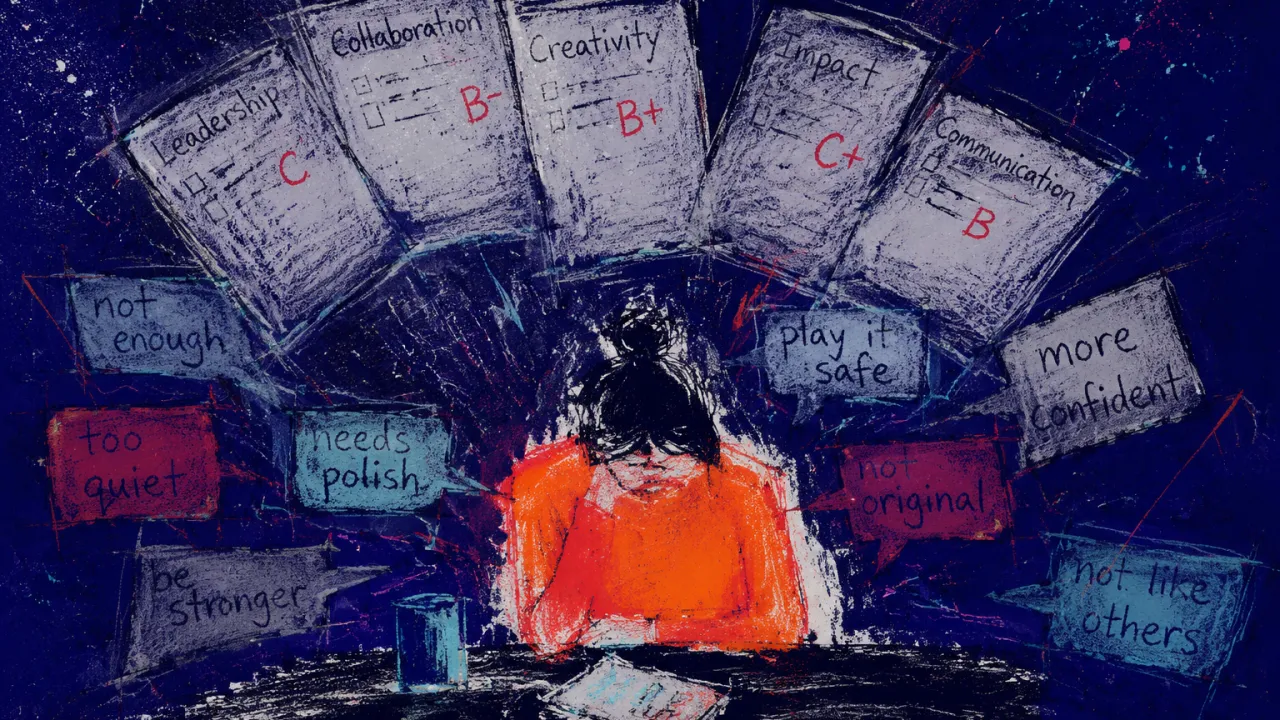
A solitary figure with shoulders beneath hovering peer notes, cool silver lines pressing inward from every side.

What is this situation?

Peer Feedback Trial - you are told on a Monday morning that, for the next three weeks, your work will be reviewed by peers as part of a temporary team pilot. The project lead posts a form in Slack, sets a weekly deadline, and asks everyone to comment on clarity, reliability, and collaboration, but no one explains which answers will stay private, which will be shared, or whether they will affect your next assignment. You submit a draft, then watch comments appear at different hours: one teammate sees initiative where another sees overreach; one person has worked closely with you, while another is judging a single message or meeting. In team calls, feedback is framed as casual, yet the lead takes notes and asks follow-up questions in front of everyone. A peer who depends on your work is also asked to rate it, while people with more influence can offer broad impressions without showing the same evidence. You revise the document, soften your wording, and check the feedback channel before opening anything new because the rules keep moving while the trial is still being called a test. By Friday, your shoulders stay lifted through the shared workspace, the commute, and the next week's planning meeting; every ordinary exchange now carries the possibility of another note, another comparison, or another version of what you were supposed to do, much like the figure in Justice, seated between pillars with scales held level as competing claims wait to be weighed.

Why it's not you?

The problem is not that you are failing to communicate well enough; the trial is an unstable setup, with shifting standards, partial visibility into your work, and peer comments carrying different levels of influence. That belongs to the process, not to your character or ability.

Peer Feedback Trial in Tarot Cards

Peer Feedback Trial leaves you at the review table with your shoulders staying lifted while comments and score sheets arrive from every side. This is an environmental, structural dynamic: the evaluation changes shape as different peers apply different standards to the same work. The cards below mirror that review-room pressure without converting it into a verdict. Here are the Tarot Cards for this situation.

Justice
Reversed
The scales in Justice's left hand, the raised sword, and the two stone pillars establish a formal apparatus for weighing competing claims. Reversed, those tools remain visible but lose procedural reliability: peer impressions are collected as though they are comparable even when reviewers have unequal access, evidence, and influence, while privacy and downstream use remain undisclosed. That imbalance explains why you keep revising beyond the substance of the work and monitoring how each interaction might be recorded. You are responding to a system where the metric can shift after submission and casual comments can become managerial evidence; the card locates the instability in the review architecture rather than treating every note as a verdict on your competence.
Three of Pentacles
Reversed
The craftsperson on the bench, the two peers holding architectural plans, and the unfinished stonework show quality being negotiated around a shared artefact. Reversed, the plans stop functioning as a common reference point: one reviewer reads initiative into the work, another reads overreach, and neither interpretation is anchored to a stable definition of scope or collaboration. You are still expected to revise as though the group has delivered one coherent brief, even though each person has inspected a different slice of your contribution. The inverted workshop makes the structural problem visible: peer input cannot operate as reliable quality control when reviewer context, decision rights, and evidentiary standards have not been aligned.
Eight of Swords
Upright
The blindfolded, loosely bound figure stands inside a ring of swords while a path and distant structure remain present beyond the enclosure. The image captures restricted interpretation rather than an absence of possible movement: information exists, but the missing view of privacy rules, evidentiary standards, and assignment consequences prevents you from judging which direction is materially safe. You replay comments and second-guess routine messages because contradictory inputs remain psychologically open when the system provides no reliable way to rank or close them. The card keeps the cause connected to the external setup: the internal gridlock is being maintained by incomplete procedural information, while the loose bindings and visible path preserve the distinction between temporary constraint and fixed incapacity.
Page of Swords
Reversed
The Page holds a raised sword while looking over one shoulder as clouds move and trees bend in the wind. Reversed, that alert posture becomes an unstable information network: attention is high, context is thin, and fragments of communication can circulate as judgments before anyone establishes what was observed or how reliable it is. You begin checking the feedback channel before opening new work because each message might be detached from its original purpose and folded into the trial. The reversed Page locates that vigilance in a blurred communication architecture where casual Slack contact, peer commentary, and managerial note-taking occupy the same channel without clear safeguards.
Five of Wands
Upright
Five figures lift crossing staffs into the same crowded space, yet no shared target organizes their effort. The upright scene keeps the disagreement visible and therefore potentially distinguishable: the comments are not one unified assessment but several workplace perspectives colliding over scope, tone, initiative, and reliability. You experience that collision as repeated revision because every response appears to demand accommodation, even when two responses cannot logically be satisfied together. The card separates productive friction from uncalibrated scoring, showing that the accessible resource is not unanimous approval but a clearer account of which standard, dependency, or piece of evidence each peer is actually using.
Seven of Wands
Upright
The figure on raised ground faces six staffs rising from below while holding one staff across the body. The scene directly captures asymmetrical scrutiny: several people can challenge your work from different positions, but you remain the visible person expected to answer every claim and reconcile every version of what should have happened. The upright stance preserves access to position, evidence, and response rather than implying automatic defeat. You can see that the pressure comes from the number and angle of the challenges, not simply from the quality of your work; the card frames traceable decisions and bounded accountability as materially different from having to defend your professional legitimacy against every broad impression.
Nine of Wands
Upright
The bandaged figure grips one wand while eight more stand behind him like a defensive boundary. His body remains upright and capable, but readiness has become a continuous physical task, closely matching the lifted shoulders, channel checking, and anticipatory tension that follow you from the shared workspace into the commute. The upright card preserves stamina and a visible perimeter, yet it also shows the resource cost of staying prepared for the next challenge. You are not merely managing a three-week form; your daily system is absorbing an unpredictable review schedule in which any message or meeting can create more work, making recovery and focused attention harder to protect.

Peer Feedback Trial in Tarot Card Reading Insights

Peer Feedback Trial puts your work into a review process where people with different levels of access weigh the same contribution from different positions, and others have brought that situation into readings. Here are the Tarot Reading Insights from readings shaped around peer evaluation.

Psychological contexts related to Peer Feedback Trial