From Performance Anxiety to Grounded Confidence: One Draft at a Time
The Northern Line and the Missing Evidence
If you are a strategy or partnerships associate in London who can make a room believe in the plan, then face a blank Google Doc afterward, you may know this as Career Confidence Anxiety: the praise lands first, and the evidence is still missing.
At 8:47 PM on a Tuesday, I watched Jordan (name changed for privacy) sit on the Northern line with a laptop balanced against one knee, scrolling through LinkedIn promotion posts while a takeaway coffee cooled beside the keyboard. The fluorescent carriage lights buzzed overhead, the phone felt warm from repeated checking, and their shoulders tightened each time another colleague announced a new title. Their central partnership document was still marked draft.
They had sounded calm and strategic that morning. They had framed the opportunity, answered objections, and volunteered to move the narrative forward. Now the thought sitting behind their teeth was simpler: I can explain the strategy, so why can I not finish the work?
I could see the strain in the restless movement of their hands and the hollow space opening beneath their ribs. It looked like a pitch deck with perfect typography but no working prototype behind it, impressive under the meeting lights and frighteningly empty when someone asked to touch the thing itself.
When Jordan told me the story, I said, 'You are not confused about the strategy; you are protecting yourself from what the first visible draft might seem to say about you. We can look at that without putting your worth on trial. Today, we are going to use the cards to draw a map through this workplace manifestation gap, from polished communication to tangible follow-through, and let you decide every next move.'
Choosing a Workbench for Clarity
I asked Jordan to place both feet on the floor, take one slower breath, and name the question without improving its wording. I shuffled gradually while they watched the cards move from one hand to the other. The point was not to summon a fixed outcome. It was to create a clean pause between the pressure of the workday and the evidence we were about to examine.
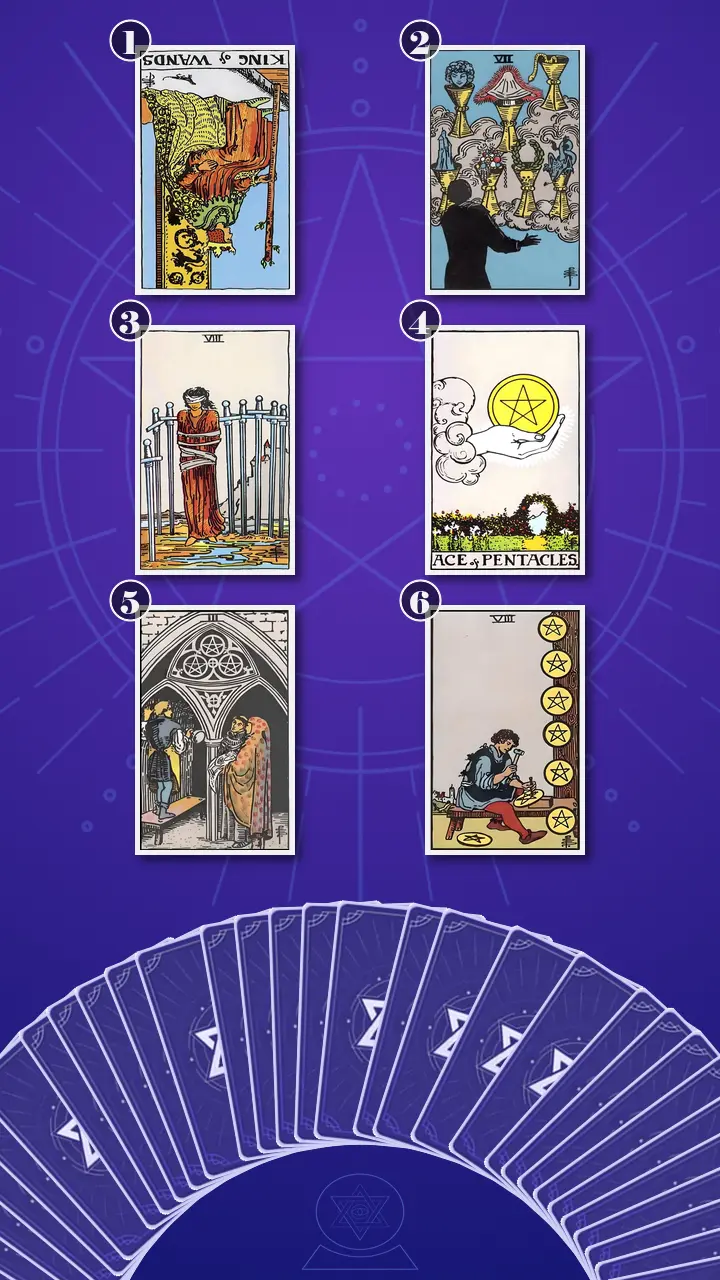
I chose the Transformation Path Grid (6), Context Edition, a six-position tarot spread for workplace confidence, follow-through, and measurable results. I use tarot as a reflective tool: the images help us notice patterns, test assumptions, and connect an intuitive response to a concrete situation.
This spread suited Jordan because it follows the confidence-to-results gap in a direct sequence. It begins with the observable symptom, identifies the immediate blockage and the belief beneath it, then moves through a practical pivot, collaborative action, and sustainable practice. A broader spread might invite speculation about external outcomes, but this grid keeps the reading anchored in self-awareness and workplace behavior.
I explained the route so neither of us would have to guess where we were going. The first card would show the split between confident communication and delayed results. The second would reveal the escape strategy that kept measurable work out of view. The third would touch the self-worth fear underneath it. The fourth would act as the visual hinge, the smallest material beginning. The final two would turn that insight into targeted feedback and repeated completion.
Reading the Map, One Visible Piece at a Time
Position 1: The Throne With No Finished Draft
Now I turn over the card representing the presenting symptom: the observable split between confident workplace communication and delayed or incomplete results, including the specific behavior of polishing explanations instead of shipping work.
The card is the King of Wands, in reversed position. In its standard meaning, this king carries vision, confidence, leadership, and creative direction. Reversed, the fire is in excess or disconnected from sustained execution. It can make authority look complete before the work behind that authority has been built.
I pointed to the seated ruler, the raised wand, and the commanding posture. In Jordan's London morning stand-up, the modern throne was the meeting. The wand was the polished claim about tightening the partnership narrative. What was missing was the machinery below the throne: the research summary, named owner, specific file, or date that would make the claim measurable.
'The risk is not that you sound confident,' I said. 'Your confidence is useful. The question is what it is being asked to carry. If the room rewards a strong statement before anyone sees the artifact, the statement can become a substitute for the first difficult work block.'
I have learned to look at the orbit between a public signal and the material object that should follow it. A planet can appear bright because of reflected light, but brightness alone does not tell me how steadily it is moving. In the same way, a compelling meeting presence is information, not proof of completed execution.
Jordan gave a small, bitter laugh instead of nodding. 'That is painfully accurate,' they said. 'I keep making the update sound better instead of making the result better.'
I did not soften the observation into a lecture. I let the laugh have its honesty. 'Then we have found a behavior, not a character flaw,' I replied. 'In one meeting this week, pair one confident claim with one specific artifact, owner, and date. Let the first uninterrupted work block belong to that artifact before you polish the status update.'
Jordan looked down at their hands and turned one palm upward, as if checking whether it could hold anything more substantial than an explanation. The defensiveness did not vanish, but it became visible enough for us to work with.
Position 2: Seven Tabs of Almost-Progress
Now I turn over the card representing the immediate blockage: the charm offensive and task-switching strategy that creates short-term approval while keeping measurable work out of view.
The card is the Seven of Cups, in upright position. Its standard meaning includes imagination, options, temptation, projection, and the difficulty of distinguishing a compelling possibility from a grounded choice. Here, the water is overflowing. Ideas are abundant, but the energy is diffuse rather than directed.
I described the scene I could already see in the card. Jordan had a Notion page, three Google Docs, a Miro board, a saved LinkedIn example, and several possible partnership routes open for the same recommendation. Each cup was a plausible version of the work. The cloud was the seductive feeling that more framing, more examples, or one more productivity podcast would somehow equal progress.
'A polished explanation is not fake evidence,' I said. 'It is simply not evidence yet. The blockage is not a shortage of ideas. It is the refusal to pick up one option long enough for an imperfect result to be evaluated.'
I asked, 'When the work becomes measurable, which escape do you reach for first: opening another tab, researching another approach, rewriting the update, or adding more context in Slack?'
Jordan's thumb hovered over their phone. Their eyes moved toward the laptop, then to the window, then back to the cards. Seven attractive exits had become easier to see than one ordinary commitment. I watched their fingers close around the phone before they set it face down.
Position 3: The Blindfold Behind the Explanation
Now I turn over the card representing the underlying root: the limiting belief and self-worth fear that makes unfinished work feel like evidence of personal inadequacy.
The card is the Eight of Swords, in upright position. Its air is blocked. The swords do not describe an external prison or a permanent condition; they show how interpretation can narrow attention until a normal task feels like a threat to identity. The blindfold is the prediction of judgment. The loose bindings are the habits of postponing, switching, and over-explaining that keep the result private.
I returned to a moment Jordan had described from 9:18 AM on the Overground. They had opened the half-finished recommendation before a client call and read the same paragraph six times. The train had braked sharply, coffee had lingered in the carriage air, and their chest had tightened at the imagined reply from a senior colleague: this is not very strong.
'Let us separate two sentences,' I said. 'The fact is: the recommendation is unfinished. The prediction is: if someone sees it unfinished, they will conclude that you are fundamentally incapable. Which one is in the document, and which one is the mind adding around it?'
Jordan's breath stopped first, their finger suspended above the edge of the card. Then their gaze went unfocused, as though the Overground scene had started playing again behind their eyes: the repeated paragraph, the unsent link, the hand reaching for another tab. Finally, a low 'Oh' came from somewhere deeper than their meeting voice. Their shoulders lowered by a fraction, followed by a brief tightening around the mouth that looked less like relief than grief for how long the prediction had been treated as fact.
I stayed with the silence. 'A rough draft can challenge the work without putting your worth on trial,' I said. 'You can take feedback about a page without handing another person the authority to define your intelligence or your right to be trusted.'
The room had grown dim while we talked. A passing bus sent a pale stripe of light across the swords, and for a moment the shadows looked less like bars than a diagram of the routes Jordan had been taking away from the central task.
When the Ace of Pentacles Made the Work Touchable
Position 4: The Small Result That Opens the Gate
The room became very quiet when I reached the visual hinge of the grid. Now I turn over the card representing the transformative pivot: the smallest insight or material beginning that can interrupt the Illusion of Competence and make competence observable.
The card is the Ace of Pentacles, in upright position. Its standard meaning is a concrete beginning, a usable opportunity, material grounding, and the first seed of sustainable growth. The energy is balanced because it asks for neither a grand reinvention nor a perfect performance. It asks for one thing that can exist outside the explanation.
In the modern scene, the golden pentacle became one page of Jordan's partnership proposal: a provisional recommendation, one source-backed metric, and a question that another person could answer. The cultivated garden was the workplace context already available to them. The archway was the next decision. The single coin was enough to begin, even though the whole strategy still needed revision.
I also brought in my signature diagnostic lens, Career Cycle Phase Identification. Before I let Jordan turn a missed deliverable into a verdict about talent, I wanted to distinguish a personal skill gap from an industry-wide macro contraction or an organizational shift. The first can be tested through practice and feedback. The second can limit resources even when someone is doing solid work. Here, the cards pointed first to a behavior Jordan could test, not to a permanent incapacity. That distinction moved shame out of the driver's seat without denying the need for measurable work.
At 8:47 PM on the Northern line, you are rewriting a polished LinkedIn-style status update while the central document remains blank, your phone warm in your hand and your shoulders heavy from carrying an image of readiness. You are not short of language; you are afraid the ordinary page will speak more loudly.
Stop using verbal confidence to substitute for evidence; build self-trust through one small, trackable deliverable, as the Ace of Pentacles turns an idea into something you can hold.
I let the sentence rest between us. The bridge is not sounding more capable. It is making one small result visible enough to test, revise, and finish. Confidence does not have to arrive before the work; it can be built by the work.
Jordan's face went still. First, their breath caught and their fingers tightened around the edge of the chair. Then their pupils seemed to widen as the blank Google Doc, the rewritten Slack updates, and the unsent recommendation gathered into one pattern rather than a collection of personal failures. Finally, they exhaled with a faint tremor. Their shoulders dropped, but the release brought a brief, almost dizzying emptiness with it. The old performance had been exhausting, yet it had also been familiar protection. Jordan looked at the single pentacle and whispered, 'I do not need the whole answer; I need one thing that can be seen.' The relief was real, and so was the vulnerability of having a next step that no card could complete for them.
'Now, using this new perspective, can you remember a moment last week when this insight might have made you feel different?' I asked. Jordan thought of the request for one metric and the extra two minutes spent explaining context. They did not rewrite the past. They simply saw another available move.
This was the first crossing from performative certainty toward curiosity about becoming reviewable. The emotional transformation had not reached grounded confidence yet, but the direction had changed. Self-trust could begin with one small, trackable result that could be reviewed and improved.
Position 5: The Plan Another Person Can Actually See
Now I turn over the card representing the practical next step: a collaborative behavior that turns confidence into a draft, feedback exchange, or clearly owned piece of work.
The card is the Three of Pentacles, in upright position. Its earth is balanced through collaboration. The craftsman at the bench, the architectural plan, and the two observing figures all point to skill becoming visible through contribution, standards, and useful revision.
I connected it to the simplest version of the work. Jordan could send one rough recommendation to one trusted colleague and ask, 'Which claim needs clearer evidence?' That question is bounded. It asks for help with the artifact, not reassurance about the whole professional persona. The colleague would not need to decide whether Jordan was impressive. They would only need to look at one claim on one page.
Jordan winced slightly. 'That still feels exposing.'
'Of course it does,' I said. 'But exposure and openness are not the same thing. You choose the colleague, the scope, and the question. A rough draft can be private enough to feel contained and visible enough to move the work.'
They nodded, this time without trying to add a caveat. I saw their posture shift toward the table, closer to the workbench the spread had been describing.
Position 6: The Workbench That Builds a Reputation
Now I turn over the card representing sustainable integration: the repeated practice through which Jordan learns that reliable skill is built by showing, revising, and completing work.
The card is the Eight of Pentacles, in upright position. Its earth has become steady. The focused worker at the bench, the row of completed pentacles, and the separate coin still being carved show a professional identity built through visible repetitions, not through one performance that proves complete mastery.
I translated the card into a repeatable London work block: finish one defined analysis unit, record what feedback changed, and begin the next version from evidence already made. The eight completed coins mattered, but so did the one still under construction. Sustainable confidence is not a final state in which every deliverable arrives polished. It is a history of small things completed, reviewed, and improved.
'Confidence becomes trustworthy when it has a history of small things you finished,' I told Jordan. 'You do not have to become a different person before you practice. You only need a process that lets your voice and your work start orbiting the same evidence.'
Jordan ran a finger once along the edge of the card, then opened their calendar. The movement was quiet, almost ordinary. That was the point.
From Explanation to Evidence-Built Self-Trust
When I placed the six cards together, the story became clear. The reversed King of Wands showed public fire outrunning the machinery of execution. The Seven of Cups kept that performance alive through attractive options, open tabs, and future versions of the work. The Eight of Swords revealed the hidden rule: an unfinished page had been treated as a verdict on Jordan's worth, so more explanation felt safer than one reviewable result. The Ace of Pentacles offered a seed, the Three of Pentacles gave it a colleague and a standard, and the Eight of Pentacles turned it into a practice.
The cognitive blind spot was not a lack of discipline or intelligence. It was the belief that confidence must arrive in finished form before the work can be seen. The transformation direction was more practical: move from proving competence through polished performance to building self-trust through one small, trackable result at a time. The workplace becomes an open bench where drafts can be improved through feedback and repetition, not a stage where every first attempt must look like a final performance.
I kept the next steps deliberately small. Tarot can offer a perspective, but Jordan would be the person who decided what to make, whom to involve, and when to stop.
- Make the one-page working draftOn Tuesday before 10:00 AM, open the current partnership proposal in Google Docs and create one page with only three headings: recommendation, evidence, and next question. Send it in Slack to one trusted colleague with the bounded question, 'Which claim needs the clearest evidence?' Then add the draft link, owner, and next review date to the project tracker.Label the file working draft. If the first version feels too rough to show, keep it to one page and limit the feedback window to 15 minutes. You can pause after one response.
- Use the One-Pentacle Work BlockOn Wednesday afternoon, reserve a 25-minute calendar block called one pentacle and choose one observable work unit: a metric table, a recommendation paragraph, or a five-person outreach list. At the end, mark only started, shared, revised, or finished, and write the next physical action, such as add the source for metric two.If 25 minutes feels too exposing, start with 10 minutes and stop when the timer ends. Do not open extra research, formatting, or comparison tabs until the selected unit has a visible first version.
- Build a 30-day Micro-Orbit ObservationOn Friday at 4:00 PM, record three lines in Notion: what I completed, what feedback changed, and what I will repeat next time. Schedule one recurring 30-minute block for the same task next week. For 30 days, add one context note after each cycle: a blueshift when a request gains a clear owner, useful feedback, or decision path; a redshift when scope, resources, or decision authority materially change.Record organizational signals without turning them into predictions. This Micro-Orbit Observation helps separate a skill gap you can practise from an environment that is shifting. Measure completion and revision, not whether the process felt impressive.
I also reminded Jordan that my Promotion Window Calibration is not a promise of promotion or a forecast of someone else's decision. If advancement became the question later, I would use it to map organizational shifts, decision-makers, ownership, and visible evidence so the path of least resistance could be tested in reality. For this reading, the first useful promotion was smaller: promoting one unfinished idea from private thought to reviewable work.
A History of Small Things
Six days later, I received a message from Jordan. They had made the one-page draft, sent it to the colleague they trusted, and added the owner and date before touching the slide design. The feedback changed one claim and removed a paragraph of unnecessary context. The proposal was not suddenly perfect, but it was no longer living only in Jordan's explanation.
That night, Jordan slept through until morning. Their first thought was still, 'What if the recommendation is wrong?' This time, they smiled, opened the document, and added the next source. The clarity was real, but it was not flawless. It had a pulse, a link, and a next action.
I did not make that change for Jordan, and the cards did not make it happen. The reading helped separate the observable fact from the predicted judgment. Jordan supplied the choice, the draft, the feedback, and the repetition. That is how a Journey to Clarity becomes grounded professional confidence: not by sounding certain forever, but by giving confidence a growing history of tangible work.
When the room rewards your certainty but the unfinished document makes your shoulders heavy, it can feel as if showing ordinary work would expose not only a gap in progress, but a gap in your right to be trusted. I want to leave you with the gentler truth I saw in the Ace of Pentacles: you can be seen learning without being reduced to what is unfinished.
If confidence could be something you build beside the work rather than something you perform before showing it, what small result, your own one pentacle, would you feel curious to let exist in an unfinished but reviewable form?