Posted Before You Chose?

Explore the pressure of being exposed online, related tarot cards, and tarot reading insights from sessions around this situation.

Unwanted Social Media Exposure
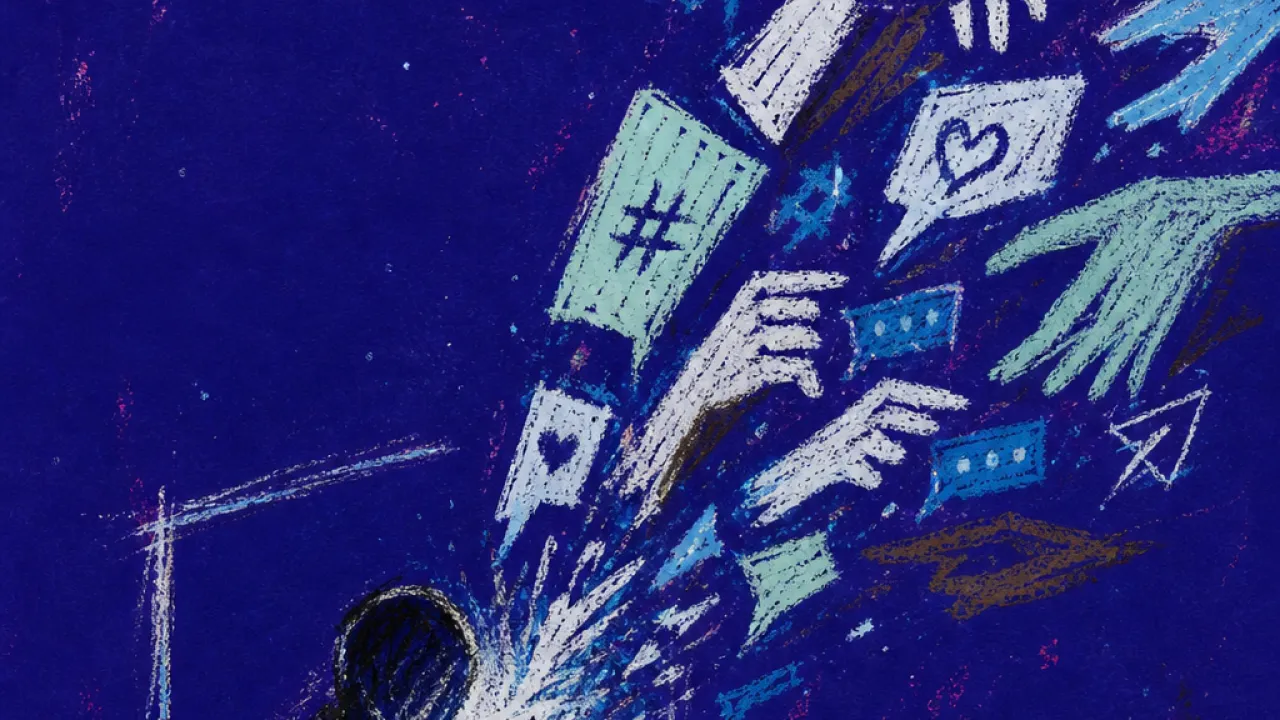
A figure shrinking behind a phone-lit boundary as floating hands push screenshots and tags into cold silver public space

What is this situation?

Unwanted Social Media Exposure — you find out because your phone lights up, not because anyone asked you first. Maybe someone tagged you in a photo you would never have posted, shared a screenshot from a private chat, mentioned your name in a comment thread, or let a joke about you travel from a close circle into a feed full of people you barely know. At first it looks small: a notification, a few reactions, a message that says “did you see this?” Then it spreads into the strange public machinery of social media, where friends of friends can view, save, repost, quote, stitch, search, or talk around you while you are still trying to understand what has already been put out there. The power sits with whoever uploaded it, whoever keeps engaging with it, and the platform that keeps pushing it back into view; you are left checking tags, muting threads, refreshing privacy settings, deciding whether responding will make it louder, and wondering who has already seen it. Your day gets interrupted by little hits of visibility: a tight throat when a new notification lands, heat in your face when someone brings it up offline, the heavy pause before opening an app you used to scroll without thinking. What makes it exhausting is not simply that people saw something — it is that the boundary between your private life and the public feed was moved without your permission, much like the Seven of Swords, where a figure slips away carrying what was not theirs to take while the camp behind them is left exposed.

Why it's not you?

The problem is not that you are too sensitive or that you should have known how the internet would react. The problem is that your image, words, name, or private context was moved into public circulation without your clear permission. That is a boundary issue created by other people’s sharing choices and by platforms built to keep attention moving.

Unwanted Social Media Exposure in Tarot Cards

Unwanted Social Media Exposure is the kind of situation where a post, tag, or screenshot keeps acting on your life after the person who shared it has moved on. The tight throat, hot face, and constant checking are signals from an environmental, structural dynamic where platforms reward circulation while your consent gets treated as optional. The cards below do not decide what you should do next; they reflect the shape of being made visible before you were ready. Here are the Tarot Cards that tend to mirror this kind of exposure.

The High Priestess
Reversed
The black-and-white pillars, the pomegranate veil, and the partly concealed scroll establish a protected threshold between what may be known publicly and what belongs inside a trusted space. Reversed, that threshold has been compromised: something disclosed within a friendship has crossed from private confidence into searchable or shareable circulation. You are dealing with more than awkward gossip when a friend posts your image or shares your messages without permission. The reversed structure shows access without stewardship, helping you locate the rupture in the friendship’s handling of private information rather than treating your discomfort as an overreaction.
Wheel of Fortune
Reversed
The rotating wheel, the figures carried around its edge, and the four distant witnesses create a system in which movement continues beyond any one participant’s control. Reversed, the circulation becomes a blocked timing structure: an old tag, screenshot, or repost can return through platform distribution just when you thought attention had passed. You cannot reliably read the moment from the first notification because the feed operates in waves rather than a single publication event. The reversed wheel makes the timing problem visible as algorithmic recirculation, where waiting may allow another cycle while reacting may supply fresh engagement to the same loop.
The Devil
Upright
The two chained figures, the elevated pedestal, and the looming central figure form a hierarchy in which attention and agency are unequally distributed. The chains are loose enough to show that the system has points of intervention, but they still capture how platform alerts, public reactions, and uncertain reach can pull your routine back toward repeated checking. You may enter an app to inspect one tag and lose an hour monitoring comments, reposts, and privacy controls because every new signal suggests the exposure is still moving. The upright structure makes that attention loop auditable: the uploader initiated the breach, the platform monetises continued visibility, and you absorb the unpaid labour of watching the consequences.
The Tower
Upright
The lightning strike, the displaced crown, and the falling figures present a boundary failure that becomes visible all at once. A single notification can function like that strike: the post may already have travelled through a network before you have time to understand who uploaded it, who saved it, or how widely it has been seen. You are navigating a response window created by sudden disclosure rather than by your own publishing schedule. The upright Tower makes the rupture unmistakable and therefore locatable; once the initial shock is separated from the distribution mechanics, the event can be read as a consent breach with identifiable actors, channels, and escalation points.
The Moon
Upright
The dim path between two towers, the uncertain light, and the animals reacting from opposite sides depict movement through an environment where signals are visible but their meaning is unstable. After unwanted exposure, view counts, vague comments, indirect messages, and offline references can confirm that something is circulating without revealing the true audience or the version of the story they received. You may know that people are talking while lacking access to the threads, private reposts, or cropped context shaping the conversation. The upright Moon keeps a path visible through that information gap: it distinguishes verified distribution from imagined reach while naming the platform’s opacity as a structural source of uncertainty.
Three of Cups
Reversed
The three linked figures, elevated cups, and enclosed celebratory arrangement show intimacy being generated through shared participation. Reversed, the group bond is no longer a reliable container: one friend can turn an inside joke, candid photo, or private exchange into a post that invites reactions from people outside the friendship. You may be asked to accept the breach as harmless banter because everyone in the original circle understood the context. The reversed card exposes the missing consent transition between sharing something with friends and allowing a friend to publish it, naming that gap as a friendship-boundary failure rather than a humour mismatch.
Four of Pentacles
Upright
The pentacle held against the chest, the coins fixed beneath both feet, and the crown-bound coin show a person using their whole body to prevent further loss. After unwanted exposure, that posture appears in locked accounts, archived posts, removed tags, restricted audiences, and constant privacy-setting checks. You have access to protective controls, but maintaining them can reorganise your digital life around guarding against another breach. The upright image clarifies both the resource and its cost: tighter control may restore some containment while also consuming ease, spontaneity, and ordinary participation because someone else previously treated access as permission.
Two of Swords
Upright
The blindfold, crossed blades, and dark water create a decision point protected by pause but constrained by missing information. After an unwanted post appears, replying, reporting, contacting the uploader privately, or remaining silent can each affect visibility, yet you rarely know the full audience or platform trajectory when the choice first arrives. You are not failing to decide; the decision environment withholds the information needed to compare consequences cleanly. The upright balance keeps a route open by separating the available options from the pressure to act instantly, making the real tradeoff visible: restoring a boundary without unintentionally feeding the same attention system.
Seven of Swords
Upright
The swords being carried away, the figure checking behind them, and the exposed communal camp show shared material leaving its home context under one person’s control. In a family system, photographs, childhood stories, private updates, or screenshots can be posted as if they were collective property even though the visibility consequences fall unevenly across relatives. You may encounter appeals to family closeness, tradition, or harmless pride as substitutes for asking permission. The upright image keeps the structural line visible: family access explains how the material was obtained, but it does not automatically authorise public distribution or erase your stake in the audience boundary.
Eight of Swords
Upright
The blindfolded figure, loose bindings, and surrounding sword fence depict a person whose movement is constrained by visible barriers and incomplete situational knowledge. After unwanted exposure, each option can appear to close another route: a public reply may amplify the post, silence may leave the framing uncontested, and private contact may depend on the uploader’s cooperation. You are operating inside real constraints, but the image also shows gaps between the swords and ground beyond the enclosure. The upright structure makes those openings available for analysis by separating what the platform controls, what the uploader controls, and what remains within your decision space, without pretending that any option can restore the moment before publication.
Nine of Swords
Upright
The figure sitting upright in bed, the row of swords overhead, and the patterned quilt show an external conflict continuing inside a private resting space. Unwanted exposure can create that carryover when every notification suggests another viewer, repost, or offline conversation, turning the phone into a reminder that the audience remains unknown. You may replay who saw the material or hesitate before opening an app that once felt routine. The upright image makes the mental cache visible and nameable while the domestic setting preserves an important distinction: the repeated thoughts are being fed by a real unresolved distribution event, not by a personal failure to be relaxed about public attention.
Page of Swords
Reversed
The raised sword, scanning posture, and wind-driven clouds and trees create an atmosphere of alert observation and fast-moving information. Reversed, curiosity loses its ethical container and becomes watching, screenshotting, gossiping, or reposting without checking context or consent. You are visible to people who can inspect and redistribute fragments while remaining socially distant from the consequences. The reversed Page shows the information resource being mishandled: communication is available, but it is routed through surveillance and speculation rather than direct clarification or accountable exchange.
Five of Wands
Upright
The five figures, crossing staffs, and absence of any shared direction create a crowded field where every participant adds motion without resolving the conflict. A comment thread, quote-post chain, or stitched response can operate the same way, with strangers competing to interpret, joke about, defend, or condemn material involving you. You become the subject around which other people perform their own positions, even when no participant has the full context or your consent. The upright image makes the crowd legible as multiple contributors rather than one unified verdict, preserving a route to distinguish the original uploader, active amplifiers, bystanders, and people escalating for attention.
Seven of Wands
Upright
The elevated figure, the six staffs rising from below, and the mismatched footing show one person trying to hold a boundary against pressure arriving from several directions. That physical imbalance mirrors the social asymmetry of answering comments, correcting cropped context, requesting removals, and responding to people who can engage casually while you carry the consequences. You have a defensible position because the central issue is consent, yet the feed can make defence feel like an endless obligation to explain yourself. The upright stance preserves an accessible resource: the boundary can be stated without accepting every commenter as a legitimate tribunal or every notification as a demand for renewed participation.
Eight of Wands
Upright
The parallel staffs crossing open space and the clear distance behind them resemble content moving rapidly between accounts without meeting a meaningful boundary. In a social network, one person’s upload can become another person’s repost, reaction clip, group-chat link, or offline talking point before you have entered the conversation. You are facing distributed transmission rather than a contained disagreement with one uploader. The upright image exposes the route as a network of handoffs, which makes it possible to distinguish the breach itself from the scale produced by secondary sharers and platform recommendations.
Ten of Wands
Upright
The bundled staffs, the figure’s bent posture, and the visible town ahead show a load that must be carried through ordinary life even though it obstructs the carrier’s view. After unwanted exposure, the burden appears as screenshots to document, accounts to block, tags to remove, messages to answer, and settings to review alongside everything your day already required. You are performing moderation and reputation labour created by someone else’s decision to publish. The upright path still has an endpoint, and that matters structurally: the workload can be separated into finite tasks rather than treated as proof that you must remain permanently available to every new notification.

Unwanted Social Media Exposure in Tarot Card Reading Insights

When Unwanted Social Media Exposure turns a post, tag, or screenshot into something you cannot fully pull back, people often bring that exact pressure into a reading. The readings below show how this situation can appear when someone sits with the cards and the leftover noise around it. Tarot Reading Insights from related sessions.
Psychological Contexts Related to Unwanted Social Media Exposure