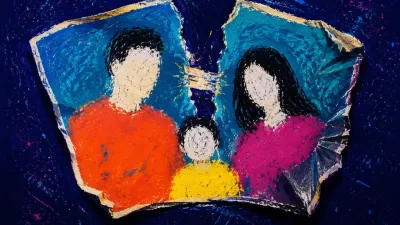
When Home Splits In Two

Explore the fallout of parents divorcing later in life, with related tarot cards and tarot reading insights from sessions.

Late-life Parental Divorce Fallout
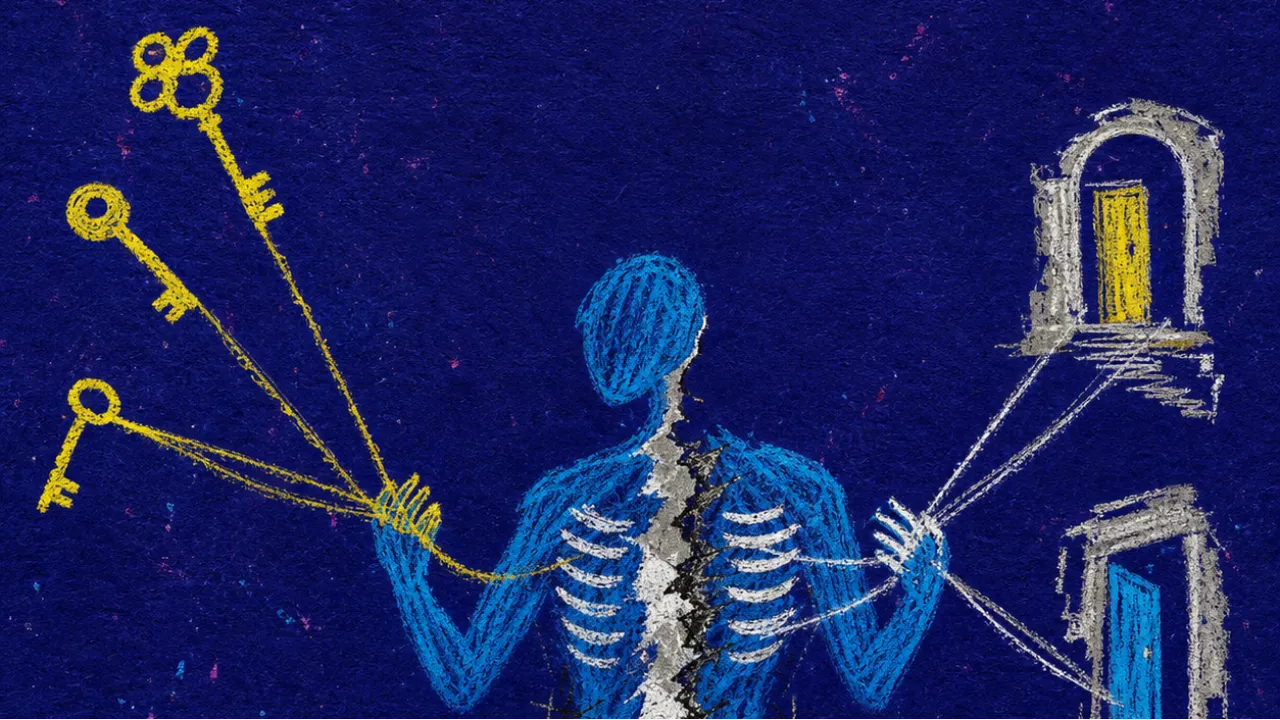
A solitary figure between two doorways, keys and message threads pulling from both sides across deep indigo space

What is this situation?

Late-Life Parental Divorce Fallout — you find out through a call, a text, or a carefully staged conversation that the marriage you grew up around is ending after decades of being treated as fixed background. At first, everyone says they do not want to put you in the middle, but the middle starts forming anyway: one parent calls to explain their side, the other sends updates about housing, relatives ask what you know, and every holiday suddenly needs a seating chart, a travel plan, and a quiet calculation about who will feel left out. The family home becomes a place of boxes, spare keys, missing furniture, and rooms that no longer mean what they used to mean. Old routines get split into separate versions: two birthdays, two dinners, two sets of plans, two stories about what happened. You may be living in another city, building your own life, working, studying, paying rent, trying to keep your week moving, but the fallout keeps arriving through late-night messages, tense family threads, requests to mediate, and small remarks that ask you to choose without saying it directly. What makes it harder is that everyone assumes an adult child should be able to handle it cleanly, as if age makes the family map less important. Instead, the structure that once held your past in one frame has cracked into separate rooms, much like The Tower, where figures are thrown from a structure that can no longer hold together.

Why it's not you?

This is not happening because you failed to stay neutral, respond perfectly, or manage everyone’s feelings. Late-life divorce changes the family structure around you, and the pressure comes from that rearrangement: split homes, separate narratives, disrupted rituals, and parents who may lean on you before the new boundaries are clear. The fallout belongs to the situation, not to your ability to absorb it.

Late-life Parental Divorce Fallout in Tarot Cards

Late-Life Parental Divorce Fallout is not just a family update; it is a shift in the structure that used to organize holidays, home visits, group chats, and who calls whom first. The tightness that shows up when your phone lights up with another parent-to-parent message is a body-level record of being pulled into logistics you did not create. This is an environmental, structural dynamic: the family system has changed around you, and the pressure lands through schedules, roles, rooms, and divided loyalties. The Tarot Cards below reflect the shape of that fallout without telling you what you owe anyone.

The Hierophant
Reversed
The formal religious figure, crossed keys, repeated symbols, and kneeling followers depict beliefs transmitted through an authorised social structure. In reversal, inherited rules lose their automatic authority, matching the cognitive disruption that occurs when a decades-long parental marriage no longer confirms the family model you were taught to treat as permanent. You may begin questioning marriage, loyalty, home, or what counts as a successful family, even when those questions were not part of your life before the announcement. The reversal keeps reinterpretation available without demanding rejection: your parents’ divorce can expose inherited assumptions for review while leaving you free to define which commitments and relationships remain credible in your own adult framework.
The Lovers
Reversed
The two exposed figures stand on separate ground with a mountain between them while an angel occupies the space above. In reversal, the vertical promise of alignment no longer resolves the physical distance, making the image a precise metaphor for parents whose long-standing partnership has split into incompatible positions and separate lives. You may be recruited to carry information across that distance or to confirm which parent’s account is more valid. The reversal identifies a blocked relational channel between the parents; it does not make you the replacement channel, and it separates their broken agreement from your continuing relationship with each of them.
The Chariot
Reversed
The black and white sphinxes sit in opposing colours beneath a driver who holds no visible reins, while the solid city remains behind the chariot. In reversal, coordinated movement is obstructed: two parental accounts may pull in different directions while each quietly expects you to supply the missing control system. You may be presented with choices that are not truly yours, such as deciding who was right, whose holiday takes priority, or which parent deserves more reassurance. The reversal exposes the resource gap rather than a personal failure to decide: no amount of adult composure can create shared direction when the two sides have not established workable boundaries with each other.
Justice
Upright
The seated figure holds an upright sword in one hand and balanced scales in the other, placing clear judgment beside measured distribution. The image anchors the formal side of a late-life divorce: one household, shared property, family access, and long-established obligations must be separated into explicit arrangements. You may receive legal or housing updates as though awareness makes you responsible for deciding whether every outcome is fair. The upright card keeps procedural clarity available while drawing a role boundary: a formal process can divide marital responsibilities, but you are not required to serve as the court of appeal for each parent’s emotional account.
The Hanged Man
Upright
The suspended figure hangs from a living wooden frame with one foot secured, the other bent, and a clear halo around his head. The image captures a period in which movement is limited but observation remains available, matching the months when housing, legal arrangements, holiday expectations, and parental boundaries have not yet settled. You may feel unable to make firm plans because each update changes the practical map or because both parents still treat arrangements as provisional. The upright suspension provides a legitimate pause rather than a demand for passivity: waiting can reveal which requests are temporary fallout and which patterns are becoming the family’s new long-term structure.
Death
Upright
The armoured rider moves past a fallen authority figure while people respond differently and the sun rises between distant towers. The scene presents an ending that changes roles and social arrangements, closely matching a divorce in which the category of one married parental household has ended even though both parents and their relationships with you continue. You may be asked to plan as if the family can return to its previous form, especially when relatives minimise the disruption or parents alternate between separation and familiar habits. The upright path remains open only through transition: your future family map can include changed addresses, changed rituals, and changed boundaries without treating those changes as evidence that your entire history disappeared.
The Tower
Upright
The struck tower splits open as its crown is thrown away and two figures are expelled from what had looked like a permanent structure. The image directly mirrors a decades-old parental marriage losing its capacity to contain one household, one family story, and one set of rituals. You may be geographically independent and still experience the collapse as a change to your own family architecture. The upright Tower separates structural failure from personal responsibility: you did not cause the marriage to break, and absorbing both parents’ explanations cannot rebuild a structure they have ended.
The Moon
Upright
The moonlit path runs between two towers while a dog and a wolf answer the same light differently and a creature rises from dark water. The divided reactions, partial visibility, and uncertain route mirror an adult child receiving two emotionally charged accounts of a decades-long marriage without access to the whole private history. You may replay vague remarks, scan family threads for hidden meaning, or wonder whether recognising one parent’s pain automatically invalidates the other’s. The upright Moon keeps uncertainty visible rather than filling it with a forced verdict: incomplete information is a feature of your position outside the marriage, not evidence that you have failed to decode the family correctly.
Five of Cups
Upright
The cloaked figure faces three spilled cups while two remain standing behind, with a bridge and inhabited buildings still reachable across the water. The arrangement captures grief for the lost version of family life while preserving the fact that separate relationships with both parents may continue in altered forms. You may focus on the vanished shared dinner, the emptied childhood room, or the last holiday before everything split, especially when others move quickly into logistics. The upright image makes mourning an available process while keeping the loss specific: the parental marriage and unified household are gone, but not every family bond has spilled with them.
Six of Cups
Reversed
Two children, flower-filled cups, and a protected courtyard build a contained image of remembered safety and familiar exchange. In reversal, that contained past no longer functions as a stable resource, echoing the way a late-life divorce can alter the meaning of childhood rooms, family photos, traditions, and memories that once seemed settled. You may revisit old events through each parent’s new account or feel disoriented when the childhood home is emptied and reorganised. The reversal reveals a blocked route back to the old family frame without declaring the memories false: your past remains real, while its adult interpretation can no longer depend on the marriage remaining intact.
Ten of Cups
Reversed
The rainbow of cups arches above a couple, children, green land, and a distant home, assembling the complete public image of one emotionally unified household. In reversal, the arch remains visible but stops functioning as one shared roof, precisely reflecting a family ideal that survives in photographs and expectations after the parental partnership has divided. You may feel pressure to preserve the happy-family presentation for relatives, ceremonies, or holidays even when separate plans are the actual operating reality. The blocked resource is not affection but collective coherence: the reversal allows individual bonds to remain while naming that the old image can no longer organise everyone without concealment or strain.
Two of Pentacles
Upright
Two pentacles circle inside an infinity loop while the figure continually shifts his weight, and two ships rise and fall on the rough water behind him. The image closely mirrors the practical system created by a late-life parental divorce: two households, two holiday calendars, two streams of updates, and no fully stable surface from which to coordinate them. You may be keeping your own job, studies, rent, and routines moving while repeatedly reallocating time between parents. The accessible resource in the upright image is adaptability, but the endless loop also exposes the structural cost: flexible scheduling can keep the week functioning without making you responsible for permanently balancing the family split.
Ten of Pentacles
Reversed
An elder, a couple, a child, dogs, ten coins, and a built family compound create a dense picture of intergenerational continuity, accumulated property, and established belonging. In reversal, that continuity loses its reliable channel, matching a late-life divorce that splits a long-held home, possessions, rituals, and the family’s assumption that the parental unit would anchor the next generation. You may receive updates about keys, furniture, housing, or the future of the childhood home while relatives debate what the separation means for the wider family. The reversal identifies the resource disruption clearly: history and connection still exist, but the household and legacy systems carrying them are no longer operating as one structure.
Two of Swords
Upright
The blindfolded figure holds two swords in a precise cross while sitting between a rocky shoreline and an open but unsettled sea. The posture captures an enforced neutrality that requires constant effort, much like receiving incompatible divorce narratives while being expected to decide nothing, disclose nothing, and offend no one. You may delay replies, repeat the same neutral wording, or avoid committing to holiday plans because any movement could be interpreted as taking a side. The upright card makes temporary non-decision available as protection, but it also reveals the bottleneck: neutrality cannot become a permanent operating system for decisions about your own time, access, and relationships.
Three of Swords
Upright
Three swords pass directly through an exposed heart beneath heavy rain, giving separation a clear and unprotected point of impact. The image fits the pain of learning that a parental marriage treated as permanent is ending, especially when adult independence leads others to underestimate how deeply the family split still lands. You may continue working, studying, paying rent, and answering messages while the loss remains largely invisible to everyone around you. The upright image makes emotional impact accessible without assigning blame: the hurt can belong to the changed family structure even though the marriage was not yours to preserve.
Four of Wands
Reversed
The garlanded wands frame a homecoming while figures celebrate near a substantial house, but reversal prevents that threshold from functioning as one secure communal centre. The scene closely matches a family home becoming boxes, spare keys, missing furniture, and contested memories rather than the unquestioned site of shared return. You may find that birthdays and holidays now require two invitations, separate seating plans, or a calculation about who will feel excluded. The reversal locates the blockage in the gathering structure itself: no perfectly diplomatic performance can make one celebration feel unified while the family’s home and partnership remain divided.
Five of Wands
Upright
Five figures raise intersecting staffs without any shared formation, making it difficult to tell where competition ends and coordination begins. The crowded scene mirrors parents and relatives circulating different explanations, corrections, and claims on your loyalty after a long marriage ends. You may spend calls clarifying what someone else said, defending a scheduling decision, or trying to prevent one parent’s disappointment from becoming a wider family dispute. The upright card keeps each person’s position visible, but it also exposes the structural problem: more participation does not create resolution when the group lacks agreed rules for direct communication.

Late-life Parental Divorce Fallout in Tarot Card Reading Insights

When parents separate later in life, the fallout often follows people into readings through split holidays, awkward calls, and the sudden need to navigate two versions of home. These Tarot Reading Insights show how others have brought this kind of family rupture into a reading space.

Psychological Contexts Related to Late-life Parental Divorce Fallout