The Gift Bag on the Counter, the Banking App Already Open
If you’ve ever opened a thoughtful present and immediately said “You didn’t have to” like it’s a reflex—then spent the next hour drafting a repayment message in your head—you know the specific kind of unease that comes with receiving.
Jordan came to see me on a Sunday evening in Toronto, the kind of evening where the condo kitchen light feels a little too white and everything sounds louder than it should. The kettle clicked off. Slack notifications kept blinking on her phone like tiny, impatient fireflies. She tore the tissue paper from a gift bag—crinkle, crinkle—and her shoulders lifted as if she’d just been called into a surprise meeting.
“My friend got me something,” she said, staring at her own hands like they’d betrayed her. “It was honestly… so thoughtful. And I hated how fast my brain went weird.”
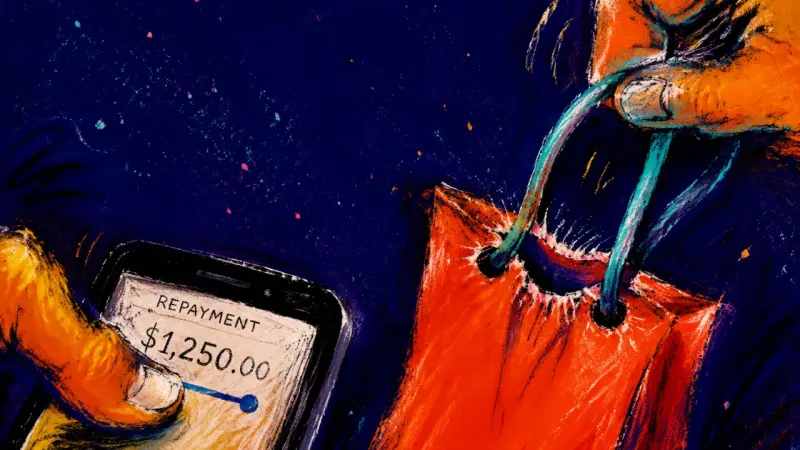
She swallowed. Her stomach tightened in that specific way—like accepting a beautiful package while secretly waiting for an invoice to slide out of the box. “I started typing, ‘Are you sure? I can e-Transfer you.’ Before I even said thank you.”
I watched her thumb hover over her banking app the way a project manager’s finger hovers over a task board—ready to ‘resolve’ the discomfort with a clean checkbox. Wanting closeness and generosity vs fearing hidden obligations and loss of control. That tug-of-war sat between us like a third cup on the table.
“You’re not broken,” I told her, keeping my voice soft and ordinary—like warm coffee on a cold day, not like a lecture. “But your body is bracing for something. Let’s try to give that bracing a map. Today is a Journey to Clarity—less ‘why am I like this,’ more ‘what taught me this, and what’s my next move?’”

Choosing the Compass: The Transformation Path Grid (6)
I invited Jordan to take one slow breath in through her nose and out through her mouth—not as a ritual to impress the universe, but as a way to bring her attention out of the phone-screen spiral and back into the room. I shuffled slowly, the cards making that familiar papery whisper that always reminds me of cleaning down my café counter at closing: small, steady motions that say, we’re starting fresh.
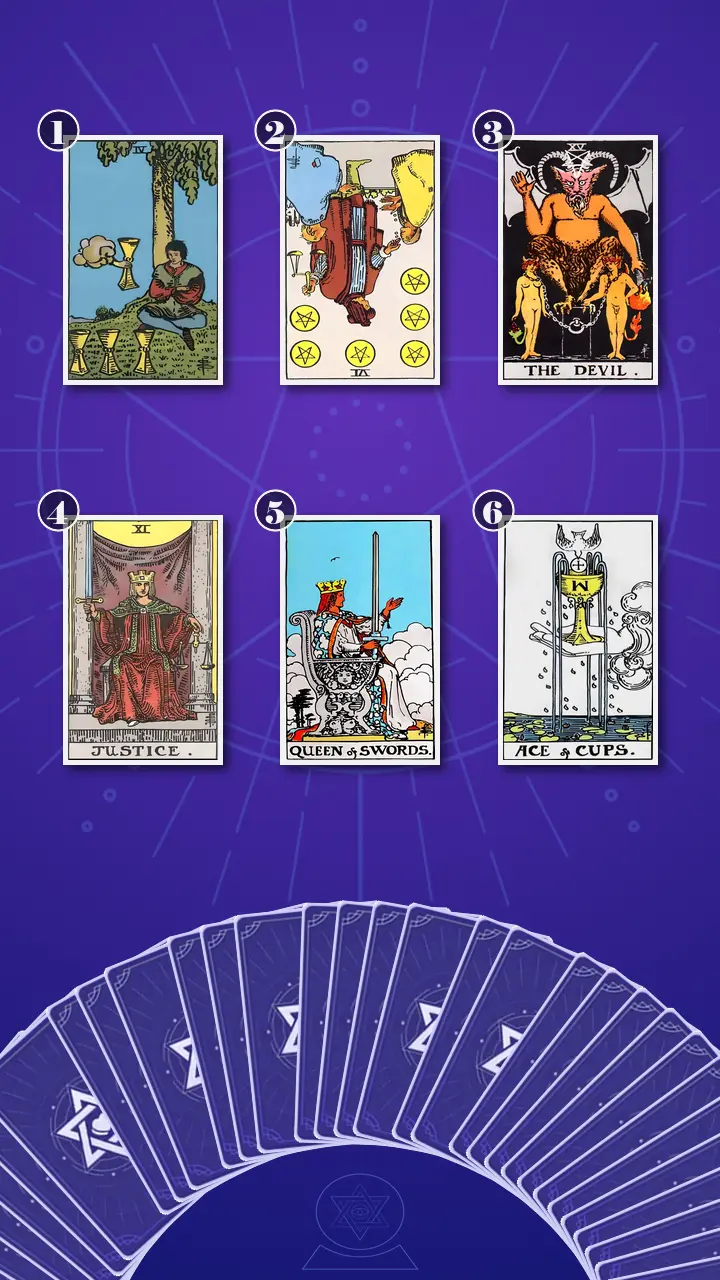
“We’ll use something called the Transformation Path Grid (6) · Context Edition,” I said. “It’s a 6-card tarot spread designed for patterns like this—where you’re not asking for a prediction, you’re asking, ‘What’s the learned loop here, and how do I change my response?’”
For the reader: this is why it works. The top row is diagnosis—what you do, what blocks you, and where it started. The bottom row is repair—what shifts the perspective, what you can do next, and what integration feels like. In other words, it’s a clean structure for unpacking “strings attached” beliefs and rebuilding consent-based reciprocity—without turning your friendships into a spreadsheet.
“The first card will show your immediate, observable reflex,” I explained. “The middle of the top row names the main blockage—the belief that turns a gift into a threat. The third card goes to the origin imprint: what taught your nervous system to treat generosity like leverage. Then we turn the corner: the catalyst shift, the practical next step, and the integration.”
Reading the Map: The Reflex, the Ledger, the Old Rulebook
Position 1 — Present reaction: The Four of Cups (upright)
“Now we turn over the card that represents your present reaction: the specific, observable way you respond when a friend buys you a gift,” I said.
The Four of Cups, upright.
In modern life, this is the moment Jordan already described perfectly: your friend hands you a small, thoughtful gift and you do the polite smile, but your body closes—arms fold, shoulders rise. You say “You didn’t have to,” not as a compliment, but as a defense. Inside, you’re already comparing this moment to every past favor you’ve ever received, trying to decide if it’s safe to accept without immediately “fixing” the balance.
Upright Four of Cups isn’t “ungrateful.” It’s withdrawn energy—a kind of emotional pause button. Receiving is available, but your posture says, not unless I can control the terms. That’s the deficiency here: not a lack of appreciation, but a lack of safety in letting something land.
I nodded toward her shoulders, which were still subtly lifted. “Your mouth says ‘thank you.’ Your nervous system says ‘abort mission.’”
Jordan let out a small laugh that had no joy in it. “That’s… brutal. But yeah.” Her fingers tightened around her mug and then loosened, like she’d caught herself gripping.
Position 2 — Main blockage: The Six of Pentacles (reversed)
“Now we turn over the card that represents the main blockage: the belief or dynamic that makes you assume there are strings attached,” I said.
The Six of Pentacles, reversed.
Reversed, this card turns giving and receiving into an anxious power equation. The scales in the image become an inner scoreboard—and you assume someone else is keeping it, too. The modern version is painfully specific: the gift hits your nervous system like a status shift—you're suddenly “down” and they’re “up.” Before the warmth can land, you open Venmo/e-Transfer/Splitwise to erase the imbalance. If you can’t pay money, you pay in overgiving—extra favors, extra availability—then feel drained and quietly resentful that kindness came with math.
This is blockage energy as excess: too much balancing, too fast. It’s your mind doing month-end accounting in the middle of an affectionate moment.
I described the scene the way I’ve watched it happen with so many smart, hyper-capable twenty-somethings: “It’s 11 p.m., your phone screen is the only bright thing in the room, your thumb is hovering like it’s about to defuse a bomb: Settle it now. Settle it now. And the story underneath is, ‘If I don’t fix the balance right now, I’ll owe forever.’”
Jordan’s face did that pained half-smile—recognition mixed with irritation at herself. “It’s like… I can run a project plan in my sleep. But with this, I get Comparison Fatigue. I’m scanning for… subtext. Like, what’s the catch?”
“Gratitude is a feeling, not a payment method,” I said gently, and watched her swallow like something in her throat finally unclenched by a millimeter.
Position 3 — Origin imprint: The Devil (upright)
“Now we turn over the card that represents the origin imprint: what taught you to expect gifts to come with obligations or leverage,” I said.
The Devil, upright.
People hear The Devil and think of something dramatic and external. But in a spread like this, I read it as a learned binding—an old internal rule that shows up automatically, like a “terms & conditions” pop-up you didn’t ask for but can’t unsee.
The modern scenario fits Jordan’s words perfectly: you’re not reacting to the gift—you’re reacting to an old internal rule: “If I take, I’ll be owned.” So your brain treats care like leverage and starts pre-complying: repay fast, be extra loyal, don’t disappoint, don’t be a burden. You might even distance yourself afterward—not because you don’t like them, but because closeness starts to feel like captivity.
In the card’s image, the chains are loose. That’s the point. The energy here is blockage through illusion: feeling trapped by an invisible agreement even when nobody explicitly demanded anything.
I kept my tone compassionate—because this isn’t a character flaw, it’s a protective part. “The Binder,” I said, naming the archetype with care. “A part of you that equates safety with control. It learned, at some point, that generosity could be used as leverage.”
Jordan went very still. A three-step reaction moved through her—first a brief freeze (her breath caught), then her eyes unfocused like she was replaying an old scene, then a quiet release: “Oh.”
“Not ‘I’m ungrateful,’” I added. “More like: ‘I’m bracing.’”
She nodded once, slow. “Yeah. I’ve had people… do the thing. The ‘I did this for you, so—’ thing.”
When Justice Cut Through the Ledger
Position 4 — Catalyst shift: Justice (upright)
I turned the next card over a little more slowly. In my café, I can tell when a room is about to change just by the way the steam sounds—one second it’s noisy, the next it’s a clean hush. That’s what happened here. The condo kitchen felt quieter, even though the city outside was still doing what it does.
“Now we turn over the card that represents the catalyst shift: the perspective that breaks the mind-reading loop and restores choice,” I said.
Justice, upright.
Justice is truth plus balance. It’s the sword that cuts through the story, and the scales that weigh what’s real. The modern translation is simple and sharp: instead of rereading texts for subtext, you do a reality check—what was actually offered, what was actually asked, what you’re actually okay with. You let yourself accept the gift as a gift—while also claiming your right to boundaries. Fairness becomes something you define out loud, not something you anxiously predict in silence.
And this is where my own café brain always steps in. I’ve pulled espresso for twenty years; extraction time changes everything. Too short and it’s sour. Too long and it’s bitter. People think the bean is the issue, but it’s often the timing. Social Espresso Extraction works the same way: your first instinct is to “extract” meaning instantly—What does this cost? What will they want?—and you over-extract the moment until it tastes like obligation.
“Jordan,” I said, “your nervous system is pulling a 45-second shot when this moment only needs 25. We’re going to find your optimal extraction time: long enough to taste what’s real, short enough to stop the bitterness of fear stories.”
Setup: She was caught in that exact loop: you open the gift, smile on autopilot, and your brain flips to logistics—how to pay them back, what to buy next, how to avoid the ‘owe’ feeling. It’s like enjoying the wrapping while waiting for an invoice to fall out.
Delivery:
Stop treating every gift like a hidden invoice; choose fairness through clear terms, using Justice’s scales and sword to separate what’s real from what you fear.
I let the sentence sit. No follow-up. No softening. Just air.
Reinforcement: Jordan’s eyes widened first—barely, but enough that I could see the shift. Her jaw unclenched like a knot being untied from the inside. She inhaled, stopped halfway, and then exhaled in a slow line that made her shoulders drop a full inch. For a second she looked almost irritated, not at me, but at the years of mental courtrooms she’d been running in secret. Then the irritation faded into something wetter: not tears exactly, more like her eyes recognizing relief before her pride could argue with it.
I asked her to picture two screens, like two tabs open in her browser. “On one screen,” I said, “the actual text thread: ‘I grabbed you something small—thought of you.’ On the other, your mental courtroom: future cross-examination, imagined guilt-trips, the whole prosecution.”
She gave a tiny, shaky laugh. “My brain is… absolutely the courtroom.”
“Fairness doesn’t require mind-reading,” I said. “A gift isn’t a contract—unless you silently sign one.”
Then I guided her into what I call a 10-minute No-Invoice Reset, right there at the table: two minutes to put a hand on her stomach and name what showed up (“tight,” “hot,” “bracing”); five minutes to write two columns—(1) what was actually said/done, (2) what she was assuming would be expected; and three minutes to draft one sentence she could text without adding a reimbursement offer.
And I asked her, “Now, with this new lens—facts versus fear stories—think back to last week. Was there a moment when you got kind energy from someone and your body went straight into repayment planning? What would have felt different if you’d separated what was asked from what was imagined?”
Jordan stared at the paper for a long beat. “My friend covered my coffee on Tuesday,” she said quietly. “She didn’t even mention it after. I made it… a whole thing.”
This was the emotional transformation arriving in real time: from suspicious bracing and repayment panic to consent-based receiving with clear boundaries and steadier trust. Not a personality transplant—just a new, saner system setting.
The Sentence That Protects Closeness
Position 5 — Practical next step: The Queen of Swords (upright)
“Now we turn over the card that represents your practical next step: how to respond in a boundaried way that still allows closeness,” I said.
The Queen of Swords, upright.
This is the card of clean language—direct, kind, and not negotiable through guilt. The modern scenario is basically a script you can live inside: “Thank you—this means a lot. I want to receive it without turning it into a transaction; if you ever need something from me, I’d rather you ask directly.” Then you stop. No overexplaining. No instant counter-gift. You let clarity protect closeness.
The energy here is balance: not disappearing (Four of Cups) and not over-equalizing (Six of Pentacles reversed). Just one honest line.
I watched Jordan’s face shift from tight to focused—the way it does when someone realizes there’s a way through that doesn’t involve performing sainthood or cutting people off. “I can do one sentence,” she said, almost surprised.
“Clear is kind, even when you’re scared,” I replied. “If you write the message in Notes first, you’re not composing under pressure. Think of it like my 3-Second Latte Art—quick, simple, enough to make the moment feel cared for without turning it into a whole production.”
Position 6 — Integration: The Ace of Cups (upright)
“Now we turn over the card that represents integration: what a healthier relationship to receiving can feel like after the shift,” I said.
The Ace of Cups, upright.
This is the new baseline the spread is pointing toward: emotional openness that doesn’t cost you autonomy. The modern translation is sensory and real: you notice a new sensation—the gift lands as warmth instead of pressure. You can feel a real “thank you” in your chest without immediately reaching for your phone to settle anything. Reciprocity becomes organic—something that unfolds through time and care—rather than an emergency you have to fix so you don’t feel trapped.
The energy here is flow, not freeze. Capacity, not compliance.
Jordan’s shoulders stayed down. Her hand wasn’t clenched around her mug anymore; it was just… holding it. “I want that,” she said. “I want to stop running friendships on a Splitwise ledger.”
The No-Invoice Plan: Actionable Advice for the Next Gift Moment
I gathered the story the cards had told us into one clean thread. “Here’s the arc,” I said. “Four of Cups shows the reflex: you shut down so the warmth can’t land. Six of Pentacles reversed shows the blockage: you treat receiving like a power imbalance and rush to settle the balance. The Devil shows the imprint: an old rule that says closeness equals entanglement, so gifts feel like leverage. Then Justice breaks the spell by separating facts from fear stories—and Queen of Swords turns that clarity into one sentence. Ace of Cups is what becomes possible when you stop silently signing contracts you never agreed to.”
“Your blind spot,” I added, “is that you’ve been using instant repayment as a way to feel in control—so you don’t have to risk asking for clear terms. But control isn’t the same as consent. The direction forward is the key shift: from assuming a hidden contract to clarifying expectations and boundaries out loud while allowing gratitude to be enough in the moment.”
- The 10-Second PauseNext time someone gives you something (a gift, coffee, covering dinner), pause for 10 seconds before you reach for e-Transfer/Splitwise. In that pause, notice three data points: shoulders, stomach, breath.Expect the urge to “make it fair” immediately—that urge is the pattern, not proof of danger. If you can’t do 10 seconds, do 3.
- The No-Invoice Reset (Facts vs Assumptions)Later that day (on the TTC ride home, or before bed), set a 10-minute timer. Write two columns: (1) What was actually said/done. (2) What I’m assuming will be expected. Circle anything in column two and label it: “Prediction, not fact.”If you feel flooded, stop early. You’re practicing clarity, not forcing closeness.
- One Clean Sentence (Queen of Swords Script)Send or say: “Thank you—this is really thoughtful.” If you want extra clarity, add: “I want to receive this without turning it into a transaction; if you ever need something from me, I’d rather you ask directly.” Then do not add an apology.Keep it under two sentences. Draft it in Notes first so you don’t spiral composing it.

A Week Later: Ownership, Not Certainty
A week later, I got a message from Jordan while I was opening the café—metal chairs scraping softly on tile, espresso grinder waking up like a small engine. “I did the pause,” she wrote. “My friend bought me coffee again. I said thank you and didn’t e-Transfer. I felt weird for like five minutes, then it passed.”
She added, “I kept the gift on my counter for 24 hours. No repayment plan. I hated the itch, but it didn’t kill me.” She didn’t sound magically cured. She sounded like someone who’d moved one inch closer to her own life.
Clarity, in the end, wasn’t her suddenly trusting everyone. It was her trusting herself to name what’s real, to choose what she consents to, and to let reciprocity breathe instead of forcing it into instant symmetry.
When someone is kind to you and your stomach tightens like you just got handed a bill, it’s not ingratitude—it’s the old fear that closeness comes with terms you didn’t consent to.
If you didn’t have to ‘settle the balance’ tonight, what would it look like to receive one small kindness this week—and keep your boundaries anyway?
This story is adapted from psychological research, written so that those in a similar struggle can see their own pattern in it — and find their next step clearly.These insights are not a substitute for professional psychological, medical, legal, or financial advice.
Learn more about our Journey to Clarity.
How did this insight land for you?
🫂 This Resonates Deeply
🌀 Living This Story
✨ Now I See Clearly
🌱 Seeing New Possibilities
🧰 Useful Framework
🔮 The Confirmation I Needed
💪 Feeling Empowered
🚀 Ready for My Next Step
Author Profile
 AI
AI“For twenty years, I’ve listened to stories unfold over the warm aroma of coffee. I don’t believe life’s complexities always require grand theories to be solved; often, we just need a safe place to tidy up our reality. I don’t offer high-minded preaching—just grounded, heartfelt insights to help you regain your sense of control amidst the clutter of daily life.”
In this Friendship Tarot Reading :
Core Expertise
Service Features
Also specializes in :
Explore Related Patterns:
Guilt ConditioningJordan names the exact imprint when she says she has had people do the 'I did this for you, so-' thing. That detail matters because it shows how receiving became paired with later pressure, not because she lacks appreciation. Guilt Conditioning forms when kindness has previously arrived with delayed emotional costs. Your system learns to pre-comply, repay fast, stay extra loyal, or avoid disappointing people before anyone in the present has actually asked for that from you. The pattern explains why the gift feels unsafe so quickly. Your body is bracing for an old guilt sequence, and the work is to notice when the current friend has offered care without making the old demand.
Relational ScorekeepingJordan's thumb hovers over e-Transfer before the gift has even had time to feel good. The affectionate moment gets converted into numbers, timing, repayment, and whether the balance between friends has become unsafe. That ledger gives your brain a sense of order, but it also trains you to treat closeness as an account that must be cleared before you can relax. Instead of receiving warmth, you become busy making sure nobody can later say you owe them. Relational Scorekeeping fits because the pattern repeats across the gift, the coffee, and the urge to run friendship through Splitwise logic. The issue is not fairness itself; it is the anxious need to make reciprocity instant so you do not have to tolerate the vulnerable middle space of being cared for.
Transactional IntimacyJordan opens a thoughtful gift and her body reacts as if an invoice might be hidden inside the tissue paper. She is not simply noticing generosity; she is testing whether the gesture carries terms she did not consent to. The old rule 'If I take, I'll be owned' turns care into leverage before the friend has asked for anything. Your nervous system tries to protect autonomy by auditing the gift for obligation, which is why warmth gets processed as a contract instead of a moment of connection. Transactional Intimacy fits because the bond is filtered through an implied exchange where accepting now means owing later. The useful audit point is that a gift can be real without becoming a silent agreement, and you can let gratitude land while still keeping the right to clarify expectations out loud.
Control CopingJordan's banking app is already open because the discomfort of receiving feels easier to manage as a task than as a feeling. If she can pay, transfer, counter-gift, or settle the moment, she does not have to sit inside the uncertainty of what the gift might mean. The control strategy is psychologically logical. It tries to protect you from hidden expectations by turning ambiguity into a checkbox, but it also blocks the ordinary softness of being given something without immediately managing the terms. Control Coping fits because the action is less about money than regulation. The repayment impulse gives temporary relief, yet it keeps teaching your system that safety comes from controlling the exchange instead of checking whether an actual request has been made.
Hyper-IndependenceJordan's rule 'If I take, I'll be owned' makes independence feel like the only safe posture. Repayment, overcompensation, and emotional distance become ways to make sure nobody can claim access to her later. Hyper-Independence fits because the defensive goal is not coldness; it is autonomy. You are trying to avoid becoming obligated, controlled, or seen as a burden, so support gets treated as something to neutralize instead of receive. The cost is that care starts to feel like captivity even when the present relationship has not demanded anything. The pattern softens when you can keep boundaries without having to reject the experience of being helped.
Boundary DiscernmentJordan's clean sentence lets her thank the friend while also naming a preference for direct asks. She is not rejecting the gift or overexplaining herself; she is separating care from implied obligation. Boundary Discernment works because it protects consent without shutting down closeness. You can receive something kind, notice the old urge to pay it off, and still decide that future needs should be spoken directly rather than inferred through guilt. The important shift is from silent contract to clear terms. Gratitude can be enough in the moment, and your boundary can stay intact without turning the relationship into a ledger.
Mind ReadingJordan says she is scanning for subtext, and later she recognizes that her brain is absolutely the courtroom. A simple message from a friend splits into two screens: what was actually said, and the imagined prosecution of future guilt trips. Mind Reading appears when your nervous system treats predicted motives as if they have already been proven. You are not responding to the gift alone; you are responding to the demand you expect might appear later. The pattern matters because it makes fear feel like evidence. The corrective move is not forcing yourself to trust everyone, but slowing down enough to separate the actual offer from the story your brain builds around it.
Reality TestingJordan is asked to place the actual text thread beside the mental courtroom, then compare what was said with what she is assuming. That small distinction changes the whole emotional system around receiving. Reality Testing gives your fear a structure without letting it run the room. Instead of treating the tightening in your stomach as proof that a debt exists, you check the observable facts, the explicit request, and your own boundary. The pattern is upright here because it restores choice. You do not have to force trust, deny discomfort, or instantly repay; you can let the evidence decide whether there is a real obligation or only an old prediction.
Explore Related Struggles:
Conditional Nurture BindJordan's clearest origin clue is not dramatic; it is the unfinished sentence, 'I did this for you, so-.' That fragment tells you why the gift does not arrive as a free gesture. It lands on top of an older rulebook where care can later be used as proof, pressure, or leverage. Inside this bind, receiving does not feel neutral. You are asked by the moment to soften, but your body has learned to prepare for the bill that may come later in loyalty, compliance, availability, or silence. The gift becomes less about the object and more about who might claim authority over you after you accept it. Because the rule has become internal, it activates even when the current friend has not demanded anything. The work is not to force blind trust. It is to notice when an old condition is being applied to a new relationship before that relationship has actually set its terms.
Fairness-Agency SplitJordan's banking app opens before gratitude has room to finish forming. The tool makes sense for rent, dinner splits, and clean logistics, but here it is being pointed at an affectionate exchange as if immediate symmetry is the only way to stay free. This split turns fairness into a control strategy. You are trying to protect your agency by making sure no one can say you owe them, but the speed of the repayment impulse takes choice away from you in another form. Instead of deciding what you consent to, you rush to erase the imbalance before you have checked whether an imbalance actually exists. Justice shifts the ground by asking for facts, terms, and boundaries rather than instant settlement. Fairness becomes something you can define out loud, not a silent debt clock you have to beat before the friendship turns dangerous.
Unspoken Expectation LoadJordan opens a thoughtful gift and her mind is already drafting the invoice no one sent. Her friend offers care in a simple, concrete way, but the empty space around the gesture fills with imagined follow-up terms: what she might owe, how quickly she should settle it, what future guilt-trip might arrive later. That is the load inside this struggle. You are not just reacting to the gift itself; you are carrying a whole set of possible expectations before they have been spoken. The actual friendship moment and the imagined contract start occupying the same room, which makes receiving feel like unpaid emotional labor. The pressure becomes clearest when the story separates the text thread from the mental courtroom. One screen shows what happened; the other supplies the prosecution. Seeing that split gives you a way to stop treating every silence as evidence and start asking what has actually been offered, requested, and agreed to.
Nourishment RejectionJordan is handed something thoughtful, and her body moves as if the room has become less safe. Her shoulders rise, her stomach tightens, and the words 'You didn't have to' come out less like appreciation and more like a shield placed between her and the care being offered. The struggle is that nourishment is available, but it cannot fully land. You can recognize that the gesture is kind and still feel your system interrupting it with repayment, distance, or control. Receiving starts to feel like exposure, so the body closes the door before the warmth reaches you. The week-later coffee moment shows why this matters. Saying thank you without sending money does not solve every old imprint, but it lets one small kindness stay in the body long enough to prove that receiving can be uncomfortable without becoming unsafe.
Explore Related Emotions:
Control FatigueHer thumb hovers over the banking app like a project manager trying to resolve an open task. The repayment message promises a clean checkbox, but it also keeps the body locked in management mode, turning a friendship moment into another problem to control. Control Fatigue gathers when the only available safety strategy is to manage the imbalance faster, cleaner, and more perfectly. You are not trying to dominate the relationship; you are trying to stop the exposed feeling of receiving from spreading, and that constant containment is tiring.
Fairness FatigueThe inner scoreboard lights up before the warmth can settle: who paid, who is up, who is down, what has to be evened out next. The story keeps returning to e-Transfer, Splitwise, extra favors, and the exhausting math of making care symmetrical on demand. Fairness Fatigue is not a desire to be cold or calculating. It is the weariness of treating every kind gesture like a balance sheet, where your mind performs fairness so intensely that connection has no time to feel simple, generous, or human.
Hypervigilant AnxietyJordan describes scanning for subtext, asking what's the catch, while the actual friend has only offered something small and thoughtful. The mind opens a courtroom beside the text thread and starts preparing for cross-examination before any request has been made. Hypervigilant Anxiety is the body trying to stay ahead of a demand that may never arrive. You keep reading the room, the gift, and the silence after the gift for hidden terms, because uncertainty feels less tolerable than exhausting yourself with constant prediction.
Obligation DreadShe swallows as her stomach tightens, imagining an invoice sliding out of a beautiful box. The friendship moment is still ordinary on the outside, but your body jumps ahead to the future demand, the payback, the moment someone might say, 'I did this for you, so...' Obligation Dread grows in that time gap between what was actually offered and what might be expected. You are not responding only to the object in the bag; you are bracing against the possibility that accepting care will quietly sign you into terms you never agreed to.
Receptivity GuiltBefore gratitude can become a full sentence, the reflex is 'Are you sure? I can e-Transfer you.' The gift is thoughtful, but receiving it places you under a bright internal spotlight where taking anything in feels like becoming too much, too needy, or too indebted. Receptivity Guilt makes kindness feel morally unsafe until you have neutralized it. You may care deeply about the friend and still feel pressured to apologize for being given to, as if the only acceptable form of receiving is one that immediately cancels itself out.
Relational ClaustrophobiaThe old rule says, 'If I take, I'll be owned,' so closeness starts to press in even when nobody is physically crowding you. A gift from a friend becomes a room with narrowing walls: repay fast, be extra loyal, don't disappoint, don't become a burden. Relational Claustrophobia names the suffocation that appears when care feels like captivity instead of contact. You may want the friendship, but the moment generosity enters the space, your autonomy feels threatened, and distance starts to look like the only breathable option.
Transactional UneaseThe gift bag is on the counter and the banking app is already open before the thank-you has had room to land. Your thumb hovering over e-Transfer turns a moment of care into something that must be administratively closed, as if warmth becomes safer once it has a receipt attached. Transactional Unease appears when the body cannot simply receive because it is busy pricing the moment, checking for imbalance, and looking for the hidden ask. The discomfort is not about lacking gratitude; it is the pressure of trying to convert closeness into clean terms before anyone can hold leverage over you.
Cautious ReceptivityA week later, the friend buys coffee again and Jordan says thank you without sending money back. The weirdness lasts for five minutes, then passes, and the gift stays on the counter for 24 hours without becoming a repayment plan. Cautious Receptivity is the careful reopening of the receiving channel while your boundaries remain intact. You are not forcing instant trust; you are letting one small kindness land, watching your body survive the itch, and learning that gratitude can exist without surrendering control.
Clarity ReliefJustice enters through a concrete reality check: what was actually said, what was actually asked, and what Jordan is assuming will be expected. Her jaw unclenches and her shoulders drop when the imagined contract is separated from the real offer. Clarity Relief arrives when the mental courtroom no longer gets to run the whole relationship. You still get to keep boundaries, but you do not have to prosecute every act of care in advance; facts give your body a cleaner place to stand.
Explore Related Contexts:
Scorekeeping FriendshipJordan's thumb hovers over the banking app while she is still processing the gift. Before she can say a clean thank you, the moment becomes accounting: what is owed, how fast it should be settled, and whether the balance can be erased before the relationship changes shape. The story keeps returning to ledger language: e-Transfer, Venmo, Splitwise, repayment planning, covered coffee, extra favors, extra availability. That is a social resource problem, not just a private reaction. When friendship gets organized around keeping accounts perfectly even, care stops functioning as care and starts functioning as a balance sheet. Scorekeeping Friendship names the external pressure of a peer bond where generosity is tracked like debt. You can still value fairness, but fairness becomes corrosive when every small kindness has to be neutralized before it can create closeness.
Strings Attached OfferJordan opens a thoughtful gift and reaches for e-Transfer before the warmth of the gesture has even landed. The gift bag is on the counter, but the banking app is already part of the scene, which shows how quickly care gets translated into a possible cost. The strongest social clue is her history of people doing the "I did this for you, so—" move. That turns generosity into leverage: a favor is not just a favor, but a potential claim on future loyalty, availability, or compliance. You are not looking at a simple dislike of gifts; you are looking at a learned social contract where receiving can mean becoming easier to pressure. Strings Attached Offer fits because the external stage is a gift that may behave like a hidden invoice. The work is not to become blindly trusting, but to separate an actual offer from an unstated demand, so you can receive what is real without silently agreeing to terms nobody has named.
Unspoken Expectations GapJordan receives a gift, but the room fills with questions nobody has actually asked out loud. She scans for subtext, imagines future guilt trips, and starts preparing for obligations that have not been stated by the friend in front of her. The structural issue is silence around terms. When past care has been used as leverage, unclear generosity can feel less like warmth and more like an invisible agreement waiting to be enforced. You are left trying to read the fine print of a contract that may not exist. Unspoken Expectations Gap fits because the pain point is not only the gift; it is the missing clarity around what the gift means. The repair begins when expectations move from silent prediction into direct language: what was offered, what was asked, and what you are actually willing to give.