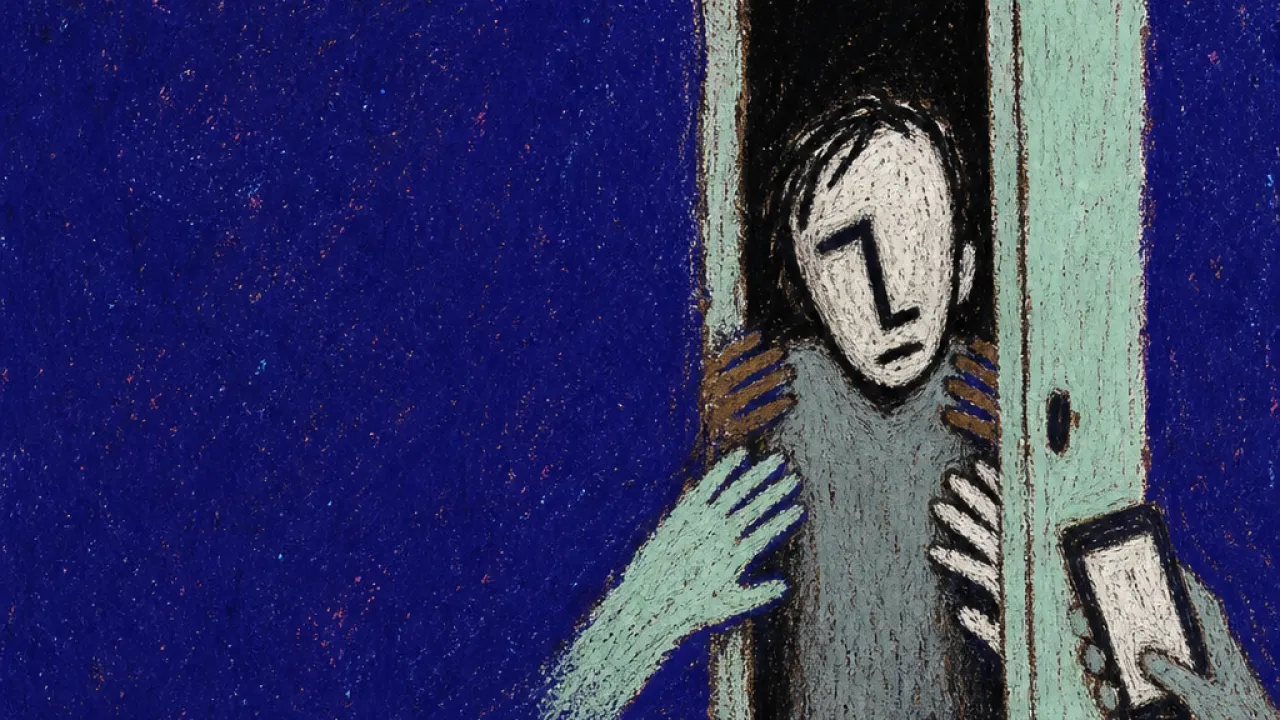
That moment when your shoulders brace before you speak is the body keeping track of the Community Approval Test already unfolding around you. The situation is environmental, structural, and dynamic: friends, family, groups, or observers are shaping what counts as acceptable before you get to simply belong. The cards below do not decide who should approve you; they reflect the visible shape of the approval system around the threshold. Here are the Tarot Cards that mirror this kind of social gate.
The Hierophant UprightThe two acolytes kneel in matching positions before the elevated figure, while the temple's symbols arrange every body into a readable order. Nothing in the scene is casual; belonging is staged through posture, dress, distance, and correct attention. That geometry mirrors the external test of being acceptable inside a group, especially when inner work becomes visible to other people. You may be trying to hear your own signal while also tracking what the room rewards: calmness, insight, humility, restraint, or the right language. The card anchors this context in the tension between genuine belonging and a performance of belonging that keeps the inner self under review.
The Lovers UprightThe naked figures stand in a bright garden with no covering, no private wall, and no physical contact to hide behind. Above them, the angelic figure and sun make the whole scene feel witnessed, while the trees behind them turn personal choice into something that can be read by the surrounding field. In social life, that exposure maps cleanly onto the pressure of being evaluated by a community before belonging feels secure. The group may look warm and orderly from the outside, but its acceptance still depends on how your preferences, attachments, and boundaries are received when they become visible. This is why the card connects to a community approval test. The central issue is not popularity; it is whether a social ecosystem can see you clearly without turning visibility into a compliance exam.
Strength UprightThe white robe, floral belt, and clear posture make the woman socially readable before she does anything dramatic. She stands in the open with a powerful animal, and the scene watches whether her presence can hold its shape. Strength turns approval into a test of composure under visible pressure. In a social circle, this can look like being quietly assessed for how you handle intensity: whether you can enter the room without grabbing power, whether you can be close to strong personalities without collapsing, and whether your tone makes the group safer or more volatile. The test is informal, which is why it can be hard to name. No one may announce the standard, but the field still has one. The card reveals the hidden social audition beneath the pleasant surface: belonging is being negotiated through steadiness, boundaries, and the way you handle force.
Justice UprightThe seated judge framed by two pillars turns the card into a public chamber of assessment. The upright sword, balanced scales, and fixed central posture show a social space where inclusion is not casual; it is measured through conduct, consistency, and visible alignment with the room's standards. In a social network, this mirrors the moment when a group is watching whether you understand its norms before granting deeper access. The pressure is not only about being liked, but about being legible to a community that has its own rules for trust, fairness, and credibility. The card does not reduce this to approval seeking. It shows a threshold where you can audit what is actually being measured, decide which standards are worth meeting, and keep your agency intact while navigating the group's test of belonging.
Judgement UprightThe raised figures in Judgement stand exposed in open coffins while a single trumpet sounds from above. Their bodies are not hidden in private reflection; they are arranged in a shared field where every response becomes visible, measured, and socially legible. In a social context, that visual structure maps onto a moment when a group asks for alignment before it grants deeper belonging. The red-cross banner functions like a public standard: not a practical instruction, but a signal that certain gestures, tones, and responses will be read as acceptable. You are not simply trying to be liked here. The card frames the situation as a community-facing test of whether your changed self can enter a shared social order without becoming swallowed by it. Clarity comes from seeing which parts of the group's approval process are legitimate orientation, and which parts are just pressure to perform belonging.
Three of Cups UprightThree raised cups form a small social circle where recognition does not come from one person alone. The women are separate individuals, but the choreography makes acceptance visible through shared rhythm, shared space, and a mutual toast. In a relationship context, that image points to the moment when romance stops being purely private and has to survive contact with the people around it. You are not just asking whether the connection works one-on-one; the structure is asking whether the bond can enter your trusted circle without becoming distorted by outside approval. The harvest at their feet matters because this is not a casual introduction scene. Something has already grown enough to be shown, and the social environment now becomes part of the test: who welcomes it, who subtly resists it, and whether the relationship still feels coherent once other people can see it.
Nine of Cups UprightThe well-dressed figure sits under a row of cups that look curated, symmetrical, and ready for inspection. His posture is settled, but the scene also reads like a public-facing presentation of what has been earned, collected, or socially proven. Community Approval Test emerges when a group turns belonging into a quiet evaluation of taste, confidence, achievements, contacts, or lifestyle signals. You may be trying to tell whether the circle is meeting you as a person or scoring the display behind you. The Nine of Cups holds both the value and the audit. The cups show real social currency, but their elevated placement reveals how quickly a community can make recognition feel conditional on visible proof.
Three of Pentacles UprightThe craftsperson is not working alone in a hidden room; the work is being viewed at the threshold of a public building by figures who carry social authority. The scene turns private effort into something that can be recognized, questioned, or approved by others. In love, that visual pressure becomes the community approval test. Friends, chosen family, social circles, cultural expectations, or public milestones may be shaping how the relationship is seen. The issue is not whether outside perspective is automatically wrong; the issue is whether the relationship can remain honest while being watched. The card makes the test visible without giving it final authority. You can see where outside validation supports the structure and where it starts replacing the couple's own ability to define the bond.
Ten of Pentacles UprightThe archway, coat of arms, balance emblem, and chessboard pattern make the household feel ceremonial rather than casual. Entry is possible, but the scene is surrounded by symbols that imply standards, trials, and recognition from people who already hold position. That is the structure of a community approval test. You may be interacting with the group, attending the events, and saying the right things, while still sensing that full belonging depends on a judgment that has not been spoken aloud. The card gives that pressure a visible shape. It shows a social gate where acceptance is not only about warmth; it is also about whether the group’s established codes can make room for you without turning connection into an audition.
Four of Wands UprightTwo celebrants raise garlands in front of a carefully ordered square of wands, making participation visible before the larger home in the background can be reached. The scene turns belonging into something public, witnessed, and organized through shared symbols. That visibility can become an approval test when the group starts measuring whether you know the cues, show up correctly, and perform the right version of togetherness. You are not just asking whether people like you; the structure exposes how recognition, ritual, and status are being distributed inside the circle.
Five of Wands UprightDifferent clothing, different stances, and five separate wands turn the field into a public test of position. No one is seated, welcomed, or clearly in charge; each person has to prove their place through visible participation. That is the social texture of a community approval test. The group may not say there is an entrance exam, but the first interactions reveal who gets mirrored, who gets challenged, whose jokes land, and whose presence is treated as provisional. The card does not reduce this to simple popularity pressure. It shows a temporary arena where belonging is still being negotiated, and where your agency comes from seeing which standards are real, which are performative, and which ones you do not need to pass.
Six of Wands UprightThe five wands in the crowd do not sit passively in the background; they rise around the rider and create a visible field of endorsement. The rider's own wand meets that field, turning the scene into a social exchange where recognition is reflected back from the group. This is the outer structure of a community approval test. You are measuring whether a new role, new voice, new level of visibility, or new version of yourself can be received by the people around you without being reduced to their reaction. In introspection, the card makes the approval system visible. It asks you to notice where support genuinely confirms a transition, and where the need for group validation starts deciding which parts of you are allowed to become real.
Seven of Wands UprightThe six lower wands rise from people the image does not fully show, so the pressure is visible while its sources remain partly outside the frame. The central figure has to respond to a crowd-shaped force without being able to reduce it to one clean conversation. That is the structure of a relationship under community approval pressure. Friends, family, roommates, online audiences, or a wider social circle may not control the relationship directly, but their opinions can still point upward like wands, asking the partnership to defend its legitimacy. The elevated position keeps You from being swallowed by the group field, but it does not remove the cost of being watched. The card clarifies that the real decision is not whether every outside voice is wrong; it is which voices deserve structural weight inside the relationship.
No cards available for this filter.