Finding Clarity in the 11:38 p.m. Outlook Glow
You’re a master’s student in a big-city program, and one “Seen” from a professor can derail your entire evening into read receipt anxiety.
Jordan sat down across from me like she’d been carrying something fragile all day and was terrified of dropping it. She was in London, I was in my New York studio, but the scene she described landed so vividly between us it might as well have been my own floorboards.
“It was 11:38,” she said, voice low. “Tuesday. The radiator kept clicking on and off. I was sitting on the edge of my bed with the laptop open… rereading the same sent email.”
I could hear the harshness of the screen light in her words—the way it turns a room into a little interrogation cell. Her phone had been warm in her hand from constant waking. Each time she unlocked it, her chest tightened and her throat did that small clench people get when they’re bracing for bad news, even if the bad news hasn’t happened yet.
“I just want clarity,” she said. “But ‘Seen’ feels like… a verdict.”
What she meant was bigger than email etiquette. It sounded like an internal courtroom where a delayed reply became evidence that she’d done something wrong. The loop had a punchy rhythm: Too much. Not enough. Wrong tone. And underneath it, that very specific dread—like standing outside a closed office door, listening for footsteps, deciding what you’re “allowed” to ask based on silence.
“Okay,” I told her gently. “We can work with that. And just so you know—this isn’t an email problem—this is a read-receipt rejection loop.”
Her shoulders lifted in a tiny, embarrassed flinch, the kind that says, Thank you for naming it… and please don’t look too closely.
“Let’s do a Journey to Clarity,” I said. “Not by forcing a response out of someone else, but by mapping what’s happening in you—so you get your agency back.”

Choosing the Compass: The Four-Layer Insight Ladder
I asked Jordan to take one slow breath with me—not as a mystical thing, but as a clean handoff from spiraling to observing. Then I shuffled slowly, the sound like dry paper in a quiet room.
“Today,” I said, “we’re using something I call the Four-Layer Insight Ladder · Context Edition.”
For you reading along: a classic timeline spread can accidentally turn situations like this into outcome-hunting—When will they reply?What will they say?—which only feeds the anxiety. Jordan’s issue wasn’t lack of information; it was what her mind did with ambiguity. This ladder spread is built to separate layers cleanly: the visible loop (refreshing/re-reading), the trigger meaning-making (“Seen”), the root authority-worth story underneath it, and then the reframe + a grounded one-week plan. Empowering, non-predictive, and practical.
“We’ll climb it,” I told her. “First card: what the loop looks like right now. Second: what your brain is treating as ‘evidence.’ Third: the deeper belief underneath. Then we’ll find your inner stabilizer, the reframe that unlocks movement, and finally your next rung—what to do in real life.”
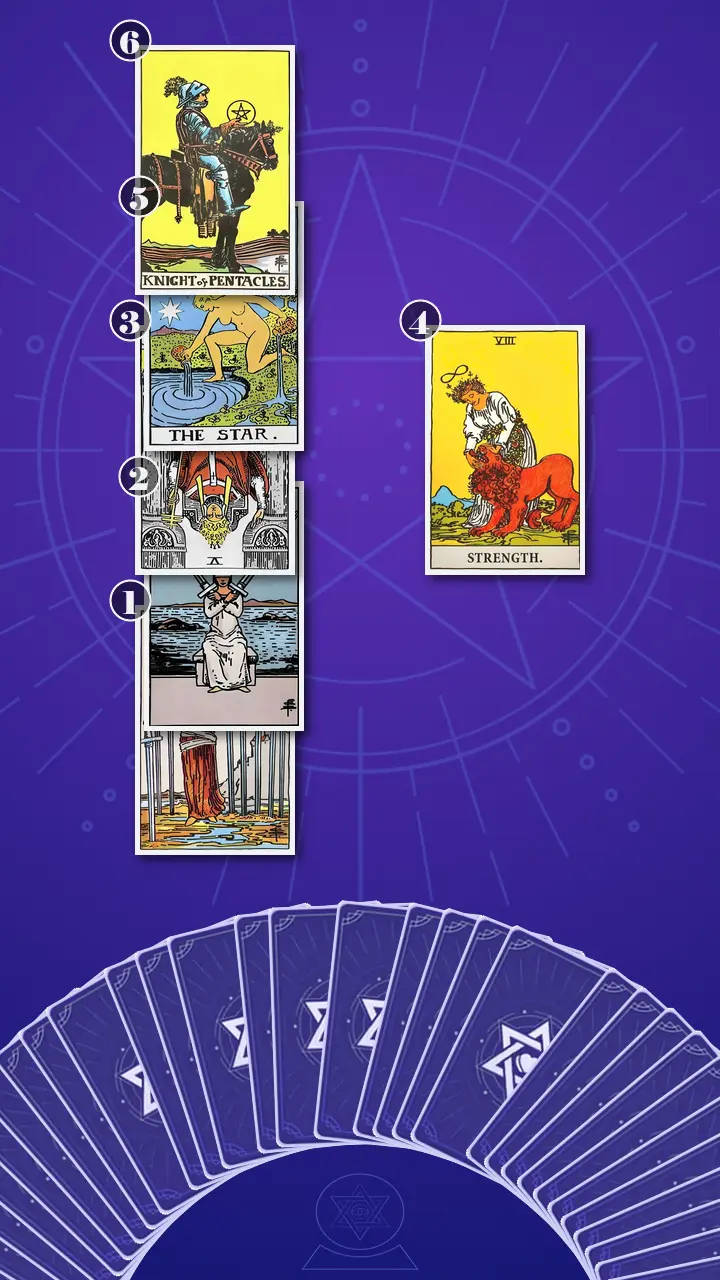
Reading the Map: How Tarot Works in a ‘Seen but No Reply’ Spiral
Position 1: The Present-Moment Lock-In
“Now flipped over,” I said, “is the card that captures the most observable present-moment loop around the email—the lock-in you’re living inside.”
Eight of Swords, upright.
“This,” I said, “is the moment you keep Outlook open in the background like a vital sign monitor—refreshing, reopening Sent, rereading your wording—because your brain has decided you’re not ‘allowed’ to move on with your day until your professor replies.”
The blindfold on the card matters. The loose bindings matter even more. The scene looks inescapable, but it isn’t. That’s the tell.
“Energy-wise,” I explained, “this is blockage: your mental energy isn’t missing, it’s trapped in a fenced-in loop. The more you check, the more your nervous system learns, This is urgent. And the more urgent it feels, the less choice you feel you have.”
I watched Jordan’s face on the screen. She let out a tense little laugh that had a bitter edge to it.
“That’s… so accurate it’s kind of rude,” she said, rubbing her thumb across her palm like she was trying to wipe the feeling off.
“I know,” I said. “Tarot can be blunt. But it’s blunt in a useful way. The bindings are loose—meaning there’s a small freedom available that your brain keeps discounting.”
Her eyes flicked away from the camera for a second, like she was picturing the laptop glow. “I tell myself I can’t start my reading until she replies,” she admitted. “Like my week is on hold.”
Position 2: The Trigger and the Meaning You Assign
“Now flipped over,” I said, “is the card that shows what your mind is treating as evidence—the meaning you assign to ‘Seen,’ and how that stalls action.”
Two of Swords, upright.
“You’re stuck in the fork,” I said, “follow up and risk looking ‘pushy,’ or don’t follow up and risk disappearing. So you choose a third option—freeze.”
This was the most modern part of the card to me: the protective stalemate. Like having three draft emails in Notes and never hitting send because you’re trying to predict the reaction before it exists.
“Energy-wise,” I told her, “this is defensive balance that’s gone too far. The crossed swords protect your heart, but they also block your hands.”
I mirrored her inner monologue out loud, in the exact cadence it tends to come in:
“I’ll just check once → Why would they read it and not reply? → I should rewrite it → I can’t send that.”
Jordan winced, then nodded once, hard.
“And then I hate myself for caring,” she said. “But I can’t stop.”
“That’s the trap,” I said. “You’re trying to avoid the pain of a clear no by staying in ambiguity. But ambiguity keeps you on the hook.”
Position 3: The Root Pattern Underneath the Event
“Now flipped over,” I said, “is the card that reveals the deeper rejection narrative about authority, worth, and what it means to ask for help.”
The Hierophant, reversed.
Jordan went still in a way I’ve learned to respect. Not dramatic. More like her brain just opened a folder she didn’t love.
“This is the ‘rulebook’ card,” I said. “Reversed, it’s the internalized rulebook plus externalized permission.”
Then I gave her the translation that fits her actual life: “You treat your professor’s reply like a stamp of legitimacy. If they respond warmly, you belong; if they delay, you must have broken an invisible rule. So you rewrite your email to sound ‘proper,’ add extra justification, and apologize preemptively—like there’s a secret institutional etiquette rubric you’re about to fail.”
“Oh my God,” she said quietly. “I literally Googled ‘how to email a professor UK’ on Sunday night.”
“Exactly,” I said. “And here’s the part I want you to hear: A read receipt isn’t a grade.”
She blinked fast, like she was holding back irritation—at herself, at the system, at the whole power dynamic. “It feels like one,” she said.
“Because The Hierophant is about institutions,” I said. “Your nervous system has learned to treat access to authority as permission to exist. So silence becomes the judge’s gavel.”
I paused, and asked her the question the position demands: “If you’re brutally honest—what’s the unspoken rule you think you violated?”
Jordan swallowed. “That I should already know. That asking means I’m wasting her time.”
In my head, a cinematic flash of Dead Poets Society drifted in—how quickly a teacher can become a symbol, a doorway, a verdict. But I kept my voice grounded. “No one actually handed you this rubric,” I said. “Your brain wrote it to keep you safe.”
Position 4: The Inner Resource You Can Access
“Now flipped over,” I said, “is the card that identifies the stabilizing capacity you can access—how you stay connected to self-worth while uncertainty exists.”
Strength, upright.
The card always looks calmer than people expect. Not force. Not domination. A gentle hand. A steady gaze.
“In modern terms,” I said, “this is the moment you notice the urge to refresh as a body event—tight chest, throat-clench—instead of a command you must obey. You take three slow breaths, unclench your jaw, and choose your next step from steadiness rather than adrenaline.”
“Energy-wise,” I explained, “this is balance. Not ‘calm down.’ More like: I can hold this feeling and still act like myself.”
As I said it, Jordan’s shoulders lowered a fraction. That tiny softening is the first rung out of a spiral. Not a breakthrough—an inch.
“I keep thinking if I regulate, I’m… letting them off the hook,” she said.
“No,” I replied. “Strength isn’t you excusing them. Strength is you refusing to let their bandwidth decide your nervous system’s mood.”
When The Star Spoke: Silence as Data, Not a Verdict
Position 5: The Reframe That Unlocks Movement
I slowed down before turning this card. “We’re flipping the antidote,” I said. “The one that changes the story without forcing a specific outcome.”
The Star, upright.
“This is the card where your perspective widens,” I said. “You stop treating response speed as a measurement of your worth. You zoom out: professors are busy, institutions are slow, and email isn’t intimacy. From that wider view, you write one structured follow-up that’s respectful and clear—because you’re acting like someone who belongs here, even while you wait.”
“Energy-wise,” I told her, “The Star is renewal. The steady pouring is you refilling your own sense of worth so the inbox can’t drain it.”
Jordan’s mouth tightened. For a second, I saw resistance—not because she disagreed, but because accepting it would cost her the familiar ritual of self-blame.
Setup: She was still stuck in that 11:38 p.m. moment—laptop glow in a dark room, rereading the same thread until her throat clenched—because “Seen” felt louder than actual words.
Delivery:
Stop letting a read receipt define you; choose the calm, clean horizon of The Star and respond from clarity rather than panic.
I let the sentence hang there for a beat, like a film cut that forces you to watch what you’ve been avoiding.
Reinforcement: Jordan’s reaction came in layers. First, a physiological freeze—her breath paused mid-inhale, and her eyes widened slightly like someone had opened a window in a room she thought was sealed. Then the cognitive part: her gaze went unfocused for a second, as if her mind replayed the thread—Seen—and watched herself turning it into a character assassination. Finally, the emotional release: she exhaled, not fully relieved, more like startled by how much effort she’d been spending.
“But if I act like it’s neutral,” she said, voice sharp for a moment, “doesn’t that mean I was… overreacting? Like I made it all up?”
“No,” I said. “It means you were protecting yourself. And you can thank that part of you—then update the method.”
This is where I used one of my favorite tools—my Einstein thought experiment approach. “Let’s do a quick experiment,” I told her. “Same email, same ‘Seen’ status. Two universes.”
“Universe A: ‘Seen’ means rejection. What do you do?”
“Refresh,” she said immediately. “Rewrite. Try to sound easier to deal with.”
“Universe B: ‘Seen’ means seen. Neutral information. What do you do?”
She stared at the card on her screen. “One follow-up,” she said, slower. “With… an actual question. And a deadline.”
“Exactly,” I said. “Different meaning, different behavior, different nervous system.”
I watched her shoulders drop again—then I caught that slight post-release vulnerability too, the almost-dizzy feeling of having a clear path. Clarity can feel like responsibility for the first few minutes.
“Now,” I asked her, “using this new lens—think back to last week. Was there a moment when ‘Seen’ hijacked your day, and this reframe could have changed how you moved through it?”
Jordan’s eyes got glossy. “On the Tube,” she said. “I checked at 8 a.m. and then I couldn’t focus in seminar. I was physically there, but my brain was in her inbox.”
“That,” I said, “is the shift. Not from uncertainty to certainty—from rejection dread and compulsive checking to self-respecting clarity. The Star doesn’t promise instant replies. It returns you to yourself.”
Position 6: The Grounded Next Step
“Now flipped over,” I said, “is the card that translates the reframe into a one-week, concrete action and boundary that restores agency and clarity.”
Knight of Pentacles, upright.
“This is the opposite of hovering,” I said. “One pentacle. One plan. A steady pace.”
In modern life: “You set a simple professional process: follow up once after 48–72 hours, keep it to one clear question, and then put email away. You choose two inbox check windows a day and return to your work—because reliability to yourself is the antidote to hovering.”
“Energy-wise,” I explained, “this is structure—not rigidity, but a container. And it’s exactly what breaks rumination.”
Jordan let out a breath that sounded like she’d been holding her whole week in her teeth. “I can do structure,” she said. “It’s the… waiting that destroys me.”
“That’s why we build the container before we wait,” I said. “One clear follow-up beats five perfect drafts.”
The One-Ask Protocol: Your Next 7 Days Without Hovering
I stitched the spread back together for her in plain language.
“Here’s the story the cards told,” I said. “You’re in an Air-heavy loop: Eight of Swords says you feel trapped by what you’re thinking, not by a lack of options. Two of Swords says you freeze because choosing feels like risking a verdict. The Hierophant reversed shows why it feels so high-stakes—your worth is temporarily outsourced to an authority figure’s response time. Strength gives you the internal lever: you can meet the body spike kindly without obeying it. The Star restores the frame—Silence is data, not a verdict. And the Knight of Pentacles turns that into a professional, bounded follow-up plan.”
“Your cognitive blind spot,” I added, “is believing that perfect wording can guarantee safety. That’s the trap: perfectionism as protection. The transformation direction is the opposite—bounded clarity: one calm action, then you stop negotiating with your anxiety every hour.”
Jordan nodded, but then her brow tightened. “I’m juggling coursework and work,” she said. “I don’t even know if I can do all these steps. Like, I can’t afford to lose time.”
“Perfect,” I said. “Then we keep it small and surgical. No extra work. Just fewer mental tabs open.”
- Send the 5-Line Follow-Up (7-minute version)Open a draft and write only five lines: (1) Hi Prof __, (2) quick nudge on my question about __, (3) my specific question is __?, (4) if it helps, I’m aiming to decide/submit by __, (5) thank you—Jordan. Send it once during a low-drama time (mid-morning), subject line unchanged.Set a 7-minute timer. When it ends, stop—no extra context, no apology paragraph. Read it once out loud before you decide.
- Lock in the 48–72 Hour RulePut a calendar reminder for 48–72 hours after your last email: “If no reply, follow up once / or ask in office hours.” This answers the question “how long to wait before following up with a professor” with a boundary you don’t renegotiate daily.If anxiety tries to override it, label the feeling: “Read-Receipt Courtroom.” Then do one physical action (fill your water bottle, open your notes, start the next task).
- Build an Inbox Window BoundaryChoose two inbox windows for the week (e.g., 10:30 a.m. and 4:30 p.m.). Outside those windows, log out of email on your phone or move Outlook off your home screen.Before any check: one hand on chest, inhale for 4, exhale for 6, then ask: “What am I hoping this check will prove?” If the answer is “that I matter,” wait until the next window.
And because I’m me—an artist who thinks in images—I offered Jordan one more optional tool from my own weird toolkit: Manuscript Mindmaps.
“If you catch yourself rewriting the follow-up for the tenth time,” I said, “take a blank page and do mirror writing for sixty seconds—write the core ask backward, messy, illegible if it needs to be. It breaks the perfectionist spell. You’re telling your brain: This is communication, not a performance.”
Jordan actually smiled at that. Small, real.
“And for the record,” I added, “you don’t have to hover to be cared about.”

A Week Later: The Quiet Proof
Six days later, Jordan messaged me. Not a paragraph. Just a screenshot and one line: “Sent the 5-line follow-up. Then put Outlook in a folder on the last screen of my phone.”
She told me she still felt a flicker of panic after hitting send—her body didn’t suddenly become a zen garden—but it didn’t own her whole day. She studied in the library with rain tapping the window, checked her inbox only at the windows she chose, and when the urge spiked at night, she wrote tomorrow’s single academic task on paper and plugged her phone in across the room. Clear, but not perfect. Steady, but still human.
That’s the real Journey to Clarity I care about: not forcing certainty out of someone else’s silence, but reclaiming self-respect inside the waiting. The Star doesn’t change the professor’s workload. It changes who gets to narrate Jordan’s worth.
When you’re staring at a “Seen” thread and your chest tightens, it’s not just about an email—it’s that quiet fear that being ignored might mean you don’t matter.
If you treated the silence as neutral information for the next 48 hours, what’s one clean, bounded action you’d want to take—just to be on your own side?
This story is adapted from psychological research, written so that those in a similar struggle can see their own pattern in it — and find their next step clearly.These insights are not a substitute for professional psychological, medical, legal, or financial advice.
Learn more about our Journey to Clarity.
How did this insight land for you?
🫂 This Resonates Deeply
🌀 Living This Story
✨ Now I See Clearly
🌱 Seeing New Possibilities
🧰 Useful Framework
🔮 The Confirmation I Needed
💪 Feeling Empowered
🚀 Ready for My Next Step
Author Profile
 AI
AI“I’ve always felt our lives are films currently in production. As an artist, I know that when you feel stuck, it’s often because you’ve bravely stayed in a painful scene for just a little too long. I’m not here to coldly analyze you. I want to sit closely with you, look at those difficult moments with profound empathy, and gently hand you the pen so you have the courage to write your next beautiful act.”
In this Study Tarot Reading :
Core Expertise
Service Features
Also specializes in :
Explore Related Patterns:
Permission SeekingJordan treats the professor's reply like a stamp of legitimacy: a warm answer means she belongs, while a delay means she may have broken an invisible rule. That is why the email becomes bigger than etiquette; it starts deciding what she is allowed to ask. Permission Seeking turns authority into an emotional gatekeeper. You try to make the request proper enough, justified enough, and apologetic enough to earn safety, but the hidden cost is that your own right to need help gets outsourced to someone else's response time.
Rejection SensitivityJordan's 11:38 p.m. moment starts with a tiny external cue: Outlook says 'Seen,' and her body reacts as if a verdict has landed. The delayed reply becomes evidence in an internal courtroom, where 'too much,' 'not enough,' and 'wrong tone' all argue that she has done something wrong. That is the rejection loop: ambiguity gets converted into personal evidence before reality has enough data. You are not reacting to an email alone; you are watching the mind protect against possible rejection by pre-living it, scanning for signs, and letting an authority figure's silence narrate your belonging.
Certainty SeekingJordan says she wants clarity, but the search for clarity happens through response speed, read receipts, and the imagined meaning of silence. Her mind treats the professor's reply as the missing piece that will finally let her start reading, focus in seminar, or move through the evening. Certainty Seeking turns ambiguity into a problem that must be solved before life can continue. You keep reaching for one more piece of data, but the deeper function is emotional safety: if the silence can be decoded, maybe rejection can be prevented before it lands.
Compulsive CheckingThe laptop stays open like a vital sign monitor, and Jordan keeps refreshing, reopening Sent, and waking her phone until the device feels like it is controlling the room. Each check gives a tiny hit of possible relief, then leaves her more locked onto the thread. Compulsive Checking is the behavioral engine of the rejection loop. You are not checking because the inbox has useful new information every few minutes; you are checking because the nervous system has learned to treat checking as a way to discharge uncertainty, even though it trains the uncertainty to come back louder.
Freeze ResponseJordan names the fork clearly: follow up and risk looking pushy, or stay silent and risk disappearing. Instead of choosing either side, she freezes, and the email begins holding her reading, seminar focus, and evening routine hostage. Freeze Response works here as a protective stalemate. You are not doing nothing because you have no options; you are doing nothing because every option has been loaded with threat, so ambiguity starts to feel safer than a clear move.
Perfectionism-Driven AvoidanceJordan rewrites the message to sound proper, adds extra justification, apologizes before she has been accused of anything, and even searches how to email a professor in the UK. The wording becomes a performance designed to prevent a negative reaction before it exists. Perfectionism-Driven Avoidance is not about high standards in this loop; it is about using polish as protection. You keep trying to make the ask rejection-proof, but the effort to eliminate all possible disapproval delays the clean action that would actually restore agency.
Boundary DiscernmentThe 48-72 hour rule, the five-line follow-up, and the two inbox windows give Jordan a boundary that does not depend on the professor replying quickly. Instead of hovering over Outlook, she decides when she will act, when she will check, and when she will return to her own work. Boundary Discernment is the corrective pattern because it separates care from control. You can care about the reply without letting the inbox own the whole day, and you can ask clearly without turning every hour of silence into a new negotiation with anxiety.
Explore Related Struggles:
Mentor Approval LockJordan's professor is not only the person who might answer an academic question. In the way Jordan describes the wait, the reply becomes a stamp of legitimacy: if it lands warmly, she belongs; if it delays, she must have crossed some invisible line. You are seeing an authority relationship carry more symbolic weight than it can safely hold. A busy professor's bandwidth starts deciding whether Jordan feels allowed to ask, allowed to continue, and allowed to trust her own place in the program. Mentor Approval Lock fits because the academic contact has become a permission gate. The deeper loop is not just wanting guidance from someone senior; it is needing their response to stabilize a sense of belonging that has to become more internally held.
Permission ParalysisJordan names the fork clearly: follow up and risk looking pushy, or stay quiet and risk disappearing. Instead of choosing either path, she freezes, keeping Outlook open while her reading, seminar focus, and evening all wait behind the same unanswered message. You can see the paralysis in the way ordinary next steps become permission-dependent. Starting her reading, sending one clear follow-up, or moving through the week all feel suspended until the professor's reply grants enough safety to proceed. Permission Paralysis captures the structure because the block is not a lack of options. The block is the feeling that action needs external authorization before it is allowed to count as reasonable, respectful, or safe.
Read Receipt Worth LockJordan sits in the 11:38 p.m. laptop glow rereading the same sent email, and the small status marker on the thread stops behaving like delivery data. Seen becomes a verdict, and the professor's delayed reply starts carrying more weight than the actual content of the exchange. You are watching a worth system get outsourced to a tiny digital signal. If the professor answers warmly, Jordan feels legitimate; if the inbox stays quiet, her mind starts building a case that she was too much, not enough, or wrong in tone. Read Receipt Worth Lock fits because the rejection loop is not only about wanting a reply. It is about letting response speed narrate whether you belong, whether you are allowed to ask, and whether silence means you have already been judged.
Inner Tribunal LockJordan describes Seen as if it has entered evidence, and the story keeps returning to courtroom language: verdict, judge's gavel, a hidden rule she may have broken. A delayed reply becomes less like a scheduling gap and more like proof that her email failed an invisible standard. You can trace the tribunal through her edits. She rewrites to sound proper, adds extra justification, apologizes before anyone has accused her, and even searches how to email a professor in the UK, as if the right format could keep her from being found guilty. Inner Tribunal Lock fits because the harshest authority in the scene is not only the professor. It is the internal court that takes ambiguity, turns it into accusation, and makes Jordan defend herself before any actual feedback has arrived.
Monitoring-Safety FusionJordan keeps Outlook open in the background like a vital sign monitor, refreshing, reopening Sent, and checking the same thread for a change that has not arrived. The action looks practical on the surface, but it does not produce new information. You can feel how the checking becomes a safety substitute. Each refresh briefly promises control, then trains the body to treat the thread as urgent, which pulls her attention out of her reading, the Tube, the seminar, and the rest of her night. Monitoring-Safety Fusion fits because the loop turns vigilance into the thing that feels protective. The inbox becomes less like a communication tool and more like a console she must keep watching to prove that nothing bad has happened to her place in the room.
Clarity-Exposure SplitJordan says she wants clarity, but the cleanest path toward it is also the path that makes her feel most exposed. A direct follow-up could answer the question, yet it also risks making her visible as someone who needs help, has a deadline, and cannot fully control the professor's reaction. You can see the split in the third option she keeps choosing: freeze. Ambiguity protects her from a clear no for a little longer, but it also keeps her attached to the thread, negotiating with silence instead of acting from her own standards. Clarity-Exposure Split fits because clarity is not simply missing. It is loaded with the risk of being judged, refused, or seen as too much, so the very thing that could restore movement also feels like the thing that could wound her.
Explore Related Emotions:
Ambiguity DreadOutlook stays open in the background like a vital sign monitor, and Jordan keeps reopening Sent, rereading the same wording, and checking for a reply that has not come. The silence does not sit quietly; it keeps generating possible meanings. Ambiguity Dread is the pressure of being held inside an unfinished sentence. You are not dealing with a clear no, a clear yes, or a clear next step, so the mind keeps trying to complete the missing information by turning uncertainty into threat. The waiting becomes more consuming than the email itself because it never gives the body a clean place to land.
Approval AnxietyJordan describes the professor's response as if it can stamp her into legitimacy or leave her outside the room. A warm reply would mean she belongs; a delay starts to mean she has asked too much, sounded wrong, or failed some rule she cannot see. Approval Anxiety shows up when your worth starts borrowing its oxygen from someone else's tone, timing, and availability. In this story, the professor is not just a person with a crowded inbox; she becomes the imagined gatekeeper of whether Jordan is a real student, a reasonable asker, and someone allowed to need help.
Performance FreezeJordan can name the practical options, follow up or wait, but both options seem to carry a social cost. If she follows up, she might look pushy; if she does not, she might disappear. So her system invents a third option: stay suspended. Performance Freeze is the stuckness that appears when every move feels like it will reveal something unacceptable about you. The email is small, but the imagined audience is huge. You end up rehearsing tone, timing, and possible reactions until the hand that could send one clear message becomes locked behind prediction.
Permission AnxietyJordan says she cannot start her reading until the professor replies, as if the rest of her week needs a green light from the inbox. Even the follow-up becomes charged: send it and risk looking pushy, do nothing and risk disappearing. Permission Anxiety names the feeling of waiting to be allowed into your own next move. You are technically free to act, but the authority figure's silence starts occupying the space where your own judgment should be. In Jordan's loop, the email is no longer just communication; it becomes a checkpoint for whether she is allowed to continue, ask, study, and take up space.
Rulebook ShameJordan literally Googles how to email a professor in the UK, then rewrites her message to sound more proper, adds justification, and apologizes before anyone has accused her of anything. The simple act of asking starts to feel like entering an exam she did not know she was taking. Rulebook Shame lives in that invisible etiquette rubric. You feel exposed not because you have done something wrong, but because you believe there is a correct way to need help and you might have failed it. The sentence underneath, 'I should already know,' turns a normal academic question into a private verdict against your competence.
Verdict DreadJordan sits at 11:38 p.m. with the laptop open, rereading the same sent email while her phone keeps lighting up in her hand. The body details matter: the chest tightening, the throat clench, the edge-of-bed posture, the room turned into a small interrogation cell by the Outlook glow. That scene turns a neutral digital status into a private courtroom. You are not simply waiting for a reply; you are watching silence become evidence, and the read receipt starts to feel like a ruling on whether you asked correctly, sounded wrong, or deserved attention at all. Verdict Dread names the inner weather where no answer has arrived, but the body is already bracing as if judgment has been passed.
Clarity ReliefWhen Jordan tries the two-universe thought experiment, the same email and the same read receipt produce a different next step: one follow-up, an actual question, and a deadline. The situation has not become certain, but the mental fog starts to separate into usable pieces. Clarity Relief is the first breath after the inbox stops being the narrator of your worth. You still have to wait, and the body may still spike, but the path becomes cleaner. In Jordan's case, relief does not come from getting an instant reply; it comes from seeing the difference between silence as data and silence as a verdict.
Grounded AgencyJordan sends the five-line follow-up, moves Outlook into a folder on the last screen of her phone, and checks only during the windows she chose. Nothing about the professor's workload changes, but Jordan's relationship to the waiting changes. Grounded Agency is the feeling of having a handle inside uncertainty. You are not controlling the other person's response; you are reclaiming the part that is yours: the clean ask, the boundary, the return to your work, the choice not to negotiate with the inbox every hour. It is agency without theatrics, built from small actions that hold.
Hard-Won ComposureA week later, Jordan still feels a flicker of panic after hitting send, but it does not own her whole day. She studies in the library, keeps the inbox to chosen windows, writes one academic task on paper at night, and plugs the phone across the room. Hard-Won Composure is not instant calm. It is the steadiness that remains when the old spike still appears and you no longer hand it the steering wheel. In Jordan's story, the win is not becoming untouched by silence; it is staying connected to herself while silence exists.
Standby Mode AnxietyJordan checks at 8 a.m. on the Tube and then cannot focus in seminar; she is physically there, but her mind is still inside the professor's inbox. Later, she says her week feels on hold until the reply arrives. Standby Mode Anxiety captures that suspended half-life where you keep functioning on the surface while your real attention is parked somewhere else. You are not choosing rest, work, or connection fully; you are waiting for a signal to release you. In this story, the inbox becomes the switch that decides whether the day can begin.
Hypervigilant AnxietyJordan's phone is warm from being woken over and over, and each unlock brings the same body sequence: chest tight, throat clenched, attention narrowing toward the screen. Outlook sits open in the background like something that has to be medically monitored. Hypervigilant Anxiety names the scanning state underneath the loop. You are not checking because new information is likely every few minutes; you are checking because the body has started treating the next tiny signal as emotionally decisive. The inbox becomes a surveillance field, and ordinary time gets reorganized around the possibility of impact.
Explore Related Contexts:
Academic Legitimacy ScrutinyJordan describes the professor's reply as if it can certify her place in the program: a warm response means she belongs, while a delay suggests she may have broken an invisible rule. That is why she rewrites the email to sound proper, adds extra justification, and apologizes before anyone has accused her of anything. The academic hierarchy turns a routine communication channel into a legitimacy checkpoint. You are trying to prove you are the kind of student who is allowed to ask, even though the actual situation is only a sent message awaiting a reply. Academic Legitimacy Scrutiny fits because the pressure is not just about getting information from a professor. It is about an institutional setting where access, tone, and response time start to feel like measurements of whether you are prepared enough, acceptable enough, and properly positioned inside the academic system.
Academic Outreach ParalysisJordan is stuck in a very specific fork: follow up and risk looking pushy, or stay quiet and risk disappearing. The result is not a clean decision but a freeze, with draft messages forming in the background while her reading and weekly rhythm remain on hold. The external structure matters because academic outreach is asymmetrical. The professor holds status, the reply timing is unclear, and the student carries the cost of deciding when a second message becomes reasonable. You are trying to act professionally without a visible rule for how much contact is allowed. Academic Outreach Paralysis fits because the blocked action is not abstract hesitation. It is a stalled academic ask inside a hierarchy, where the fear of misreading the channel keeps a concrete next step from being sent.
Access as Proof PressureJordan turns access to her professor into evidence about her place in the room. If the professor replies warmly, she reads it as permission to belong; if the reply is delayed, she starts treating the delay as proof that she has asked too much or failed some unspoken standard. That structure makes someone else's bandwidth function like a scoreboard. You are not only waiting for an answer; you are waiting for access to confirm that your question was acceptable, your tone was safe, and your presence in the program is not being quietly downgraded. Access as Proof Pressure fits because the story shows a concrete external gate: a professor's response channel becomes the mechanism through which belonging is checked. The work of reclaiming agency begins when access becomes useful information again, rather than the evidence source for whether you are allowed to take up space.
Hidden Curriculum GapJordan literally Googles how to email a professor in the UK, then names the rule she thinks she has violated: she should already know, and asking may be wasting the professor's time. No one in the story hands her a formal rubric, but she moves as if one exists and as if she is already close to failing it. That is the hidden layer of the academic environment. You are navigating more than coursework; you are navigating tone, timing, deference, and the unspoken standard for how a student is supposed to ask for help without becoming inconvenient. Hidden Curriculum Gap fits because the pressure comes from rules that are socially enforced but not clearly taught. The email becomes harder than it needs to be because the real task is not only asking the question; it is decoding the invisible etiquette of an institution while trying not to lose your place inside it.
Read Receipt PressureJordan keeps Outlook open in the background like a vital sign monitor, reopens Sent, rereads her wording, and treats one Seen receipt as the signal that decides whether she can move on with her reading. The pressure comes from a specific digital setup: the platform confirms that the message was viewed, but it gives no usable answer, no tone, and no next step. That half-signal keeps the academic exchange alive long after the email has been sent. You are not dealing with ordinary email delay here; the read receipt becomes a public-looking marker inside a private waiting room, making the inbox feel like the place where your study focus, social safety, and next move are being negotiated. Read Receipt Pressure fits because the external trigger is not silence alone. It is silence made visible by a status marker, then amplified by an academic power gap until checking, rereading, and waiting start to organize the evening around someone else's delayed response.