When Hurt Sounds Like Logic

Explore how hurt starts sounding like logic, with related tarot cards and Tarot Reading Insights from sessions.

Pain-logic Fusion
What does this feel like?

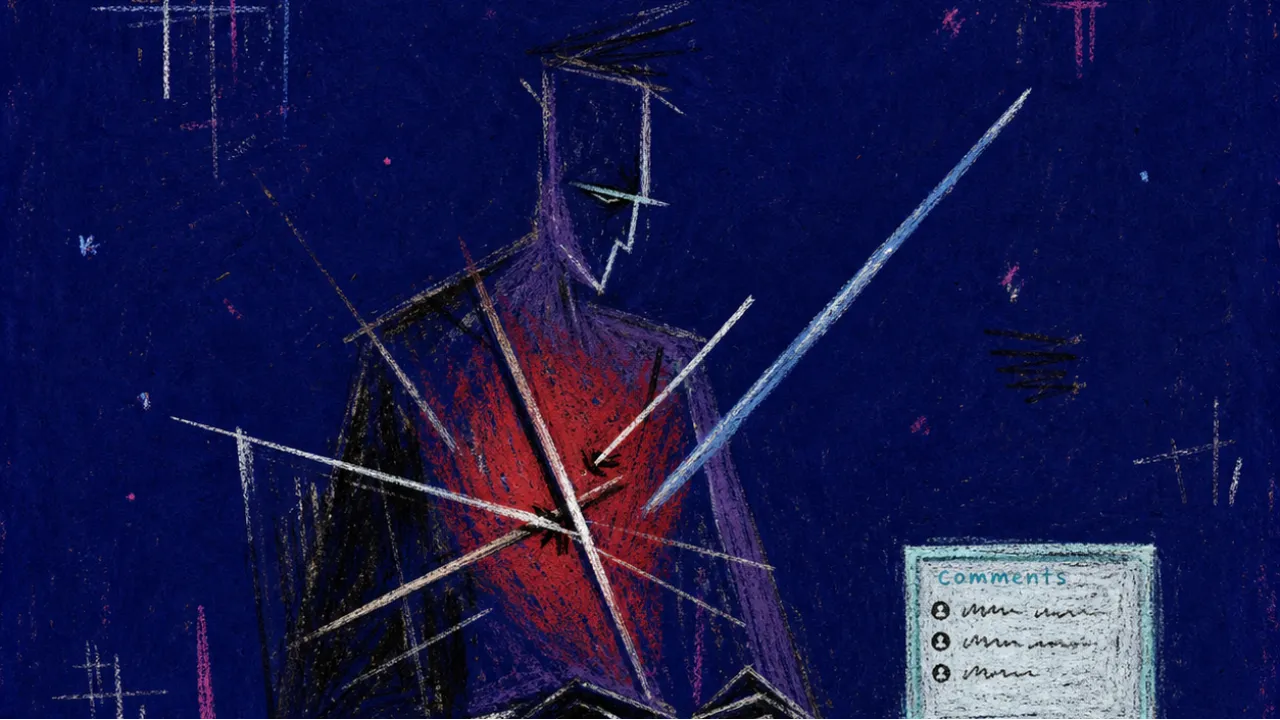
Pain-Logic Fusion is what it feels like when you are sitting at your desk after a comment, a text, or a grade, and the part of you that hurts starts speaking in the clean voice of reason. You reread the sentence again, then again, as if the right angle of attention will make the sting useful. Your shoulders creep up, your jaw locks, and your chest tightens in that small place under the sternum where a single word can land like a mark you cannot rub off. You tell yourself you are being sensible, that the harsh option must be the honest one because it costs more, that the familiar ache means you are finally seeing clearly. The trouble is quiet: the more an explanation hurts, the more trustworthy it begins to feel, and the more a gentle answer seems suspicious, like you are letting yourself off too easily. So you keep refining the argument, screenshot by screenshot, note by note, memory by memory, until your inner world starts to look organized and your body feels smaller inside it. You might call it standards, discipline, closure, self-awareness, or just not being naive, but underneath the neat language there is a private rule forming: if it cuts, it counts. The cost is that comfort starts to look unserious, softness starts to feel unsafe, and your own tenderness has to pass through a blade before it is allowed to matter, much like the Three of Swords, where three straight lines enter the heart so neatly that a clean wound starts to sound like an argument.

What's pulling at you?

The pull is simple but hard to spot: you want clarity, and pain has started pretending to be clarity. You are caught between needing reasons you can stand behind and noticing that your body is paying for those reasons before you even choose them. The stuck place is the rule that says the harsher answer must be the more responsible one.

How It Shows Up?

  • You open a feedback doc or performance note and one sentence seems to light up brighter than the rest. You keep rereading it, copying it into your notes, turning the wording around until your throat goes dry and your shoulders sit high around your ears. The comment becomes a clean little blade-grid over your chest, exact and convincing, and the screen feels colder the longer you look at it. You can let the sentence stay as one piece of information without letting it become the full measure of you.
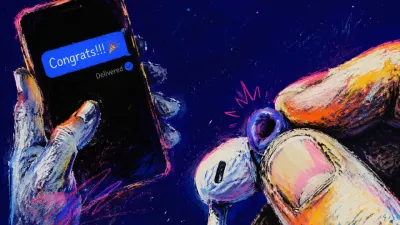
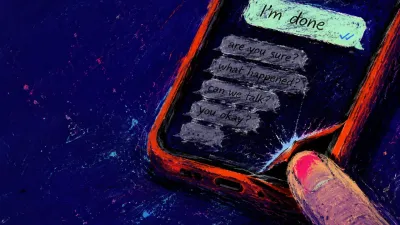
  • After a delayed reply, you scroll back through the thread with your thumb moving too fast, collecting timestamps, punctuation, and tiny shifts in tone. Your stomach drops, then tightens, and your breathing gets shallow as the hurt starts arranging itself into reasons. By the time you put the phone down, the ache feels more orderly than the bond itself, like the Five of Swords after the weather has already moved through. It is allowed to be a hurt moment before it has to become a conclusion.
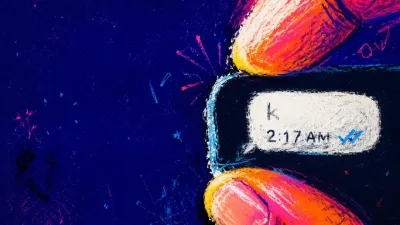
  • At 2 AM, you are lying awake with a decision open in your notes app, one option written in blunt, punishing language and another written in words that feel almost too kind. Your jaw pulses from clenching, and there is a thin pressure behind your eyes as you keep choosing the sentence that hurts more because it sounds more serious. The room is quiet, but your mind feels like the Nine of Swords, everything lined up above you with no space for your body to sleep. You can pause on the gentler wording without having to trust it all at once.
  • In a group chat or at dinner, someone says something small that catches under your skin, and you smile while a second conversation starts inside your head. Your tongue presses against the roof of your mouth, your neck goes tight, and you begin building the cleanest explanation for why the sting makes sense. Everyone else keeps talking, but you feel like you are holding a sword under the table, trying to make hurt behave like evidence. You can notice the sting without presenting it to anyone right away.
  • Your body starts giving the same signal before your mind has finished the argument: a knot under the sternum, a hard swallow, a shallow inhale that never quite fills your ribs. You may be reading an email, revising a paragraph, or replaying a conversation, but the sensation arrives first and the explanation rushes in after it. It has the texture of the Three of Swords reversed, an orderly pattern built from puncture points that almost passes as stability. You can treat the tightness as a signal, not a final answer.

Pain-logic Fusion in Tarot Cards

Pain-Logic Fusion shows up when hurt starts acting like evidence, so the heavy option feels serious because it hurts. You can feel it in the tight sternum, shallow breath, and cursor blinking while you try to make the cleanest argument. From an existential perspective, the structural framework here is about what happens when pain becomes the measuring tool for what counts as clear. Here are the Tarot Cards that mirror that outline.

Three of Swords Upright
The three swords enter the red heart from separate angles and meet at the same living center. Their clean metal geometry belongs to the realm of thought, language, and analysis, yet the object receiving them is the soft organ of feeling, so the mind's sharp edge is shown as something that can become indistinguishable from injury. In personal growth, that structure mirrors the moment when self-audit stops being clarifying and starts becoming an internal verdict. You may keep trusting a thought because it hurts, as if intensity were proof; the card locates the struggle in that fused point where insight, critique, and pain all arrive at once.
Reversed
The three swords create a clean, almost rational geometry across the heart. In reversal, that order can look like stability even though the structure is built from puncture points. Pain-Logic Fusion appears when a decision begins using hurt as proof. If an option feels heavy, punishing, or familiar in its discomfort, the mind can start reading that pain as evidence that the option is serious, realistic, or necessary. The card exposes the danger of a choice system that mistakes a well-arranged wound for a sound argument. It does not deny the facts; it shows where the facts have been organized around pain until pain starts sounding like logic.
Five of Swords Upright
Turbulent water sits behind a field of sharpened metal, and the sky carries the same disturbed motion as the swords below. The emotional background is present, but the foreground language of the image is blade, proof, position, and aftermath. In love, this card locates the moment when hurt can no longer move as hurt and has to harden into an argument before it feels real. You are not simply overthinking the relationship; the structure shows pain being forced through logic until the bond becomes a case to prove instead of a wound to witness.
Reversed
The swords are clean, straight, and countable, while the water behind them keeps moving under a gray sky. The card places sharp mental instruments on the edge of an emotional field, showing a conflict that has been translated into blades before the feeling underneath has settled. When inner work becomes dominated by explanation, Pain-Logic Fusion takes over. You can build an airtight case for why you hurt, but the case itself can start carrying the pain, making feeling look like evidence and relief look like winning the argument. The inward texture lives in the way the upright blade keeps the body fixed while the weather keeps shifting. The structure names a private loop where analysis stays busy because the unprocessed hurt has nowhere else to go.
Six of Swords Upright
Six swords stand upright inside the boat, arranged with clean symmetry across the front half of the vessel. They create a visible barrier for the passengers, but they also travel with them, adding weight to the same small structure that has to carry them away. Pain-Logic Fusion appears here as a crossing built out of the very mental instruments that once made the pain manageable. You can organize the wound, explain it, map it, and keep it contained, yet the analysis remains inside the boat rather than being set down on the shore. For introspection, the card locates the cost of using thought as the only safe container. The mind may be creating order, but the body is still being ferried under the weight of sharpened material that has not become memory, meaning, or release.
Nine of Swords Upright
The swords do not only hang above the figure; they cross the head, throat, and heart as one continuous pressure system. The body cannot separate thought, voice, and feeling, so impact travels through every channel that would normally help you interpret what is happening. In personal growth, this becomes pain-logic fusion. A difficult attempt, awkward transition, or exposed weakness is read as proof that the whole path is wrong, because discomfort and conclusion have been forced into the same line. The card’s structure makes the fusion visible without treating it as truth. Pain is present, but the blade grid shows how pain can become a false measuring instrument when it is placed across the exact organs of meaning, expression, and courage.
Reversed
The swords are instruments of reason and division, but here they cross the same zones that register bodily pain: head, throat, and heart. Reversed, the blade grid is no longer just above the figure; it becomes the internal ruler by which every sensation and thought is measured. Study pressure takes this form when logic begins to hurt and hurt begins to masquerade as logic. You may call it being realistic about your grades or future, but the card shows a fused system where academic reasoning has absorbed the sting of self-judgment.
Ten of Swords Upright
Ten swords stand upright in the fallen figure's back, turning the suit of thought into a row of fixed conclusions. The body is not merely tired; its central axis has been occupied by sharp, vertical judgments that leave no room for flexible movement, revision, or self-trust. In personal growth, this structure mirrors the moment when self-analysis stops being a tool and becomes a verdict. You may keep searching for the lesson, the limiting belief, or the hidden pattern, but every explanation lands as another proof that something in you is defective. The calm river and faint horizon show that another state of being is not absent. The struggle is that the mind has fused pain with truth so tightly that the path forward cannot be approached without first feeling like you are arguing against reality itself.
Reversed
The hand gesture matters because it remains after the body has lost every practical option. A sign of belief is still present, but it is trapped under a structure where thought has become blade, weight, and wound. In academic life, this is the moment when suffering starts to feel like proof that the work is real. The student may begin reading exhaustion, panic, or relentless difficulty as evidence of discipline, intelligence, or seriousness, even when those signals are showing structural damage rather than depth. Pain-Logic Fusion names the internal rule that makes academic harm feel meaningful. The card exposes that rule by showing intellect turned against the body that carries it, so the question is no longer whether the work matters, but why pain has become the language through which mattering is being measured.
Knight of Swords Reversed
The sword is clean, sharp, and beautifully suited to separation. In the knight's hand, it becomes the main instrument of contact, even though the living scene around him is made of wind, motion, and a horse that must be guided rather than cut. In romantic conflict, this image maps the fusion of hurt with logic. The mind keeps refining the argument, finding the exact sentence, the proof, the inconsistency, the fatal point, while the emotional wound underneath remains untouched by precision. The card shows why the fight can feel both intelligent and impossible. You may be naming real facts, but the relationship cannot be repaired by the same tool that keeps turning pain into a case to be won.
Queen of Swords Upright
The stern face, upright sword, and cloud-wrapped cloak put sorrow and discernment inside the same posture. The blade is clean, but it is held by a figure whose authority has clearly been shaped by weathered experience. In personal growth, this is the place where old pain starts speaking in the voice of good judgment. You may believe you are being realistic, disciplined, or smart, while the card shows a deeper fusion: the mind has learned to protect the wound by turning it into a rule.
Reversed
The Queen’s sword belongs to clarity, but in this state it can become the only instrument through which the whole scene is read. The clouds below and the clear air above form two competing realities: what is felt in the relational atmosphere and what can be justified as fact. In friendship, this is the struggle of being unable to separate present perception from the memory of previous disappointment. You may read tone, timing, silence, and small shifts with impressive precision, yet the reading itself carries the temperature of old hurt. Pain-Logic Fusion is the point where analysis stops feeling like freedom and starts becoming a sealed room. The card does not deny your perception; it shows how perception can become over-sharpened when pain and clarity are forced to share the same blade.
King of Swords Upright
The King’s blue robe and cape dominate the surface, while red remains visible at the hood and elbows, close to the body’s heat and impulse. The sword rises from that layered clothing as if clean logic could carry everything underneath without distortion. Personal growth can take on this exact architecture when emotional pain is translated too quickly into rational verdicts. You may call it standards, strategy, honesty, or discipline, while the charge beneath the language still shapes what the blade is cutting. The card does not deny the value of clear thought. It shows the strain that forms when logic becomes the official voice of a feeling that has not been given its own room, turning self-understanding into a sharp instrument that can mistake protection for truth.
Reversed
Blue cloth, grey stone, and steel dominate the card, while the red of warmth and feeling appears only in controlled fragments. The butterfly of transformation is present, but it is carved into the throne rather than moving through the air. In reversal, family pain can become trapped in the same way: converted into arguments, evidence, timelines, and defensible statements before it is allowed to be real. The feeling does not disappear; it gets forced into a colder container that may prove the point while leaving the wound untouched. This struggle is the fusion of injury and logic. You may be able to explain exactly what happened, but the family system has trained pain to survive as a case file instead of a living signal.

Pain-logic Fusion in Tarot Card Reading Insights

For people who know the feeling of turning every ache into proof, Pain-Logic Fusion can enter readings through choices, work feedback, love questions, or self-audit. The shift from cards to readings shows how others bring that same stuck rule into a spread: if it cuts, it counts. Tarot Reading Insights from related sessions.

Psychological struggles related to Pain-logic Fusion