The 8:47 p.m. Silence in the Hallway
If the nickname hits and your throat goes tight, you do a quick polite laugh, and then you spend the next hour drafting the perfect boundary text in Notes that never gets sent—yep.
When Taylor showed up on my screen, they were sitting in a small Toronto apartment that looked exactly like a life you built yourself: a coat rack crowded by the door, a narrow hallway, and that particular winter-dark reflection in the window that makes everything feel a half-step more private. They ended a family call while we were still settling in—almost by accident, like it had been on their mental to-do list for days and finally happened because the banner popped up and they couldn’t ignore it.
The screen went dark. The silence felt loud. A radiator clicked like it was keeping time. Taylor’s phone was warm in their palm, and their jaw was tight in that way that doesn’t feel like anger so much as it feels like you’ve been chewing on words you never got to swallow.
“They did it again,” Taylor said. Not yelling. Not dramatic. Just… flat. “The old nickname. And I laughed. I literally laughed. And now I’m going to pace and write twelve versions of a text I won’t send.”
I watched them stand, drift into the hallway by the coat rack, and start that familiar loop: two steps forward, two steps back, like their body was trying to walk the sentence out of their throat. They opened Notes. Typed. Deleted. Typed again.
What landed between us wasn’t just irritation. It was hurt—sharp and clean—followed immediately by guilt for having it at all. Like a tiny internal courtroom had convened in their chest: Are you overreacting? Are you being ungrateful? Are you hard to love?
Taylor looked at me and said, “It’s not just a word, it’s a whole version of me getting dragged into the room. I want to be seen as who I am now. But I’m scared that correcting them is going to make me seem ungrateful or… difficult.”
Their throat worked like it was trying to push something past a locked gate.
“Okay,” I said, keeping my voice peer-level and steady. “We’re not here to write the perfect paragraph. We’re here to find clarity—what boundary actually helps in the moment, and how to say it without abandoning yourself or turning it into a fight.”

Choosing the Compass: The Celtic Cross · Context Edition
I asked Taylor to take one slow breath with me—not as a ritual, not as anything mystical, just as a nervous-system gear shift. While they exhaled, I shuffled. On my desk, a blotter strip held a soft, clean scent—something I use when conversations carry old family electricity. It’s not magic. It’s sensory psychology: a small, consistent cue that tells the body, we’re safe enough to be honest.
“For this,” I said, “I’m using a spread called the Celtic Cross · Context Edition.”
And because people always deserve the ‘why,’ I explained it plainly: “This issue isn’t just what should I say. It’s a whole chain—what happens in your body when the nickname lands, what blocks you from speaking, the family rule underneath it, and then a workable way to practice a repeatable boundary. The Celtic Cross is good for mapping a pattern, not just predicting an outcome.”
I pointed to three anchors in the layout, the way I’d talk someone through a map app before a long walk: “Card one will show the lived moment—your immediate reaction. Card two is the block—the pattern that keeps the correction stuck behind your teeth. And later, card seven is your stance: the version of you that can actually deliver the boundary with dignity. Then the final card shows an integrated direction—something you can cultivate through practice, not a fixed fate.”
Taylor nodded once, small. Their shoulders were still high, like they were bracing for impact.
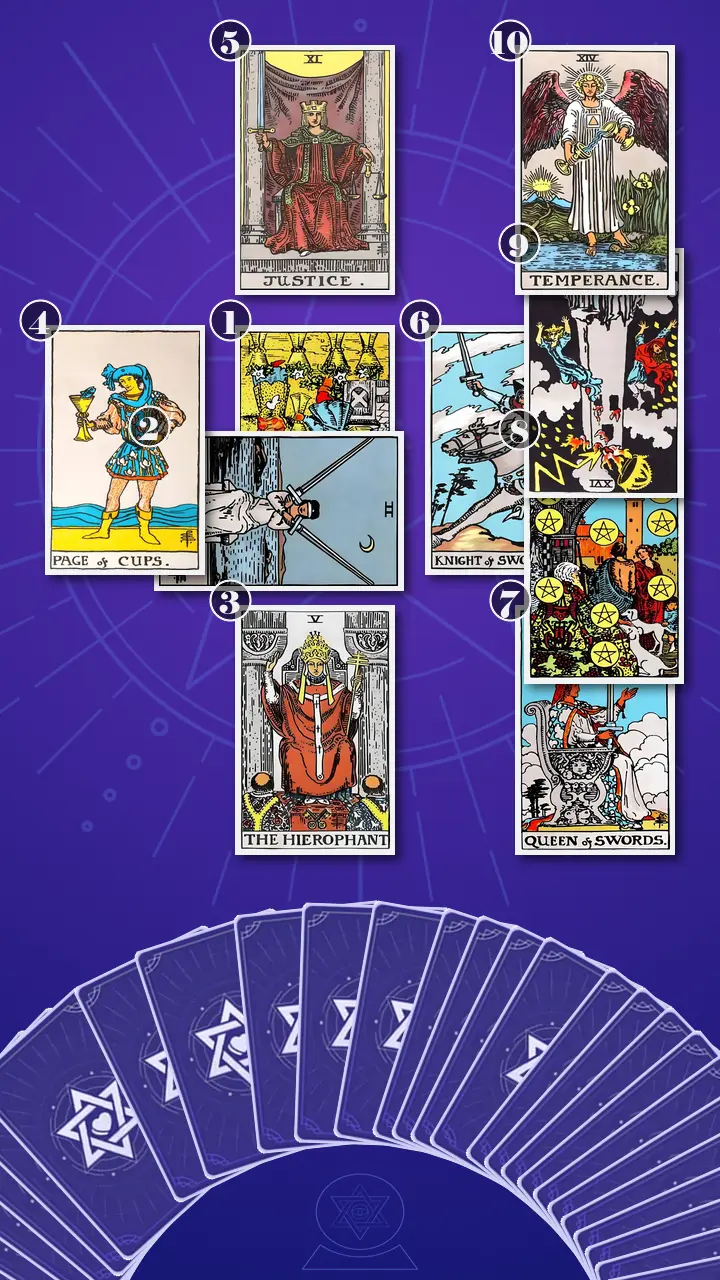
Reading the Map: Card Meanings in Context
Position 1: The Moment the Nickname Lands
“Now we’re turning over the card that represents the lived moment when the old nickname lands: the immediate identity and nervous-system reaction you experience.”
Six of Cups, reversed.
“This is the time-travel card,” I told Taylor. “Reversed, it’s nostalgia as autopilot—the past trying to define the present.”
I used the translation that fits modern life because it matters that tarot lands in real context: “It’s like your family keeps tagging you in an old Facebook photo-album version of you, and you’re trying to update the tag without starting a comment war.”
Taylor let out a short laugh that didn’t carry any humor. More like a recognition flinch. “That’s… actually brutal,” they said. “But yeah.”
“Not brutal,” I said gently. “Accurate. The energy here is a blockage in present-day identity. The nickname may be ‘sweet’ to them, but it assigns you a role: easy, cute, low-maintenance. And your body does what it learned to do back when you needed that role.”
I watched Taylor’s fingers press into their phone case, then release, then press again—like a metronome of restraint.
Position 2: The Block—Peacekeeping Through Silence
“Now we’re turning over the card that represents what blocks the boundary from being stated simply: the in-the-moment conflict-avoidance pattern.”
Two of Swords, upright.
I didn’t rush this one. The room felt quieter, even through video—like Toronto winter had leaned a shoulder against the window.
“This,” I said, “is tone-monitoring as a blindfold.” I tapped the image lightly. “Two swords crossed at the chest—this is the locked jaw. The held breath. The body going, don’t move, don’t make it weird.”
And I gave the inner monologue out loud, because sometimes hearing it externalized is what releases shame: “If I say it wrong, I’ll make it weird… so I’ll just not say it.”
Taylor’s throat bobbed like they’d swallowed a word. Their jaw flexed, and then they caught themselves doing it—like they’d just noticed their hand on a hot stove.
“Yeah,” they said quietly. “And then afterward I’m mad at myself for, like, choosing silence.”
“It’s not a moral failure,” I said. “It’s a strategy that used to keep you safe. But it comes with a trade: short comfort now versus long discomfort later—stewing, drafting, distancing, feeling less real around them.”
Taylor nodded once. A small exhale. The kind that says, Oh. It’s a pattern.
Position 3: The Root—The Family Rule Underneath
“Now we’re turning over the card that represents the family-rule underneath the nickname: the inherited role expectation that keeps repeating.”
The Hierophant, upright.
“This is ‘the way we’ve always done it’ energy,” I said. “Naming conventions in families can become a ritual. Not conscious. Not malicious. Just… institutional.”
Here’s where my own mind flashed to my training—perfume school in Paris, where tradition is both beautiful and stubborn. You can respect a classic formula and still update it for the person who’s going to wear it in 2026, not 1996. The Hierophant always reminds me: legacy isn’t the enemy, but it is heavy.
“In your family system,” I continued, “there’s an unspoken rule: parents name, kids accept. Even when the ‘kid’ is 28 with a corporate job and a fully adult life.”
Taylor stared at the card, then looked away, like it was too direct. “It’s like… I’m not allowed to correct them.”
“Exactly,” I said. “That rule is old. And it’s running the conversation in the present.”
Position 4: The Emotional History You Don’t Want to Damage
“Now we’re turning over the card that represents what the nickname originally represented in your relationship: the emotional history you’re trying not to damage.”
Page of Cups, upright.
“This card is tenderness,” I said. “Playful connection. The nickname probably started as affection, not control.”
I let that land because nuance is often what stops guilt from hijacking clarity. “A nickname can be affectionate and still be inaccurate,” I said, using the phrase the way I’d use a calming ingredient in a blend—small but stabilizing.
Taylor’s eyes softened for a second. “Yeah. Like… I don’t think they’re trying to hurt me.”
“Right,” I said. “And that’s why your boundary needs to update the connection, not punish it.”
Position 5: Your Conscious Aim—Fairness and Accuracy
“Now we’re turning over the card that represents what you’re actually asking for at a values level: respect, accuracy, and adult-to-adult language.”
Justice, upright.
“This is the catalyst,” I said. “Justice is HR-policy-level clarity. Facts, not feelings. Like correcting your name on a file: not drama, just accuracy.”
I watched Taylor’s shoulders drop a fraction—the smallest physical evidence that the request could be simple.
“Here’s the script energy Justice likes,” I said, and I spoke it the way you’d read a clean line in a handbook: “I go by Taylor now—please don’t use that nickname.” One sentence. Then stop.”
Taylor blinked. “That sounds… too simple. Like I should add something so they don’t get defensive.”
“That’s the Two of Swords talking,” I said. “Keeping the vibe isn’t worth losing yourself in the room.”
Then, very gently: “Accuracy is not cruelty.”
Position 6: The Near-Future Energy—Speed and Sharpness
“Now we’re turning over the card that represents the next conversational energy: how the correction is likely to come out if you speak without preparation.”
Knight of Swords, upright.
“This is momentum,” I said. “After enough silence, your truth wants to come out fast.”
I connected it to the exact modern pattern: “It’s like the next time they say it in front of relatives, your brain goes, now or never, and you want to say it all at once—every reason, every feeling, every example.”
“Yeah,” Taylor said, and their mouth tightened. “And then I’m scared I’ll sound sharp.”
“That’s the watch-out,” I agreed. “The Knight’s energy can be excess—truth delivered like a sprint. We want mature air, not storm air.”
Position 7 (Key): The Boundary Posture That Serves You Best
“Now,” I said, slowing down, “we’re turning over the card that represents the boundary posture that serves you best: the self you need to embody while speaking. This is the key card.”
Even through a screen, the atmosphere shifted. The radiator seemed to pause between clicks. Taylor stopped pacing and sat down—like their body knew something important was coming.
Queen of Swords, upright.
“This is the adult you,” I said. “Clear, calm, and boundaried without cruelty. One sentence. Neutral tone. Steady repeat.”
Then I brought in the lens that’s uniquely mine—because I’m not only reading cards; I’m reading systems. “Taylor, I’m going to use something I call Intergenerational Communication Decoding. It’s a way of translating ‘what they mean’ into ‘what lands.’ Your parents’ language is probably coded for closeness—like a familiar family scent they’ve worn forever. Your language is coded for accuracy and respect—like a clean, modern formula. They’re not speaking the same dialect of love.”
“And,” I added, “this is where my perfumer brain gets very practical: you can’t fix a blend by yelling at the top note. You fix it by changing the default—what goes on the skin every time.”
Taylor’s eyes narrowed slightly, focused. The first time I’d seen them look forward instead of inward.
Setup (the stuck loop): Taylor was mid-call after a long week, and the nickname dropped like it always does. Their throat tightened, they laughed on autopilot, and later they were pacing their apartment rewriting a ‘perfect’ text they never sent—trying to buy safety with extra words.
Delivery (the line that cuts clean):
Stop trying to keep the peace by staying silent; claim your words with a steady blade and an open hand.
I let the sentence sit there. No extra commentary. Like a pause after a clear note in a perfume evaluation—so you can actually smell what changed.
Reinforcement (the body learns it’s allowed): Taylor’s reaction came in layers. First, a micro-freeze—their breath held, and their fingers hovered above their phone as if they were about to type and couldn’t. Second, the thought landed: their gaze went slightly unfocused, like they were replaying every dinner table moment where they’d swallowed the correction. Third, emotion moved: their jaw unclenched in a visible release, and their shoulders sank, not dramatically, but like a backpack being set down after a long commute.
“But… if I do that,” Taylor said, and their voice sharpened for a second—more fear than anger—“doesn’t that mean I was wrong for not saying anything all these years?”
I didn’t flinch from that. “No,” I said. “It means you were surviving with the tools you had. The Queen isn’t here to shame you. She’s here to give you a new tool—one that doesn’t require a courtroom-level explanation. Firm line, open door.”
I leaned in slightly. “Now—use this new lens and look back at last week. Was there a moment when the nickname happened and you could’ve said, just once, ‘I go by Taylor now,’ and then continued the conversation like normal? No apology tour. No essay. Just one clean update.”
Taylor swallowed, but this time it looked like they were making space rather than blocking. “Yeah,” they said. “Tuesday. They did it in front of my aunt. And I went small for the rest of dinner.”
“That,” I said softly, “is the shift. This isn’t just about a nickname. It’s you moving from sting-and-freeze into grounded self-respect—choosing to be accurately seen without making it a referendum on love.”
Position 8: The Family System’s Gravitational Pull
“Now we’re turning over the card that represents the family system’s gravitational pull: why the nickname persists and what it ‘means’ on their side.”
Ten of Pentacles, upright.
“This is legacy,” I said. “Family culture. Shared language that repeats like holiday stories. They may hear the nickname as belonging.”
Then I brought in my other diagnostic tool: “In my Family Energy Diagnosis, I often look at what people associate with ‘home.’ For some families it’s sweet, nostalgic notes—vanilla, caramel, laundry-clean musk. Comfort. Familiarity. Your boundary isn’t you rejecting the whole scent of home. It’s you saying: ‘The label on the bottle needs updating.’ Same love. New name.”
Taylor’s expression shifted—less defensive, more… strategic. “That feels kinder,” they admitted. “Like I can acknowledge what they mean without giving up what I need.”
Position 9: Hopes and Fears—The Catastrophe Forecast
“Now we’re turning over the card that represents what you fear will happen if you correct them, and what part of you hopes it can change.”
The Tower, reversed.
“This is the fear that one sentence will cause an explosion,” I said. “And reversed, it’s also the impulse to prevent any shake-up by swallowing yourself.”
I named the pattern without shaming it: “Pre-emptive soothing. Compliment-padding. Voice-softening. Topic-switching. Or disappearing after the visit.”
Taylor made a tight-lipped smile—recognition with a little ‘yikes’ in it. “I do all of that,” they said.
“It’s like you’re trying to defuse a bomb that might just be a smoke alarm,” I said. “We’re not aiming for lightning. We’re aiming for a micro-shift.”
Position 10: Integrated Direction—The Slow Pour That Changes the Default
“Now we’re turning over the card that represents the best-integrated direction if you practice the boundary consistently.”
Temperance, upright.
“This is my favorite kind of boundary card,” I said. “Because it’s not performative. It’s sustainable.”
“Temperance is the slow pour between two cups,” I continued. “You’re translating ‘family affection’ into ‘adult respect’ without throwing either cup away. This is how you stop waiting for the perfect moment and start building a new normal: same line, same tone, repeated over time.”
Taylor’s face softened again, but this time it wasn’t just tenderness—it was relief with a thread of nerves. Like, I can do that… but wow, it’s real.
From Insight to Action: The One-Line Correction (and the Calm Repeat Protocol)
Here’s the story the whole spread told, in one coherent line: the Six of Cups reversed showed the identity snapback—being pulled into an old role. The Two of Swords showed how you protect the vibe by freezing. The Hierophant and Ten of Pentacles explained why it’s sticky: inherited family rules and legacy language. Justice clarified your true aim—accuracy and respect. The Knight of Swords warned that when you finally speak, it might come out fast. The Queen of Swords taught the posture: firm line, open door. The Tower reversed admitted the fear of rupture. And Temperance offered the path: micro-shifts that change the default.
Your cognitive blind spot—because it’s such a common one for people-pleasers—is this: you keep treating your boundary like a debate you must win, so you try to craft a perfect explanation that prevents any reaction. But a boundary doesn’t work because it convinces someone. It works because it’s clear, repeatable, and calmly enforced.
Now, the next steps—small, specific, doable this week. And because I’m Luca, I’m going to make this not only verbal, but sensory. When we’re dysregulated, the body doesn’t follow logic; it follows cues. So we’ll pair your script with a scent anchor that tells your jaw and throat, we’re safe enough to speak. That’s my Dialogue atmosphere enhancement with calming scents strategy—practical, not precious.
- The One-Line CorrectionOpen Notes and write one sentence you can live with: “I go by Taylor now—please don’t use that nickname.” Read it out loud once in a neutral tone.If your brain screams “That’s mean,” label it: “This is guilt, not proof I’m wrong.” Then stop. Don’t add a second sentence.
- Low-Stakes 1:1 Soft LaunchPick one low-stakes 1:1 moment this week (a quick call, not a group dinner). Before you dial, inhale a calming scent (even your hand soap is fine—lavender, clean musk, or a soft woody note) for one slow breath. Then deliver the line once, and continue the conversation like normal: “How was your week?”If you freeze live, text it 10 minutes before the call. It counts. The goal is “boring consistent,” not “brave in public.”
- The Second-Time Repeat LineDecide your second-time repeat in advance: “Yep—just Taylor.” If they say, “But we’ve always called you that,” respond: “I know. And I’m asking you to call me Taylor.” Then pause. Let one beat of silence happen without filling it.Calm repetition is a boundary, not a debate invitation. If escalation starts, exit cleanly: “I’m going to hop off the call now—talk later.”
If you want a scent-specific upgrade that’s still low-effort: keep something citrus-light (bergamot, grapefruit, lemon) near the door for visits or before calls. Citrus doesn’t erase hard feelings; it simply brings the nervous system into a slightly more open, less braced state. In perfumery we use it to lift a blend’s top notes—your first two seconds matter.

A Week Later: Ownership, Not Certainty
Five days later, Taylor sent me a message that was almost aggressively simple: “Did it. One sentence. Didn’t explain.”
They told me it happened on a quick 1:1 call. Their parent used the nickname. Taylor felt the familiar jaw-lock start—then they took one breath, delivered the line, and asked about their parent’s week. No speech. No apology. No ‘just so you know…’ paragraph. Just a clean update.
“It was awkward for like… two seconds,” Taylor wrote. “And then it wasn’t. I didn’t feel amazing. But I didn’t feel invisible either.”
That’s what a real Journey to Clarity looks like in relationships: not a movie-scene confrontation, but one tiny proof that you can stay in the room as yourself.
When a parent says the old nickname, it can feel like your throat locks—like you have to choose between being loved and being accurately seen in the same sentence.
If you didn’t have to earn the right to be addressed correctly, what would your simplest ‘just call me ___’ line sound like this week?
This story is adapted from psychological research, written so that those in a similar struggle can see their own pattern in it — and find their next step clearly.These insights are not a substitute for professional psychological, medical, legal, or financial advice.
Learn more about our Journey to Clarity.
How did this insight land for you?
🫂 This Resonates Deeply
🌀 Living This Story
✨ Now I See Clearly
🌱 Seeing New Possibilities
🧰 Useful Framework
🔮 The Confirmation I Needed
💪 Feeling Empowered
🚀 Ready for My Next Step
Author Profile
 AI
AI“As a perfumer for fifteen years, I’ve learned to perceive human boundaries through the delicate metaphor of scent. Relationships need the right amount of space to breathe, and I've seen too many kind souls exhaust themselves trying to please everyone. I’m here with warmth and understanding—not to teach you to be guarded, but to help you gently clear the air and rediscover the comforting, safe boundaries that are rightfully yours.”
In this Family Tarot Reading :
Core Expertise
- Enmeshment & Permeability Diagnosis: Using scent diffusion as a metaphor to identify suffocating families where personal boundaries are virtually non-existent.
- Atmospheric Toxicity Auditing: Detecting passive-aggressive tension and unstated resentment quietly polluting the family emotional climate.
Service Features
- The Quarantine Zone Protocol: Establishing an impenetrable psychological 'airlock' to prevent family toxicity from bleeding into your independent adult life.
Also specializes in :
Explore Related Patterns:
Boundary DiscernmentTaylor's eventual line, "I go by Taylor now, please don't use that nickname," shows the boundary becoming clean instead of overbuilt. It names the present reality, states the request, and stops before it turns into an apology or a defense brief. Boundary Discernment fits because the goal is not to punish the parents, reject family affection, or win a debate. The goal is to separate meaning from impact: they may mean closeness, and you may still need accurate adult-to-adult language. This is the pattern that directly answers what boundary helps. A useful boundary is simple enough to repeat, specific enough to enforce, and emotionally neutral enough that you do not have to abandon yourself or escalate the room to be understood.
CatastrophizingTaylor's fear is not only that the correction will be awkward; it is that one sentence could cause an explosion. That forecast turns a small boundary into a high-stakes emotional event before anyone has actually responded. Catastrophizing fits because the mind jumps from "please call me Taylor" to rupture, rejection, or family fallout. Once the nervous system believes that forecast, silence starts to feel safer than reality-testing the request. The practical boundary helps by shrinking the imagined catastrophe back down to a micro-shift. You are not trying to force a dramatic reckoning. You are testing whether one accurate sentence can exist in the relationship without becoming a referendum on love.
Conflict AvoidanceTaylor's polite laugh when the old nickname lands is not random social awkwardness; it is a conflict-management reflex. The body chooses smoothness first, even while the jaw tightens and the real sentence stays unsaid. That reflex works by treating a small correction as a potential relational threat. You are not only deciding whether to say, "I go by Taylor now"; you are scanning for whether the room will become tense, whether your parents will feel rejected, and whether you will be cast as difficult. Conflict Avoidance fits because the immediate goal becomes keeping the interaction emotionally undisturbed rather than keeping your identity accurately represented. The boundary that helps is therefore not a perfect argument, but a low-drama interruption of the avoidance loop: one clear sentence, neutral tone, and no debate invitation.
Defensive OverexplainingTaylor's twelve versions of an unsent boundary text show the mind trying to solve a relational risk through language control. The draft is not just a message; it becomes a shield against being misunderstood, challenged, or emotionally punished. Defensive Overexplaining fits because the boundary gets inflated into a courtroom-level explanation. The hope is that if the wording is perfect enough, nobody will get defensive and you will not have to tolerate the discomfort of a reaction. But the story keeps pointing back to the same repair: the boundary does not need to win a debate. It needs to be clear, repeatable, and calm enough for your body to deliver. "I go by Taylor now, please don't use that nickname" works because it stops using extra words as emotional armor.
Family Role RegressionTaylor's line that the nickname drags a whole old version of them into the room is the clearest identity cue in the story. The word is small, but it activates a family role that is bigger than the word itself. Family Role Regression fits because the nickname pulls Taylor back into the child-positioned self: easy, cute, low-maintenance, and not allowed to correct the people who named them. The present adult self is temporarily overridden by the old family script. The boundary helps because it updates the role in real time. "I go by Taylor now" is not just a preference statement; it is a present-day identity marker that interrupts the automatic return to the old position.
Guilt ConditioningTaylor's hurt is followed almost instantly by guilt: "Are you overreacting? Are you being ungrateful? Are you hard to love?" That sequence matters because the guilt arrives before the boundary can become clear. Guilt Conditioning fits because the mind treats self-advocacy as if it needs moral clearance. A basic naming correction starts to feel like a character test, where being accurate might mean being cold, disloyal, or difficult. The old nickname complicates the pattern because it may have started as affection. You are not trying to punish love; you are trying to update the language around it. The helpful boundary has to separate guilt from evidence: feeling guilty does not prove the request is wrong.
Self-SilencingTaylor's throat tightening, the locked jaw, and the unsent Notes drafts show a very specific pattern: the boundary exists internally, but it does not get permission to become sound. The self-protective move is to swallow the correction and process it privately afterward. Self-Silencing is the mechanism underneath that split. You can know exactly what feels inaccurate and still mute yourself in the moment because being visibly separate from your family role feels too costly. The pattern becomes especially clear when Taylor says they went small for the rest of dinner after the nickname happened in front of their aunt. The issue is not that you lack words; it is that your words have been trained to wait until nobody can react to them. A useful boundary has to be short enough to survive the freeze response.
Emotional RegulationTaylor's successful follow-up call is built around one breath, one sentence, and then a normal continuation of the conversation. That sequence matters because the body learns that speaking clearly does not have to become a confrontation. Emotional Regulation fits because the boundary depends on keeping the nervous system inside a workable range. Taylor is not trying to feel fearless; they are using breath, tone, and repetition so the jaw-lock does not take over the whole interaction. The pattern supports the boundary by making it sustainable. You can feel awkward for two seconds and still stay present, which is different from waiting until you feel perfectly calm before you speak.
Intergenerational AwarenessTaylor begins to see that the nickname may be coded as closeness for their parents while landing as inaccuracy for them. That distinction lowers the pressure to frame the whole issue as either love or disrespect. Intergenerational Awareness fits because the story is not only about a word; it is about inherited communication rules meeting an adult identity that has changed. You can understand the family meaning without letting it override the present impact. This awareness makes the boundary less reactive. Instead of arguing against the entire history of the nickname, you update the current default: same relationship, clearer language, more accurate recognition of who you are now.
Explore Related Struggles:
Boundary Ambiguity LockTaylor opens Notes and tries to build the perfect paragraph after the nickname lands, but the message never leaves the phone. The boundary becomes a draft, then a revision, then a way to manage every possible reaction before anyone has actually heard the request. You are watching the function of the boundary get blurred. Instead of serving as a clear limit, it is asked to be an explanation, a reassurance, a conflict prevention tool, and proof that Taylor is still loving enough. That is too much weight for one sentence to carry. Boundary Ambiguity Lock is the struggle of knowing something must be said while losing track of what the saying is for. The useful boundary helps because it restores the job of the sentence. It does not have to prevent discomfort; it only has to state the update clearly and hold its shape when repeated.
Dignity-Belonging SplitTaylor says they want to be seen as who they are now, then immediately worries that correcting their parents will make them seem ungrateful or difficult. The nickname sits at the exact point where affection and misrecognition collide. You can feel the false choice forming. Stay lovable by accepting the old name, or stay dignified by risking discomfort. The story keeps showing that Taylor is not asking to withdraw from the family; they are asking to remain connected without being pulled out of their current self. Dignity-Belonging Split names that pressure point. The boundary that helps must protect both sides of the need. It should be firm enough to preserve accurate recognition and calm enough to leave the door open for the relationship to keep moving.
Inherited Role LockTaylor does not only struggle with what their parents call them. They struggle with the old family rule underneath it, where parents get to name and the child is expected to accept, even when the child is now an adult with a full life and a current name. That rule shows up in the body before it becomes a thought. Taylor laughs automatically, holds the correction in their throat, and only starts searching for words once the call has already ended. The inherited role is still running the conversation even when the adult self knows the request is reasonable. Inherited Role Lock names the moment when an old family position keeps dictating what feels speakable. The useful boundary is short because it interrupts the role assignment directly. You are not asking to win authority over the family; you are taking authority over how you are addressed now.
Nostalgic Belonging LockTaylor hears the old nickname and feels a past version of them enter the room before their current self has a chance to speak. The parents may be reaching for warmth, memory, and continuity, but the word lands as an old tag pinned back onto a life Taylor has already rebuilt. You are not reacting to a syllable in isolation. You are meeting a family memory system that keeps using belonging as a reason to freeze your identity in an earlier form. That is why the correction feels heavier than a preference update. Nostalgic Belonging Lock names the bind where old affection becomes the container that keeps the present self from being fully recognized. The boundary that helps is not a rejection of the past; it is a calm update that lets connection continue without letting memory overrule accuracy.
Performative HarmonyTaylor keeps the call smooth by laughing at the nickname, swallowing the correction, and letting the awkwardness stay invisible to everyone else. The room gets to remain comfortable, while Taylor carries the cost afterward in pacing, deleted drafts, and the feeling of being less real around their parents. You can see the trade clearly in the story. Short comfort is purchased through silence, but the unpaid bill shows up later as stewing, distance, and a boundary that has to be rewritten twelve times because it was not allowed to exist once. Performative Harmony captures this surface-level peace that depends on self-reduction. The boundary that helps is not harsher. It is cleaner. One steady correction breaks the performance loop because it stops making your own invisibility the price of keeping the interaction pleasant.
Autonomy Guilt BindTaylor feels the sting of the nickname and then immediately puts that feeling on trial. The questions arrive fast, asking whether they are overreacting, being ungrateful, or becoming hard to love simply because they want to be called by the right name. You can see autonomy and guilt moving together. Taylor reaches for self-definition by drafting the correction, then brakes because the correction feels like it might injure the bond. The need is reasonable, but the act of naming it carries the old fear of becoming difficult. Autonomy Guilt Bind captures that friction between self-ownership and relational guilt. The boundary helps when it stops treating basic accuracy as something that has to be morally defended. A simple line gives the adult self room to speak without turning the request into an apology for existing separately.
Explore Related Emotions:
Approval AnxietyTaylor hears the clean boundary line and immediately wants to add more so their parents will not get defensive. The sentence is simple, but the approval system around it keeps demanding padding, proof, and emotional insurance. Approval Anxiety fits because the boundary is being measured by whether it can prevent a reaction before it is even spoken. You are trying to make the request acceptable enough to be allowed, when the real help comes from making it clear enough to be repeatable.
Boundary GuiltTaylor hears the old nickname, laughs politely, and then opens Notes to draft a perfect boundary text that never gets sent. The body has already registered the line, but the mind immediately turns the request into a trial about being ungrateful, overreacting, or hard to love. Boundary Guilt fits because the pain is not only about the word; it is about feeling like accuracy might cost affection. You are trying to ask for one clean update while also carrying the pressure to protect your parents from discomfort, which makes the simplest boundary feel morally loaded.
Cautious AutonomyTaylor begins to see that the nickname can carry affection and still need updating. The boundary does not have to reject the whole scent of home; it can say the label on the bottle needs to match the person now wearing it. Cautious Autonomy fits because separation here is careful, not cold. You are learning to acknowledge what your parents may mean while still refusing to give up what you need: a name that lets love meet the current version of you.
Grounded AgencyFive days later, Taylor takes one breath, says the line once, and asks about their parent's week. There is no speech, no apology tour, and no attempt to make the moment feel perfect before letting it count. Grounded Agency is the feeling of having a workable move inside a familiar pressure point. You are not waiting to become fearless; you are choosing a small, repeatable action that lets you stay in the room as yourself.
Hard-Won ComposureThe familiar jaw-lock still starts, but Taylor takes one breath and delivers the line without turning it into a paragraph. The awkwardness lasts for two seconds, and they let that silence exist without rushing to fill it. Hard-Won Composure is not effortless calm. It is steadiness built right on top of the old reflex, where your voice can stay neutral, your words can stay brief, and your boundary can hold without becoming a fight.
Invalidation AcheTaylor says the nickname is not just a word; it is a whole version of them getting dragged back into the room. The adult apartment, the current name, and the life they built all sit beside a family label that still points backward. Invalidation Ache captures the sting of being known through outdated language. You are not asking for a performance of respect; you are asking for the present version of you to be recognized without having to erase the affection that came before.
Low-Maintenance ShameThe nickname does more than sound familiar; it assigns Taylor the old family role of being easy, cute, and low-maintenance. When they imagine correcting it, the fear is not just that someone will be annoyed, but that needing accuracy will make them seem difficult to love. Low-Maintenance Shame names the pressure to stay small enough that nobody has to adjust. You are not ashamed of having a boundary; you are reacting to an old bargain where being agreeable once felt safer than being accurately seen.
Relational Catastrophe DreadTaylor imagines that one sentence could cause an explosion, so they start defusing the room before anything has happened. Compliment-padding, voice-softening, topic-switching, and disappearing after the visit all become ways of treating a smoke alarm like a bomb. Relational Catastrophe Dread names the forecast that makes a tiny correction feel dangerously large. You are not reacting to the nickname alone; you are reacting to the imagined rupture that might follow if you stop swallowing yourself to keep the atmosphere smooth.
Self-Betrayal AcheTaylor laughs when the nickname lands, then paces the hallway rewriting a boundary that never reaches the parent. Later, they can name the aftertaste clearly: they are mad at themselves for choosing silence and for going small after the dinner table moment. Self-Betrayal Ache is the soreness that appears when peace is bought by disappearing from your own sentence. You are not failing because you froze; the ache is showing you exactly where the boundary needs to protect your presence, not just manage the room.
Explore Related Contexts:
Family Boundary NegotiationTaylor does not describe the nickname as pure hostility; they can see that it probably began as affection. That nuance matters because the boundary has to work inside an ongoing family relationship, where the aim is not to burn down the connection but to update the terms of address. The negotiation sits between two realities: the parents may experience the nickname as closeness, while Taylor experiences it as inaccuracy. That gap turns a simple sentence into a relational task, because Taylor has to state the boundary without overexplaining, apologizing, or making the request dependent on everyone instantly understanding it. Family Boundary Negotiation fits because the story keeps returning to the practical question of how to hold connection and accuracy in the same room. The helpful boundary is not a courtroom defense; it is a repeatable adult line that says what name is current, then lets the relationship continue under a clearer rule.
Family InfantilizationTaylor is sitting in an apartment that clearly belongs to an adult life they built, yet the moment their parents use the old nickname, the family room pulls a younger version of them back onto the stage. The word does more than identify them; it assigns a familiar role where they are expected to be easy, cute, low-maintenance, and unlikely to correct anyone. The pressure becomes structural because the naming power still sits with the parents. Taylor is 28, independent, and asking for basic accuracy, but the family habit keeps treating their self-presentation as something the older generation can override with affection-coded language. Family Infantilization fits because the conflict is not about whether the nickname was originally loving. It is about an adult being repeatedly addressed through a child-sized role, then having to decide whether to absorb the mismatch or calmly update the room. The useful boundary is small precisely because the structure is sticky: a clean naming correction repeated until the family default starts to change.
Family Script PressureThe old nickname keeps returning because it belongs to a family script: parents use the familiar name, the adult child laughs, and the conversation moves on as if nothing needs to be updated. Taylor’s silence is not random; it is being pulled along by a role that has been rehearsed for years. Family Script Pressure fits because the conflict is embedded in inherited language rather than a single bad moment. The family has a default setting for closeness, and that default still places Taylor in a version of themselves that no longer matches their adult life. A useful boundary interrupts the script without turning the whole family history into a trial. The line works when it is plain enough to become the new default: Taylor names the update, repeats it when needed, and stops treating every correction as a referendum on love.
Gratitude PolicingTaylor’s first obstacle is not the sentence itself; it is the fear that a naming correction will be judged as ungrateful or difficult. The family call turns a basic request into a loyalty test, where accepting the old nickname is treated as the easier way to prove appreciation. That pressure is a form of Gratitude Policing because affection becomes the reason Taylor is expected to stay quiet. The nickname may carry warmth for the parents, but Taylor is still being asked to absorb a label that no longer fits so nobody has to adjust the family habit. The boundary that helps has to separate gratitude from compliance. Taylor can acknowledge the relationship without handing over naming authority: one sentence, no apology tour, no extra paragraph designed to prove they are still lovable.
Tone PolicingTaylor writes twelve versions of a text they do not send because the problem has become less about the name and more about the acceptable tone of asking. They are trying to make the correction soft enough, brief enough, grateful enough, and harmless enough that no one can object to it. Tone Policing fits when the right to make a boundary becomes conditional on flawless delivery. The family system does not have to openly forbid the request; it only has to make Taylor feel responsible for preventing awkwardness, defensiveness, or sharpness before they are allowed to speak. The helpful boundary lowers the performance standard. Taylor does not need a perfect paragraph to earn accuracy; they need one clean line, delivered neutrally, then repeated without filling every silence with proof that they meant no harm.
Delayed Autonomy NegotiationTaylor’s apartment, job, and adult routine are already in place, but the family call does not fully register that shift. The old nickname becomes a small access point for a larger lag: Taylor’s life has moved forward, while the family language still treats them as someone who can be named from above. Delayed Autonomy Negotiation fits because Taylor is not trying to become independent for the first time; they are trying to get an already adult identity recognized inside an older family hierarchy. The negotiation is delayed because the external markers of adulthood are visible, yet the interactional rules have not caught up. The boundary helps by making autonomy concrete in the smallest possible unit: the name Taylor uses now. Instead of arguing for full adult legitimacy, they practice one repeatable correction that lets the family relationship meet the life that already exists.
Designated Peacekeeper RoleTaylor laughs when the nickname lands, then carries the unsaid correction into the hallway, into Notes, and into the next hour of pacing. The family call stays smooth because Taylor absorbs the disruption privately. Designated Peacekeeper Role fits because the story shows Taylor being positioned as the person who must protect the atmosphere. The role is external and relational: if Taylor speaks too directly, they risk being cast as the one who made things weird, so silence becomes the job they perform to keep everyone else comfortable. The boundary that helps has to release Taylor from managing the whole room. A steady naming correction gives them a way to stay connected without paying for that connection by disappearing inside the old nickname.
Off-Script Family PathTaylor’s request sounds simple on paper, but it breaks the family’s expected sequence. The inherited path says the parents use the familiar name and Taylor accepts the role attached to it; asking for Taylor instead means stepping outside that script in real time. Off-Script Family Path fits because the boundary is not only about wording. It is an adult choice to stop letting old family language decide who gets to appear in the room. That choice can feel disproportionate precisely because the script has been treated as normal for so long. The practical boundary gives Taylor a low-drama way to walk the off-script path. They do not need to justify the whole evolution of their identity; they only need to make the new form of address clear enough to be repeated.