Is That Limit Even Yours?

Define the pattern, explore tarot cards that mirror it, and read Tarot Reading Insights where similar beliefs appear.

Limiting Beliefs
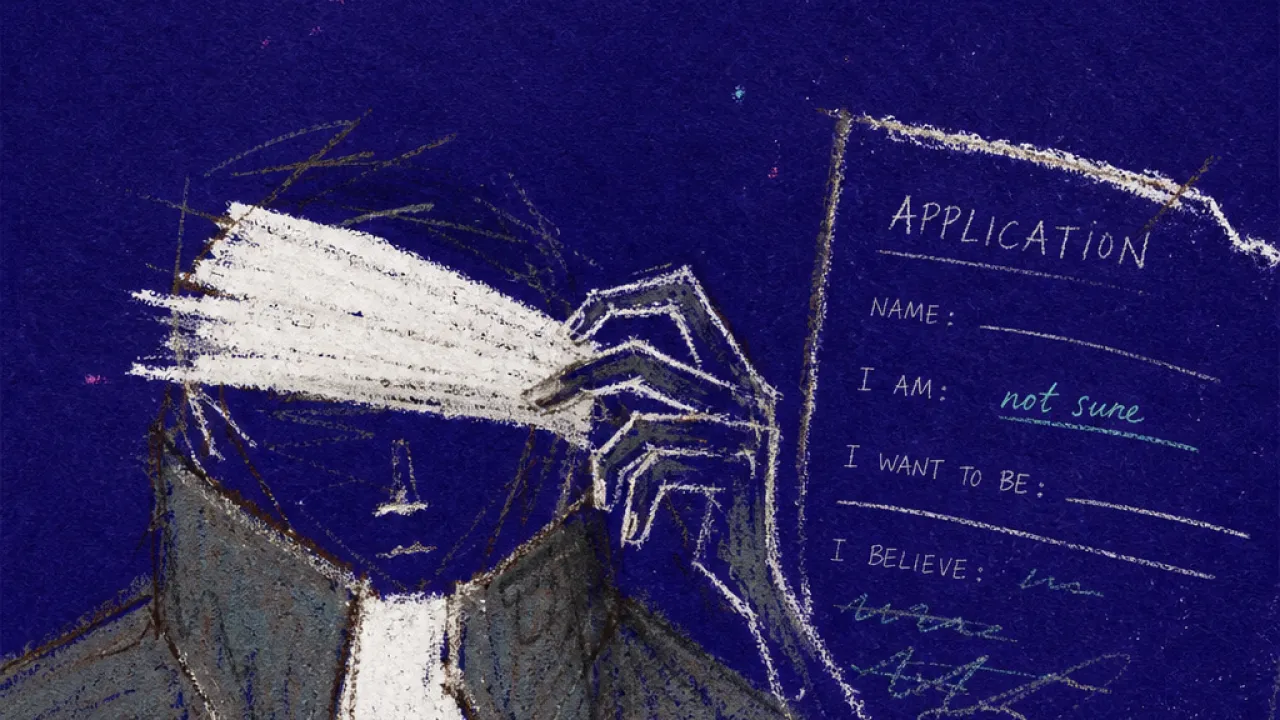
What is this really?

You treat certain old conclusions about yourself as if they are plain common sense: not ready, not talented, too late, too inconsistent, not the kind of person who can follow through. This can look like caution, maturity, or discipline, and it often gives your mind a stable cognitive schema when risk, visibility, or change would otherwise feel too exposed. Yet the belief that once helped you stay grounded can start shrinking the room around you, turning every new opening into a test you pre-fail before touching it—much like the Eight of Swords, where the blindfolded figure stands among blades that look like walls even though they do not fully block the open ground.

Why did it happen?

At some point, naming limits may have helped you avoid the sting of trying in a room that did not feel ready to receive you, so your mind learned to check the exit before it checked the opening. Over time, that inner pattern can start speaking first, making old labels sound like facts and leaving you with a quiet mental exhaustion before anything has actually been tested. The belief begins to feel less like a thought you are having and more like the floor you are standing on.

How does it feel?

  • You start drafting an idea, then pause with your cursor blinking halfway through the first sentence; your shoulders lift a little as you delete the line and rename the document something safer, like notes. In that moment, your chest may feel compressed, as if your body has stepped back before the work has even met the room. You can let that pause exist without treating it as a final verdict.
  • When someone suggests you apply for a role, pitch yourself, or try something bigger, you give a small laugh and look down before saying, “I’m probably not there yet.” Right after, there may be a flat heaviness behind your ribs, like the sentence landed before you had a chance to check whether it was accurate. It is enough to notice the landing before you argue with it.
  • You scroll past people doing the thing you want to do, then tighten your grip on the phone and switch apps before the feeling gets too loud. Your jaw may set, your breathing may get shallow, and your attention may narrow until comparison feels like evidence. That narrowing can be observed without needing to obey it immediately.
  • You open a calendar, budget, syllabus, or career page and quietly build a list of reasons the timing is wrong; your eyes move fast, but your body stays still. Afterward, there may be a tired buzzing in your head, like you ran the whole route without taking one step. Uncertainty can stay in the room without becoming a locked door.
  • You receive a compliment or a small sign that something is working, and your face holds still for a beat before you explain it away: luck, low standards, timing, someone being polite. The body can feel strangely distant afterward, with warmth arriving and then being filtered out before it reaches you. You are allowed to register the warmth before deciding what it means.

Limiting Beliefs in Tarot Cards

That split second when your chest compresses before you even test the idea is where Limiting Beliefs often feel most convincing. Jungian archetypal theory gives this pattern a visual language: the inner rule becomes a figure, a room, a fence, a tower. These cards do not prove or disprove the belief; they reflect the unconscious dynamics underneath the rule that keeps naming what cannot happen. Below are the Tarot Cards that mirror this pattern.

The Devil Reversed
The figures stand beneath the Devil's raised hand, but the most important restraint is not the hand itself. It is the black cube beneath him and the loose collars around their necks, which make limitation look stable, official, and unquestionable. In the reversed texture, Limiting Beliefs form when an old interpretation becomes an inner authority. The chain may no longer be mechanically tight, but the belief keeps organizing posture, attention, and choice as if escape would violate reality itself. In personal growth, You may treat inherited self-definitions as evidence: not disciplined, not ready, not gifted, not the kind of person who follows through. The card exposes the belief as a structure rather than a truth, which means it can be examined, named, and rebuilt.
The Tower Upright
The lightning bolt hits the crowned tower exactly where the structure presents itself as highest, most finished, and most untouchable. The stone walls look solid, but the strike shows that the tower's strength was also its rigidity: it could stand tall, but it could not flex when reality arrived with force. That visual logic mirrors the way a limiting belief can become a private architecture of certainty. You may not experience it as a belief at all; it can feel like realism, maturity, discipline, or self-knowledge. The Tower exposes how a thought that once organized your growth can become a locked structure that keeps every new version of you outside. In personal growth, this pattern is not about needing a softer mindset slogan. It is about seeing which internal rule has been crowned as truth, then noticing where that rule collapses the moment life asks for expansion, risk, or a more complex self-image.
The Moon Upright
The two towers stand like a narrow gate at the far end of the path, while the moon lays borrowed light over everything between the water and the horizon. The scene offers a route, but it also encloses that route inside old-looking boundaries, as if the path forward must pass through an inherited internal architecture. That is how Limiting Beliefs operate: they do not always feel like fear. They often feel like realism, caution, timing, or self-knowledge, because the mind has lived under their light long enough to mistake them for the actual landscape. In personal growth, The Moon links this pattern to the moment when an old self-concept starts shaping what you think is possible before evidence has been gathered. You are not simply choosing a small path; the inner map may be dimming the route before your actual capacity has had a chance to appear.
Judgement Reversed
The coffins are open, but they still define the exact footprint of each body. The figures rise only within the dimensions of the old container, while the mountains close the horizon around the entire field. Limiting Beliefs appear here as a container that has stopped being sealed but still governs the range of movement. You may recognize that an older self-concept is outdated while unconsciously letting it decide how far your growth, visibility, or ambition is allowed to go.
Four of Cups Upright
The three cups on the ground look solid, familiar, and already known. They form a small evidence archive in front of the figure, while the fourth cup arrives from a different direction that his current attention does not include. That arrangement mirrors Limiting Beliefs built from real experience. In career terms, past under-recognition, stalled promotion cycles, or shallow praise can become a cognitive schema that says every future offer will carry the same emptiness. The Four of Cups exposes how a belief can feel rational because it is built from evidence, while still being incomplete. You are not imagining the old cups, but the card asks whether they have become the whole dataset through which every new professional possibility is judged.
Reversed
The rooted tree, the fixed seated posture, and the cups arranged in front of the youth make the scene feel stable, but also heavily conditioned by what has already been experienced. The fourth cup is present, yet his closed eyes keep the old emotional frame in charge of perception. In personal growth, Limiting Beliefs operate this way: previous disappointment becomes the evidence your system uses to pre-reject new information. You are not failing to see the cup because it is absent; the belief structure has decided what the cup will mean before contact happens.
Five of Cups Reversed
The river separates the figure from the castle, but the bridge is already there. The visual contradiction is sharp: the card shows a crossing, while the figure's posture behaves as if no crossing can be trusted. Limiting Beliefs emerge when the psyche turns a past loss into a rule about future access. The belief may feel protective because it prevents another disappointment, but it also narrows the internal map before the route has been tested. In introspective tarot, this pattern is the private rule hidden inside the emotional scene. You may be seeing the bridge, but the deeper belief decides whether it counts as real.
Six of Cups Reversed
The home and courtyard in the Six of Cups make the early environment feel emotionally stable, almost load-bearing. In reversal, that same structure can become invisible architecture: the old place still defines what feels possible even after the person has outgrown it. Limiting Beliefs form when early rules about safety, worth, talent, or permission continue to operate as if they are facts. The psyche is not just remembering an old environment; it is letting that environment keep writing the boundaries of the present self. In personal growth, this can make ambition feel unrealistic before it has even been tested. You may call the constraint practicality, humility, or self-knowledge, but the card points to a deeper audit: which inherited rule is still deciding the size of your future?
Four of Pentacles Reversed
The crown pentacle sits at the top of the visual structure, while the figure's face remains tight and guarded. Thought, status, and security are fused into one narrow channel, and the body appears to obey the belief that nothing should loosen. This makes the card a strong image of a belief system that sounds protective but limits movement. The pursed lips and locked posture suggest emotional material being kept out of the conversation, so the belief can present itself as simple realism. In personal growth, those beliefs often arrive as practical statements that quietly prevent the next step. Limiting Beliefs are not always dramatic; they often sound mature, cautious, or responsible. You may believe you are naming reality, but the card reveals a more subtle audit point: the belief may be defending control rather than describing the full range of what is possible.
Page of Pentacles Reversed
The pentacle sits at eye level, directly between the Page's gaze and the wider horizon. Trees, mountains, and open sky are present, but the attention channel narrows around the one measurable object he can hold. That narrowing becomes a private rule about what is allowed to count as possible. You may reduce your potential to what can already be proven, turning a practical anchor into a ceiling that screens out the larger field of capacity.
Three of Swords Upright
The swords do not strike randomly; they form a precise structure around the heart. Their clean geometry gives the wound the appearance of certainty, as if emotional pain has been converted into a stable argument about what is true. That is the core movement of Limiting Beliefs in personal growth. You may not experience the belief as fear, because it often arrives dressed as realism: I am not disciplined enough, I am too late, I am not the kind of person who follows through. The card links this pattern to the moment pain becomes proof. The heart is isolated in the gray field, and the mind builds a convincing structure around the injury, making a temporary wound feel like a permanent rule about potential.
Reversed
The swords create a rigid structure through the center of the heart, and the grey weather closes around it. The image suggests a belief system formed under impact: not a neutral map, but a set of mental lines drawn through pain. That is the mechanics of Limiting Beliefs. In a direction reading, old disappointment can harden into rules such as it is too late, people like me cannot pivot, desire is unrealistic, or one wrong chapter has already decided the rest. The reversed pressure comes from mistaking a wound-formed rule for reality. You may feel as if the future has narrowed, but the card shows the narrowing as a structure imposed through the heart, which means it can be examined rather than obeyed automatically.
Eight of Swords Upright
The blindfolded woman stands inside a ring of swords that do not actually touch her body, while her hands are tied behind her back and the open ground remains close enough to reach. The card shows restriction as a perceptual architecture: the barrier looks absolute because her access to feedback, movement, and spatial testing has been interrupted. Limiting Beliefs work in the same way. They do not always remove every option; they narrow what the mind can register as possible. You may be standing inside assumptions about readiness, talent, age, discipline, or permission that feel like facts because you have stopped testing them against lived evidence. In personal growth, this pattern turns self-improvement into a mental enclosure. The sword-like thoughts keep naming what cannot happen, while the body waits for certainty before moving. The audit point is not whether the fear is real; it is whether the belief system is accurately mapping the exits that are already in the room.
Nine of Swords Upright
The quilt covers the lower half of the figure's body while its surface carries repeated, incomplete symbols. Beneath the visible anguish, the body is wrapped in a patterned field that looks meaningful but does not form a stable map. Limiting Beliefs often operate in exactly that hidden layer. They are not always loud thoughts; they can be the background rules that decide what feels possible before action even begins. In personal growth, those rules can make expansion feel forbidden, excessive, or unsafe. The swords strike the upper body while the lower body stays covered, showing how mental pain can sit on top of a deeper immobilizing script. The card links to this pattern because it shows distress being held in place by a meaning system that has not yet been consciously audited.
Ten of Swords Reversed
The ten blades create a narrow visual corridor: every line of attention returns to the fallen body. Even the faint dawn remains secondary because the immediate structure of the image is built from the instruments of defeat. Limiting Beliefs work through the same architecture in personal growth. A past collapse becomes the organizing structure for what the mind believes is possible, so the person does not simply fear the next step; they pre-filter the next step through an old ceiling. The Ten of Swords makes that ceiling visible. You are being shown a belief system that treats damage as design, and the audit begins by separating what happened from what the mind has decided it proves.

Limiting Beliefs in Tarot Card Reading Insights

For anyone who has watched an old self-definition turn into a rule about what is possible, others have brought that same narrowing into readings. Here is how the cards showed up when that belief was placed on the table. Tarot Reading Insights that speak to this pattern.
Psychological patterns related to Limiting Beliefs