Perfect enough to be seen?

A clear audit of Appearance Perfectionism, the tarot cards that mirror it, and tarot reading insights for visual self-auditing loops.

Appearance Perfectionism
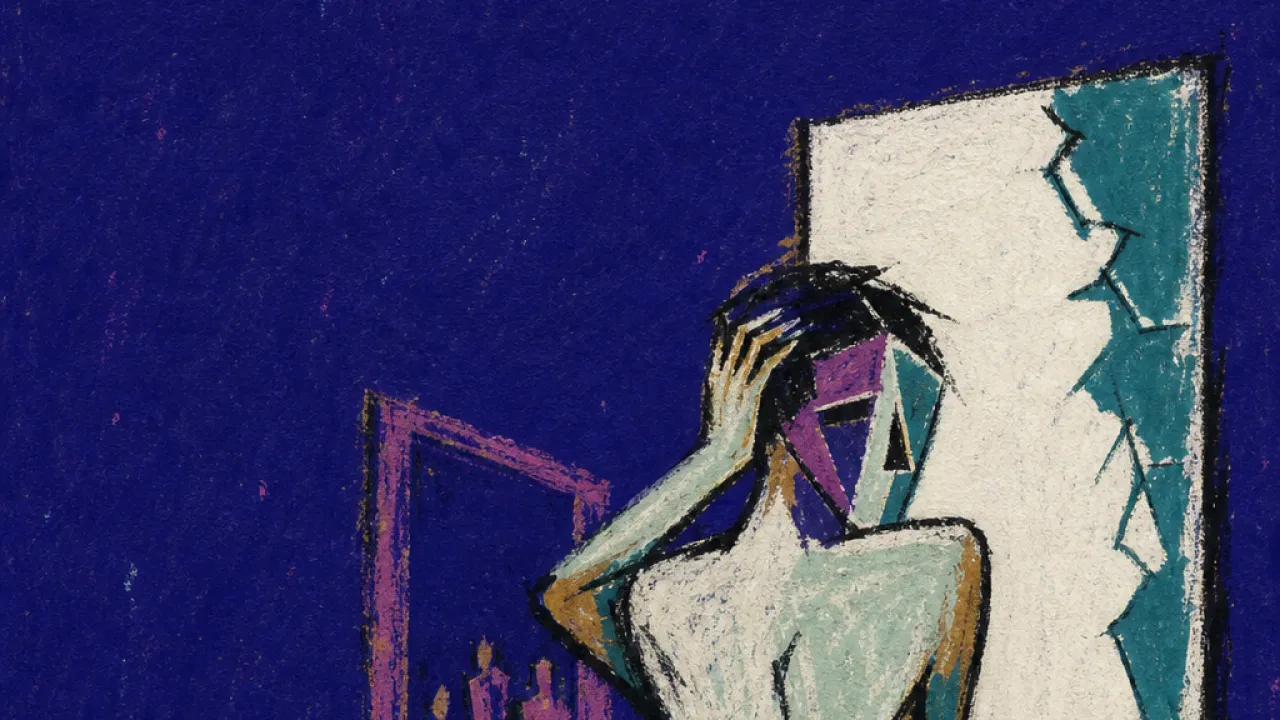
A rigid figure pins hair beside a lit mirror, with a porcelain white reflection fractured against deep teal shadows

What is this really?

Appearance Perfectionism is when you keep editing your look as if one more adjustment will make you finally feel safe to be seen: checking mirrors, retaking photos, scanning your skin, hair, outfit, posture, and angles before you can relax into the moment. Underneath, this can work like a defense mechanism against being judged, misread, or reduced to a single unflattering detail, so controlling the surface becomes a way to protect your sense of access, confidence, and social belonging. Yet the tighter you try to secure the image, the more your attention gets trapped outside your own body, at the cost of feeling present in the life you dressed up for—much like the woman in the Nine of Pentacles, composed and beautifully arranged inside a garden that can start to feel more like a display than a place to breathe.

Why did it happen?

At some point, looking composed may have helped you move through rooms with less friction, fewer comments, or a stronger sense of control when attention felt unpredictable. Over time, that same inner pattern can start running before you choose it, pulling your eyes back to every reflective surface and leaving you mentally worn out before the moment has even begun.

How does it feel?

  • Before leaving the house, you pause at the mirror, tilt your chin a few degrees, smooth the same piece of hair twice, then step back to check the full outline. In that pause, your breathing may get shallow and your shoulders may lift toward your ears before you even notice it; letting the moment be unfinished for a few seconds is allowed.
  • When someone takes a group photo, you lean in, smile, then immediately reach for the screen and zoom in on one small area of your face while everyone else is still laughing. Afterward, your chest might feel tight, and the rest of the room can blur behind that one detail; it can simply be a signal your body is trying to settle.
  • You open your camera before a call, adjust the light, shift the angle, wipe the lens with your sleeve, and check your reflection instead of the person waiting on the other side. As the call starts, your jaw may stay slightly clenched, like part of you is still holding the frame in place; uncertainty can stay in the room without needing to be solved instantly.
  • While getting dressed for a casual plan, you try on three versions of the same outfit, tug at the waistband, turn sideways, and leave clothes folded over the chair like evidence of a private debate. By the time you pick something, your stomach might feel hollow or buzzy, even if nothing visible has changed; that sensation can be noticed without turning it into a command.
  • Alone at night, you scroll past old photos, stop at one where you almost look relaxed, then pinch-zoom into the part you wish no one had seen. Your face may go still and your throat may feel dry, as if the screen has become louder than the room around you; pausing there is enough, even before you know what to do next.

Appearance Perfectionism in Tarot Cards

That reflex to check the frame before you enter the room is where Appearance Perfectionism becomes more than preference. The shallow breath before you leave the mirror gives the pattern a body, not just an idea. From a Jungian archetypal theory lens, the polished surface can be read as a symbolic figure standing between visibility and self-recognition. The cards below reflect the unconscious dynamics behind that constant editing: Tarot Cards that may feel visually familiar.

The Empress
Reversed
The crowned figure reclines on cushions amid wheat, trees, and flowing water, with the body held inside a richly sensory landscape. Reversed, this abundance can become inaccessible from within: the body is managed as an external visual object while comfort, sensation, and physical presence fade into the background. You may perfect the body's image while feeling increasingly absent from the body itself, assessing shape and surface instead of receiving breath, temperature, movement, or ease. The appearance project then imitates care at the visual level while bypassing the embodied information that could distinguish preference from fear-driven correction.
The Devil
Upright
The pedestal, chains, and dominating figure organize the whole image around submission to a single controlling structure. Upright, beauty can occupy that position internally, no longer serving expression or pleasure but issuing compulsory standards that define when confidence, visibility, or self-respect are permitted. You may keep pursuing another correction because the standard presents itself as a requirement rather than a preference. Seeing the rule as a constructed authority exposes the difference between caring about appearance and allowing appearance to govern access to the rest of your life.
Judgement
Reversed
The trumpet sounds above exposed bodies, giving judgment a commanding volume that fills the entire scene. Reversed, that volume belongs to an internal critic that treats small visual deviations as revelations of the whole self rather than limited, context-dependent details. You may feel shame arrive before any balanced appraisal, then use that feeling as proof that the perceived flaw must be severe. The loop combines emotional reasoning with selective attention, converting an activated state into an apparently objective appearance verdict.
The World
Reversed
The wreath forms a complete boundary around a body already present at the center, while the surrounding figures hold their positions as witnesses. Reversed, the completed form cannot be internally accepted, and improvement keeps circling back to another surface correction before wholeness can be claimed. You may build a future self around the promise of finally being satisfied with your appearance, only to relocate the deficiency after each change. The moving finish line preserves a familiar identity of being not yet ready, separating growth from the capacity to inhabit an imperfect present.
Nine of Pentacles
Reversed
The cultivated vines, arranged pentacles, elaborate clothing, and slow-moving snail all place refinement inside a field of sustained effort. Reversed, development can be measured mainly through visible optimization, turning growth into an endless project of improving the surface rather than expanding agency or lived capacity. You may imagine that a more perfected future appearance will finally permit confidence, freedom, or full participation. This makes the desired life contingent on completing an image that has no stable finish line, preserving the self-improvement cycle while postponing embodiment.
Eight of Swords
Upright
The blindfolded figure stands bound inside a narrow arrangement of swords, while open ground and a distant structure remain outside the restricted field of attention. Upright, the image captures the perceptual confinement of appearance perfectionism: imagined judgments surround the self, and selective attention prevents wider evidence from entering. You may feel trapped inside how other people could be seeing you even when no one has communicated a negative appraisal. The blindfold is the mind-reading gap filled by prediction, while the swords are the repeated evaluative thoughts that make those predictions feel like observable facts.
Nine of Swords
Upright
The figure sits upright in bed with both hands covering the face while nine swords fill the dark wall above. Upright, the enclosed nighttime scene mirrors post-event appearance rumination, when a photograph or remembered angle is mentally replayed without new information entering the review. You may lose sleep revisiting how you looked, imagining what others noticed, and treating the absence of certainty as evidence that the worst interpretation is true. The mind is attempting to prevent future shame through retrospective analysis, but the repeated review intensifies the memory and makes the image feel more consequential than the event itself.
Six of Wands
Reversed
The mounted figure is raised into collective view, surrounded by people and crowned with a visible symbol of achievement. Reversed, professional recognition can trigger optics anxiety, as though the legitimacy of the achievement depends on looking sufficiently composed while receiving attention. You may prepare thoroughly and still feel endangered by a presentation, profile photograph, or leadership role because visibility exposes the image alongside the work. Appearance control then becomes an attempt to prevent professional evaluation from collapsing into a judgment of the whole self.

Appearance Perfectionism in Tarot Card Reading Insights

For anyone who keeps checking the frame before entering the room, others have brought this same visual self-auditing into readings. The shift from tarot cards to readings shows how this pattern can appear when someone sits with the question instead of the mirror. Below are Tarot Reading Insights that speak to this pattern.

When Jeans Won’t Zip: Trading the Shame Trial for One Fair Choice

When Jeans Won’t Zip: Trading the Shame Trial for One Fair Choice

Topic:Introspection Tarot Reading

Struggle:Control Lock

Context:Wellness Optimization Trap

Why You Delete Photos Before Posting—and How to Drop the Scoreboard

Why You Delete Photos Before Posting—and How to Drop the Scoreboard

Topic:Study Tarot Reading

Struggle:Aesthetic Self-Management Trap

Context:Personal Brand Performance

When Tagged Clothes Feel Like a Verdict: One-Wear Practice Reps

When Tagged Clothes Feel Like a Verdict: One-Wear Practice Reps

Topic:Personal Growth Tarot Reading

Struggle:Permission Paralysis

Context:Personal Brand Performance

Obsessive Selfie Retakes—And How to Treat the Photo as Neutral

Obsessive Selfie Retakes—And How to Treat the Photo as Neutral

Topic:Introspection Tarot Reading

Struggle:Aesthetic Self-Management Trap

Context:Personal Brand Performance

The Zipper Stalled in the Fitting Room—and I Didn’t Cancel Plans

The Zipper Stalled in the Fitting Room—and I Didn’t Cancel Plans

Topic:Personal Growth Tarot Reading

Struggle:Belonging-Authenticity Split

Context:Algorithmic Comparison Loop

One Gray Hair Felt Like Proof I Was Slipping—Until I Stopped Scorekeeping

One Gray Hair Felt Like Proof I Was Slipping—Until I Stopped Scorekeeping

Topic:Personal Growth Tarot Reading

Struggle:Aesthetic Self-Management Trap

Context:Aesthetic Lifestyle Creep

From Engagement Anxiety to Steadier Self-Worth: The Mirror-to-Choice Shift

From Engagement Anxiety to Steadier Self-Worth: The Mirror-to-Choice Shift

Topic:Personal Growth Tarot Reading

Struggle:Observer-Self Split

Context:Social Performance Loop

From Zoom Self-View Anxiety to Self-Trust: The One-Sentence Shift

From Zoom Self-View Anxiety to Self-Trust: The One-Sentence Shift

Topic:Personal Growth Tarot Reading

Struggle:Observer-Self Split

Context:Executive Presence Test

My 'Self-Care' Was a Worth Audit: How I Learned to Step Back

My 'Self-Care' Was a Worth Audit: How I Learned to Step Back

Topic:Personal Growth Tarot Reading

Struggle:Aesthetic Self-Management Trap

Context:Wellness Optimization Trap

From Self-Policing to Self-Trust: Retraining the Inner Judge in the Mirror

From Self-Policing to Self-Trust: Retraining the Inner Judge in the Mirror

Topic:Introspection Tarot Reading

Struggle:Belonging-Authenticity Split

Context:Personal Brand Performance

Psychological Patterns Related to Appearance Perfectionism