The Nightly Worth-Audit Under Toronto LEDs
If you lean in so close to the mirror you can see every pore, then feel like you can’t leave the bathroom until you’ve “fixed” something, that’s not skincare—that’s a nightly audit of worth.
Jordan said that to me like they were confessing a bad habit they should’ve outgrown. But it wasn’t a confession. It was a pattern asking to be named.
They described 11:57 PM in their Toronto condo bathroom: the overhead LED so bright it felt accusatory, the fan humming like it was keeping time, the mirror turning their face into an HD close-up. Jordan leaned toward the sink until their breath fogged the glass. Their jaw set hard. Their shoulders climbed. Their fingers hovered—restless, ready to pick or re-check—like their hands were trying to negotiate with their own reflection.
“I start with a normal plan,” they told me. “Cleanser. Moisturizer. One treatment. And then I catch… something. Texture. A bump. And my brain goes: okay, we’re behind. And then it’s Reddit, TikTok, ingredient lists, Sephora cart. Like I’m building a case.”
I could hear the emotional signature in the way they said it: hyper-analytical scanning for flaws, constant comparison, the private mental math of if I don’t optimize this, I’m failing. Their shame wasn’t loud—it was quieter than that. It was the kind that sits in the stomach like a cold stone and pulls your face closer to the mirror, as if the closer you get, the safer you’ll feel.
“I’m glad you asked this,” I said, keeping my voice steady and unhurried—the way I would when I’m cueing a nervous guest on-air. “Because you’re not asking ‘what serum should I buy.’ You’re asking: why does a routine turn into a verdict? Let’s try to map the pattern so you can get your nights back—and find some actual clarity at the sink.”

Choosing the Compass: The Four-Layer Insight Ladder Spread
I invited Jordan to take one slow breath in through the nose and a longer exhale out, just to mark a transition. Not as a mystical thing—more like pressing pause on the mental tabs that were already open. Then I shuffled while they held the question in mind: Why does my skincare routine trigger not-enough thoughts—what pattern?
“Today I’m going to use a spread I designed for questions exactly like this,” I told them. “It’s called the Four-Layer Insight Ladder · Context Edition.”
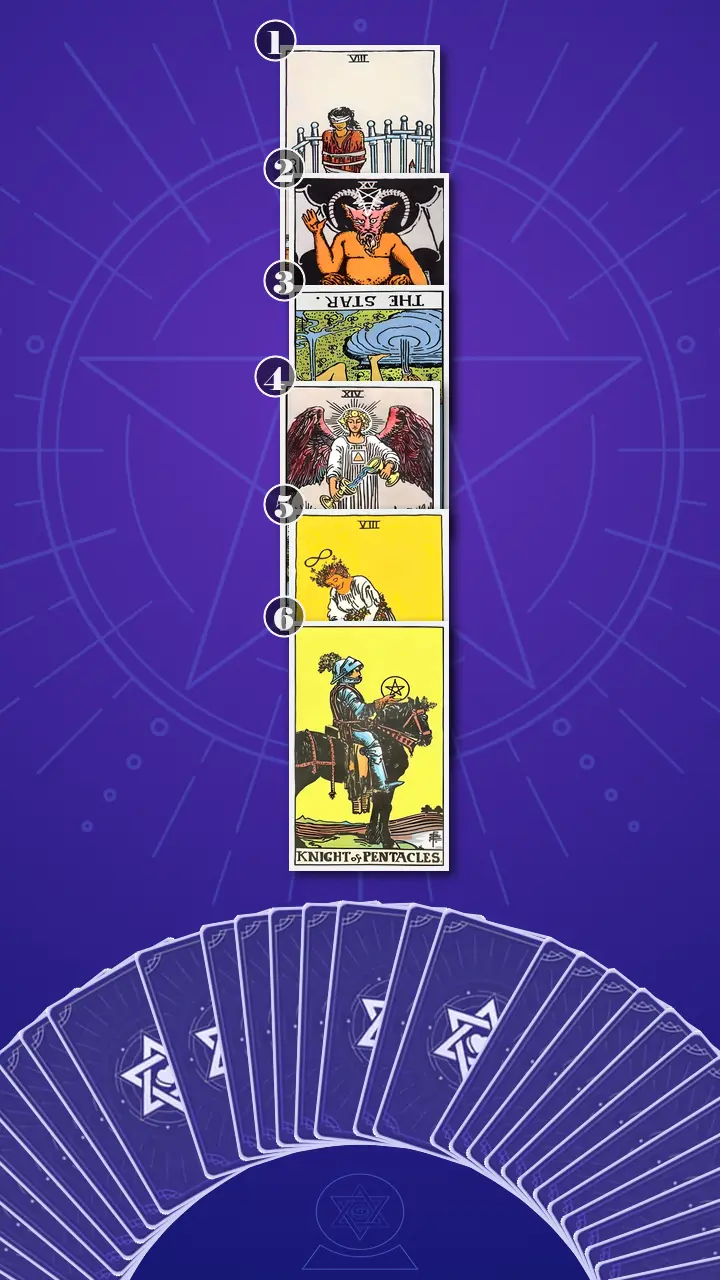
For you reading this: this is a six-card tarot spread built for pattern recognition and actionable next steps—not prediction. It works especially well when you’re dealing with a loop—compulsive mirror checking, comparison fatigue, decision fatigue—because it moves like a diagnostic: surface trigger (what’s happening) → hook (what keeps it sticky) → root belief (what it ‘means’) → integration (what balances it) → transformation (the turning point) → action (what to do next).
I also like the “ladder” structure for modern self-exploration because it doesn’t make the cards an external authority. It makes them a mirror—just not the kind with harsh LEDs and a front-camera distortion filter.
“Here’s what we’ll listen for,” I said, laying the positions out top-to-bottom. “Position 1 shows the exact moment your routine flips from care to verdict. Position 3 goes underneath that to the belief that turns skincare into a worth-measuring ritual. And Position 5—the transformation layer—will tell us what inner shift changes the whole relationship.”
Reading Down the Ladder: The Mirror Cage, the Hook, and the Dimmed Star
Position 1: Surface experience—what the routine is triggering in the moment
“Now I’m turning over the card that represents Surface experience: what the routine is triggering in the moment,” I said. “This is what you can actually catch yourself doing.”
Eight of Swords, upright.
I tapped the blindfold lightly on the card. “This is the mental trap card. Not because you’re ‘weak’—because your attention gets narrowed until it feels like there’s only one safe outcome.”
And I used the exact modern translation that fit Jordan’s life: “It’s like you’re standing at the sink late at night, leaning in until your face fills the mirror. You rotate your head to catch the light like you’re trying to confirm a fear. Even though you could stop, step back, and keep it simple, it feels impossible—like you’re not allowed to end the routine until the mirror agrees you’re ‘okay.’”
In energy terms, this is Air in excess: thoughts so sharp they cut off options. The bindings in the Eight of Swords are loose, but your body acts like they’re tight. That’s the key. The cage is made of interpretation and repetition—mirror-checking, scoring, re-checking—more than it’s made of reality.
Jordan let out a small laugh that wasn’t really funny. It had a bitter edge, like they’d been caught by a camera they didn’t know was recording. “That’s… yeah,” they said. “It’s accurate in a way that feels kind of rude.”
“I know,” I said softly. “And it’s also hopeful. Because if the trap is ‘self-imposed restriction through interpretation,’ we can change the interpretation. We can widen the frame.”
Position 2: The hook—what keeps the trigger sticky
“Now I’m turning over the card that represents The hook: what keeps the trigger sticky—the pressure that intensifies the loop,” I said.
The Devil, upright.
“This card doesn’t mean you’re broken,” I told Jordan immediately. “It names compulsion. Attachment. The belief that more control equals more worth.”
And again, the modern-life scenario landed with precision: “You tell yourself it’s self-care, but it has the vibe of compulsion: one more active, one more serum, one more TikTok creator’s routine. The real hook isn’t your skin—it’s the belief that you need to earn the right to feel confident and be seen, so buying/optimizing becomes a quick hit of temporary safety.”
This is bonded energy—a blockage where the routine stops being care and becomes a contract: if I perfect this, I’m safe to be seen.
I offered Jordan the split-screen I was hearing in their story, exactly the kind that shows up in a tired Toronto night:
(A) “I’m just doing skincare.”
(B) “If I don’t fix this, I can’t show up tomorrow—on camera, in the office, in bright lighting, in photos.”
In my mind I saw them on the TTC after work, headphones in, scrolling a glass-skin close-up reel while their body carried commute fatigue like a weighted blanket. The Eight of Swords says: no choices. The Devil says: and if you choose wrong, you lose belonging.
Jordan’s reaction came in a small sequence—subtle, but unmistakable. First: their breath paused mid-inhale. Then: their eyes lost focus for a second, like they were replaying a familiar clip. Then: a long exhale, shoulders dropping a fraction. “Oh… yeah,” they said quietly. “It’s like my skin is… a performance review.”
“Exactly,” I said. “If skincare feels like a nightly courtroom, of course you’re anxious at the sink.”
I watched their hands. They kept rubbing their thumb against the side of their index finger—an invisible fidget I’ve seen in studio guests right before they admit something tender. “Also,” I added, “more steps isn’t more care—it’s often just more panic with better packaging.”
Position 3: Root layer—the deeper belief underneath the routine
“Now I’m turning over the card that represents Root layer: the deeper belief that turns skincare into a worth-measuring ritual,” I said. “This is the ‘meaning’ your brain assigns.”
The Star, reversed.
“This is the heartbreak underneath the optimization,” I told Jordan. “Because The Star is supposed to be replenishment—when you can receive care. Reversed, it’s like the channel is there, but the signal keeps getting interrupted.”
I pulled in the modern-life scenario: “Even when you’ve been consistent, you can’t let it count. You finish your routine and immediately re-check under different lighting or with your front camera. One breakout wipes out two weeks of effort in your mind, and the ritual stops feeling restoring—it feels like evidence you’re failing at something you should already have figured out.”
The energy here is a deficiency of gentleness—not because you’re incapable of it, but because the “audit mindset” keeps filtering it out. It’s like a phone camera setting turned up too high: sharpening every pore into a headline. You’re not seeing more truth; you’re seeing more noise.
Jordan swallowed, then looked down at the card instead of at me. “That’s the part that scares me,” they said. “I don’t even know what my skin looks like anymore without judging it.”
“That makes sense,” I replied. “When your nervous system is looking for danger, it’ll treat normal texture like a threat. But we can rebuild a way of seeing that doesn’t punish you for being human.”
Position 4: Integration layer—what restores balance and interrupts escalation
“Now I’m turning over the card that represents Integration layer: what restores balance and interrupts the escalation pattern,” I said.
Temperance, upright.
Something in Jordan’s face softened before I even spoke—like their body recognized the shape of permission.
“Temperance is boring on purpose. That’s why it works,” I said, letting the line be both practical and kind.
Then I translated the angel pouring between two cups into a metaphor Jordan could feel: “This isn’t ‘smash the speaker because the song is too loud.’ It’s adjusting the volume on a playlist. Calibration, not punishment.”
And I anchored it to the modern-life scenario: “You decide your routine is allowed to be boring. You pick a small set of steps and treat changes like calibration, not panic. You track irritation triggers like data (not a moral grade), and you let time be part of the formula—because you’re building steadiness, not chasing a nightly ‘perfect.’”
In energy terms, Temperance is balance. It restores the middle. It’s the opposite of the Devil’s “one more fix” adrenaline.
Jordan exhaled again, slower this time. Their hands were still. “That sounds… doable,” they said, like they were surprised by the word.
“Doable is the whole point,” I told them. And because my day job is audio, my mind flashed to a mixing desk: if you keep turning every knob every night, you never learn what the track actually sounds like. Consistency is how you get real feedback. Not perfection.
When Strength Spoke: Gentle Courage at the Sink
Position 5: Transformation layer—the key inner shift that changes your relationship with the trigger
When I reached for the next card, the room felt quieter—not in a dramatic, spooky way, but in the way a studio quiets when everyone senses the next line matters.
“Now I’m turning over the card that represents Transformation layer: the key inner shift that changes your relationship with the trigger,” I said. “This is the turning point energy.”
Strength, upright.
I let Jordan look at the image for a beat: the calm hands, the lion, the infinity symbol—power that doesn’t clench.
The setup was already written across their face, because I’ve seen that particular moment a thousand times: bright bathroom LEDs, head tilted side-to-side like you’re trying to catch “the truth,” and then the chest-drop when one tiny texture suddenly means something bigger. Jordan had been living inside I have to do this perfectly or it proves something about me.
Not a nightly trial in front of the mirror—choose gentle courage and steady hands, like Strength calming the lion instead of fighting it.
I didn’t rush past the sentence. I let it hang there like a sustained note.
Jordan’s reaction came in layers—an almost textbook three-step chain. First, a physiological freeze: their shoulders held still, and their lips parted slightly like their body forgot what came next. Then, the cognition seeped in: their gaze drifted away from the table, unfocused, as if they were replaying last night at the sink and hearing the inner dialogue with new subtitles. Finally, the emotional release: their eyes got glassy, and a shaky breath left their chest—half laugh, half relief.
“But if I do that,” they said, and there was a flash of anger under the tenderness, “doesn’t it mean I’ve been doing it wrong? Like… I’m the reason I’m stuck?”
“No,” I said, clear and gentle. “It means you were using the tools you had to try to feel safe. The Eight of Swords and The Devil are survival logic: control it, or get judged. Strength isn’t a scolding. It’s a new kind of power.”
Then I brought in my signature lens—because this is where my work in sound energy and music psychology fits like a key in a lock.
“When I hear your story,” I told them, “I don’t just see the mirror. I hear the sound of it: the fan’s steady hum, the harsh acoustics of tile, the way a bathroom echoes and makes everything feel sharper. That’s why one of my core tools is Space Tuning.”
“Your nervous system reads an environment like it reads a soundtrack,” I continued. “Bright light + echo + late-night fatigue equals: danger, evaluate, fix. Strength is when we change the soundtrack—not by lying to you, but by giving your body a cue that you’re not in a threat scenario.”
I offered Jordan the “Strength pause” as a practical, almost embarrassingly small practice—because big change rarely starts big.
“Tonight,” I said, “before the first product, do a 2-minute Strength pause. Set a timer. Both feet on the floor. Three slow breaths.”
“And because you’re a human with a brain that loves proof,” I added, “name the urge—out loud or in your head: ‘This is the part of me that wants proof.’”
“Then pick one boundary for the routine: either no zooming closer than arm’s length, or one mirror check only at the very end—max 30 seconds. If you feel yourself spiraling, you’re allowed to stop and do the simplest version (cleanse + moisturize) and call it complete. No moral score attached.”
Jordan nodded slowly, like they were testing the idea for sturdiness. “Okay,” they said. “I can feel how… my body wants to argue. Like it’s unsafe to stop checking.”
“That’s the lion,” I said. “Strength isn’t winning against your reflection. It’s refusing to negotiate your worth with it.”
I leaned forward a little. “Now, with that lens—just for a second—can you remember a moment from last week where this would’ve changed the night?”
Jordan blinked hard. “Tuesday,” they said. “I was about to open Reddit. I had cleanser on my hands. I could’ve… just stopped.”
“That’s it,” I told them. “That’s the first rep.”
And I named the deeper arc explicitly, because clarity loves language: “This isn’t only about skincare. It’s a shift from shame-driven mirror policing and proof-seeking to self-respect-based consistency and quiet, non-conditional confidence. You can still want clearer skin. Strength just refuses to make your worth conditional on the outcome.”
Position 6: Action layer—the next grounded step that builds self-trust
“Now I’m turning over the card that represents Action layer: the next grounded step that builds self-trust through consistency,” I said.
Knight of Pentacles, upright.
“This is the card that makes progress look almost boring,” I said, smiling a little. “One routine. Repeated. Long enough to give you real feedback.”
And I tied it to the exact scenario: “You run a four-week ‘no new products’ window. You do the same core steps at roughly the same time, and you measure success by follow-through and comfort—not by perfect skin every day. The routine starts supporting your life instead of hijacking your nights, and your nervous system learns it doesn’t need daily proof to be okay.”
In energy terms, this is Earth in balance: grounded, repeatable behavior. The opposite of the Devil’s frantic upgrades. It’s evidence-based confidence built through repetition.
Jordan’s face pinched with a practical concern. “But I literally don’t know if I can put my phone away,” they admitted. “I use it for… I don’t know, comfort? Music? And also—if I don’t look up what I’m doing, I feel like I’m messing it up.”
“That’s real,” I said. “So we don’t do an all-or-nothing ban. We make it easier. Put the phone on the other side of the bathroom and play one pre-chosen track before you start—no scrolling, no switching. If you need guidance, write the routine steps on a sticky note. Let your hands learn.”
As a radio host, I’ve learned: the nervous system loves a repeatable cue. A theme song. A consistent intro. The Knight of Pentacles is basically the ‘same show, same time slot’ card.
From Insight to Action: The Care-Not-Proof Routine
I summarized the ladder for Jordan in plain language, stitching the cards into one coherent story.
“Here’s what’s been happening,” I said. “The Eight of Swords is the mirror-cage moment—where your perception narrows and you feel like you’re not allowed to stop until you’re ‘okay.’ The Devil is the hook: the external standard that convinces you control equals safety, so you chase one more fix. The Star reversed shows the cost: you can’t receive your own care because you’re using it as proof. Temperance restores balance through calibration. Strength is the turning point: gentle courage that holds discomfort without escalating. And the Knight of Pentacles makes it real through consistent, boring-on-purpose follow-through.”
“Your cognitive blind spot,” I added carefully, “is thinking the goal of the routine is to erase discomfort immediately. That’s why the checking and researching feel urgent. The transformation direction is the opposite: treating skincare as consistent, moderate care guided by self-respect rather than self-correction.”
Then I gave Jordan a small set of next steps—clear, realistic, and designed to break the loop without shaming them for having it.
- 7-Night Temperance ProtocolFor the next 7 nights, do the exact same core routine: cleanse + moisturize + one treatment you already use. No new additions, no “just in case” actives, no mid-week overhaul.Expect your brain to call this “settling.” That’s the Eight-of-Swords/Devil combo trying to keep the courtroom open. Tell yourself: “I’m not committing forever—this is a 7-night experiment.”
- Mirror Audit Exit Strategy (Lighting + Boundary)Do your routine with the overhead light off and a softer lamp/night light if you can. Then allow only one final mirror check at arm’s length, max 30 seconds.Use my Space Tuning rule: if the room feels like an interrogation (bright + echo + harsh), your brain will act like it’s in danger. Softer light and less “bathroom reverb” (even hanging a towel, closing the door, lowering the fan) can make the whole routine feel less like a trial.
- Strength Pause + Gentle Hands (60 seconds)Mid-routine, say one line: “I can want improvement without making my worth conditional on it.” When the re-check impulse hits, take one slow breath with your hands still. Then apply moisturizer slowly for 60 seconds—no picking—like you’re caring for someone you genuinely like.If you want a sound-based anchor (my specialty): try my 21-Day Sound Bath in the smallest version—3 minutes a day. Pick one low, steady hum on your exhales or one calming track you always use. The goal isn’t ‘good vibes’; it’s giving your body a consistent cue: “We’re safe. We’re done.”
Jordan looked at the list the way people look at a plan that finally respects their actual life. “So it’s not ‘never care about your skin,’” they said. “It’s… care without proving.”
“Exactly,” I told them. “A ‘bad skin day’ is not evidence. It’s just a day.”

A Week Later: The Quiet Proof
Six days later, I got a message from Jordan. It wasn’t a dramatic transformation photo. It was one sentence: “I did the 7-night thing. Phone on the other side of the bathroom. One mirror check. And I left even though my brain wanted to renegotiate.”
They added, almost as an afterthought: “Had a breakout on day four and I still went camera-on for my Monday meeting. I felt shaky for like thirty seconds and then… it was fine.”
That’s what a real Journey to Clarity looks like most of the time: not fireworks—just a nervous system learning new evidence.
When you’re inches from the mirror under the harshest light, it can feel like your skin is giving a verdict on whether you’re safe to be seen—so you keep trying to earn “enough” with one more fix.
If your routine didn’t have to prove anything tonight, what would “care” look like in the smallest, most realistic version you’d actually do?
This story is adapted from psychological research, written so that those in a similar struggle can see their own pattern in it — and find their next step clearly.These insights are not a substitute for professional psychological, medical, legal, or financial advice.
Learn more about our Journey to Clarity.
How did this insight land for you?
🫂 This Resonates Deeply
🌀 Living This Story
✨ Now I See Clearly
🌱 Seeing New Possibilities
🧰 Useful Framework
🔮 The Confirmation I Needed
💪 Feeling Empowered
🚀 Ready for My Next Step
Author Profile
 AI
AI“Through ten years of sound energy research, I’ve found that when we struggle, it's usually just our internal rhythm falling out of sync under pressure. I know firsthand the frustrating helplessness of wanting to move forward but feeling paralyzed. Without overwhelming theories, I want to be the soothing background track that helps you recalibrate, turning your heavy burdens back into a light, effortless, and harmonious melody.”
In this Personal Growth Tarot Reading :
Core Expertise
Service Features
Also specializes in :
Explore Related Patterns:
Shame BindingJordan describes their skin as a performance review, and the routine starts to feel like a nightly courtroom. A breakout, texture, or pore is no longer just a skin detail; it becomes evidence in a private trial about whether You are allowed to feel confident, visible, and socially safe. The psychological bind is shame attaching itself to proof. Your mind is not only trying to improve an outcome; it is trying to prevent the sinking feeling that something about You is exposed or not enough. That is why leaving the bathroom before the audit feels complete can register in the body as unsafe. Shame Binding fits because the routine is held together by a hidden equation: if the skin is not fixed, the self is not cleared. Naming the bind helps separate care from worth, so a bad skin day can become just a day instead of a verdict.
Appearance PerfectionismJordan's routine begins as a simple sequence, but the moment a bump or texture appears, the bathroom turns into an evaluation chamber. The mirror, LED lighting, and front-camera checks stop being neutral tools and start acting like a performance review for whether You are acceptable enough to be seen. The mechanism underneath is perfectionistic threat detection applied to appearance. Your mind treats ordinary skin variation as a signal that something has gone wrong, then tries to restore safety through correction, optimization, and proof. That is why the routine does not feel finished when the products are applied; it only feels finished if the mirror delivers a temporary verdict of okayness. Appearance Perfectionism fits because the pressure is not simply wanting clearer skin. It is the conditional rule that confidence, visibility, and social ease must be earned through visible correction. Once that rule is active, skincare becomes less about care and more about defending Your worth from the next perceived flaw.
Certainty SeekingJordan sees texture, a bump, or a breakout, and the mind immediately starts building a case. The next move is not just applying skincare; it is searching, comparing, verifying, and trying to reach the one answer that will make the uncertainty stop. The cognitive mechanism is an intolerance of unresolved doubt. Your mind treats ambiguity about skin, products, lighting, and tomorrow's visibility as a threat that must be solved before You can rest. That is why the mirror becomes something to negotiate with: if it can confirm You are okay, then maybe the body can finally stand down. Certainty Seeking fits because the real target is not perfect information about skincare. The target is emotional permission to stop. But the more You chase certainty through checking and research, the more Your brain learns that ordinary uncertainty is dangerous.
Compulsive CheckingJordan keeps returning to the mirror, rotating their face into the light, checking under different conditions, opening Reddit or TikTok, scanning ingredient lists, and considering another cart. Each check promises clarity, but it also reopens the question of whether the routine, the skin, and the self are okay yet. The behavioral function is reassurance through inspection. Your nervous system gets a short hit of control from checking, but the relief is unstable because every new angle, texture, or product claim creates another uncertainty to solve. The checking becomes self-reinforcing: it reduces discomfort for a moment, then trains the mind to believe another check is necessary. Compulsive Checking fits because the visible loop is not just curiosity or responsible skincare research. It is a repeated verification ritual that keeps the not-enough thought alive. The more You check for proof that You can stop, the more stopping starts to feel unsafe.
Control CopingJordan's first response to discomfort is to tighten the system: more analysis, more research, more product logic, more precision, and more rules about what must happen before the routine can end. The routine becomes a control panel for managing the fear of being judged. The defense strategy is understandable. Control gives Your mind something concrete to do when the real anxiety is harder to hold: being seen before You feel visually ready, going camera-on with imperfect skin, or leaving the bathroom without a clean verdict. Optimization becomes a way to convert vulnerability into a task. Control Coping fits because control is being used as emotional regulation. It can create short-term steadiness, but in this story it also raises the stakes of every pore and product choice. The audit softens when You shift from controlling the outcome to containing the routine.
Deficit FixationJordan can be consistent for two weeks, but one breakout becomes the headline. The mind discounts follow-through, comfort, and steadiness, then zooms in on whatever still looks unfinished under harsh light or front-camera distortion. The cognitive filter is deficit-based attention. Your mind keeps selecting the piece of evidence that says not enough and rejects the evidence that care has already happened. This creates a distorted feedback system: progress cannot accumulate because every flaw resets the score. Deficit Fixation fits because the routine is organized around what is missing, not what is working. The skin is scanned for lack, the routine is judged by gaps, and Your self-perception gets pulled toward the one detail that seems to disqualify the whole picture.
Comparison TrapJordan's not-enough thoughts intensify when the routine opens into Reddit threads, TikTok creator routines, ingredient lists, and product carts. The external feed becomes a moving benchmark, and the skin in the mirror gets compared against standards designed to keep attention hooked. The cognitive mechanism is social comparison fused with selective attention. Your mind is not simply gathering information; it is measuring Your current face and routine against curated examples, product claims, and optimization scripts. That comparison makes ordinary skin texture feel like being behind. Comparison Trap fits because the more external standards enter the routine, the less Your body can register enoughness from the inside. Skincare turns into a race against someone else's lighting, editing, genetics, product budget, and content strategy.
Wellness PerfectionismJordan starts with a routine that could be restorative, but the sequence quickly becomes corrective: one more active, one more serum, one more creator's routine, one more way to prove the skin is being handled correctly. Care gets absorbed into an optimization script. The mechanism is perfectionism wearing the language of wellness. Your mind uses a socially acceptable self-care practice to pursue a stricter goal: becoming visibly improved enough to relax. That makes the routine feel productive even when it is actually escalating anxiety. Wellness Perfectionism fits because the ritual is not rejected as unhealthy from the outside; it is overused from the inside. The shift is not to stop caring about skin, but to stop making care carry the impossible job of proving Your worth.
Boundary DiscernmentJordan's change begins with a concrete boundary: one mirror check, arm's length, max thirty seconds, with the phone placed away from the sink. The routine is no longer allowed to expand every time the mind asks for more proof. The psychological function is self-definition under pressure. Your mind still wants to renegotiate with the mirror, but the boundary gives the body a different rule to follow: completion comes from the chosen routine, not from the anxiety finally feeling satisfied. Boundary Discernment fits because the key skill is telling care apart from compulsion in real time. You can still have a skincare routine, still prefer clearer skin, and still refuse to let the mirror decide whether You are allowed to be done.
Explore Related Struggles:
Aesthetic Self-Management TrapJordan begins with cleanser, moisturizer, and one treatment, then a bump turns the night into Reddit, TikTok, ingredient lists, and a Sephora cart. Skincare is still the visible activity, but its function has shifted: the face becomes a project that has to be managed before the person attached to it can feel acceptable. Aesthetic Self-Management Trap names that private conversion of care into worth management. You can still want clearer skin, but the trap forms when products, lighting, routines, and creator standards become tools for negotiating whether you are behind, presentable, or enough. The clearest signal is not caring about appearance; it is needing appearance management to settle a verdict about yourself.
Monitoring-Safety FusionAt 11:57 PM, Jordan leans close enough to fog the mirror, shoulders raised and fingers hovering, even though the original plan was simple. The routine has not disappeared; it has been overtaken by a monitoring loop where every pore becomes a possible signal that something is not safe to leave unresolved. Monitoring-Safety Fusion shows up when checking starts carrying the job of protection. You are not just looking at your skin; you are trying to get enough visual proof to feel allowed to stop, sleep, and show up tomorrow. The struggle is that the more the mirror is asked to provide safety, the less capable it becomes of giving a clear ending.
Performance-Worth FusionJordan says it plainly when the pattern lands: their skin feels like a performance review. A single breakout can erase two weeks of consistency, and the thought of being on camera, in the office, under bright lights, or in photos starts to depend on whether the face passes inspection. Performance-Worth Fusion is the lock where an outcome stops being an outcome and starts acting like a grade on the self. You are not only reacting to texture; you are carrying the pressure that visible skin will decide whether you are competent, acceptable, or safe to be seen. That is why the routine feels so high-stakes at night: the mirror is being asked to answer a question about worth that skin was never built to answer.
Certainty-Safety FusionThe moment Jordan catches texture, the next move is not only another product; it is building a case through Reddit, TikTok, ingredient lists, and a Sephora cart. More information promises relief because it looks like the missing answer might finally make the routine feel safe to end. Certainty-Safety Fusion appears when the need to know becomes the need to be okay. You are not researching because curiosity is present; you are researching because uncertainty feels like exposure. The bind is that every new reference point creates another standard to satisfy, so certainty keeps moving just out of reach while the night gets consumed by proof-seeking.
Nourishment RejectionEven when Jordan has been consistent, the routine does not get to count. They finish and immediately re-check under different lighting or through the front camera, while one breakout can overwrite the felt value of the care they have already given themselves. Nourishment Rejection is the deeper depletion underneath the optimization. You keep offering care, but the audit mindset filters it out before it can become comfort, steadiness, or trust. The struggle is not a lack of effort; it is that the system receiving the effort keeps converting nourishment into evidence, and evidence into another reason to inspect.
Explore Related Emotions:
Mirrored Self-DoubtJordan's hands hover near their face like they are negotiating with their reflection, and later they admit they do not know what their skin looks like anymore without judging it. The mirror has stopped being neutral; it has become a surface that answers questions about worth. When perception gets that fused with judgment, every close look can destabilize you. You are not only asking, "Is my skin okay?" You are asking whether you can trust your own eyes, whether improvement counts, and whether a normal texture means something bigger about you. Mirrored Self-Doubt captures that fractured self-seeing. The doubt is not abstract; it is produced right there in the reflection, where your face becomes over-sharpened, over-interpreted, and harder to meet with basic gentleness.
Not-Enough PanicJordan catches one texture or bump and their brain immediately says, "we're behind." From there, the night accelerates into research, comparison, and product logic, as if a tiny visual detail has exposed a larger personal deficit. The panic comes from the speed of that meaning-making. You are not responding only to skin; you are responding to the fear that you have missed a standard everyone else somehow understands. The routine becomes an emergency repair attempt for a feeling of insufficiency. Not-Enough Panic fits because the story keeps returning to the same alarm: if this is not fixed, you are failing. Naming it gives the loop a clearer shape, so the pressure can be examined instead of obeyed.
Optimization FatigueJordan starts with a normal plan: cleanser, moisturizer, one treatment. Then one bump becomes Reddit, TikTok, ingredient lists, and a Sephora cart, as if the only way to feel okay is to keep adding more proof. The routine exhausts them because optimization is doing emotional labor it was never built to do. You are trying to convert research, products, and tiny adjustments into a sense of safety, but each new option also creates another way to feel behind. Optimization Fatigue names the drained feeling underneath the chase. It is the tiredness of treating every skin detail as a solvable flaw and every night as another chance to correct yourself into being acceptable.
Quiet ShameJordan speaks about the routine as if they are confessing a habit they should have outgrown, and the shame is described as sitting in the stomach like a cold stone. Nothing dramatic has to happen for the night to feel heavy; the judgment is already internal. This shame stays quiet because it attaches to ordinary care. You may still look functional, informed, and disciplined from the outside, while inside the routine carries the feeling that needing reassurance makes you weak or behind. Quiet Shame fits because the pain is private and compressed. It does not shout; it pulls you closer to the mirror, makes one breakout cancel weeks of effort, and turns self-care into another place where you feel secretly not enough.
Self-Audit AnxietyJordan leans so close to the mirror that their breath fogs the glass, while their jaw sets, shoulders climb, and fingers hover near their skin. The body is already acting like a tribunal is in session, even before any product touches their face. That physical narrowing turns skincare into a worth-audit. You are not simply noticing texture; you are scanning for evidence, building a case, and trying to earn permission to stop. The bathroom becomes a place where care is measured like performance. Self-Audit Anxiety fits because the fear is organized around internal scoring. Every check asks whether you are doing enough, fixing enough, improving enough, and that question keeps your attention locked on the mirror long after the routine could have ended.
Verdict DreadJordan describes the bathroom as a place they cannot leave until something has been fixed, and the reading names the routine as a nightly courtroom. A bump or texture stops being a detail and starts acting like evidence. That is why the dread has such force. You are not afraid of a single pore; you are bracing for the meaning your mind will attach to it. The mirror becomes the judge, the routine becomes the trial, and stopping early feels like walking away before the verdict is safe. Verdict Dread names the fear of being internally sentenced by your own reflection. It is the emotional charge behind the question, "Am I okay enough to be seen?"
Explore Related Contexts:
Algorithmic Comparison LoopJordan's routine is haunted by glass-skin close-ups, front-camera checks, bright lights, and the thought of being seen tomorrow in the office, on camera, or in photos. The comparison field follows them from the phone screen to the bathroom mirror and then into the workday. Algorithmic Comparison Loop fits because the standard Jordan is measuring against is not ordinary human skin at arm's length. It is a stream of optimized faces, selective lighting, creator routines, and camera-ready images that make normal texture look like a problem to solve. You are not comparing one real face to another real face; you are comparing a tired late-night body to a curated visibility economy. That external loop explains why one breakout can feel bigger than one breakout. The algorithm supplies the reference image, the mirror supplies the inspection site, and the next day's public visibility supplies the stakes.
Algorithmic Self-Help SpiralJordan describes the exact escalation chain: a normal routine, one noticed texture change, then Reddit, TikTok, ingredient lists, creator routines, and a Sephora cart. The search for clarity becomes an expanding information environment where every answer opens another tab, another product category, or another possible mistake. Algorithmic Self-Help Spiral names the external content structure around the sink. You are dealing with platforms built to keep feeding solutions, comparisons, and micro-corrections at the moment your attention is already narrowed. The loop feels productive because it looks like research, but the practical result is that the routine never gets to be complete. This context matters because the trigger is not only the face in the mirror. It is the collision between late-night uncertainty and an advice economy that monetizes the feeling that one more search will finally make you safe to stop.
Wellness Optimization TrapJordan starts with cleanser, moisturizer, and one treatment, then the routine shifts when one bump or patch of texture becomes something to fix before they are allowed to leave the bathroom. The external structure is not just a mirror; it is a whole wellness market that rewards more steps, more research, more product consideration, and more proof that care is being done correctly. That is why Wellness Optimization Trap fits the story. You are not looking at a simple skincare habit going off schedule; you are looking at a care routine absorbed into a culture where optimization becomes a moral score. The sink turns into a checkpoint, the product cart becomes a safety lever, and ordinary skin texture gets processed as evidence that more effort is required. The useful clarity is that the problem is not caring about your skin. The pressure point is the external script that says care only counts when it produces visible control, fast reassurance, and public-ready confidence. Naming that script gives you room to separate consistent care from endless correction.
Aesthetic Lifestyle CreepJordan's routine begins as a few concrete steps, then stretches toward one more active, one more serum, one more creator's recommendation, and a Sephora cart. The escalation is small enough to look reasonable in the moment, but it keeps adding complexity to a routine that was supposed to be basic care. Aesthetic Lifestyle Creep names the consumer-side pressure in the story. You are not just choosing products; you are being pulled into a lifestyle system where improvement is packaged as constant upgrading. Each new option appears to offer relief, but it also raises the baseline for what counts as doing enough. The creep is important because it hides inside normal self-care language. The routine does not collapse all at once; it expands by tiny purchases, saved videos, extra steps, and new standards until care starts costing more attention than it gives back.