Walking-Into-the-Room Panic at 8:41 p.m.
If you are in your twenties, live in a city, can handle the actual hangout once you are inside, and still nearly bail when you have to walk into the birthday dinner alone, this is that walking-into-the-room panic. When Maya, a 26-year-old junior marketing coordinator in Toronto, sat across from me and said, "It is not the hangout. It is the walk in," I knew we were not dealing with flakiness or a weak social battery. We were looking at one of the most specific forms of social entrance anxiety: walking into a group alone, freezing at the door, and turning ten feet of floor into a belonging test.
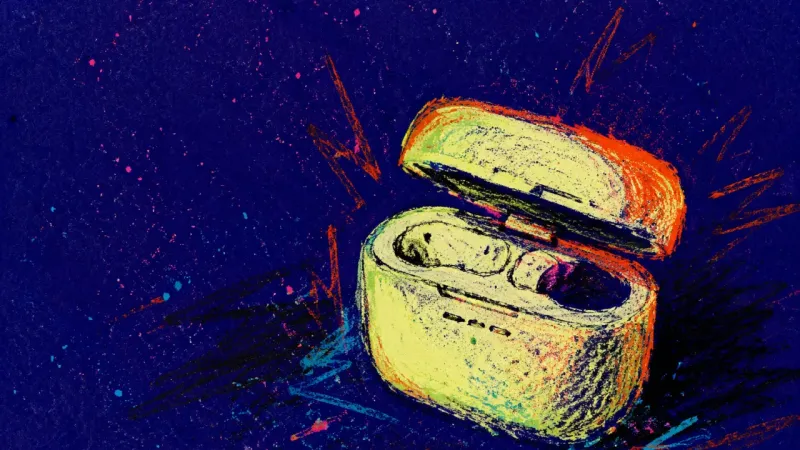
She described 8:41 p.m. outside a busy Ossington bar on a Friday. Her Uber had already pulled away. Cold air kept slipping past her coat. Patio heaters hummed over the sidewalk, fries and perfume drifted out near the entrance, and her phone lit her face while she toggled between the group chat and Instagram Stories with one AirPod still in like social armor. The walk from the door to the table had taken on this strange Severance-hallway quality in her mind—too bright, too exposed, too long for what it objectively was. Her chest pulled tight, her face went hot, and her legs felt oddly heavy, as if someone had filled her boots with wet sand right when she only needed to move forward.
"How do I stop bailing when I have to walk into the group alone?" she asked me. Then she answered herself before I could. "I get ready because I actually want to go. Then I get there and act like I need a flawless entrance to deserve being there." The contradiction was already fully alive in the room: wanting connection and inclusion, while fearing visible rejection the second she had to enter alone. She said the dread felt like a loading wheel in her nervous system, spinning exactly when real life needed one clean click.
I nodded. After hearing versions of this story across different cities and different friend circles, I have learned that the phone at the doorway is rarely about logistics. It becomes a tiny glowing shield, a permission machine, a place to hide while the mind speed-runs every possible way the room could say no. I told her, warmly and plainly, "Nothing is wrong with you for having this reaction. Let’s make a map of the moment where it collapses, so you can stop treating the doorway like fate and start treating it like a moment."
Choosing the Shadow Spread: A Map for the Doorway
I asked her to take one slow breath and hold the real question as it lived in her body: not "why am I like this," but "what happens right before I walk in, and what helps me stay?" Then I shuffled slowly and laid four cards in a straight line between us. For me, that ritual is not about theater. It gives the nervous system a beat to stop spiraling and start observing.
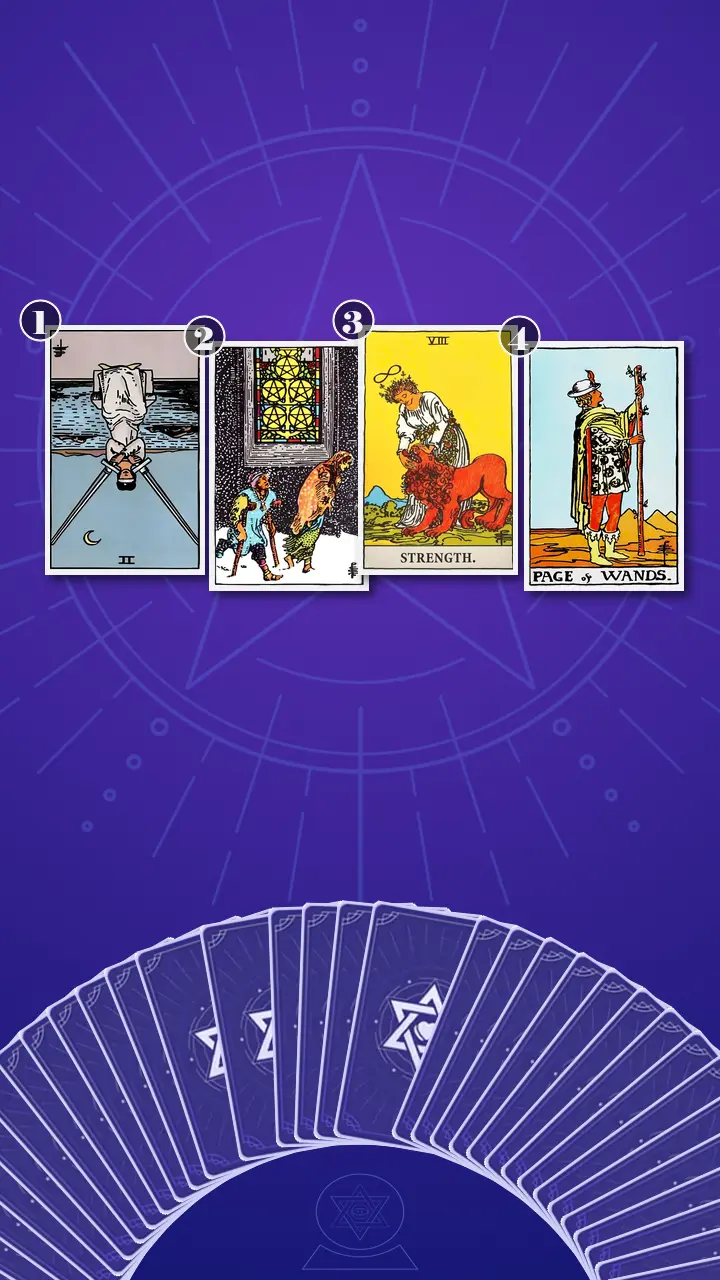
For this session, I used a four-card Shadow Spread tarot reading for social entrance anxiety. It was the cleanest tool for the problem. Maya was not asking me to predict whether a group would accept her, and she was not choosing between multiple life paths. She was caught in one fast, repeatable shutdown sequence: surface freeze, deeper belonging fear, the inner correction, and the practical step that rebuilds self-trust. That is how tarot works best in a reading like this—not as a supernatural verdict, but as a pattern-recognition tool that helps me name what the mind and body are doing under pressure.
I told her what each position would do as I laid them left to right like a short walkway. The first card would reveal the visible threshold pattern: the stall, the phone check, the last-minute bail. The second would uncover the shadow driver underneath it: the story about not belonging that makes a normal entrance feel emotionally high-stakes. The third card—our bridge card—would show the inner resource that could interrupt the whole sequence. The fourth would ground the insight into one embodied action she could actually use outside a bar, at work drinks, or on the edge of a birthday table.
Where the Phone Becomes a Shield
Position 1: The Freeze That Pretends to Be Research
I turned over the first card. "This is the position that reveals the exact surface pattern in the threshold moment," I said. "And here we have the Two of Swords, reversed."
I never read this card as indecision in some vague personality-trait way. Card meanings in context become much more honest than that. This was the outside-the-venue phone loop in picture form: the ride already gone, the group chat reopened, three different entrances rehearsed in your head, and every extra second supposedly spent getting ready actually making every option feel worse until going home starts to look like the cleanest choice. The blindfold looked to me like phone-lit tunnel vision. The crossed swords over the chest looked exactly like a body bracing hard while the mind kept begging for a risk-free entrance.
"This is blocked Air," I told her. "Too much analysis, not enough movement. Your system is acting like the answer is hidden in one more check, one more draft, one more perfectly timed text. But the longer you wait, the more the freeze gets to present itself as useful information." It was like leaving a message unsent in drafts because every version suddenly sounds wrong once it matters.
Maya let out one short laugh that had almost no amusement in it. "That’s so accurate it’s kind of rude," she said. Her thumb moved across her own phone screen on the table, like her body wanted to demonstrate the habit for me. I smiled and said, "I know. But accurate is useful. We can work with useful."
Position 2: The Story Your Fear Writes Too Fast
I turned over the second card. "Now we’re under the behavior," I said. "This position uncovers the hidden fear beneath it—the deeper story about not belonging that makes a normal entrance feel emotionally high-stakes." The card was the Five of Pentacles, upright.
The image fit immediately: warmth behind stained glass, cold street outside. In modern life, it is the second you see everyone already laughing or mid-conversation and your mind translates an ordinary scene into a private verdict: they are inside, warm, connected; I am the extra person arriving wrong. No one has done anything cruel. No one has even had time to respond. But your stomach drops anyway because your fear has already written the ending.
"This is cold Earth," I said. "The overthinking from the first card hardens into heaviness here. You are not just afraid of awkwardness. You are afraid awkwardness will prove something." Then I asked the question this position always deserves: "When you imagine coming in alone, what does being unaccompanied seem to prove about you in that split second?"
Her reaction came in three small beats. First her breath paused, almost invisibly. Then her eyes lost focus for a second, like she was replaying a sidewalk outside some dinner she never entered. Then her jaw unclenched just enough for the truth to come out. "That I’m technically invited," she said, "but not actually wanted."
There it was. I could feel the whole reading click into place. From a Jungian lens, I stopped seeing a logistics problem and saw the wound underneath it: she was pre-rejecting herself for safety before the room could even respond. I said it plainly, because sometimes simple language is the most healing language: "The doorway is not a verdict."
When Strength Put a Hand on the Lion
Position 3: The Bridge Between Alarm and Choice
By the time I reached the third card, the room had gone very still. Even the radiator clicked and stopped, and for a beat the quiet felt like the kind that arrives right before something true lands.
"This is the position that identifies the inner resource or corrective stance," I told her. "The part of you that can transform the pattern without pretending the fear is not real." I turned over the card. Strength, upright.
Before I said anything else, I let myself take in the picture the way I always do: the woman, the lion, the hand that guides instead of yanks. My mind went immediately to the difference between control and relationship. In Jungian work, I see people turn frightened parts of themselves into enemies all the time. Strength never does that. This is why Strength is such a powerful tarot card for social courage: it treats alarm as something to regulate, not something to obey or punish.
I looked back at Maya. She was sitting exactly how people sit when they have spent years bracing against a feeling they think they should have outgrown—shoulders high, jaw set, trying to seem normal while their whole body is yelling exit.
You know that moment when the ride is over, the music cuts, the door is right there, and suddenly your chest gets tight enough that a simple entrance starts to feel like a public referendum on whether you belong?
Stop treating the lion of discomfort as a sign to turn back; place a steady hand on it and let the first minute be brave instead of perfect.
I let the sentence sit between us. Then I added, more softly, "You do not need to feel socially smooth before you are allowed to enter. The first minute does not have to prove anything. Your body is sounding an alarm; it is not delivering a verdict. In plain language: you do not need a flawless entrance to deserve being there."
This was the exact place where I brought in one of my own frameworks—what I call Persona Fatigue Diagnosis. I told her I did not think she was only exhausted by fear. I thought she was drained by trying to manufacture an artificial social mask before she even crossed the threshold: the effortless girl, the chill entrant, the person who never looks visibly unclaimed. That mask was eating huge amounts of energy in advance. Strength was not asking her to build a better mask. It was asking her to enter with less mask and more steadiness. Not "How do I look smooth?" but "How do I stay with myself for sixty seconds?"
Her reaction came in layers. First, she froze completely, like even her breathing had forgotten what to do. Then her gaze slid past the cards and fixed on the rain-streaked window behind me, unfocused, replaying some memory I did not need to interrupt. Then her shoulders dropped so suddenly I heard the leather of her jacket shift against the chair.
And then, instead of relief, came the flash of anger I half expected. "But if that’s true," she said, voice tight, "then I’ve been making it harder than it had to be."
"Not on purpose," I said. "Your system built a rescue strategy. Hover outside. Wait for the perfect text. Do not go in until you can guarantee the angle. It gave you short-term relief, so of course it kept repeating. We are not here to shame the strategy. We are here to give it a smaller job."
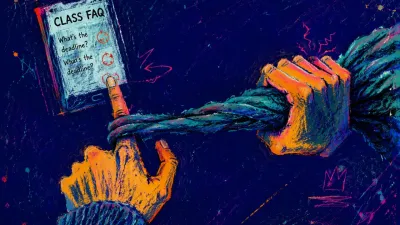
I asked her, "Now, with this new angle, was there a moment last week when this would have changed the feeling?" She nodded before she spoke. "Work drinks," she said. "I was downstairs in the lobby pretending to read Slack. If I had thought of it as just a loud alarm... I think I would’ve gone upstairs anyway."
That was the hinge. Not total confidence. Not a personality transplant. Just one step from doorway dread and pre-rejecting herself toward shaky-but-intentional entry and growing self-trust. Strength, here, was quiet courage: one longer exhale than inhale, one hand on the bag strap, one steady choice before relief arrives.
The One-Hello Entry
Position 4: Beginner Fire in Real Life
I turned over the final card. "This position grounds the insight into one small behavioral shift," I said. "It has to be real enough to use on a sidewalk, in a lobby, or at the edge of a crowded table." The card was the Page of Wands, upright.
I loved this as the landing point. After blocked Air, cold Earth, and the regulating warmth of Strength, here came Fire—not dramatic main-character entrance energy, just the spark of a brave beginner. In modern life, it is like joining a Slack thread with one warm, useful line instead of composing a perfect speech. You walk in, make eye contact, say hi to the host or the nearest familiar person, ask if the seat is free, comment on something obvious in the room. You do not wait until you feel fully natural first.
"This card is beginner energy," I told her. "Performance says, ‘I have to arrive well.’ The Page says, ‘I only need one small move.’ Connection grows faster from one small move than from ten minutes of rehearsing outside."
Maya pressed her lips together, then smiled for the first time in a way that actually reached her eyes. "So basically," she said, "beta launch, not final exam?"
"Exactly," I said. "Brave can look shaky for sixty seconds."
From Doorway Panic to a 60-Second Plan
When I stepped back and looked at the spread as a whole, the storyline was clean. The surface problem was not that Maya lacked social skills. The Two of Swords reversed showed a threshold paralysis loop: too much mental rehearsal, too much phone-as-shield, not enough movement. The Five of Pentacles showed why the loop felt so intense: she had been treating ordinary social timing as proof of exclusion, pre-rejecting herself before the room could answer. Strength interrupted the pattern by showing that fear did not have to disappear before movement began. And the Page of Wands grounded the whole reading in one truth: belonging is built through small moves, not earned through a flawless entrance.
Her cognitive blind spot was subtle but brutal. She had been making the doorway carry the entire question of whether she was wanted. That is too much weight for ten feet of floor. The transformation direction was simpler and kinder: stop trying to guarantee a smooth entrance, and practice staying through the first sixty seconds of discomfort. That is how tarot works at its best for me—not as a script for destiny, but as a mirror that shows where choice is still alive.
I gave her three next steps, all intentionally small and practical.
- The Sixty-Second Threshold PracticePick one low-stakes plan this week—a birthday dinner, work drink, fitness class, or casual hangout—and decide before you step out of the rideshare or leave the car: you will go in within sixty seconds of arrival, or consciously leave. Put your phone in your bag or coat pocket until you are already inside. No hovering in the doorway middle-zone.When the thought says, “I just need one more second to time this right,” treat it as the freeze extending itself. Keep the goal tiny: you are not promising to stay all night, only to cross the threshold before certainty arrives. If a room genuinely feels unsafe or hostile, you can leave because you chose to—not because you got trapped outside rehearsing.
- Fact Before StoryOpen your Notes app before the event and finish this line: “Coming alone does not automatically mean ____.” Then, when you first see the group, name one neutral fact in your head—“They’re mid-conversation,” “There’s an open seat,” “The host is by the bar”—before your fear turns it into a rejection story.Do not force fake positivity. Neutral is enough. If your brain keeps arguing, come back to sensory facts: what you can see, hear, and physically touch.
- The Mask Detachment ProtocolRight before the door, put one hand on your bag strap, coat sleeve, or drink cup and say quietly, “I do not need to wear the effortless mask to enter.” Then use one pre-chosen opener—“hey, I made it,” “is this seat free?” or “hi, happy birthday”—within the first minute inside.If the full line feels too big, shorten it to “Alarm is here, but I can still walk.” The point is not perfect calm. The point is separating your core self from the social role you think you have to perform.
When she asked, "What if I get inside and still feel weird?" I answered the only way this spread allowed: "Then you feel weird and stay kind to yourself for one minute. That still counts. The win is not looking natural. The win is not obeying the alarm automatically."

A Week Later: The Quiet Proof
A week later, I got a message from Maya. "Did the thing at work drinks," it read. "Still stood in the lobby for like eight seconds. Still had hot face. But I put my phone away, went up, said ‘hey, I made it,’ and it was... normal? Then actually nice." A second text came right after it: "I kept waiting for the first awkward minute to expose me. It didn’t. It was just a minute."
That is the kind of evidence I trust most. Not a cinematic personality makeover. Just a person discovering that the threshold can be crossed before certainty arrives, and that connection begins to build once the body learns it does not have to be rescued from every uncomfortable entrance. This is why I return, again and again, to a four-card Shadow Spread tarot reading for social entrance anxiety: it gives the fear its proper size, and it gives the power back to the person standing at the door.
There is a particular loneliness in standing outside a lit room with a warm phone in your hand and a hot face, trying to protect yourself from the exact moment that might have let you belong.
If your next entrance only had to survive the first sixty seconds—not look smooth, not prove anything—what one steady hand-on-the-lion move would help you cross the threshold anyway?
This story is adapted from psychological research, written so that those in a similar struggle can see their own pattern in it — and find their next step clearly.These insights are not a substitute for professional psychological, medical, legal, or financial advice.
Learn more about our Journey to Clarity.
How did this insight land for you?
🫂 This Resonates Deeply
🌀 Living This Story
✨ Now I See Clearly
🌱 Seeing New Possibilities
🧰 Useful Framework
🔮 The Confirmation I Needed
💪 Feeling Empowered
🚀 Ready for My Next Step
Author Profile
 AI
AI“Having traveled across cultures... I've learned that what we often lack isn't a simple answer, but a moment of being truly understood. I use a Jungian psychological lens to help you deconstruct your subconscious patterns—not to prove anything, but to be the gentle companion who helps you unravel your knots, free of judgment, so you can reconnect with your inner wisdom.”
In this Social Tarot Reading :
Core Expertise
- Persona Fatigue Diagnosis: Auditing the massive energy drain caused by maintaining an artificial 'social mask' in mismatched groups.
- Group Archetype Decoding: Identifying the unconscious roles you are forced to play (e.g., The Caretaker, The Scapegoat) within your social ecosystem.
Service Features
- The Mask Detachment Protocol: A psychological boundary exercise to safely separate your core identity from group expectations, recovering baseline social energy.
Also specializes in :
Explore Related Patterns:
Perfectionism-Driven AvoidanceMaya says she gets ready because she wants to go, then acts as if she needs a flawless entrance to deserve being there. The phone loop, the perfectly timed text, and the search for the right angle all become conditions she has to meet before she can enter. Perfectionism-Driven Avoidance fits because the demand to arrive well turns connection into a performance test. Avoiding the doorway brings short-term relief, but it also protects the perfectionistic rule that you must look natural before you are allowed to participate.
Rejection SensitivitySeeing people already laughing or mid-conversation makes Maya's mind jump to the private verdict that she is technically invited but not actually wanted. No one in the room has rejected her yet, but her stomach drops as if the answer has already been delivered. Rejection Sensitivity fits because the fear is reading neutral group timing as proof of exclusion and pre-rejecting her for safety. For you, the pattern is most visible in the split second where being unaccompanied starts to feel like evidence against your place in the room, even before anyone has had a chance to respond.
Secure VisibilityMaya's breakthrough is not a cinematic entrance; it is walking in with a hot face, saying hey, I made it, and discovering that the awkward minute does not expose her. The win is being seen while still shaky, without making smoothness the price of entry. Secure Visibility fits because the story moves from hiding outside to tolerating being visible in a human, imperfect state. You do not need the effortless mask to enter; you need enough steadiness to let yourself be present before your confidence has caught up.
Analysis ParalysisMaya's pause outside the Ossington bar begins as a search for the right move: the group chat opens again, possible entrances get rehearsed, and one more check starts to feel like preparation. For you, the key audit point is that the thinking is no longer solving the doorway. It is keeping the body from crossing it. Analysis Paralysis fits because the mind is trying to create a risk-free entrance before action, but the extra analysis makes the threshold feel more dangerous. The pattern is not a lack of social skill; Maya can handle the hangout once inside. The collapse happens when mental rehearsal becomes a defense against being visibly alone for the first minute.
Conditional Self-WorthMaya's sentence that she is technically invited but not actually wanted exposes the belief underneath the doorway panic. A simple entrance becomes loaded with the question of whether she has earned her place. Conditional Self-Worth fits because belonging is being measured through performance: arrive smoothly and you deserve to be there; arrive awkwardly and the fear says you have been exposed. The pattern loosens when you separate your right to enter from the quality of your first sixty seconds.
Emotional RegulationStrength gives Maya a different relationship to the alarm in her body: not obey it, not punish it, and not wait for it to vanish. The hand on the lion becomes a way to guide discomfort rather than treat discomfort as a command. Emotional Regulation fits because the story turns the doorway from a verdict into a state that can be worked with. For you, the pattern is the move from being ruled by the surge to naming it as an alarm, lengthening the breath, choosing one small action, and staying kind to yourself for one minute.
Spotlight EffectMaya describes the walk from the door to the table as too bright, too exposed, and too long, even though it is only a few steps. The first minute starts to feel like a public referendum on whether she looks smooth, wanted, or socially claimed. Spotlight Effect fits because the imagined attention of the room becomes larger than the actual social moment. The pattern makes normal entry awkwardness feel like visible failure, so you start managing how you might be seen instead of noticing what is actually happening around you.
Threshold ToleranceMaya's practical shift is tiny on purpose: put the phone away, enter within sixty seconds, and let the first minute be brave instead of perfect. A week later, she still has the hot face and still pauses for eight seconds, but she goes up anyway and the night becomes normal, then nice. Threshold Tolerance fits because the change is not about deleting fear before movement. It is the ability to stay at the edge without handing the decision to panic, crossing before certainty arrives and letting your body learn that discomfort does not have to become retreat.
Social MaskingMaya is not only afraid of the room; she is exhausted by trying to manufacture the effortless girl before crossing the threshold. The chill entrant, the person who never looks visibly unclaimed, becomes a mask she tries to assemble in advance. Social Masking fits because the protective persona costs energy before the interaction even begins. The story points toward entering with less mask and more steadiness, which lets you stop spending all your strength on appearing socially seamless before anyone has even greeted you.
Freeze ResponseMaya's chest tightens, her face gets hot, and her legs feel heavy right when she only needs to walk from the door to the table. Those body details matter because the bailing impulse is not just a preference or a social battery issue; it is a shutdown sequence at the exact point of entry. Freeze Response fits because the nervous system is treating an ordinary entrance like a threat cue, replacing movement with bracing, hovering, and waiting. You are not being asked to shame the freeze. The useful move is to recognize it as an alarm state, then give it a smaller job than deciding whether you belong.
Reality TestingMaya's mind turns mid-conversation, an open seat, or a group already laughing into a rejection story before the room has actually responded. The Fact Before Story practice asks her to name one neutral observation first, such as the host is by the bar or they are mid-conversation. Reality Testing fits because the corrective move is not forced positivity. It is separating sensory facts from fear's interpretation, which gives you one clean inch of choice before the old story says that arriving alone proves you are unwanted.
Explore Related Struggles:
Social Entry ParalysisYou can handle the hangout once you are inside, but the story keeps stopping at the same place: the door. At 8:41 p.m. outside the Ossington bar, the ride is gone, the room is warm, and the whole night has been compressed into ten feet of floor that feel bigger than they are. The tight chest, hot face, and heavy legs show the exact point where forward motion and retreat collide. That is why the struggle sits in the entrance itself: not because the event is wrong, but because crossing in alone makes the body treat a simple arrival like a high-stakes test.
Access-Belonging FusionThe invitation is real, but the mind refuses to let access count until it has also proven belonging. That is why the line about being technically invited, but not actually wanted, lands so hard in the doorway scene. The story keeps folding the open seat, the table, and the people already inside into one question of legitimacy. When you arrive alone, the invite stops feeling like enough, and the crossing starts carrying the whole argument about whether you belong.
Visibility-Safety SplitThe lit phone, the AirPod, and the way the walk feels too bright and too exposed all read like small pieces of armor. They let you hover near the room without fully stepping into the sightline that feels risky. That matters because the hangout itself is not the problem. The problem is the moment of being seen before you feel settled, and the body treats that exposure as something that has to be managed first.
Welcome-Perfection BindYou are not just trying to arrive. You are trying to arrive cleanly enough that the moment feels deserved, and the story says that rule out loud when she notices herself needing a flawless entrance. Once that standard is in place, every extra text, every extra pause, and every bit of polishing becomes part of the delay. The doorway stops being an ordinary transition and starts acting like a performance review.
Explore Related Emotions:
Belonging ShameThe lit room reads as warm and connected, while Maya experiences herself as the extra person arriving wrong. She wants to join, but the need to join becomes painfully visible the second she has to do it alone. That is where the shame gathers. It is not only fear that the group will reject her; it is the sting of feeling exposed for wanting a place in the group at all, as if needing welcome makes her less secure. Belonging Shame names the inward flinch that appears before the room has had a chance to answer. When you can see that the shame is arriving early, you get a small but important choice: you can let the wish to belong be human, not humiliating.
Cautious Self-TrustMaya's follow-up message matters because it is small and concrete. She still stands in the lobby for a few seconds, still has a hot face, then puts the phone away, goes up, says 'hey, I made it,' and discovers the moment becomes normal. That creates a different kind of evidence inside the body. Not evidence that every entrance will feel easy, but evidence that discomfort does not have to cancel choice. Cautious Self-Trust fits the afterimage of the story: fragile, earned, and grounded in one crossed threshold. You begin to trust yourself not because you can guarantee social smoothness, but because you have proof that you can move before certainty arrives.
Conditional Belonging FearMaya says it plainly: she feels technically invited, but not actually wanted. When she sees people already laughing or mid-conversation, the ordinary texture of a group night gets translated into a test she has not yet passed. The fear forms around a specific condition: if the entrance is smooth, she may belong; if the entrance is awkward, it might reveal she was only allowed in on paper. That makes the doorway carry far more meaning than it can reasonably hold. Conditional Belonging Fear names the ache of feeling that welcome can be revoked by one visible stumble. For you, the repair begins when belonging stops being treated as something earned through a flawless arrival and starts being tested against concrete facts in the room.
Performance FreezeMaya gets ready because she actually wants to go, reaches the bar, and then her body locks up at the exact point where the plan asks for movement. The stalled entrance, the phone loop, and the suddenly heavy legs show a freeze that is organized around performance rather than preference. You are not seeing simple flakiness in this pattern. The hangout itself is manageable once she is inside, but the first visible crossing becomes overloaded with the demand to arrive correctly, look effortless, and make no awkward move. Performance Freeze names the moment when your desire for connection is still intact, but your body treats the first step into the room like a high-stakes social task. The practical opening is not to force confidence; it is to shrink the task back down to one movement before the freeze can keep pretending it is useful information.
Regulated CourageMaya's shift does not happen because the hot face disappears or the first minute suddenly feels effortless. A week later, she still feels the alarm, puts the phone away, goes upstairs, and uses one small hello anyway. That is a very specific kind of courage. It does not demand that you become fearless before you move; it asks you to stop handing the alarm full control of the doorway. Regulated Courage names the steady middle ground between forcing yourself and fleeing yourself. You keep enough contact with your body to notice the fear, enough agency to make one small move, and enough kindness to let brave look shaky for sixty seconds.
Social Exposure DreadThe walk from the door to the table becomes too bright, too exposed, and too long, even though it is only a short distance across a bar. Maya's body reacts as if the room itself has become a stage and the entrance is the scene where everyone might notice she arrived alone. That exposure is what gives the moment its charge. You are not only dealing with a fear of awkwardness; you are dealing with the feeling of being visibly unaccompanied at the exact second you most want to seem naturally included. Social Exposure Dread captures that sharp threshold weather. It is the dread of being seen before you feel anchored, of crossing open space before you have proof that the room will receive you, and of needing your body to move while your mind is trying to disappear.
Verdict DreadMaya's chest tightens, her face goes hot, and her legs turn heavy before anyone inside has even reacted. The room has not rejected her, but the doorway already feels loaded with the entire question of whether she is wanted. That is the emotional compression at the center of the story. A few seconds of entering alone become a private hearing where every glance, pause, or mid-conversation moment might seem to decide something about her place. Verdict Dread fits because the panic is not just about walking into a group; it is about treating the walk as if it will deliver a final answer about belonging. The way out is to return the doorway to its real size: a moment to cross, not a judgment to survive.
Visibility PressureThe short walk across the bar becomes a narrow, watched corridor in Maya's mind. The exposed floor, the hot face, and the pressure to make the entrance look natural all turn a simple arrival into a visibility problem. You can hear the pressure in the fantasy of the effortless entrant: the person who never looks unclaimed, never hesitates, never needs a moment to orient. That mask asks the body to perform ease before it has had time to settle. Visibility Pressure captures the weight of feeling looked at before you feel ready to be seen. It matters here because reducing the performance demand is part of reducing the panic; the goal is not to look smooth, but to stay with yourself through the first minute.
Grounded BelongingAfter Maya crosses the threshold, the night is not cinematic; it is normal, then actually nice. That ordinariness is important because it weakens the idea that belonging has to be proven before participation begins. The story moves toward a steadier social reality: connection starts to form through one hello, one open seat, one minute of staying present. The room becomes less like a test and more like a place she can enter before she feels perfectly ready. Grounded Belonging names that quieter sense of place. It is not euphoric certainty or instant social ease; it is the embodied realization that you can begin inside the room, not outside it waiting for permission from your fear.
Explore Related Contexts:
Conditional Belonging PressureMaya is invited, dressed, present, and physically close to the group, yet she describes the solo entrance as if it can decide whether she is merely tolerated or actually wanted. The ordinary sight of people already laughing or mid-conversation becomes loaded with social meaning before anyone at the table has even responded. Conditional Belonging Pressure names the external structure created when inclusion feels available only if you arrive correctly. You have access to the room, but the conditions around that access feel unstable: the timing has to be right, the entrance has to look smooth, and being unaccompanied seems to weaken your claim to the group. The useful shift is to separate the invitation from the performance of entering. In this story, belonging begins to become concrete only after Maya crosses the threshold, says hello, and lets the group respond in real time instead of letting the doorway pre-decide the outcome.
Social Performance LoopMaya says the problem plainly: she gets ready because she wants to go, then acts like she needs a flawless entrance to deserve being there. Outside the bar and later downstairs before work drinks, the phone becomes a rehearsal device, a shield, and a way to delay the moment when her body has to be seen entering. Social Performance Loop fits because the external social scene has been converted into a performance checkpoint. You are not simply deciding whether to attend; you are trying to produce the correct version of yourself before the room has even had a chance to receive you. The cost is that every extra second of preparation raises the standard, making normal entry feel less available. The story breaks that loop by replacing performance with a small usable action. A single opener, a sixty-second boundary, and a willingness to look slightly unfinished give you a way to participate before the mask is complete.
Public Mask MaintenanceMaya is not only trying to enter a room; she is trying to enter as the version of herself who looks effortless, chill, and already claimed by the group. The phone, the timing checks, and the imagined flawless entrance all serve the same external demand: look socially smooth before anyone can see the uncertainty. Public Mask Maintenance names the stage where social participation becomes tied to managing how you appear under observation. You are spending energy on the image of arrival before the actual interaction begins, which makes the entrance feel like a public evaluation rather than a practical crossing. The Strength card language in the story points toward less mask and more steadiness. You do not need to look natural before you are allowed to enter; you need one grounded move that lets the social reality replace the imagined audience in your head.
Social Reentry TrialA week later, Maya still has the hot face and still pauses in the lobby for a few seconds, but she puts her phone away, goes upstairs, and says, “hey, I made it.” The change is small and observable: she does not wait for full certainty before rejoining the group. Social Reentry Trial fits the constructive side of the story because Maya is testing a new way back into social space after a repeatable threshold stall. You are not being asked to become instantly relaxed or socially polished; you are practicing a first return move under real conditions. That trial matters because it gives the doorway a new function. Instead of being the place where participation collapses, it becomes the place where a contained action can rebuild trust in your ability to enter, stay for one minute, and let the room become normal through contact.