Why Can't You Step In?
Understand Social Entry Paralysis through lived detail, related tarot cards, and tarot reading insights from threshold moments.

Social Entry Paralysis
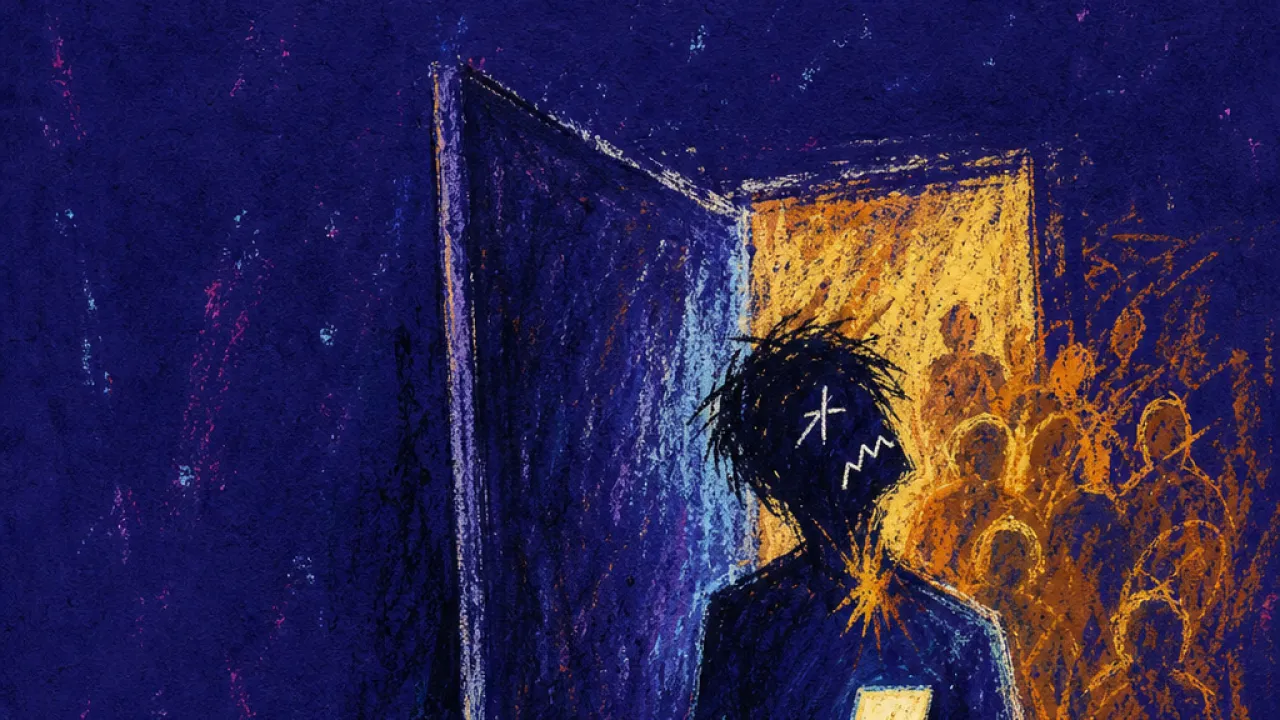
What does this feel like?
Social Entry Paralysis — you are standing just outside something you technically want to enter: a room, a conversation, a group chat, a first day, a table where people have already started laughing. Your hand is on the door handle, or your thumb is hovering over the send button, and nothing dramatic is happening from the outside, but inside your body every small movement has become loaded. You are not deciding whether you want connection; you do want it, badly enough that you keep showing up at the edge of it. The stuckness happens in the tiny space before becoming visible, when you can still imagine entering correctly, saying the right thing, catching the right rhythm, arriving without making everyone adjust around you. Your throat tightens before you speak. Your chest pulls inward. You rehearse a greeting so many times it starts to sound fake before it leaves your mouth. You tell yourself you are just waiting for a better opening, but the better opening keeps moving, and every second you wait makes the room feel more established without you. The strange part is how close you are: close enough to hear the music, see the notifications, know the names, understand the joke, picture yourself belonging there. But crossing the last few feet feels like stepping through a pane of glass no one else can see. So you linger at thresholds, refresh the chat, arrive early and stay in your car, watch the meeting cursor blink, let chances pass because entering late feels louder than not entering at all. The cost is not only loneliness; it is the slow training of your life around almost-contact, until you become familiar with being near warmth but not inside it, much like the figure on the Eight of Swords, standing still in open ground while the blades around them make every direction feel too narrow to trust.
What's pulling at you?
You are stuck between wanting to be included and needing the entry point to feel perfectly safe before you move. The problem is that social spaces keep changing while you are trying to calculate them, so the longer you wait, the more visible the first step starts to feel.
How It Shows Up?
- You are alone in your room with your shoes on, keys in your palm, phone open to the address, and somehow the door still feels far away. Your hand is cold around the keys, your chest is tight, and you keep checking the time as if another five minutes will make the decision cleaner. The pause has the stillness of the Two of Wands, looking outward from a wall without yet stepping into the world. It is allowed for the first step to be smaller than arrival.
- A friend drops a casual message into the group chat, and you watch the replies stack up while your thumb hovers over the keyboard. You type one sentence, delete it, type a shorter one, delete that too, and feel your throat tighten because the thread already seems to have moved on without you. You can let the moment pass without turning one missed opening into a verdict on where you belong.
- In a class, meeting, or team call, you know exactly what you want to say, but you wait for the perfect gap. Your shoulders lock, your breathing gets shallow, and by the time the right moment appears, the topic has shifted and your sentence feels expired in your mouth. Noticing the missed opening is enough for now; you do not have to argue with yourself in the middle of the room.
- You arrive outside the bar, party, campus event, or coworking meetup and see people through the glass, already laughing in a rhythm you are not inside yet. Your hand touches the handle, then drops; your stomach dips, your cheeks heat, and the lit room feels like the stained-glass warmth of the Five of Pentacles, close enough to see but not crossed into. Taking a minute at the doorway can still be part of being there.
- Your body starts preparing before anyone says anything: jaw set, collarbones tight, stomach held in, eyes scanning for the exact second when greeting someone would not feel intrusive. The space between your body and the room becomes sharp, almost like the ring of swords around the Eight of Swords, with gaps visible but hard to trust. You can give your body a few breaths before asking it to move.
Social Entry Paralysis in Tarot Cards
Social Entry Paralysis lives in the second before you cross into the room, when connection is close but visibility feels expensive. You can feel it in the hand hovering near the door handle, the shallow breath, and the throat-tight sentence that never quite lands. From an existential perspective, the structural framework here is the bind between wanting to be included and needing certainty before being seen. These Tarot Cards trace the outline of that threshold.
Social Entry Paralysis in Tarot Card Reading Insights
When Social Entry Paralysis turns a doorway, group chat, or meeting gap into a place you cannot quite cross, other people have brought the same threshold into readings. The pieces below move from card patterns into what surfaced during those readings. Tarot Reading Insights for this stuck-before-entry feeling.

From Posting About Loneliness to One Useful Exchange in Toronto
Topic:Social Tarot Reading
Struggle:Visibility-Connection Split
Context:Community Integration Trial
Walking Into a Group Alone: From Doorway Dread to One Small Move
Topic:Social Tarot Reading
Struggle:Visibility-Safety Split
Context:Solo Event Entry