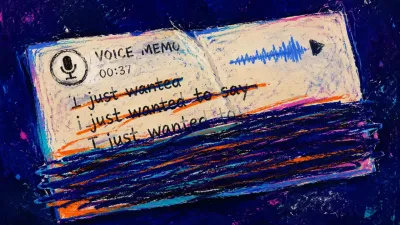
The 8:47 p.m. Kitchen Audition
If you record your voicemail, listen once, and delete it immediately—then open Notes to rewrite the script like it’s a branding exercise—you’re living the “audition” version of adulting.
Casey (name changed for privacy) told me that sentence felt uncomfortably specific, like I’d been standing in their cramped Toronto apartment kitchen watching the whole loop play out.
“It’s twelve seconds,” they said, phone in hand, “and somehow it feels like an audition.”
I could hear the scene in their description before I could even see the cards: 8:47 PM on a Tuesday, fridge humming like a small engine, the overhead LED buzzing with that slightly mean, office-like light. Their phone was warm from being gripped too long. Thumb hovering over Record. Jaw tightening. Breath going shallow—like their body was bracing for impact before a sound even existed.
They’d gotten good at crisp Slack updates and clean emails. They could speak in meetings. But the second their voice became replayable—voicemail, Loom, any recorded intro—something in their chest snapped shut like a seatbelt locking.
“I don’t hate my voice until it’s recorded,” Casey said. “Then I hear it back and it’s like… instant embarrassment. Hot. Fast. And then I’m like, okay, I’ll fix it. I’ll fix it until it’s… not me.”
They weren’t asking for a better script. They were asking why their own voice—plain, human, real—triggered cringe so hard it hijacked their sense of being a “real adult.” The core tug-of-war was right there: wanting to sound natural and like yourself, while fearing that sounding like yourself will be judged as unprofessional or cringe.
That self-consciousness had a texture to it. Not a vague “insecure” feeling—more like standing in front of a microphone while an imaginary panel of judges scored every syllable, and you could feel the scorecard before you even spoke.
I softened my voice on purpose. “Okay,” I said. “Let’s not treat this like a personality test. Let’s treat it like a moment your nervous system is trying to keep you safe. We’re going to make a map of the loop—and then we’ll find a way out that doesn’t require you to become a different person.”

Choosing the Compass: A Five-Card Cross for Voicemail Cringe
I asked Casey to take one slow breath—not as a mystical ritual, but as a clean transition. The kind you do before you hit send on an email you’ve over-edited. I shuffled slowly, letting the sound of the cards be a metronome. “Just hold the question,” I told them. “Not perfectly. Just honestly.”
“Today,” I said, “we’ll use a Five-Card Cross.”
For anyone reading along who’s wondering how tarot works in a situation this specific: the Five-Card Cross is minimal but psychologically complete. It captures the exact arc you need when you’re stuck in a tiny loop that feels weirdly high-stakes—like why do I cringe at my voicemail greeting? It shows: (1) the present pattern, (2) what’s crossing it (the pressure), (3) the root imprint underneath, (4) the best reframe/support, and (5) the next practical step. It’s perfect for decision fatigue and micro-performance shame because it doesn’t drown you in possibilities—it gives you a clean sequence.
I pointed to the layout as I placed the cards. “Card 1 is the observable loop—what happens in those thirty seconds. Card 2 is the script pressing on you—the identity rule you’re trying to follow. Card 3 is the older origin point that trained your body to tighten. Card 4 is the medicine. Card 5 is the low-drama next step.”

Reading the Map: What the Cards Say in Context
Position 1: The observable cringe loop right now
“Now we turn over the card representing the observable cringe loop right now: what you do and think when you try to record the greeting,” I said.
Eight of Swords, upright.
It was almost painfully literal. “You’re standing in your apartment kitchen after work, phone warm in your hand, and you treat the voicemail button like a spotlight,” I said, using the exact modern translation as my anchor. “The moment you hear playback, your brain runs a mental focus group—recruiter, manager, client, random stranger—everyone has an opinion. You delete the take not because it’s unclear, but because deleting gives you a hit of control. Then you start scripting again, convincing yourself the next version will finally prove you belong.”
This card’s energy is Air in excess: hyper-self-monitoring, rapid evaluation, too much mind and not enough body. The Eight of Swords isn’t a card of inability. It’s a card of constriction. The figure is blindfolded, loosely bound—trapped mostly by the story that says, “If I do this wrong, it means something about me.”
Casey let out a small laugh that had a bitter edge. “That’s… rude accurate,” they said. “Like, I’m not even bad at speaking. I just can’t stand… hearing proof of myself.”
I nodded. “Exactly. And I want you to hear this clearly: Your voicemail isn’t a personality test. It’s logistics. But your mind is treating it like a high-stakes identity exam.”
They stared down at the card like it had snitched on them, then rubbed their jaw without realizing they were doing it.
Position 2: The identity script crossing your real voice
“Now we turn over the card representing the identity script that clashes with your real voice and turns the greeting into a performance test,” I said.
The Hierophant, reversed.
“This,” I told them, “is the ‘approved adult’ voice. The internal rulebook. The corporate phone-tree energy.”
I kept it grounded in the real-life scenario: “You slip into a stiff, corporate phone-tree voice—slower, lower, more formal words you’d never say to a real person. It’s the voice you think ‘counts’ as professional. But as you record it, your body resists: throat tight, pacing weird, face tense. The cringe spikes because you can hear the costume. Your voicemail becomes a compliance test to an invisible authority instead of a basic message.”
The Hierophant reversed is an Earth-as-institution energy that’s blocked. It’s not stable; it’s rigid. It’s tradition without fit. A rule that used to promise safety—“If I sound like this, I’ll be taken seriously”—but now it’s upside down, heavy, and a little absurd.
I used the “borrowed script” reveal and made it specific: “It’s like you paste a ‘professional voicemail greeting script’ from Indeed or The Muse—words like ‘at your earliest convenience’—and the second you try to speak it, your throat tightens. Not because your voice is bad. Because your voice is refusing to cosplay authority.”
Then I gave them the inner monologue template I could already hear in their story: “If I sound like me, they’ll think I’m not legit.”
Casey’s reaction came in three quick layers: first, a sharp exhale like someone punched the air out of their lungs; second, their eyes unfocused like they were scanning a memory bank; third, a quiet, stunned, “Oh…”
“I can literally hear my old manager,” they said. “Not even what they said—just the vibe. Like I’m supposed to sound… calm, polished, effortless. Like I’m never trying.”
“That’s the Hierophant,” I said gently. “A throne in your throat.”
Position 3: The older imprint underneath the loop
“Now we turn over the card representing the underlying origin point: the older experience or imprint that trained your self-monitoring around how you sound,” I said.
Six of Cups, reversed.
This is where the reading moved from “strategy” to “history.” I stayed careful—no therapy-speak, no forced excavation—just a respectful flashlight into the root.
“When you hear your recorded voice,” I said, “you don’t just hear audio—you feel a throwback. One tiny awkward pause lands like a flashback to being younger and getting commented on: ‘Why do you talk like that?’ ‘You’re so loud.’ ‘Say it properly.’ You learned to edit your voice for acceptability. Now your adult self is trying to leave a functional greeting, but your nervous system is reacting like it’s still protecting a younger you from being labeled and remembered.”
To honor the “flashback micro-cut” technique, I spoke it like a quick edit in a film: “Present day: you hit playback. Immediate snap: you’re 13 in a hallway, someone mimics your tone. Heat rushes up your face. Stomach drops. Urge to disappear. Then—back to now, adult-you holding a phone, but younger-you steering the wheel.”
The energy here is Water that’s been turned backward: instead of comfort and innocence, it’s emotional memory replaying as a rule. This isn’t you being dramatic. This is an old alarm going off in a new room.
Casey swallowed. Their fingers tightened around the phone and then loosened. “There was this thing in middle school,” they said slowly, like they were surprised the sentence was even forming. “People would repeat how I said certain words. It wasn’t like… a huge trauma. But it’s like it’s still in my body.”
“That’s exactly how imprints work,” I said. “They don’t need to be catastrophic to be sticky. They just need to teach you, once, that being heard has a cost.”
When The Star Spoke: Finding Clarity Without Becoming Someone Else
Position 4: The healthiest reframe—support and guidance
I let a beat of silence happen before turning the next card. Not dramatic—just respectful. Like letting your eyes adjust when you step from a subway platform into night air.
“Now we turn over the card representing the healthiest reframe: what it would mean to let your voice be human and still credible,” I said.
The Star, upright.
The image always changes the temperature in a reading. Open sky. Water poured steadily. No armor. No throne. No performance.
Setup (the moment right before the insight lands): Casey was caught in the same thought trap that shows up in so many “recorded voice embarrassment” spirals: if I can’t get this perfect right now, it means I’m not a real adult. A twelve-second greeting had become a performance review, and their brain kept widening the audience until it felt like a public trial.
Delivery (the sentence that shifts the room):
Stop auditioning for an invisible panel; start speaking like The Star—clear, unguarded, and steady—so your voice can flow instead of freeze.
I didn’t rush past it. I let it hang in the air the way a planetarium show goes dark for a second before the first stars appear.
Reinforcement (what it looks like in the body, right now): Casey’s face changed in tiny steps. First, a freeze—breath held, eyes widening a fraction, like their system didn’t trust relief yet. Then their gaze dropped to the card and softened, the way people look at something that feels true but unfamiliar. Their jaw unclenched in a slow, almost reluctant release. Shoulders lowered as if they’d been wearing a backpack they forgot they had on.
Then something more complex: a flicker of sadness, like realizing how long they’d been trying to earn permission to simply exist on a voicemail. They blinked hard once. Their mouth opened, closed, and finally they said, “I hate that I’ve been… doing this. Like I’ve been trying to sound like someone I don’t even like.”
I felt my own inner flashback—ten years of guiding visitors through the Tokyo planetarium, watching people go quiet when I talked about pulsars. A pulsar doesn’t ask if it’s impressive. It repeats. Steady. Honest. It becomes trustworthy because it keeps its rhythm.
“In my work,” I told Casey, “I use something I call Pulsar Breathing. It’s not mystical—it’s pattern. When you’re about to press record, your body tightens and your breath gets shallow. That’s the ‘judges’ moment. Pulsar Breathing is three slow breaths where you imagine a steady signal, like a cosmic lighthouse. The goal isn’t to sound magical. It’s to return your voice to a rhythm you can inhabit.”
I shifted into the sensory “friend on the phone” imagery. “The Star is you leaving a message for one kind person—not a committee. Open air. Slower breath. A warm tone. And the target standard is simple: warm and clear, not impressive.”
Then I gave them the permission sentence, because this card demands it: “You’re allowed to be heard without earning it.”
Casey inhaled, and this time it reached lower—chest less braced, throat less clenched. They looked almost dizzy for a second, like the absence of tension created a small blank space they didn’t know what to do with yet.
I asked, quietly and directly: “Now, with this new lens—when was a moment last week where this would have changed how you felt? A time you tried to sound ‘approved’ instead of simply understandable?”
Casey’s eyes flicked up. “Yesterday,” they said. “I had a missed call from an unknown number on the TTC. I started spiraling immediately. I didn’t even try to record a greeting. I just… felt ashamed for having the default iPhone voicemail still on.”
“That’s the shift,” I said. “Not ‘I will never cringe again.’ Just: ‘Oh. This is the borrowed voice trying to drive.’”
And I named it clearly, so the transformation had a handle: “This isn’t only about a voicemail. It’s a move from micro-performance shame and hyper-self-monitoring to warm, functional self-expression—confidence built through practice, not perfection.”
Position 5: The next step—grounding insight into a repeatable practice
“Now we turn over the card representing a concrete next step that turns insight into a low-stakes, repeatable practice over the next week,” I said.
Knight of Pentacles, upright.
“This is the antidote to endless tinkering,” I said. “The Knight holds one pentacle. One message. He doesn’t sprint. He repeats.”
I used the modern scenario as written because it’s the medicine: “You set a timer for 10 minutes, do three takes, pick the clearest one, and stop. You leave it live for a week like it’s routine maintenance—because that’s what it is. You let ‘good enough and consistent’ replace ‘perfect and never finished.’ Over time, your voice stops feeling like a referendum and starts feeling like a tool you use.”
The Knight’s energy is Earth in balance: steady follow-through. Credibility as repetition. A normal maintenance task, not a product launch.
Casey immediately pushed back—an actual obstacle, not a philosophical one. “But I don’t even have ten minutes,” they said, and their shoulders crept up again. “I get home, I’m fried, and then it turns into this whole thing.”
I didn’t argue. I adjusted the size of the step. “Then we do the three-minute version,” I said. “The card isn’t asking for a perfect window of calm. It’s asking for a boundary that stops the loop.”
I offered one of my practical “space” strategies—something I’ve used backstage at the planetarium when my own voice needed to stay steady on a long day: “If your mind starts racing mid-record, try a Supernova Focus cue. Turn on your phone flashlight and point it at a sticky note with just three words: Warm. Clear. Done. The light is your ‘single star’—a tiny, physical reminder that this is one simple job, not a courtroom.”
From Borrowed Voice to “Info-Only”: Actionable Next Steps
I pulled the whole story into one thread for Casey—because insights don’t stick until they become coherent.
“Here’s the map,” I said. “The Eight of Swords shows the present loop: you hit record, imagine being judged, delete to regain control, and call it ‘fixing.’ The Hierophant reversed explains why it’s so intense: you’re trying to speak through a borrowed authority voice, like there’s one approved way to sound credible. The Six of Cups reversed shows the hidden history: an older version of you learned that being heard could get you labeled, so your body protects you by tightening and erasing. Then The Star offers the reframe: you’re allowed to be heard without earning it—warm and clear is enough. And the Knight of Pentacles closes it: credibility comes from consistency, not a flawless take.”
I named the blind spot plainly. “Your cognitive blind spot is thinking the discomfort means you’re doing it wrong. But the cards show the discomfort is often your system rejecting the costume—or your younger imprint flaring—not evidence that your voice is unprofessional.”
“The transformation direction,” I continued, “is from ‘my voice must prove I belong’ to ‘my greeting is functional information delivered in my real voice, refined through practice—not perfection.’ That’s how you stop re-recording your voicemail greeting and deleting it. Not with a magical script—by changing what the task means.”
- Write the “info-only human script”In your Notes app, write one sentence that sounds like how you’d actually answer a call: “Hi, you’ve reached Casey. I can’t take your call right now—please leave your name and number and I’ll get back to you.” Keep it to one breath.If you feel the urge to over-formalize, delete any phrase you’d never say to a real person (like “at your earliest convenience”). Your only standard is: warm and clear.
- Do Pulsar Breathing (3 breaths) before you press recordStanding in the kitchen (feet on the floor), put one hand on your chest or belly. Take three slower breaths—longer exhale than inhale—then record.Expect “this feels cheesy.” That’s just the old Hierophant script fighting the new rhythm. You’re not trying to love your voice—just to deliver information without bracing.
- Use the Three-Take Boundary (and stop)Set a timer for 10 minutes (or 3 minutes if you’re wiped). Record exactly three takes. Choose the clearest one. Set it live. No fourth take.Treat the discomfort after setting it live like new shoes: noticeable, not meaningful. If you want to redo it, write the urge down and delay 24 hours—practice is allowed to be visible.
Before we ended, I added one more optional piece for the nights when shame gets loud—my gentlest skill, designed for people whose bodies spike when they’re “about to be perceived.” “If bedtime is when your brain replays the day like a highlight reel,” I said, “try CMB Resonance: five minutes in the dark, hand on chest, listening to your own breath like background radiation—steady, ordinary, always there. It’s not about being spiritual. It’s about teaching your nervous system that being audible doesn’t equal danger.”

A Week Later: The Quiet Proof of Finding Clarity
Six days after our session, Casey messaged me: “I did the three takes. I picked one. It’s live. I hated it for like… an hour. Then I forgot about it.”
They added, “This morning my first thought was still ‘what if it sounds cringe,’ but I kind of smiled? Like, okay, that thought can exist. It doesn’t get to run my phone.”
It wasn’t a cinematic transformation. It was better: a small, real shift. A voicemail greeting that stopped being an identity referendum and became a tool—version 1.0, allowed to exist.
When I look back on readings like this, I think about what I teach under the dome of a planetarium: stars don’t become navigational because they’re perfect. They become navigational because they’re consistent. This was Casey’s Journey to Clarity—moving from an invisible panel of judges to one steady point of light: warm and clear.
When a 12‑second voicemail feels like an audition, it’s usually not because you don’t know what to say—it’s because part of you is bracing for the moment your real voice gets judged as “not enough.”
If your greeting only had to do one job—be warm and clear—what would you let it sound like in your real voice for the next seven days?

Every reading at AceTarot is a journey to connect with inner wisdom and empower the path ahead. This reading shared here is a psychological mirror, not a private record—crafted to reflect universal emotional loops and help restore personal clarity. Please note that these insights do not replace professional psychological, medical, legal, or financial advice, and should not serve as the sole basis for major life decisions.
Learn more about our Journey to Clarity.
How did this insight land for you?
🫂 This Resonates Deeply
🌀 Living This Story
✨ Now I See Clearly
🌱 Seeing New Possibilities
🧰 Useful Framework
🔮 The Confirmation I Needed
💪 Feeling Empowered
🚀 Ready for My Next Step
Author Profile
AI Laila Hoshino
829 readings | 533 reviews
“After a decade of guiding people through the stars, I’ve come to see life much like the orbits of planets: everything has its inevitable cycles. When you feel lost, please don't blame yourself; you might just be in a natural low tide. I’m here to sit under the night sky with you, offering a gentle cosmic perspective to distinguish temporary pain from the beautiful breakthroughs just around the corner.”
In this Personal Growth Tarot Reading :
Core Expertise
- Cognitive Spiral Mapping: Validating that feeling 'stuck' is often just a necessary orbital slingshot phase before a major intellectual breakthrough.
- Gravity Well Identification: Diagnosing the obsolete habits or environments exerting a downward pull on your personal evolution.
Service Features
- The Orbit Expansion Strategy: A macro-perspective exercise to map the precise trajectory and momentum needed to escape your current cognitive gravity well.
Also specializes in :
Explore Related Patterns:
Competence TheaterCasey's stiff corporate phone-tree voice, the formal phrases they would never say in real life, and the old manager vibe all point to an identity rule: to be taken seriously, you must sound calm, polished, and effortlessly adult. The voicemail stops being a message and becomes a miniature legitimacy test, where every syllable has to perform competence. That is why the cringe spikes when the voice sounds like a costume. You are not only hearing audio; you are hearing the gap between your real voice and the borrowed authority script you think will protect you. Competence Theater names that protective performance: acting capable enough to avoid judgement, even when the performance makes you feel less real.
Visibility Shame LoopThe moment Casey's voice becomes replayable, their chest snaps shut, their breath gets shallow, and the take gets deleted. The same loop shows up across voicemail, Loom, and recorded intros: once the self can be heard again, the mind treats the sound as evidence that can be judged, saved, replayed, and used against them. Visibility Shame Loop fits because the shame is not random embarrassment; it is tied to being perceived in a durable form. You can speak live in a meeting, but a recording turns your voice into an object for review, so the nervous system tries to erase it before anyone else can. The pattern loosens when the greeting becomes functional information rather than proof of your acceptability.
Rejection SensitivityThe school-age memory of being mimicked and corrected gives the present voicemail a sharper charge. When Casey hears one pause or one tone that sounds off, the body reacts as if judgement has already arrived, even before another person has heard the greeting. Rejection Sensitivity names the fast threat-read underneath the cringe. You learned that being heard could become a social liability, so your system scans for signs that your real voice might be dismissed as too loud, too awkward, or not legitimate. The goal is not to argue with that history; it is to notice when an old alarm is interpreting a new room.
Spotlight EffectCasey's brain builds a mental focus group around a private voicemail: recruiter, manager, client, random stranger, all scoring the greeting before it even exists. A twelve-second recording gets widened into a public trial, even though the real audience is usually one caller needing basic information. Spotlight Effect names that cognitive distortion: overestimating how much other people are watching, judging, or remembering your small performance moments. You are not making the greeting worse by noticing it; your attention has simply turned the volume up on an imaginary audience. Seeing the audience as constructed is what gives you room to choose a warmer, simpler take.
Secure VisibilityCasey's shift happens when the audience gets smaller: one kind caller, one clear message, one real voice. After three takes, the greeting goes live; the cringe thought still appears, but it no longer gets to run the phone. Secure Visibility names the healthier visibility pattern emerging here. You are not forcing yourself to love being heard or pretending judgement never exists; you are practicing being audible without turning it into a trial. The voice becomes trustworthy through consistency, not through a flawless performance.
PerfectionismThe record-listen-delete-Notes loop turns a basic voicemail into a branding exercise. Casey deletes takes that are clear enough because the next version might finally feel more adult, more polished, and less exposed. Perfectionism fits here because the standard keeps moving from 'understandable' to 'immune to judgement.' You are not refining the message for clarity anymore; you are trying to remove every trace of human awkwardness so the voice cannot be criticized. The three-take boundary works because it changes the target from flawless self-presentation to finished, functional communication.
Boundary DiscernmentThe three-take rule is the clearest behavioral boundary in the case: set a timer, record exactly three versions, choose the clearest one, and stop before the fourth take reopens the loop. The sticky-note standard 'Warm. Clear. Done.' cuts the task down to its actual job. Boundary Discernment fits because Casey is learning where refinement ends and self-erasure begins. You still get to care about clarity, but you do not have to obey every shame-driven urge to redo the greeting. The boundary protects the real voice from being edited until it disappears.
Control CopingDeleting the take gives Casey an immediate hit of control, and rewriting the script in Notes makes the exposure feel manageable for a moment. The problem is that the relief is short-lived; the control move sends them back into another take, another edit, and another attempt to make the voice safer. Control Coping fits because the behavior is not just editing; it is using control to regulate the discomfort of being heard. You are trying to shrink uncertainty by managing the script, tone, timing, and audience reaction in advance. The three-take rule matters because it keeps control in service of the task instead of letting control become the task.
Explore Related Struggles:
Performative AuthorityCasey does not simply dislike a voicemail script; they slide into a slower, lower, more formal voice they would never use with a real person. The borrowed phrases and corporate phone-tree rhythm promise credibility, but the body gives the mismatch away through a tight throat, strange pacing, and a face that cannot relax into the performance. You are dealing with an authority script that has become performative instead of supportive. It says the credible adult voice must sound calm, polished, formal, and effortless, even if that version of you feels staged. The cringe spikes because part of you can hear the costume while another part still believes the costume is required. Performative Authority captures the way an outside standard moves into the throat and starts managing the voice from the inside. The greeting becomes a compliance test for an invisible professional audience, when the actual task only needs a human sentence that is warm, clear, and finished.
Voice-Visibility LockCasey can send clean Slack updates, write crisp emails, and speak in meetings, but the moment their voice becomes replayable, the whole task changes shape. A voicemail or Loom is no longer just sound moving through a channel; it becomes a stored version of the self that can be replayed, judged, and remembered. You can feel the lock in the kitchen scene: thumb hovering over Record, jaw tightening, breath going shallow, phone held too long. The body is already bracing before the greeting exists because the issue is not speaking itself. The issue is being made visible through your own voice in a form that feels permanent enough to be examined. Voice-Visibility Lock names that specific bind. You need your voice to function in adult life, yet the recorded voice starts to feel like evidence against you, as if ordinary warmth and clarity could expose something professionally or socially unacceptable. The work is not to erase the cringe; it is to separate being heard from being put on trial.
Identity Verdict LockCasey keeps returning to the same twelve-second task as if the greeting can reveal whether they are a real adult. The voicemail button becomes a spotlight, and playback turns into a moment where every pause, pitch shift, and wording choice seems to carry more identity weight than it deserves. You can see the verdict logic in the delete-and-rewrite loop. The take is not rejected because the message fails to communicate; it is rejected because it feels like it says something about who you are. Deleting offers a brief sense of control, then the next draft inherits the same impossible job: prove legitimacy through a tiny piece of audio. Identity Verdict Lock names the bind where a basic functional action becomes a referendum on the self. The exit is not a flawless script, because the script was never the real court case. The shift begins when the greeting is allowed to become information again instead of evidence of whether you belong.
Monitoring-Safety FusionBefore Casey even records, the body is already acting as if feedback has arrived. Their thumb hovers, the jaw tightens, breath gets shallow, and an imagined focus group assembles around the phone before a single syllable exists. You are not just checking the greeting for clarity; you are scanning the future for possible judgment. Recruiter, manager, client, random stranger, old manager vibe: each imagined listener becomes part of a safety system that tries to prevent embarrassment by catching every flaw in advance. The problem is that the monitoring starts producing the danger signal it was meant to avoid. Monitoring-Safety Fusion describes this reversal. Watching yourself closely feels responsible, but the closer the surveillance gets, the less usable your voice becomes. The task narrows from 'leave a clear message' into 'prevent every possible misreading,' and no twelve-second greeting can carry that much pressure.
Explore Related Emotions:
Invalidation AcheCasey remembers people in middle school repeating how they said certain words, and the present-day playback snaps into that older hallway feeling. One awkward pause in a voicemail does not stay in the present; it touches the memory of being heard, labeled, and remembered in a way that made the body want to disappear. You are carrying more than dislike for a recording. Invalidation Ache names the tender bruise under the cringe, where being audible once came with correction or imitation. The adult voicemail becomes charged because part of you is still checking whether being heard will cost you again.
Micro-Performance ShameCasey is standing in a kitchen at 8:47 p.m. trying to record 12 seconds of information, yet the whole scene behaves like an audition. The fridge hums, the LED light feels office-like, the phone is warm in the hand, and the smallest adulting task expands until it seems to measure the whole self. You feel cringe because the task has become too symbolically heavy for its size. Micro-Performance Shame names the modern pressure of making a tiny functional output feel like a public proof of competence, polish, adulthood, and social legitimacy all at once.
Not-Enough PanicCasey names the hidden sentence directly: if I sound like me, they'll think I'm not legit. That turns a basic greeting into a test of whether their ordinary voice can pass as adult, credible, and allowed in the room. You are not panicking because you lack a script. You are panicking because the task has been loaded with the fear that the unedited version of you will be judged as not enough. Not-Enough Panic captures that hot, fast rush where a tiny recording suddenly feels like it could expose a flaw in your right to belong.
Rulebook ShameCasey slips into a slower, lower, more formal voice they would never use with a real person, then hears the costume immediately. The old manager's vibe is not a quote or a clear instruction; it is a rule sitting in the throat, telling them there is one approved way to sound professional. You cringe because the greeting becomes a compliance test for an authority that is not actually in the room. Rulebook Shame names the sting of measuring your real voice against a borrowed script and feeling as if your natural tone has failed a standard you never consciously chose.
Verdict DreadCasey describes the voicemail as an audition, then the reading makes the invisible audience specific: recruiter, manager, client, random stranger. The greeting is only a few seconds long, but the imagined scorecard arrives before the voice does. You are not reacting to the voicemail as logistics. You are reacting to the feeling that one awkward syllable could become a verdict on whether you sound credible, adult, or legitimate. Verdict Dread fits because the pressure is not simple nervousness; it is the inner weather of being judged before you have even spoken.
False Alignment UneaseCasey says they will fix the greeting until it is not them, and the body gives the mismatch away through a tight throat, strange pacing, and a tense face. The polished version may sound more professional on paper, but it lands in the body like a costume. You are sensing the gap between sounding acceptable and sounding inhabited. False Alignment Unease fits because the discomfort is not proof that your voice is wrong; it is the inner friction of performing a version of yourself that meets the rule but does not feel true enough to stand behind.
Performance FreezeCasey's thumb hovers over Record in the cramped kitchen while their jaw tightens, breath goes shallow, and the phone stays warm from being gripped too long. The body starts reacting before there is even a sound to judge, as if the voicemail button has become a spotlight rather than a utility. You can speak in meetings and send clean Slack updates because those moments move forward and disappear. The recorded greeting freezes because it can be replayed, inspected, and corrected, so the voice stops feeling like communication and starts feeling like evidence. Performance Freeze names the moment your body tries to protect you by locking the task in place before anyone else gets a say.
Visibility ReliefThe Star reframes the voicemail as a message for one kind person, not a committee. Warm and clear becomes enough, and Casey's shoulders lower as the voice is allowed to be human rather than impressive. You do not have to disappear in order to sound credible. Visibility Relief names the softer weather that arrives when being heard stops requiring a performance of authority and starts becoming ordinary contact. The real shift is not loving every playback; it is letting your voice exist without earning permission first.
Explore Related Contexts:
Adulting Performance PressureCasey is standing in a cramped Toronto kitchen with a warm phone in hand, treating a twelve-second voicemail greeting like an audition. The task is small, but the social meaning attached to it is oversized: if the voice sounds awkward, too casual, or too much like their real self, it starts to feel like evidence that they are failing at being a real adult. The pressure comes from a modern adulthood script where credibility is expected to sound effortless, polished, and administratively competent. A voicemail is supposed to be logistics, but Casey's loop turns it into a status check, as if professional maturity can be heard in pacing, pitch, and word choice. For you, this context names the external stage around the cringe: not a lack of skill, but a tiny adulting task loaded with social proof. Once the greeting is seen as a maintenance function instead of an identity referendum, the pressure has less room to define who gets to sound legitimate.
Corporate Conformity PressureCasey slips into a stiff, corporate phone-tree voice the moment the greeting needs to be recorded: slower, lower, more formal, full of wording they would never use with an actual person. The cringe spikes because the voice sounds like a costume, and their body resists the mismatch before the message is even finished. The external structure here is an unspoken professional rulebook. Casey is not only recording audio; they are trying to comply with an invisible authority standard that says credible adults sound calm, polished, and effortless. The old manager's vibe becomes a social template for what counts as acceptable. For you, Corporate Conformity Pressure explains why the greeting feels so artificial. The task is being filtered through workplace-coded expectations about tone, legitimacy, and authority, so sounding like yourself starts to feel risky even when the real requirement is only to be clear enough for someone to leave a message.
Evaluation Pressure LoopCasey hits record, listens once, deletes the take, and opens Notes to revise the script again. The replay button turns a private kitchen task into a silent review cycle, with an imagined recruiter, manager, client, and stranger scoring tone before anyone has actually heard the message. The loop is powered by replayability. Once the voice becomes a file that can be heard again, Casey treats it as evidence that might be judged later, so deleting feels like a short burst of control. The criteria are never stated out loud, but they behave like rules: not too awkward, not too informal, not too much like the real person. For you, Evaluation Pressure Loop names the external architecture around the cringe. The problem is not simply that playback feels unpleasant; it is that the recording format creates a miniature performance review where every syllable seems available for assessment. Mapping that loop lets you separate useful clarity from endless pre-emptive editing.
Personal Brand PerformanceCasey records the voicemail, deletes it, and then rewrites the script in Notes like it is a branding exercise. The greeting stops being a short piece of contact information and becomes a miniature brand asset, something to polish until it signals the right kind of adult competence. That self-packaging pressure shows up in the attempt to fix the voice until it is 'not me.' Phrases like 'at your earliest convenience' promise professional legitimacy, but they also make the message sound imported from a template rather than spoken by a real person. The more optimized the script becomes, the less inhabitable it feels. For you, Personal Brand Performance captures the identity script underneath the cringe: the belief that even a voicemail has to market your competence. The useful shift is not to stop caring about clarity; it is to stop treating every audible trace of yourself as a public-facing campaign that must be made flawless before it can exist.
Tone PolicingCasey remembers people in middle school repeating how they said certain words, alongside comments like 'Why do you talk like that?' and 'Say it properly.' Later, the old manager's polished, effortless vibe becomes another version of the same standard: there is a correct way to sound if you want to be taken seriously. Tone Policing is the outer context because the pressure is learned through other people's reactions to the voice. The recorded greeting reactivates that social rulebook: voice is not treated as ordinary expression, but as something that can be corrected, mimicked, ranked, or used to decide whether someone sounds legitimate. For you, this label explains why the voicemail cringe can feel sharper than the task deserves. The recording is not only playing back sound; it is playing back a social history of being evaluated for how you speak. Naming the policing structure helps separate your actual voice from the old demand to make it acceptable before it is allowed to be heard.