The 6:18 p.m. Advice Hangover
If you are the late-20s city friend who can write the perfect Slack message but still goes quiet the second a 'Have you tried...' text lands on the TTC, I know that very specific loneliness. Maya brought it into my café on a wet Toronto evening, shoulders lifted around her ears, both hands around a cappuccino she had stopped drinking before the foam had fully settled.
She told me about 6:18 p.m. on the 504 King streetcar: the windows rattling, cold air slipping in every time the doors opened, her phone warm in her palm, her thumb hovering over the line 'I feel lonely tonight.' She deleted it, replaced it with 'work has just been a lot lately lol,' watched the typing bubble appear, and felt her jaw lock before the reply had even landed.
'I know they were trying to help,' she said, looking at the cup instead of me. 'So why do I feel worse?'
I had heard this question in a hundred modern forms: why advice makes me feel worse, why do I feel lonely after opening up to friends, need to vent not advice. It always arrived in the body before it arrived in language. Her throat had narrowed to a straw. Her chest sounded hollow, like a paper cup after the heat has gone out of it. Being given solutions is not the same as being accompanied.
I told her what I tell people when they arrive with that kind of advice hangover: 'You are not ungrateful, and you are not broken at opening up. Helpful replies can still leave you emotionally unseen. Tonight, let me help you make a map for the moment where reaching for connection keeps ending in feeling more alone.'

Choosing the Shadow Spread for Feeling More Alone After Opening Up
I asked her to take one slow breath with both hands around the warm ceramic, not as some theatrical ritual but as a handoff from reflex to attention. Then I shuffled slowly, letting the soft drag of cardstock and the low sigh of the espresso machine do what good ritual does: give the nervous system a doorway.
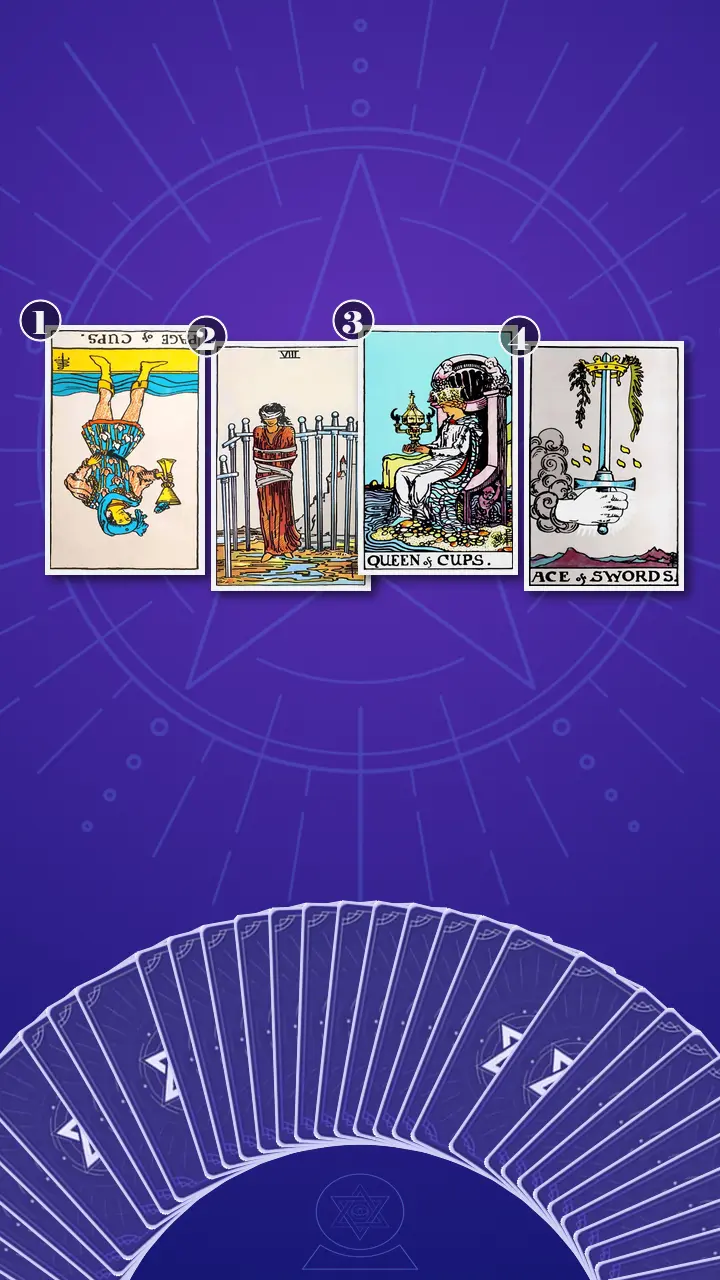
For this question, I chose the Shadow Spread. When people ask me how tarot works in a situation like this, my answer is simple: I am not using the cards to predict whether a friend means well. I am using them to show the structure of a repeating relationship pattern. This spread is small on purpose: surface symptom, hidden root, corrective medicine, embodied next step. The issue here is not choosing between external options. It is understanding why the same emotional script keeps replaying inside supportive conversations.
I told Maya I would read the line from left to right like moving through a tunnel and back into open air. The first card would show the visible pattern: how she opens up carefully and still leaves the exchange feeling more alone. The second would reveal the shadow belief underneath it. The third, our bridge card, would name the inner quality that supports the shift from indirect testing to clear self-attunement. The fourth would turn that insight into something usable in a text, a voice note, or an overlit kitchen conversation at the end of a draining day.
Reading the Left Side of the Line
The Message That Gets Cleaned Up
I turned the first card and said, 'This is the card that shows the visible conversation pattern you are acting out right now.' It was the Page of Cups, reversed.
In modern life, this is the Notes-app draft that never survives copy-paste into iMessage. After a draining hybrid workday, you write the line that actually says 'I feel lonely,' then you smooth it into something lighter, funnier, more manageable. The other person responds to the manageable version, and suddenly you are being helped around the feeling instead of met inside it.
Reversed here, the Page carries blocked water. The emotion is real, immediate, and sincere, but it does not trust itself enough to arrive plain. The fish jumps from the cup, then the inner editor grabs it midair. That is why the exchange feels so strange afterward. You did open up, technically. But you opened up in a way that protected the most tender sentence from being fully seen. Wanting comfort got translated into wanting control.
Maya let out one short laugh, the kind with a bruise under it. 'Wow,' she said. 'That is accurate enough to be rude.'
'Good,' I said gently. 'That means we are standing near the real thing.' She nodded, but her fingers kept circling the rim of the cup as if she could polish the feeling smooth on contact.
The Rule Under the Polite Reply
I turned the second card. 'This one reveals the hidden fear and limiting belief that turns advice into proof of disconnection.' It was the Eight of Swords, upright.
This is what it looks like when a vulnerable conversation becomes an internal performance review. Advice comes in, and instead of hearing only care, you hear eight tabs opening at once: I was too vague. Too much. Too dramatic. Not clear enough. Next time make it cleaner. Or stop sharing. It is like being trapped in edit mode on a Google Doc of your own emotions while the real sentence never ships.
Upright in this position, the card shows air in excess and water under arrest. The blindfold is the old fear that if your feelings are messy, people will not stay. The ropes are loose, but the body believes they are steel. So the moment someone says 'Have you tried...', you stop seeing options. You only see two: explain yourself better, or disappear. You can explain it perfectly and still not feel met.
As I said that, I had one of those small professional flashbacks I get from living half my life behind an espresso bar. If I force too much water through the grounds, hoping for a deeper shot, I do not get more truth. I get bitterness. The fridge hummed from the back kitchen like a held note, and the whole café seemed to lean into the silence with us.
Maya stopped touching her phone. First her breath stalled. Then her eyes went slightly unfocused, as if she were replaying three old chats at once. Finally she exhaled through her nose and said, very softly, 'So when they start fixing it, my body hears: make yourself easier to handle.' I nodded. That was the shadow finally speaking out loud.
When the Queen of Cups Held the Cup Steady
The Medicine of the Closed Cup
Before I turned the third card, the grinder in the front room went silent and the café settled into that rare pocket of evening hush where even porcelain sounds louder than conversation. 'This is the bridge card,' I told her. 'It names the corrective inner quality—the medicine.'
The card was the Queen of Cups, upright.
I asked her to picture the streetcar again: fluorescent light in the window, thumb hovering over the sentence she actually meant, body already bracing before the typing bubble appeared. The hard week was real, yes. But the deeper ache was the habit of making the ache easier to manage before anyone could meet it.
Stop turning your heart into a problem pitch. Hold the cup steady, name the kind of support you want, and let being understood matter as much as being helped.
I let the words sit there with the smell of coffee and rain-damp coats. Then I said, 'You do not need to make your pain easier to solve in order to deserve company inside it.'
In my café, I call this a Stress Flavor Profile. When a shot is over-extracted, we keep forcing water through the grounds because we think more pressure will produce something better. Instead, the cup turns harsh. You have been over-extracting your feelings in the same way—adding context, disclaimers, humor, precision, all the language-heavy brilliance of your UX-writing brain—until the tender note gets buried under what sounds actionable. The Queen of Cups is the opposite of that. She does not spill. She does not pitch. She holds the cup long enough to ask a cleaner question: do I want ideas right now, or do I want company inside this feeling?
Maya went very still. First her fingers froze on the handle. Then her gaze slipped past me toward the fogged front window, like she was seeing every cleaned-up message side by side. When she looked back, her eyes had gone bright. Her jaw loosened. Her shoulders dropped a full inch. Then came the complicated part—a shaky laugh, immediately followed by a flash of resistance. 'But if I say that out loud,' she asked, 'doesn't that mean I've been doing this wrong the whole time?'
'No,' I said. 'It means you learned to ask for comfort in the language of strategy, because strategy felt safer. This is not a verdict. It is a shift.' I invited her back into the card. 'Now, with this new angle, think about last week. Was there a moment when one sentence about the kind of support you wanted would have changed the atmosphere?' She pressed her lips together, nodded once, and whispered, 'The kitchen. I could have said I wanted her to stay with me for a minute.' That was the step I wanted her to feel in her body: not perfection, but movement from guarded loneliness toward awkward honesty, from self-blame toward steadier self-attunement.
One Honest Sentence Under a Gray Sky
I turned the last card. 'This one translates the insight into practice so future conversations do not default to silent disappointment.' It was the Ace of Swords, upright.
In real life, this is one clean sentence that reroutes the whole thread before it becomes the wrong workflow: 'I do not need solutions yet. I mostly need you to hear me out for a minute.' The crowned sword is focused air in balance. After the Eight of Swords filled the room with competing inner voices, this Ace gives you one deliberate line. Not a speech. Not a perfect explanation. One support-format sentence.
This is why the spread moves from eight voices in your head to one honest sentence. The work is not opening up more dramatically. It is naming the support format, not just the problem. Listening, comfort, ideas later. Once that structure is clear, the other person has a real chance to meet the actual need instead of guessing from the polished version.
Maya repeated the sentence under her breath, testing it like a new key in an old lock. The second time she said it, her voice steadied. The room felt brighter in the practical way it does when clouds thin but do not fully clear.
From Eight Voices to One Honest Sentence
When I laid the four cards out together, the story was clean. First, the Page of Cups reversed: the honest feeling appears but gets edited into something manageable. Then the Eight of Swords: the mind turns the conversation into a test of worth, as if belonging depends on perfect clarity. Then the Queen of Cups: the inner container that treats emotion as something worth witnessing before fixing. Finally, the Ace of Swords: one clear sentence that gives the relationship better instructions.
The blind spot was not that Maya lacked emotional intelligence. It was almost the opposite. She had been confusing being articulate with being known. Her story kept getting clearer while her need stayed hidden. The transformation direction was simpler and harder than more analysis: shift from indirectly testing whether people will understand to directly naming whether she wants listening, comfort, or ideas.
'But what if I do not catch it in time?' she asked. 'Some days I have already sent the polished version before I even realize I did it. And honestly, I do not always have five extra minutes.'
'Then we make the practice smaller,' I told her. 'Clarity does not require a perfect mood. It only requires one interruption in the old script.'
- Choose the support word before the storyOn one commute or late-night text this week, pause for 20 seconds before sending. In Notes or in the message box, choose one word first—listening, comfort, or ideas—then build your opening line around it: 'I am feeling hurt, and I mostly need listening tonight.'If that feels too exposed, send the line to yourself first. Awkward usually means unfamiliar, not wrong.
- Use the support-format sentenceWith one trusted friend, roommate, or partner, start the next real conversation with: 'I do not need solutions yet. I mostly need you to hear me out for a minute.' Save it in pinned notes or a text shortcut so emotional you does not have to invent it mid-spiral.Lowest-bar version: 'No fixes yet, please.' If they cannot do that in the moment, that is information, not failure.
- Try the 5-Minute Coffee ResetBefore a vulnerable voice note or text, make coffee or tea, inhale the grind or steam for one minute, then write three lines: 'What I feel,' 'What I need right now,' and 'What can wait until later.' This is my Café Therapy version of self-attunement before self-explanation.Stop after the draft if your throat tightens more. The practice is naming the need, not forcing the conversation.
I also taught her my Cup Temperature Scan. If she was in a kitchen chat or on a call holding a mug, the moment the drink went lukewarm and her jaw clenched was her cue. That was not drama. It was data. Warmth was leaving the conversation, and that was the moment to redirect instead of over-explain.

A Week Later, the Quiet Proof
Four days later, after the breakfast rush, I got a text from Maya. She had used the sentence with her roommate in that same bright kitchen: 'Can this be listening first before we problem-solve?' Her roommate put the dish towel down, turned fully toward her, and said, 'Yeah. Start again.' Maya told me the strangest part was how small the moment looked from the outside. No cinematic breakthrough. Just one cleaner ask, and a completely different kind of company.
She said she slept a full night afterward, but woke with the old thought—was that too needy?—and then laughed because the thought no longer got the final say.
That is what this kind of journey to clarity looks like when it is real. Not becoming perfectly vulnerable. Not never feeling awkward again. Just moving from advice hangover and self-blame toward clearer support requests and steadier trust in connection. The cards did not teach her how to be less needy. They reminded her that needing presence is valid.
If tonight you recognize that familiar moment when your throat tightens and you realize the conversation happened but your heart still was not joined, remember this: being witnessed before being helped is not a luxury need. It is part of how closeness works, and noticing that need already means you are no longer at the very start.
So the next time you reach for your phone—on the TTC, in the kitchen, or under that 12:57 a.m. screen glow—if you did not have to earn care by making your pain easier to solve, what kind of support would you want to name first: listening, comfort, quiet company, or ideas later?
This story is adapted from psychological research, written so that those in a similar struggle can see their own pattern in it — and find their next step clearly.These insights are not a substitute for professional psychological, medical, legal, or financial advice.
Learn more about our Journey to Clarity.
How did this insight land for you?
🫂 This Resonates Deeply
🌀 Living This Story
✨ Now I See Clearly
🌱 Seeing New Possibilities
🧰 Useful Framework
🔮 The Confirmation I Needed
💪 Feeling Empowered
🚀 Ready for My Next Step
Author Profile
 AI
AI“For twenty years, I’ve listened to stories unfold over the warm aroma of coffee. I don’t believe life’s complexities always require grand theories to be solved; often, we just need a safe place to tidy up our reality. I don’t offer high-minded preaching—just grounded, heartfelt insights to help you regain your sense of control amidst the clutter of daily life.”
In this Introspection Tarot Reading :
Core Expertise
Service Features
Also specializes in :
Explore Related Patterns:
Defensive OverexplainingMaya adds context, disclaimers, humor, precision, and all the polished language that makes a feeling sound actionable. The story names the cost directly: the tender note gets buried under a version of the problem that sounds organized enough to fix. Defensive Overexplaining tries to earn safety through clarity. If the feeling is explained perfectly, maybe it will not be misunderstood, judged, or treated as too much. But the extra explanation shifts the other person into problem-solving mode, which is exactly the mode that leaves the emotional need unseen. You can explain the situation beautifully and still feel lonely afterward because explanation is not the same as contact. In this pattern, the mind keeps adding detail to prevent disconnection, while the body is asking for something simpler: stay with me for a minute before trying to solve me.
Emotional Self-CensorshipMaya's thumb hovers over 'I feel lonely tonight,' then deletes it and sends 'work has just been a lot lately lol.' That tiny edit is the behavioral anchor: the feeling is real, but it is softened before it can be witnessed in its plain form. Emotional Self-Censorship works like a protective filter. It reduces the risk of sounding needy, dramatic, or too exposed, but it also removes the signal that would tell the other person what kind of care is actually needed. The friend can only answer the cleaned-up version, so their advice lands beside the wound rather than with it. You feel more alone after opening up when the part of you that needed company never fully entered the room. The pattern is not that you failed at vulnerability; it is that your nervous system tried to keep vulnerability safe by making it less visible.
IntellectualizationMaya can write the perfect Slack message, polish the text, and explain the situation with painful accuracy, but the story keeps showing the same split: the sentence gets smarter while the need gets less reachable. Wanting comfort gets translated into wanting control, and the feeling becomes a problem pitch. Intellectualization protects you by moving emotional risk into analysis, wording, and strategy. That can feel safer than saying the unvarnished thing, especially when your body is already bracing for the typing bubble. The cost is that the person on the other side is invited into a cognitive task instead of an emotional moment. Advice hurts more in this pattern because it doubles down on the defense you were already using. You were trying to think your way into being held, and the response gives you more thinking. The missing piece is not more precision; it is allowing the feeling to be witnessed before it gets converted into a plan.
Performative VulnerabilityMaya technically opens the door by sending a version of what is wrong, but the version that reaches the other person has already been made lighter, cleaner, and easier to solve. The raw sentence, 'I feel lonely tonight,' gets replaced by a safer update about work being a lot lately, so the conversation looks vulnerable while the real need stays partly offstage. That is the mechanism behind Performative Vulnerability: openness becomes curated enough to protect you from exposure, but not clear enough to let someone meet you where you actually are. You can feel as if you did the brave thing, because you did disclose something, while the part of you that needed presence still feels untouched. The advice hangover comes from that mismatch. You reached for connection, but the other person was handed a problem pitch, so they responded with fixes. The loneliness is not proof that you are ungrateful; it is the signal that the visible disclosure and the hidden need were not the same conversation.
Rejection SensitivityThe moment a 'Have you tried...' text lands, Maya's body does not only register advice. It hears a more painful message underneath it: make yourself easier to handle. Later, even after her roommate responds well, the old thought still appears: was that too needy? Rejection Sensitivity turns imperfect attunement into social threat data. A friend may be trying to help, but the nervous system scans the reply for signs that the need was too messy, too vague, too dramatic, or too much. Advice then becomes less about the content of the suggestion and more about whether you are still acceptable while needing care. This pattern makes opening up feel lonelier because the conversation becomes a test of belonging. You are not just hearing a solution; you are checking whether your vulnerability cost you closeness. Naming the support you want interrupts that threat loop by giving the relationship a clearer target than your fear can invent.
Secure VulnerabilityMaya's shift becomes visible in the kitchen when she asks, 'Can this be listening first before we problem-solve?' Her roommate puts the dish towel down, turns fully toward her, and says, 'Yeah. Start again.' The outside moment is small, but the psychological move is precise. Secure Vulnerability is not louder vulnerability or a more dramatic confession. It is the ability to let the real need be named while giving the other person a clear way to respond. Instead of indirectly testing whether someone can guess that you want presence, you state the support format before the conversation gets pulled into fixes. The old thought, was that too needy, still appears, but it no longer gets the final say. That matters because the goal is not to become perfectly unguarded. It is to build enough internal steadiness that you can ask for listening, comfort, quiet company, or ideas later without treating the need itself as a flaw.
Explore Related Struggles:
Expression-Reception GapMaya's thumb hovers over 'I feel lonely tonight,' then the sentence gets replaced with 'work has just been a lot lately lol.' The friend can only answer the version that arrives, so the response lands on the polished work-stress surface while the real request for company stays hidden underneath. That gap is why advice can feel lonelier than silence. You did reach outward, but the part of you that needed to be witnessed was not the part that got received. The struggle is not a lack of gratitude for help; it is the mismatch between what your message expresses and what your nervous system is hoping someone will meet.
Pain-Logic FusionMaya keeps turning loneliness into something that sounds solvable: work stress, context, disclaimers, a cleaner narrative, a more actionable ask. The advice that follows is not random; it is the natural reply to a feeling that has been translated into a problem pitch. You can become brilliant at explaining pain and still not feel accompanied inside it. When comfort is routed through logic, the conversation rewards clarity while bypassing tenderness. The struggle is the lock between needing presence and presenting the need in a format that invites solutions instead.
Self-Editing ExhaustionThe story keeps returning to the same small editing room: the deleted sentence on the TTC, the 'lol,' the extra context, the careful phrasing, the urge to make the need less exposed before anyone sees it. Each revision is trying to keep the exchange safe, but every revision also moves the tender part farther from the person who might meet it. You end up doing emotional labor before the conversation has even begun. By the time advice arrives, you have already spent energy translating, softening, and pre-defending the feeling. The loneliness after opening up is the cost of being seen through an edited version that protected you and erased you at the same time.
Support Access SplitMaya does have access to people: friends who reply, a roommate in the kitchen, a café table where the pattern can be named. The turning point comes only when she asks, 'Can this be listening first before we problem-solve?' and the roommate can finally meet the actual support request. The split is between available support and accessible support. You may be surrounded by channels for contact, yet still feel alone when the format of care stays unnamed. Naming listening, comfort, quiet company, or ideas later gives the relationship a doorway to the real need instead of leaving everyone to guess from the polished version.
Voice-Safety FusionOn the streetcar, Maya's body starts bracing before the reply even arrives. Later, when a Have you tried text comes in, her mind turns the exchange into a review of whether she was too vague, too much, too dramatic, or not clear enough. Your voice becomes tied to safety when being plain feels like it could cost connection. Instead of simply asking for care, you start calculating how clean, calm, and easy to handle the need must sound. The isolation comes from having to protect the sentence at the exact moment you most want it to be held.
Competence-Connection SplitMaya can write the perfect Slack message and shape her feelings with UX-level precision, but the reading names the painful catch: she has been confusing being articulate with being known. Her story gets clearer while her need stays hidden. You can sound composed, insightful, and easy to advise while the part that wants company remains untouched. The struggle lives in the split between performing emotional competence and receiving emotional connection. Advice feels isolating when the conversation recognizes your explanation but never reaches the person underneath it.
Low-Maintenance Worth LockAfter the kitchen sentence works, the old thought still appears the next morning: 'was that too needy?' Earlier, the same rule shows up when Maya's body hears advice as 'make yourself easier to handle,' even though the other person may be trying to help. That rule teaches you to earn care by making your pain smaller, cleaner, and more useful. You ask for comfort in the language of strategy because needing presence feels like too much to place directly in someone else's hands. The loneliness comes from treating your own need as something that must be made low-maintenance before it can be worthy of company.
Explore Related Emotions:
Conditional Belonging FearThe hidden rule is spoken plainly in the story: if your feelings are messy, people will not stay. When advice arrives, Maya's body does not only hear a suggestion; it hears an instruction to become easier to handle. Conditional Belonging Fear lives in that translation. You start treating closeness as something that must be earned through emotional clarity, good timing, and a version of need that does not inconvenience anyone. The fear makes every imperfect disclosure feel like a test of whether you are still allowed to be met.
Invalidation AcheHelpful replies keep arriving in Maya's story, but they keep touching the problem before they touch the person. Someone can mean well, offer a reasonable next step, and still miss the exact place where You were asking to be joined for a minute. Invalidation Ache names the sting that follows that mismatch. The pain is not about hating advice; it is about the moment when care becomes too efficient to feel like company. You can recognize that a reply was kind and still feel the ache of not being seen in the part of you that actually reached out.
Performative LonelinessThe line "I feel lonely tonight" is typed on the 504 King streetcar, then deleted and replaced with "work has just been a lot lately lol." The conversation opens, but it opens through a version of the feeling that has already been cleaned up, softened, and made easier to answer. That is the core of Performative Loneliness here. You are not isolated because no one is present; you are isolated because the part of you that most wants company is still backstage while the more manageable version takes the call. Advice then lands on the edited brief, and the heart feels alone inside a conversation that technically happened.
Self-Audit AnxietyThe "Have you tried" text opens eight tabs in Maya's head: too vague, too much, too dramatic, not clear enough, next time make it cleaner, or stop sharing. The outside conversation becomes an inside review, and the actual need gets buried under revisions. Self-Audit Anxiety is the jitter of watching your own feelings get graded in real time. You are no longer only responding to the friend; you are monitoring whether you expressed the need in a way that was clear enough, small enough, and acceptable enough to keep connection intact.
Cautious VulnerabilityThe practice becomes one sentence, not a dramatic confession: "I do not need solutions yet. I mostly need you to hear me out for a minute." Maya is still exposed, but the exposure now has a handrail. Cautious Vulnerability is the feeling of opening the door only as wide as the moment can hold. You are not abandoning protection; you are giving the other person clearer instructions for how to meet you. The vulnerability is careful, but it is real because the actual need finally gets a place in the room.
Micro-Performance ShameThe original need gets wrapped in a lighter tone, a "lol," extra context, and language polished enough to sound actionable. Even after the kitchen repair works, the old thought still appears the next morning: was that too needy? Micro-Performance Shame names the sting of realizing how much emotional choreography happens before a vulnerable line feels sendable. You are not simply communicating; you are managing the optics of need in tiny edits, hoping the feeling will be received if it looks composed enough.
Cautious Self-TrustThe second time Maya repeats the support-format sentence, her voice steadies. A week later, the old thought still shows up, was that too needy, but it no longer gets the final say. Cautious Self-Trust is not total confidence. It is the quieter shift where You can notice the old self-question and still believe the evidence of what happened: the ask was clear, the connection held, and needing presence did not make the moment collapse.
Emotional HangoverMaya's body reacts before the advice has even fully landed: jaw locked, throat narrowed, chest hollow, hands circling a cup she has stopped drinking. The exchange does not end when the text arrives; it keeps echoing through her body afterward. Emotional Hangover fits because the vulnerable reach costs more than it gives back. You tried to connect, but the conversation leaves an aftertaste of effort, exposure, and missing warmth. The body remembers that the moment was technically supportive while still registering that something essential did not arrive.
Reciprocal WarmthFour days later, Maya uses the sentence in the bright kitchen, and her roommate puts the dish towel down, turns fully toward her, and says, "Yeah. Start again." The repair is small from the outside, but the body can tell the difference between partial attention and real presence. Reciprocal Warmth arrives as behavior: pausing the task, facing the person, letting listening come before problem-solving. You are no longer carrying the whole emotional translation alone; the other person meets the clearer ask with a clearer kind of company.
Explore Related Contexts:
Low-Maintenance Friendship PressureMaya does not send the raw sentence. She softens it into 'work has just been a lot lately lol,' using humor and understatement to make the ask look easier to receive. The message becomes socially lightweight, but the need underneath it is not lightweight at all. That is where low-maintenance friendship pressure enters the story. You are trying to reach for support without appearing like too much work, so the bid for care gets compressed into a version that asks less than you actually need. The friend may respond appropriately to the surface-level message, but the exchange still leaves you alone because the deeper request was never given enough room to arrive. This context matters because it shifts the focus away from blaming your neediness or blaming the other person’s intentions. The real pressure is the unspoken rule that closeness should stay convenient, brief, and easy to handle. Seeing that rule gives you the option to name a more accurate ask instead of making your pain smaller before anyone has a chance to meet it.
Practicality Over IntimacyMaya has the language skills to make a perfect Slack message, but the moment she needs comfort, the feeling gets converted into something lighter, cleaner, and more actionable. The story keeps showing the same exchange: the tender sentence is turned into a manageable problem, and the other person responds with management rather than presence. That is the structure of practicality over intimacy. You are not asking for a project plan, but the social script around you treats distress as a ticket to be triaged, optimized, or fixed. The more polished the problem sounds, the more likely the other person is to stay in solution mode, which can make a technically helpful reply feel strangely lonely. The pressure comes from a culture of usefulness where being clear, reasonable, and low-friction can be mistaken for being fully known. In this context, reclaiming agency means letting closeness have its own format: listening first, comfort first, quiet company first, and ideas later when they are actually wanted.
Support Access BarrierMaya is not shown as completely unsupported. There are friends who reply, a roommate who can turn toward her, and a conversation where help is technically available. The problem is that the available support does not initially reach the part of the situation that needs company. That makes the core external stage a support access barrier. You are close enough to ask, but the route into real support is blocked by edited disclosure, advice-first replies, and unclear instructions about what kind of care is needed. The resource exists, but it is misrouted through a format that treats the problem as more important than the person inside it. This distinction is important because it prevents the story from collapsing into 'no one cares.' The sharper reading is that care has to be accessed through a clearer channel. Once the support request becomes specific, listening first before problem-solving, the same social environment can behave differently.
Unspoken Expectations GapMaya wants to be heard, but the message she sends sounds like a work-stress update that can be answered with suggestions. The other person is being asked to guess the support format from a cleaned-up signal, so advice enters the space where listening was wanted. This is an unspoken expectations gap because both sides are inside the same conversation but operating with different instructions. You may expect comfort, quiet company, or emotional witnessing, while the other person hears a solvable issue and responds accordingly. The loneliness after opening up comes from that mismatch: contact happened, but the requested kind of contact was never made explicit. The later kitchen moment shows why this gap is workable. When Maya asks, 'Can this be listening first before we problem-solve?' the other person finally receives a usable map. The agency here is not to explain your whole inner world perfectly; it is to name the kind of support the conversation is meant to hold.