Finding Clarity in the 12:47 a.m. Draft You Never Send
If you can draft a perfect help-request text three different ways but still can’t press send, because asking feels like incompetence.
Alex (name changed for privacy) sat across from me with their phone face-down on my small table, as if it might light up and accuse them. They were 28, Toronto-tired in that specific way that isn’t about sleep as much as it’s about carrying too much in public and feeling stranded in private.
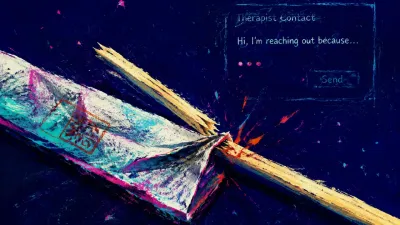
They told me about Tuesday at 12:47 a.m.—kitchen table, condo silence, laptop open, Slack draft half-written. The blue screen glow bounced off a cold mug, and the laptop fan whined like it was stressed too. They’d typed: “Hey—quick question on the reporting logic…” then reread it, removed an emoji, added “Sorry to bother you”, deleted that, added “no rush”, deleted the whole thing. Over and over.
“My throat tightens when I imagine asking,” they said, fingers rubbing the pad of their thumb like they were trying to sand down a feeling. “Then my chest does this… clamp thing. And I get this buzzy urge to just handle it immediately. Like if I move fast enough, I won’t have to need anyone.”
The shame wasn’t an abstract emotion in the room—it had a shape. It was a door locking from the inside, right at the base of their throat, every time they reached for the word help.
“Not pressing send is still a decision—and your body is making it for you,” I said gently, watching Alex’s shoulders lift as if bracing for impact. “We can work with that. Not by forcing a big personality change, but by understanding the pattern—and then giving you a next step that feels safe enough to actually do.”
They exhaled like they’d been holding air in their ribcage for days. “My mom left this old voicemail,” they added, quieter. “Just… ‘handle it.’ It’s like I heard it and suddenly I couldn’t ask anyone for anything. Even stuff that’s normal.”
“Okay,” I said, keeping my voice steady. “Let’s try to map the moment your adult self wants support… and the part of you that thinks support is a grade.”

Choosing the Compass: The Four-Layer Insight Ladder Tarot Spread
I started the session the way I always do—not as a performance, but as a transition. I invited Alex to place one hand on their chest for ten seconds and notice the sensation, not the story. Then I shuffled slowly, the soft slap of cardstock grounding the room in something physical and present.
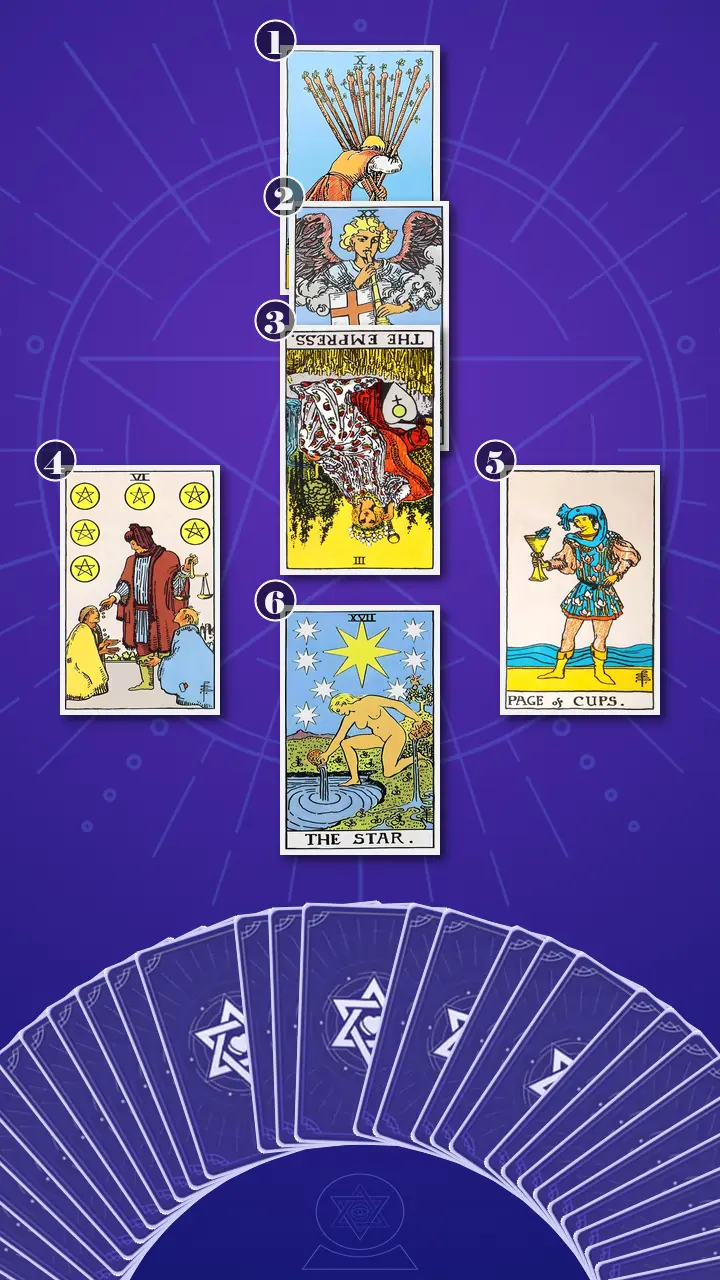
“Today, I’m going to use a spread I call the Four-Layer Insight Ladder · Context Edition,” I told them. “It’s a six-card tarot spread for inner patterns—especially the kind that show up as hyper-independence, help-avoidance, and that ‘I’ll handle it’ reflex.”
For anyone reading this and wondering how tarot works when the problem isn’t ‘What will happen?’ but ‘Why do I keep doing this?’—this spread is designed to diagnose and then translate insight into practical next steps. Positions 1–3 move from your visible behavior to the trigger that flips the switch, down into the root belief that keeps the pattern in place. Positions 4–6 climb back up with a resource, a small practice, and an integration outcome. It’s like walking down into a basement to find the old wiring—then coming back upstairs with a repaired circuit.
“We’ll look at: what the pattern looks like day-to-day,” I said, tapping the top card spot, “then the trigger—the voicemail effect,” tapping the second, “then the deeper receiving-block underneath. And once we know what we’re working with, we’ll build a fair, workable way to ask.”
Reading the Map: The Descent Into the Old Wiring
Alex cut the deck with careful hands. The room was quiet enough that I could hear the streetcar outside, and underneath it, that familiar Toronto winter hush—like the city itself was conserving energy.
Position 1: When “I’ll Handle It” Becomes Your Whole Personality
“Now we turn over the card for what the ‘I’ll handle it’ pattern looks like in your current day-to-day behavior,” I said.
Ten of Wands, upright.
It landed like a screenshot of Alex’s week: carrying a bundle so big it blocks your view, leaning forward, pushing through anyway.
“This is that late-night scene,” I told them, using the card meanings in context rather than abstract keywords. “It’s late, you’re still at the kitchen table finishing something that could’ve been delegated. You’ve got fourteen browser tabs open, three half-written messages asking for clarification, and you keep telling yourself, ‘I’ll just handle it.’ You’re not choosing the hard way because it’s efficient—you’re choosing it because it protects you from the feeling of being judged.”
The Ten of Wands is excess fire—effort and grit pushed past usefulness into over-functioning. In this energy, competence gets measured by endurance. The heavier the load, the safer you feel. Until you don’t.
Alex let out a short laugh that didn’t reach their eyes. “That’s… yeah. That’s so accurate it’s almost rude.”
I nodded. “If you always choose the heavier load, eventually it stops looking like strength.”
Their gaze dropped to the card. Their shoulders stayed lifted, but their jaw softened by a millimeter—as if something in them recognized the pattern without wanting to admit it.
Position 2: The Voicemail as a Nervous-System Push Notification
“Now we turn over the card for the trigger moment that reactivates the old message and pulls you into the familiar script,” I said.
Judgement, upright.
Judgement is the card of a call being heard—an awakening point. For Alex, it was almost literal.
“This is the voicemail effect,” I said. “You find the old message and the tone hits you like a push notification straight to your nervous system. Suddenly your adult life is running a childhood script: ‘Needing help is embarrassing. Don’t bother anyone.’ Nothing external changed in your current situation—just the meaning your body attached to asking.”
I watched their fingers flex as if they could still feel the phone warm in their hand. “It’s like a film sound cue,” I added. “The voicemail plays, and the adult room blurs for half a second. You’re in your kid-body posture before you even decide to be.”
Judgement here isn’t punishment; it’s consciousness. It’s the moment the autopilot becomes a choice-point. That energy is balance—a spotlight. A wake-up card that says: you can respond differently now that you can see it.
Alex swallowed. Their throat moved like it was trying to push something down. “I hate how fast it happens,” they said. “It’s embarrassing. I’m sitting there with a lease and a job and then suddenly I’m… twelve.”
“Let’s name the rule,” I said, calm and direct. “One sentence.”
They hesitated, then said it like reading a verdict aloud: “Needing help equals failing.”
“Good,” I said. “Now we can test whether that rule belongs to adult-you.”
Position 3: The Receiving Gate That’s Been Turned Down
“Now we turn over the card for the deep block around receiving—what part of you learned that needing support is unsafe or unacceptable,” I said.
The Empress, reversed.
In my work as a perfumer, I learned that the brain doesn’t store memory like a neat file folder—it stores it like a scent trail. One whiff, one tone, and suddenly you’re back inside an old room. With The Empress reversed, that old room often contains an unspoken lesson: care is conditional, and being ‘low-maintenance’ is how you stay lovable.
“Here’s the heartbreak under the competence,” I told them. “Someone offers something genuinely reasonable—feedback, a ride, dinner, a quick call—and you decline automatically. Not because you don’t want it, but because receiving sets off an internal alarm: ‘If I accept, I’m a burden.’ Then you overcompensate—work more, explain more, pay back fast—so you don’t have to sit in the vulnerability of being cared for.”
As I spoke, I let the meaning land in a micro-scene, because this is where people recognize themselves:
“A friend texts: ‘Want me to bring you something? I’m near your place.’ Your fingers hover. Your stomach drops—like accepting would create a debt you can’t repay. You think: I want to say yes → If I say yes, I’ll owe → If I owe, I’m trapped → So I’ll say no and call it independence.”
“You refuse the offer, then grieve the support you didn’t let in,” I added softly.
Alex went very still—micro-freeze first. Their eyes unfocused—memory replay second. Then a long, shaky exhale—release third.
“I do that exact reflex-no thing,” they said, voice low. “And then I feel awful after.”
“That’s The Empress reversed,” I said. “Not a lack of support in your life—more like a ‘receive help’ setting toggled off inside you.”
As part of my Family Energy Diagnosis, I asked one question I often ask when family patterns are activated: “When you think of your mom’s ‘handle it’ tone—what does it smell like?”
Alex blinked, thrown off in a good way. “Laundry detergent,” they said immediately. “Like… sharp. Clean. That ‘get it done’ smell.”
I nodded. “That makes sense. Scent and sound can team up. Your body hears the tone, and the whole ‘handle it’ atmosphere returns. Not because you’re broken—because your nervous system is loyal to an old survival rule.”
When the Scales Spoke: Six of Pentacles and Dignified Interdependence
“Now we turn over the card for the healthiest version of support available to you right now and what fair reciprocity could look like,” I said.
As I lifted the card, the room felt different—like the air got quieter on purpose.
Six of Pentacles, upright.
On the card, the scales are right there—clear, simple, not emotional. This is earth energy at its best: structured support. Practical. Dignified. No mind games.
I looked at Alex and kept my voice steady, almost like I was offering them a railing to hold. “This card is saying: help can be a fair exchange with clear boundaries, not a debt or a verdict.”
They nodded, but the nod was tight—as if agreement was fighting with an internal alarm.
Setup (30–50 words): It’s 12:47 a.m., the message is drafted, and your chest tightens like you’re about to be exposed—so you delete it and carry the whole thing alone again. In that moment, your brain treats a normal request like a trial you have to win.
Delivery:
Not ‘I have to carry it all to deserve respect’; choose reciprocal support—let the scales of the Six of Pentacles balance giving and receiving.
I let the sentence hang there for a beat.
Reinforcement (100–200 words): Alex’s face changed in layers. First: a blink-stall, like their eyes needed a second to focus. Then their pupils widened slightly, and the corners of their mouth pulled in—not a smile, more like the edge of a protest. Their shoulders stayed high, but their hands opened on their lap, fingers uncurling as if they’d been gripping a handle in their mind. Then the surprise: a flash of anger, quick and honest.
“But if that’s true,” they said, voice sharper, “doesn’t it mean I’ve been doing it wrong for years?”
“It means you’ve been doing what worked,” I replied. “Your system learned: ‘If I don’t need anything, I can’t be dismissed.’ That’s not wrong. It’s protective. But you’re allowed to renegotiate the contract now.”
“Help isn’t a verdict. It’s a resource,” I added, and I saw their throat bob as if the words hit the exact locked door.
“Do a five-minute scales check now,” I said, sliding a notepad toward them. “Pick one task you’re carrying. Choose one person. Write one bounded ask with a time limit—like, ‘Can you sanity-check this for 10 minutes tomorrow before 4?’ If your body spikes, you can pause, breathe, and either send it as-is or downgrade the ask. Your consent matters at every step.”
I leaned in slightly. “Now, using this new lens—can you think of one moment last week where this would have changed how you felt?”
Alex stared at the notepad, then whispered, “Wednesday. My coworker offered to take first pass at a deck. I laughed and said, ‘Oh no, you’re good—I’ve got it.’ And then I worked through dinner.” Their shoulders dropped a fraction, like something heavy finally got set down—not gone, just down.
“That,” I said, “is your bridge from ‘I’m on my own’ toward ‘I can belong without performing invincibility.’”
The Smallest Honest Message: From the Page to the Star
Position 5: The Two-Sentence Ask That Doesn’t Abandon You
“Now we turn over the card for a small, specific practice for asking—how to make a request without over-explaining or self-abandoning,” I said.
Page of Cups, upright.
“This is the tender messenger,” I told them. “You send the simplest possible message to someone safe: ‘I’m overwhelmed. Can you talk for 15 minutes?’ No paragraph. No apology tour. Then you sit through the discomfort of waiting—letting the answer be information, not a referendum on your belonging.”
The Page of Cups is water energy in balance: emotional honesty without drowning in it. And it always comes with the fish—the unexpected emotion that pops up when you try to be real. Awkwardness. Embarrassment. Softness.
Alex made a face. “I hate the wait.”
“Of course you do,” I said. “Your old system prefers control. But this practice is about building self-trust through a bounded request—and tolerating the tiny discomfort of receiving.”
I tapped the notepad. “Clarity beats a perfect tone. Two sentences is enough.”
Position 6: A Recovery Plan, Not a Hero Arc
“Now we turn over the card for how integration feels when you begin receiving support without losing your self-respect,” I said.
The Star, upright.
“This is what it looks like when your nervous system starts to believe you don’t have to earn rest,” I said. “You start living like support is normal: you accept small help, you rest before crisis, you stop performing competence as proof of worth. The shift is subtle but real—less buzzing urgency, more steady calm.”
The Star is balance returning through repetition. Two streams of water: one for the practical world (land), one for emotional replenishment (pool). In modern terms: two tabs open on purpose—practical support and emotional soothing. Both count.
Alex’s breath slowed as they looked at the card. “That sounds… nice,” they said, and their voice carried a small grief with the hope, like realizing how long they’d been going without something basic.
From Insight to Action: The Scales Check, Plus a Scent You Can Borrow
I took a moment to thread the whole spread into one coherent story, so it wouldn’t just be six separate insights.
“Here’s the arc I’m seeing,” I said. “The Ten of Wands shows how you’ve been proving your worth through carrying too much. Judgement shows the trigger—the old voicemail tone—that boots up ‘kid mode’ and makes a normal ask feel dangerous. The Empress reversed shows the deeper block: your inner permission to receive is muted, so offers of care get filtered out. Then the Six of Pentacles gives you a repair: reciprocity with scope and time—support as fair exchange. The Page of Cups gives you the practice: one honest sentence. And The Star shows the outcome: a recovery plan instead of a hero arc.”
“The cognitive blind spot,” I continued, “is that you’ve been treating receiving like it automatically creates debt—or risk of dismissal. But your transformation direction is different: shifting from proving competence by doing it alone to building self-trust through small, specific requests and tolerating the discomfort of receiving.”
Alex nodded, then immediately frowned. “Okay, but… I don’t even have five minutes for experiments. I’m behind at work, and my calendar is chaos.”
That was the real-world obstacle, right on time.
“Perfect,” I said, not sarcastic—genuinely. “That’s exactly when the old system screams, ‘Handle it alone.’ So we’re going to make the action so small your nervous system can’t argue with it.”
As my Dialogue atmosphere enhancement with calming scents strategy, I pulled out a fragrance blotter I’d prepared—soft neroli with a clean, grounding cedar note. Nothing dramatic. Just enough to signal safety. “Before you send the ask,” I said, “smell this once. It’s a physical cue to your body: ‘I’m here. I’m an adult. This is not a courtroom.’”
Then I gave them actionable advice—clear next steps, not a lecture:
- The 10-Minute Scales Check AskToday, choose one task you’re carrying (a deck slide, a logic check, a link you can’t find). Choose one person. Send: “Could you sanity-check this for 10 minutes before 4 p.m.?”Expect the throat/chest spike. If you start over-explaining, delete everything except the sentence that contains the ask. If 10 minutes feels too big, make it 3.
- The Two-Sentence Template (No Backstory)Copy/paste: “I’m stuck on X. Could you help me with Y?” Then stop typing. No apology tour, no evidence file, no ‘I tried everything.’Clarity beats a perfect tone. If you feel yourself soft-launching the need (hinting), replace the hint with the direct question.
- Receive-Without-Repaying (One-Line Reply)If they say yes, reply only: “Thank you. That helps a lot.” No immediate repayment plan, no over-justifying, no ‘I’ll owe you.’If shame says “now you’re a burden,” label it: “This is my old rule talking.” Let the help land for 30 seconds before you do anything else.
“And because that voicemail is a scent-and-sound trigger,” I added, bringing in my Intergenerational Communication Decoding, “I want you to build a counter-memory that doesn’t require you to fix everything. After you receive even a small help moment, choose one scent you like—citrus hand cream, a soap, a tiny sample—and use it only on ‘receiving days.’ That’s memory anchoring. It’s a way of teaching your body: ‘Support happened. I stayed myself.’”
Alex looked skeptical, then curious. “Like… making ‘help’ smell different than detergent and panic?”
“Exactly,” I said. “We’re not erasing your mom’s voice. We’re updating what your body believes it means.”
A Week Later: Ownership, Not Certainty
A week later, Alex texted me a screenshot. One Slack message—two sentences. No paragraph. No apology. Just: “I’m stuck on the reporting logic for the variance column. Could you sanity-check it for 10 minutes before 3?”
Under it, their coworker’s reply: “Yep—send it over.”
Alex’s caption was simple: “My chest still did the thing. But I sent it anyway. Then I sat by the window for ten minutes instead of opening twelve tabs.”
It wasn’t a dramatic reinvention. It was quieter than that—more like a jaw unclenching without fanfare. Clear scope. A fair ask. A moment of waiting. And then, proof that receiving didn’t make them disappear.
That’s the real Journey to Clarity I see in the cards, over and over: not certainty, but ownership. Not ‘I’ll never feel shame again,’ but ‘I can feel the door lock—and still reach for the handle.’
We’ve all had that moment where you want to reach out, but your chest tightens like a door locking—because a part of you still believes being turned away would mean you never really belonged.
If you didn’t have to earn support by suffering first, what’s one small, time-bounded ask you’d be curious to try—just to see how it feels to let it land?

Every reading at AceTarot is a journey to connect with inner wisdom and empower the path ahead. This reading shared here is a psychological mirror, not a private record—crafted to reflect universal emotional loops and help restore personal clarity. Please note that these insights do not replace professional psychological, medical, legal, or financial advice, and should not serve as the sole basis for major life decisions.
Learn more about our Journey to Clarity.
How did this insight land for you?
🫂 This Resonates Deeply
🌀 Living This Story
✨ Now I See Clearly
🌱 Seeing New Possibilities
🧰 Useful Framework
🔮 The Confirmation I Needed
💪 Feeling Empowered
🚀 Ready for My Next Step
Author Profile
AI Luca Moreau
835 readings | 512 reviews
“As a perfumer for fifteen years, I’ve learned to perceive human boundaries through the delicate metaphor of scent. Relationships need the right amount of space to breathe, and I've seen too many kind souls exhaust themselves trying to please everyone. I’m here with warmth and understanding—not to teach you to be guarded, but to help you gently clear the air and rediscover the comforting, safe boundaries that are rightfully yours.”
In this Family Tarot Reading :
Core Expertise
- Enmeshment & Permeability Diagnosis: Using scent diffusion as a metaphor to identify suffocating families where personal boundaries are virtually non-existent.
- Atmospheric Toxicity Auditing: Detecting passive-aggressive tension and unstated resentment quietly polluting the family emotional climate.
Service Features
- The Quarantine Zone Protocol: Establishing an impenetrable psychological 'airlock' to prevent family toxicity from bleeding into your independent adult life.
Also specializes in :
Explore Related Patterns:
Hyper-IndependenceThe 12:47 a.m. Slack draft gets edited, qualified, erased, and replaced by the urge to handle the reporting logic alone. Your body treats the simple act of asking as exposure, so competence gets protected through isolation rather than through clear collaboration. That is the mechanics of a self-reliance defense: needing support is coded as a threat to self-respect, and speed becomes the way to outrun vulnerability. The old voicemail gives the defense a voice: handle it before anyone can decide you are too much. The pattern is not laziness or a lack of capability. It is a trained attempt to stay safe by not needing anyone, which is why even normal, bounded help can feel like a risk instead of a resource.
Transactional IntimacyThe friend's imagined offer to bring something over and the coworker's real offer to take first pass both get filtered through the same equation: if you accept, you owe; if you owe, you are trapped. The support is not evaluated as care first. It is evaluated as a contract. Transactional Intimacy forms when receiving becomes mentally linked with debt, obligation, or loss of autonomy. You can want the support and still refuse it because your nervous system is already calculating the repayment plan. That is why the story keeps returning to bounded, time-limited asks. Clear scope helps separate healthy reciprocity from the old fear that care always comes with hidden terms.
Defensive OverfunctioningAlex keeps carrying tasks that could have been shared: the late-night reporting logic, the deck a coworker offered to start, the dinner that gets worked through after saying, "I've got it." The visible behavior is not just being responsible; it is using extra effort as a shield against the feeling of being evaluated. Defensive Overfunctioning turns endurance into proof. If you can carry enough, solve enough, and stay useful enough, then no one gets the chance to see you need support. The cost is that your workload becomes an emotional regulation system, not just a list of tasks. This is why the exhaustion does not automatically lead to asking for help. The heavier load can feel safer than the lighter one, because the lighter one would require someone else to witness the need.
Rejection SensitivityAlex does not only fear asking; they fear what the answer might mean. The wait after a message feels loaded, as if a delayed reply or a no could become proof that they do not belong or should not have needed anything in the first place. Rejection Sensitivity turns uncertain social feedback into a high-stakes identity threat. Before anyone has judged, dismissed, or refused the request, your system is already bracing for the emotional meaning of being turned away. That makes preemptive refusal feel protective. Saying no to help, deleting the draft, or over-softening the ask prevents an external answer, but it also blocks the chance to learn that a response can be ordinary information rather than a verdict.
Shame BindingThe locked-door feeling at Alex's throat appears right when the word help becomes possible. The body interrupts before the message can become a request, turning a normal workplace question into a moment of exposure. Shame Binding works by fusing an action with an identity judgment. Asking does not simply mean "I need clarification"; it becomes "I am failing," "I am bothering someone," or "I am not competent enough." Once that fusion happens, deleting the message feels like relief even when it keeps you stuck. The important audit point is that shame is acting like a gatekeeper, not a truth-teller. You can feel the clamp and still treat it as an old alarm rather than evidence that the ask is unsafe.
Family Role RegressionThe old "handle it" voicemail does not change the reporting logic, the coworker's availability, or the basic reasonableness of the ask. It changes the state Alex is in. The adult room blurs, and the request starts being processed through the younger self who learned that needing help could be embarrassing or unsafe. Family Role Regression happens when an old relational role takes over a present-day decision. You may have a lease, a job, and adult evidence that support is normal, but the body is responding to the family rule before your adult reasoning catches up. That is why naming the rule matters. "Needing help equals failing" becomes less powerful once it is recognized as inherited conditioning rather than current reality.
Secure VulnerabilityThe screenshot a week later shows one Slack message with two sentences, no apology, and no evidence file. Alex's chest still reacts, but the request gets sent anyway, and the reply becomes information instead of a referendum. Secure Vulnerability is not dramatic emotional exposure. It is a bounded ask made while staying connected to yourself: one task, one person, one time window, and enough self-respect to let the answer arrive. This is the repair pattern beneath the practical exercise. You do not have to wait until asking feels effortless; you build trust by making the ask small enough that your adult self can stay in the room while support lands.
Explore Related Struggles:
Burden Identity FusionWhen someone offers feedback, a ride, dinner, or a quick call, Alex does not just evaluate the offer. Their mind starts converting it into debt, burdenhood, and the possibility of being trapped by what they accepted. You can hear the sequence tighten in real time: I want to say yes, if I say yes I will owe, if I owe I am trapped, so I will say no and call it independence. The offer may be small, but the identity cost feels massive. Burden Identity Fusion names the point where receiving stops being a practical exchange and starts feeling like evidence against the self. Help becomes less about what someone is willing to give and more about what accepting it seems to prove about you.
Low-Maintenance Worth LockThe old voicemail carries a short command: handle it. After Alex hears it, a normal adult ask starts to feel like breaking an old contract where having fewer needs made them safer to keep around. You are not only asking for ten minutes of help. You are pushing against a rule that says being easy, quiet, and low-maintenance is how you avoid being dismissed. Low-Maintenance Worth Lock describes that bargain. The cost is that your needs have to shrink before you feel acceptable, so even reasonable support can feel like too much to want, too much to ask for, or too much to receive without paying for it emotionally.
Nurture-Competence SplitAlex says the rule out loud: needing help equals failing. That one sentence turns a normal workplace clarification into a grade, and it makes a quick Slack message feel like proof that competence has cracked. You are not simply deciding whether to ask a coworker. You are trying to protect an image of capability while also needing the kind of support that would actually make the work cleaner, lighter, and more human. Nurture-Competence Split captures the collision between being helped and being seen as capable. When support is coded as incompetence, every request carries double weight: the practical problem you need help with, and the identity verdict you are trying to avoid.
Support Access SplitAt 12:47 a.m., Alex has the Slack message almost ready, then rewrites it, edits the apology, removes the softening language, and deletes the whole thing. The support is close enough to reach, but the final inch between drafting and sending becomes the place where the body pulls the emergency brake. You are watching a split between access and permission. The people, channels, and bounded asks exist, yet the moment of reaching turns into a test of whether needing anything will cost you safety, respect, or belonging. Support Access Split names that jammed threshold. The struggle is not that help is impossible; it is that the route toward help has been wired to feel like exposure, so you can know exactly what you need and still feel your hand refuse to move.
Memory-Loyalty BindAlex finds the old voicemail, and the current room changes before the facts do. The work problem is still just reporting logic, but the tone of that message pulls the body back into an older posture where needing help already feels like a verdict. You are dealing with a memory that does more than replay. It organizes the present. Before a coworker can answer, before the Slack message can be sent, the old rule has already told your body what the request means. Memory-Loyalty Bind names that attachment to an outdated survival map. The struggle is not that the memory exists; it is that part of you still treats loyalty to that old instruction as the price of staying safe, even when adult-you has more options now.
Explore Related Emotions:
Adult Child PanicAlex is sitting in an adult life with a lease, a job, and a laptop open, but the voicemail tone makes the room blur for half a second. The body drops into an older posture before the present-day self can remind it what year it is. Adult Child Panic fits because the reaction is not proportional to the Slack question; it belongs to a younger internal setting being pulled into the current room. You are watching a grown-up task get hijacked by an old rule that still knows exactly where the body lives.
Conditional Belonging FearThe story's deepest pressure appears when being turned away would seem to mean Alex never really belonged. A small ask becomes loaded because the answer is not heard as information; it is heard as a possible test of whether there is still a place for them. Conditional Belonging Fear is the feeling underneath the polished competence. You can function, produce, and carry the load, but the moment you need something back, belonging starts to feel conditional on staying effortless.
Dependency ShameAlex's throat tightens around the word help, and the chest clamp arrives before the request can become a sentence. That body reaction turns a practical need into a private accusation, as if wanting backup proves that competence has already failed. Dependency Shame fits because the story keeps linking support with exposure, burden, and a loss of respect. You are not seeing a lack of skill here; you are seeing a need that has been taught to arrive with humiliation attached.
Inner Child AcheThe detergent smell and the handle it tone bring back more than a memory; they return Alex to a younger posture inside the present moment. The adult self can explain the pattern, but another part still remembers that needing support was not always met with softness. Inner Child Ache belongs here because the pain is not only about one unsent message. It is the recognition that a younger version of you learned to survive by needing less, and that version is still flinching at ordinary care.
Low-Maintenance ShameThe old voicemail carries more than words; it brings back a whole atmosphere where handle it sounds like the price of being acceptable. In that atmosphere, needing less is not a preference, it is a strategy for staying easy to keep around. Low-Maintenance Shame fits the hidden bargain underneath Alex's competence. You learn to make your needs smaller, then feel exposed when a normal request asks those needs to take up even a little room.
Message DreadThe 12:47 a.m. Slack draft keeps changing shape, first a quick question, then an apology, then a softened no-rush version, then nothing. The message itself becomes the emotional pressure point, because pressing send would move the need out of Alex's private control and into another person's view. You can feel Message Dread in the way the request is technically simple but physically charged. The fear is not about Slack as a tool; it is about the tiny public moment where a normal ask could expose a need Alex has been trained to hide.
Receptivity GuiltA friend offers to bring something over, or a coworker offers to take first pass at a deck, and Alex's fingers hover near yes before the inner math starts. Accepting help quickly turns into owing, owing turns into being trapped, and no gets relabeled as independence. Receptivity Guilt names the aftertaste of that reflex. You want the support, but letting it in feels like creating a debt your body does not trust you can safely carry.
Verdict DreadWhen Alex names the rule as needing help equals failing, the request stops being a request and becomes a trial. Even the body enters a courtroom posture, with lifted shoulders, a tight throat, and the sense that one ordinary reply could grade their worth. Verdict Dread captures that specific pressure. You are not just afraid of an answer; you are bracing for the meaning your body might attach to the answer, as if a coworker's response could decide whether you are capable enough to belong.
Cautious ReceptivityThe repair begins with one task, one person, and a ten-minute ask before 3 p.m. Nothing about it demands instant ease; the point is that the request becomes bounded enough for Alex to try without disappearing into apology or over-explanation. Cautious Receptivity names the first survivable opening toward support. You let help come close in a measured way, with enough structure that receiving does not have to feel like surrendering control.
Reciprocal WarmthThe coworker's reply is simple: yes, send it over. That clean response matters because it gives Alex a lived counterexample to the old belief that support must come with debt, dismissal, or a hidden cost. Reciprocal Warmth fits the healthier shape of help in this story. You are allowed to let support be practical, bounded, and human, without turning every act of care into a ledger you have to repay immediately.
Grounded AgencyA week later, Alex's chest still does the thing, but the message gets sent anyway. The change is not dramatic certainty; it is a concrete choice made while the old body signal is still present. Grounded Agency fits because the story ends with ownership rather than a personality overhaul. You do not have to wait until the lock vanishes from your throat; you can feel the lock and still reach for the handle.
Survival Mode FatigueThe week is full of tabs, unfinished asks, dinner skipped for work, and the constant reflex to just handle it. That pace creates a private exhaustion where asking for help feels like one more exposure risk, so the load stays inside the same overworked system. Survival Mode Fatigue fits the climate around the main question. You keep moving because stopping would reveal how much has been carried alone, and the body starts confusing endurance with safety.
Explore Related Contexts:
Adulting Performance PressureAlex names the contradiction directly: they are sitting there with a lease and a job, yet a normal request can make them feel pulled into an old role where needing help means failing. The adult markers are real, but they come with a performance demand: prove you can carry it without bothering anyone. Adulting Performance Pressure captures the social stage around the question. In a city-work life built around competence, rent, calendars, Slack, and constant self-management, asking for help can start to look like failing the role of "capable adult." You are being squeezed between a realistic need for support and a cultural script that rewards looking endlessly self-contained. This is why the question is bigger than one voicemail. The voicemail supplies the old command, but adult life supplies the arena where that command keeps getting tested: work deadlines, coworker offers, private late nights, and the pressure to remain impressive while carrying too much.
Family Script PressureThe old voicemail is only two words: "handle it." After finding it, Alex says they suddenly cannot ask anyone for anything, even ordinary things. That detail turns the voicemail from a private memory into a social instruction that still organizes adult behavior. Family Script Pressure shows up when a family-coded rule keeps operating long after the original setting has passed. In this case, the rule is brutally simple: needing help equals failing. You are not just deciding whether to send a Slack message; you are moving through a family script that treats self-sufficiency as the entry fee for being taken seriously. The pressure becomes visible because Alex has an adult life with a lease, a job, coworkers, and real support options, yet the old command still overrides the present. Naming the script gives you a boundary around it: this is a learned rule about how support is supposed to work, not a universal law about what competence requires.
Support Access BarrierAlex types the reporting logic question at 12:47 a.m., edits the apology and the "no rush," then deletes the entire Slack draft. A coworker later offers to take first pass at a deck, and the answer is still refusal, followed by working through dinner. The problem is not that support is absent; the access point closes at the exact moment it becomes usable. That creates a Support Access Barrier: help exists in the environment, but the social act of reaching for it has been coded as exposure, incompetence, or debt. You are not dealing with a lack of resources as much as a blocked route to resources, where a normal work question has to pass through an old competence test before it can become a message. The story gives this barrier a practical shape: Slack drafts, bounded coworker offers, missed delegation, and late-night solo problem solving. Seeing the barrier clearly matters because it shifts the focus from "Why am I weak for needing help?" to "What rule is blocking a resource that is already within reach?"