Half Gone, Still Held
Understand the half-exit loop, related tarot cards, and Tarot Reading Insights from people navigating unfinished departure.

Partial Exit Lock
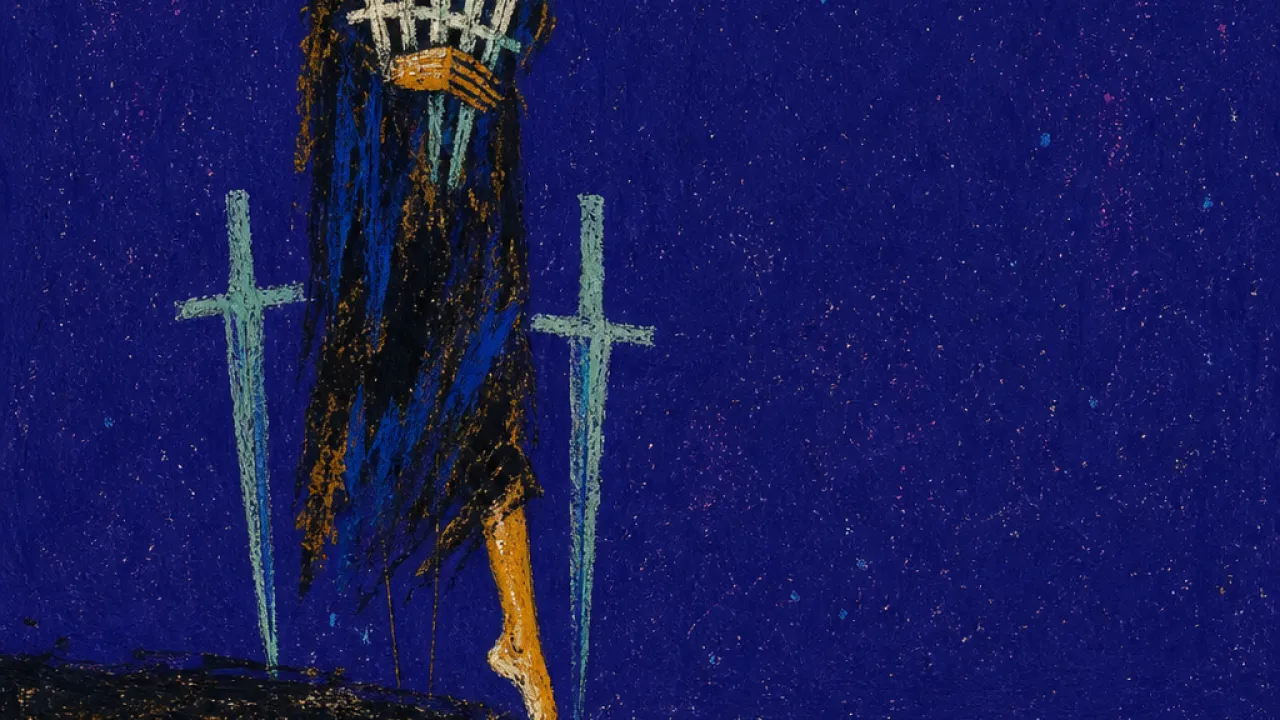
What does this feel like?
Partial Exit Lock — you know the exit exists, and that may be the most uncomfortable part. You are not standing in a sealed room anymore; some door has opened, some distance has been made, some version of you has already crossed a line that used to feel impossible. Maybe you stopped replying as fast, moved out, ended the conversation, changed the plan, muted the group chat, applied somewhere else, or finally admitted that the old route cannot be the whole map anymore. But the relief never lands cleanly. You still keep checking the place you left, still measuring your next move against old expectations, still carrying proof that you were there. Your body gives you away in small ways: one foot angled toward the door, shoulders tight when a familiar name appears, a breath held too long before you open a message, a strange pause before you say, out loud, that you have moved on. The hard part is that none of it looks like staying from the outside. You can point to changes. You can name the boundary. You can show the new apartment, the new routine, the new silence, the new plan. But inside, the old structure keeps a light on somewhere behind you, and part of your attention keeps walking back to check whether it is still asking something of you. You may feel embarrassed by the split, because one part of you wants a clean line and another part keeps treating the past like an unfinished checkpoint. So you move carefully, strategically, never quite empty-handed, never quite free of the scene you are leaving. The cost is not that you fail to leave; it is that leaving becomes a half-second stretched into a way of living, much like the Seven of Swords, where five blades move forward in the figure's arms while two remain planted behind him, keeping the open ground ahead tied to the camp he has not fully left.
What's pulling at you?
You are caught between the part of you that has already chosen distance and the part still using the old place as a reference point. The future is available, but the old route has not stopped shaping what feels safe, fair, possible, or final. That is why every step forward can feel both earned and incomplete.
How It Shows Up?
- You sit on the edge of your bed after a long day, shoes still on, phone in your hand, telling yourself you're done with that old chapter. Then a notification lights up from a person, place, or group you were supposed to be moving past, and your thumb freezes above the screen like it has hit an invisible wire. Your stomach tightens, your shoulders lift, and the room suddenly feels split in two: the life in front of you, and the two markers still planted behind you. You can let the message sit there for a while without turning the pause into a verdict.
- You tell a friend or partner, calmly, that you're not going back to the same dynamic, and for a few minutes you sound steady enough to believe yourself. Later, while brushing your teeth or waiting for the kettle, you replay the exact wording and feel a small pull in your chest, as if some part of you is still standing at the doorway checking whether they understood. Your jaw tightens, your breath goes shallow, and the exit feels less like a door closing than a thread stretching across the room. It is allowed to be unfinished without needing to be solved before bed.
- At work or school, you open a new document, apply for the new role, change your schedule, or make one concrete move toward the future. Then you keep another tab open with the old plan, the old inbox, the old course page, the old person's profile, as if leaving without a backup would make the ground disappear under you. Your neck gets stiff, your eyes ache, and your hands hover between two versions of the same day, carrying five blades forward while two stay upright behind the screen. You can notice the split without forcing yourself to choose the whole future in one sitting.
- You show up to a group thing after pulling back for weeks, and everyone acts like the old version of you is still available. You smile, answer lightly, and keep your body angled toward the exit, but your attention keeps checking the room for signs of what changed while you were gone. There is a tightness at the base of your throat, a small pressure behind your ribs, and the strange feeling that you're both present and already halfway outside. It is fine to leave a gathering without explaining every layer of your distance.
- Your body starts tracking the half-exit before your mind gives it language. One foot stays near the door, your bag remains packed even at home, your shoulders tense when a familiar name appears, and your ankle feels locked for a second before you cross from one room into another. The sensation is not dramatic; it is more like standing with one foot on mud and one foot in cold water, trying to move weight across a threshold that keeps shifting. You can treat the body signal as information, not an order.
Partial Exit Lock in Tarot Cards
Partial Exit Lock lives where the future is available, but the old route still keeps markers behind you. You can feel it in the shallow breath, tight throat, stiff neck, and the way your body hesitates at small thresholds. From an existential view, the structural framework is the split between moving forward and still being organized by what remains behind. The Tarot Cards below make that divided departure visible.
Partial Exit Lock in Tarot Card Reading Insights
Partial Exit Lock also shows up when people bring a half-finished exit into readings: the job not fully left, the bond not fully released, the old role still shaping the next move. These Tarot Reading Insights gather readings where that suspended threshold is the central question.

The Sunday Deadline Moves—Until Your Week Gets Its Space Back
Topic:Timing Tarot Reading
Struggle:Sunk Cost Paralysis
Context:Low-Maintenance Dating Pressure

At 11:47 p.m., Breaking No Contact Gives Way to a 24-Hour Pause
Topic:Love Tarot Reading
Struggle:Insight-Integration Gap
Context:Accountability Evasion Cycle
She Reopened the Chat Until a 24-Hour Pause Changed the Question
Topic:Love Tarot Reading
Struggle:Reciprocity Deficit
Context:Slow Fade

Chasing a Slow Fade on Line 1—And a Saturday Plan of Their Own
Topic:Choice Tarot Reading
Struggle:Intuition-Reality Split
Context:Sunk Cost Exit Dilemma

Fear of Texting First: Choosing Data Over a Verdict After Flirting
Topic:Choice Tarot Reading
Struggle:Binary Choice Lock
Context:Situationship Ambiguity

Caught in a Slow Fade: Name the Change, Ask Directly, Set a Boundary
Topic:Choice Tarot Reading
Struggle:Boundary Ambiguity Lock
Context:Situationship Ambiguity
Ghosting After Intimacy: From Reopening the Chat to Setting a Boundary
Topic:Love Tarot Reading
Struggle:Support Access Split
Context:Ghosting After Intimacy

Still Checking Your Ex While Dating: A Pause Before Escalation
Topic:Love Tarot Reading
Struggle:Projection-Connection Split
Context:Rebound Relationship Rush
Sending a Two-Sentence Goodbye: From Moral Crisis to Self-Trust
Topic:Choice Tarot Reading
Struggle:Clarity-Exposure Split
Context:Direct Communication Trial

Two Sealed Boxes and Three City Tabs: Choosing One Month Here
Topic:Introspection Tarot Reading
Struggle:Partial Exit Lock
Context:Community Integration Trial