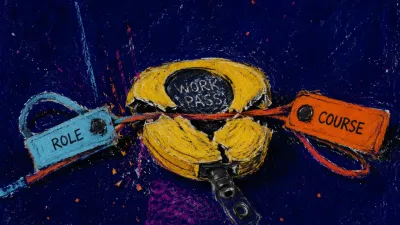
From Two Unsent Relocation Replies to an Owned Trade-Off

The Two Drafts at the Relocation Crossroads
If you are a 29-year-old product designer in Toronto with an acceptance email and a decline email drafted, reopening the same spreadsheet after rent day and calling it career decision paralysis, you already know this is not simply a pros-and-cons problem.
At 9:18 PM on a Sunday, I watched Jordan (name changed for privacy) sit in her small Toronto apartment with the laptop fan humming beside a cooling mug of tea. The screen held two notes, Accept and Decline, while her thumb hovered over the relocation deadline email. Outside, a streetcar groaned through wet streets; inside, the blue light sharpened the tired set of her jaw.
She had added another row to both columns, then reread the same message from her employer. Accepting the required relocation could mean a new product team, fresh perspective, and a break from routines that had begun to feel too familiar. Declining could protect her apartment, nearby friends, predictable finances, and the ordinary Tuesday nights that made Toronto feel like home.
Jordan looked at me and said, "I can argue both sides so well that I no longer know what I want. I wish the choice came with a label that said who I would become."
I could see the ambivalence in the pause before every sentence, with fear of regret underneath it, grief about what a move might require her to leave, and a longing for direction that kept getting mistaken for a need for more information. It was like keeping two versions of the same email open in separate browser tabs and lowering the screen brightness so neither future had to become real.
"A choice can be difficult because both sides contain a value you genuinely care about," I told her. "This is a values-based relocation decision, not a character test. We do not have to force one option to become the morally correct answer. We can give the conflict a shape, name what each path honors, and make a map through the fog together."
I asked whether the real problem was a lack of information or the demand that one answer preserve every important value at once. Jordan looked back at the two notes. Her shoulders lifted toward her ears before she answered, "That second one."

Choosing a Compass for a Career Move
I invited Jordan to put both feet on the floor, take three unhurried breaths, and focus on the question rather than on the answer she hoped the cards would give her. I shuffled slowly. For me, this is not about summoning a verdict; it is a practical transition from the noise of the day into a more honest conversation with the facts, feelings, and values already present.
For this reading, I chose the Decision Cross · Context Edition, a tarot spread for comparing two paths in a career decision. Its cross-shaped structure lets me look at the visible dilemma, the value accepting the relocation may honor, the value declining may protect, the hidden rule beneath the conflict, and the personal criterion that can bring those pieces into a fair comparison. It does not predict whether Jordan should move. It shows how tarot can work as an objective recognition tool: the images give us a disciplined language for noticing patterns that an endless spreadsheet keeps rearranging.
The center card would show the visible values clash at the forced relocation crossroads. The two cards on either side would keep movement and stability symmetrical rather than framing either as automatically wise or fearful. The card beneath the center would reveal the unexamined rule shaping the decision, while the card above it would offer a self-authored way to name the trade-off and choose a next step.
I placed the cards in a cross. The center looked like a fork in a road, the two arms like equally legitimate directions, and the vertical line beneath and above them like a question about what was driving Jordan and what standard could return the choice to her.

Reading the Map Beneath the Reply
The Crossed Blades of the Unsent Reply
Now I turned over the card representing the visible values clash at the Forced Relocation Crossroads, including the repeated comparison and delayed response identified in the diagnosis. It was the Two of Swords, in reversed position.
Reversed, this card shows a stalemate that can no longer stay neatly contained. The blindfolded figure became Jordan dimming her laptop, keeping both reply drafts open, and muting messages that asked for an answer. The crossed swords became two valid claims held against each other: movement might offer perspective, while stability might protect belonging. The moonlit water became the uncertainty she kept trying to solve with one more analysis.
This is not a deficiency of intelligence. It is a blockage of clarity. Jordan has been using comparison as a temporary control ritual: if she finds one more fact, she can avoid naming the loss; if she asks one more person, she can borrow their certainty; if she keeps both futures open, neither one can accuse her of choosing wrong. The energy is contracted around avoiding regret, and the cost is that the value being protected remains unnamed.
I asked, "When you reopen the notes, what are you trying hardest not to lose? Not which option is better. What value are you trying to keep safe?"
Jordan did not nod. First, her fingers froze above the mug. Then her gaze went unfocused, as if she were replaying every late-night spreadsheet and every friend’s voice note. Finally, she gave a small, bitter laugh and said, "That is too accurate. Almost cruel."
"I hear the cruelty in the loop, not in you," I said. "The card is showing a habit that once gave you control and now keeps the actual question behind the blindfold. We can work with that without shaming it. For now, write down the value you are afraid of losing before you decide anything else."
The card did not ask Jordan to rush into a yes or no. It asked her to stop confusing more comparison with more clarity.
The Boat Carrying More Than a New Address
Now I turned over the card representing what accepting this relocation may honor: the values of movement, perspective, and a possible break from existential drift. It was the Six of Swords, in upright position.
I pointed to the boat moving away from rougher water toward a calmer horizon. In Jordan’s modern life, it was the TTC ride home when she imagined herself in a new city with her design portfolio, her close friendships on video calls, and enough distance from familiar routines to see her life from a different angle. The train would still carry her skills, debts, commitments, grief, and unanswered questions, just as the boat carried all six swords. The move was not a clean reset, and the card made no promise that a new setting would solve the old loop.
Here the energy was available rather than blocked. Accepting could honor curiosity, movement, professional perspective, and the willingness to let a different environment change the distance from which she saw herself. But the card also asked for precision: was Jordan drawn toward a value she could name on an ordinary Tuesday, or merely trying to escape the discomfort of not knowing?
"If you accepted," I asked, "what would you hope to honor on a normal weeknight, after the novelty had worn off? And what familiar part of your life would you knowingly ask to change?"
Jordan’s chest lifted briefly. Then she pressed her lips together and looked toward the window. "I want the perspective," she said. "But I do not want to pretend that distance is the same as freedom. My friends and my routines would still matter. I would just have to carry them differently."
I watched her thumb stop scrolling through the relocation details. For the first time, movement sounded like a value she might choose, not a shiny headline she had to perform.
The Firm Grip of a Life That Already Works
Now I turned over the card representing what declining this relocation may protect: stability, continuity, and control as values revealed by the security-seeking pattern. It was the Four of Pentacles, in upright position.
The figure’s grip became Jordan standing in her small kitchen at 7:06 PM, one hand resting on the counter as she pictured the familiar route from her apartment to the coffee shop, the studio, and a friend’s place ten minutes away. The pentacles at the chest, feet, and head became emotional belonging, practical housing stability, and the mental story that staying must either be wisdom or drift. The walled town behind the figure looked like a calendar full of routines that supported her energy outside work.
This card holds a real value, but it can also become an excess of control. Declining may protect a predictable rent arrangement, nearby friendships, spontaneous dinners, and a financial life that does not require rebuilding everything at once. Those are not automatically signs of fear. The question is whether Jordan is choosing continuity because it matters, or gripping every anchor because any change feels like evidence that she cannot trust herself.
"When you imagine declining," I asked, "what happens in your body before the explanation begins?"
"My shoulders drop," she said. "Then my chest tightens because I hear myself asking whether relief is just a more comfortable name for drifting."
I let the silence stay long enough for both sensations to exist. "Relief is information, not a final verdict. So is possibility. Accepting is not automatically growth, and declining is not automatically stagnation. Clarity may arrive as an honest cost, not a painless answer."
Jordan placed one hand over the other, not gripping now, simply holding them together. That small change mattered. She was beginning to see that stability could be named as a value without being defended as proof of virtue.
The Borrowed Rule Beneath the Fork
Now I turned over the card representing the unexamined rule beneath the inner conflict: whether Jordan was following personally chosen values or inherited and institutional definitions of a meaningful life. It was The Hierophant, in reversed position.
I brought the card back to a cafe near King Street West. I could almost hear the espresso machine hiss as Jordan’s friend said, "Honestly, any ambitious professional would take the move." Jordan nodded automatically, then carried the phrase through the rest of her workday. The reversed teacher and the crossed keys asked her to notice the difference between institutional access and personal authority.
The energy here is a blockage caused by borrowed meaning. Jordan had been switching between two inner voices: "I want this" and "I should want this." LinkedIn announcements, promotion posts, and polished new-chapter stories made constant movement look like the public definition of progress. But rejecting every outside opinion would only create another rigid rule. Practical information could remain useful without becoming the authority that decided what a meaningful life meant.
I offered her a cultural shorthand. "Think of it a little like Severance," I said. "The professional role an institution rewards is not the same as the whole person who has to live with the consequences after work. Your employer can define business needs. Your friends can reveal the assumptions in the room. Neither gets to define your values for you."
I have spent twenty years listening to people sort their lives over the warm aroma of coffee, and I have learned to listen for the sentence that arrives with someone else’s voice inside it. I remembered seeing the same pattern at café tables long before anyone called it a Notion page or a Slack thread: a person asking whether an audience would approve, then mistaking that audience’s confidence for their own direction.
Jordan’s fingers tightened around the edge of her chair. She looked toward the cafe window, blinked once, and let out a slow breath. "I want this," she said quietly. "But I also want to be the person who wants it for my own reasons. I should want this is not the same sentence."
"Exactly," I said. "More opinions can lower the volume of uncertainty while making your own priorities harder to hear. Let the outside voices give you questions and logistics, not the final definition of progress."
She wrote one sentence in the margin of her page: "A meaningful life for me includes..." She did not finish it yet. That was not failure. It was the first space she had made for an answer that did not need to sound impressive.
When Justice Put the Verdict Down
The Scales Above the Fork
The room grew quieter as I turned toward the card above the central dilemma, the self-authored criterion that could integrate the two value sets: how to name the trade-off and choose a next step without demanding certainty or outsourcing the decision. I turned over Justice, in upright position.
Justice is not a yes-or-no oracle here. Its scales ask Jordan to weigh what accepting serves and what it costs, then weigh what declining serves and what it costs. Its upright sword cuts through the demand for a painless answer. On one page, she could rank her top three values, write what each path honors, name what each path asks her to release, and choose a time-bounded next step. The card gave the decision an accountable structure without making the decision for her.
At 9:18 PM on Sunday, Jordan moved between two relocation drafts while the laptop fan hummed and the deadline email stayed unopened. Both columns held valid reasons. Her jaw tightened because she was not only choosing a city; she was trying to prove which version of herself deserved to exist, and no spreadsheet could make that burden fair.
Stop treating the clash between accepting and declining the relocation as proof that you have no direction; use Justice's scales to rank what each path serves and consciously own the cost of the value you place first.
For a moment, Jordan’s breath stopped. Her eyes widened, then lost focus as if the words had opened a reel of recent scenes: the LinkedIn posts, the rent payment, the train window, the friend’s confident advice, and the two drafts waiting for her thumb. Her hand had been clenched around the pen, but her fingers slowly loosened. The tight line of her mouth softened, and a faint flush rose beneath her eyes. She did not look suddenly happy. She looked unbraced. When she finally spoke, her voice was low and slightly unsteady. "So I do not have to make one option prove that I am becoming the right person." I slid a blank page toward her and told her to write one value each path served, one cost each path carried, and the smallest fact or action that could help her decide. I reminded her that she could stop, keep the page private, or return to it later. The goal was a clearer criterion, not forced certainty.
"Now, use this new perspective to remember last week," I said. "Was there a moment when this insight could have made you feel differently?"
Jordan closed her eyes. "When I deleted the acceptance draft for the third time," she said. "I thought the panic meant I was incapable of choosing. Maybe it meant I was trying to protect two real things at once."
That was the bridge. The movement was not from confusion to a magical answer. It was from contracted ambivalence and certainty-seeking toward the first evidence of self-authored clarity. This decision was asking for a priority, not a permanent identity statement. Justice had not removed the grief of leaving or the risk of staying; it had made those costs speakable.
I looked again at the covered eyes of the Two of Swords and then at Justice’s visible face, balanced scales, and upright blade. The first image had kept the competing values undifferentiated. The second gave Jordan a method for comparing them without pretending they could all be preserved untouched.
The One-Page Justice Check
When I gathered the cards into one story, the logic became clear. The reversed Two of Swords showed why the same notes and conversations kept reopening: comparison gave Jordan a brief sense of control while keeping the central value conflict unnamed. The Six of Swords showed that accepting could honor movement, perspective, and a new professional context, while carrying existing relationships and responsibilities along. The Four of Pentacles showed that declining could protect stability, belonging, and financial continuity without automatically meaning stagnation. The reversed Hierophant revealed the hidden pressure to let an employer, a friend, or an imagined LinkedIn audience define progress. Justice offered the missing structure: a personal standard that could tell the truth about both paths.
Jordan’s cognitive blind spot was not simply overthinking. It was the belief that difficulty proved she lacked direction, and that a trustworthy choice had to preserve every important value. The transformation direction was more practical: rank the values, name each trade-off, and choose the next decision step that reflects the priority she is willing to own. She did not need to solve existential drift before moving. She needed to stop making the relocation reply carry the weight of her entire identity.
This is where I used my Analysis Paralysis Deconstruction. I stripped away abstract what-ifs and brought the conversation back to grounded realities and immediate constraints: housing, commute, friendships, professional learning, energy, money, timing, and the kind of ordinary Tuesday Jordan wanted to be able to live. Then I used Complexity Reduction to turn the clutter into a cleaner comparison, not of which future was perfect, but of what each path protected and what each path required her to release.
I also gave Jordan my Coffee Bean Filter Protocol, a 24-hour pragmatic sorting exercise. For one day, she would physically separate statements into Absolute Must-Haves and Emotional Noise. Emotional noise did not mean fake feelings or inconvenient grief. It meant pressure that was not a chosen value: "Any ambitious person would take it," "Everyone else is moving," or "If I choose wrong, I will prove I cannot trust myself." Genuine needs such as nearby support, financial steadiness, creative growth, and meaningful challenge could then be named without being buried under an imagined audience.
"You do not need to erase the conflict," I told her. "You need a criterion you can recognize as yours."
- The One-Page Justice CheckOn Tuesday evening, set a 20-minute timer and divide one blank page into three sections: values I want to protect, values I want to move toward, and the trade-off I could consciously own. Write no more than three values in priority order. Then complete two sentences: Accepting would honor ___ and cost ___; declining would honor ___ and cost ___. Circle the value that must be present in the next decision step.Use the Coffee Bean Filter Protocol for the surrounding 24 hours: put imagined audience pressure and repeated what-ifs under Emotional Noise, while keeping lived needs under Absolute Must-Haves. If the exercise starts becoming another endless spreadsheet, use the two-minute version: one value and one cost for each path.
- The Borrowed Script Audit and One-Fact StepAsk one trusted friend for a 15-minute conversation with a clear boundary: they may identify the expectations they hear in your language, but they may not choose for you. Before the call, finish "A meaningful life for me includes..." three times without using impressive, sensible, successful, or grateful. Afterward, label each note as my value, someone else's expectation, or useful logistics, then send one short question to the employer about the single fact most likely to change your ranking, such as housing support, commute expectations, travel assistance, or a delayed start. Put the reply date and your own decision date on the calendar.Send the boundary by text if saying it aloud feels awkward: "I am collecting the assumptions in the room, not asking you to choose tonight." Stop opinion-polling until the decision date. One fact and one date are enough to create movement without demanding that certainty arrive first.
The cards did not tell Jordan to accept the relocation or to decline it. That restraint was part of the reading’s value. The Decision Cross tarot spread for relocation and career choices gave her a way to see the competing priorities, separate her own values from borrowed scripts, and take an accountable next step. The authority stayed where it belonged: with the person who would live the ordinary consequences.

A Reply That Was Not a Verdict
Three days later, I received a voice note from Jordan while I was making coffee. She had sent one question to her employer about the housing allowance and confirmed the date by which she needed to answer. She had not chosen the entire future. She had stopped asking the email to announce who she was.
The employer’s reply was useful but not miraculous. It changed one line in her practical comparison and left the emotional trade-off intact. Jordan told me she felt steadier because the uncertainty now had a boundary instead of filling every available tab.
That evening, she sat alone in a King Street cafe with a coffee gone lukewarm, relieved to have sent the message and slightly sad that no answer had arrived. She looked at the empty space beside her, then opened her notebook and wrote the decision date.
I recognized that as the first small proof. Not a solved life, not a perfect signal, and not a promise that either choice would be free of loss. Just a reply sent, a question asked, and a criterion beginning to sound like her own.
That was Jordan’s Journey to Clarity: from treating the relocation as a referendum on identity to treating it as a values-based trade-off she could name, time-bound, and own. Self-trust did not arrive because the cards controlled the outcome. It began when she allowed herself to choose with incomplete information and honest priorities.
Ownership, Not Certainty
When the relocation message lands and your jaw locks, it can feel as if either reply will put your self-worth on trial: move and betray what anchors you, or stay and prove that you are drifting. But a hard choice is not always a lack of direction. Sometimes it is two real values asking to be named, weighed, and given an honest place in the same room.
Clarity may not arrive as the disappearance of grief, fear of regret, or the wish that someone else would make the call. It may arrive as a one-page scale, a borrowed rule you finally recognize, or a small email sent before you feel completely ready.
If this choice could be a trade-off you consciously own rather than a permanent verdict on who you are, what part of your own criterion would you want to hear more clearly tonight?