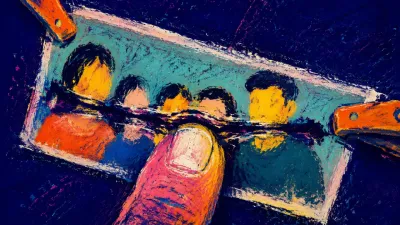
From a Red-to-Amber Edit for 'Family' Harmony to One Early Risk Report

The 10:47 p.m. Red-to-Amber Edit Behind a Workplace "Family"
If you are a Toronto product operations manager who changes a red dependency to amber at 10:47 p.m. so tomorrow's status meeting stays positive, you may recognise this as belonging-driven risk silence rather than simple overthinking.
I met Maya over video from her Toronto condo on a Tuesday night. She shared her Google Slides deck, changed one red indicator to amber, and deleted the sentence describing its likely impact. Her laptop fan whirred through the silence, blue phone light crossed a mug of tea she said had gone cold, and I watched apprehension pull her throat tight like a drawstring while an invisible brace locked around her chest.
"We say we're a family," she told me, rubbing one thumb over the other. "So why does honesty feel disloyal? If I can fix it quietly, no one has to worry."
I let the question sit without correcting or minimising it. "You are not hiding the risk because you cannot see it," I said. "You are hiding it because belonging has started to feel conditional. Let's make a map of that pressure and see where your choices are still yours."
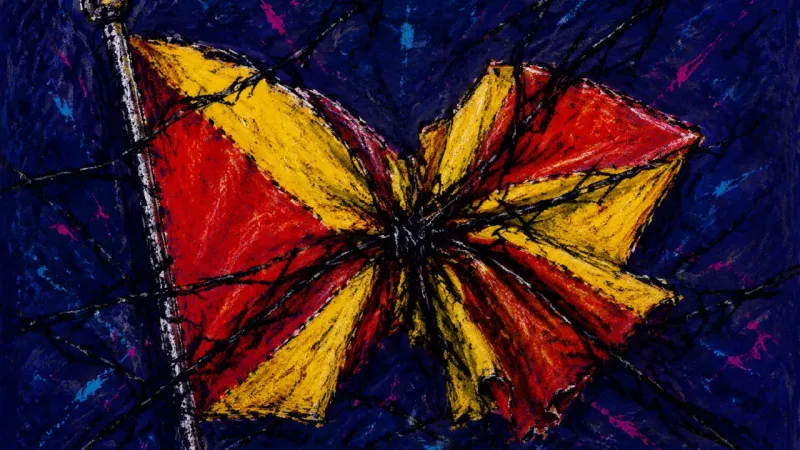
Choosing a Compass for the Hidden Center
I invited Maya to take one slow exhale and focus on the moment immediately before she edited a warning. I shuffled while she held that scene in mind. I use this pause as a transition into focused reflection, not as a performance of mystery.
I chose the five-card Shadow Spread, a tarot spread designed to examine a protective pattern without turning it into a character flaw. This is how tarot works in my practice: the cards externalise a mechanism so I can examine it with the querent. They do not issue a verdict or override real workplace evidence.
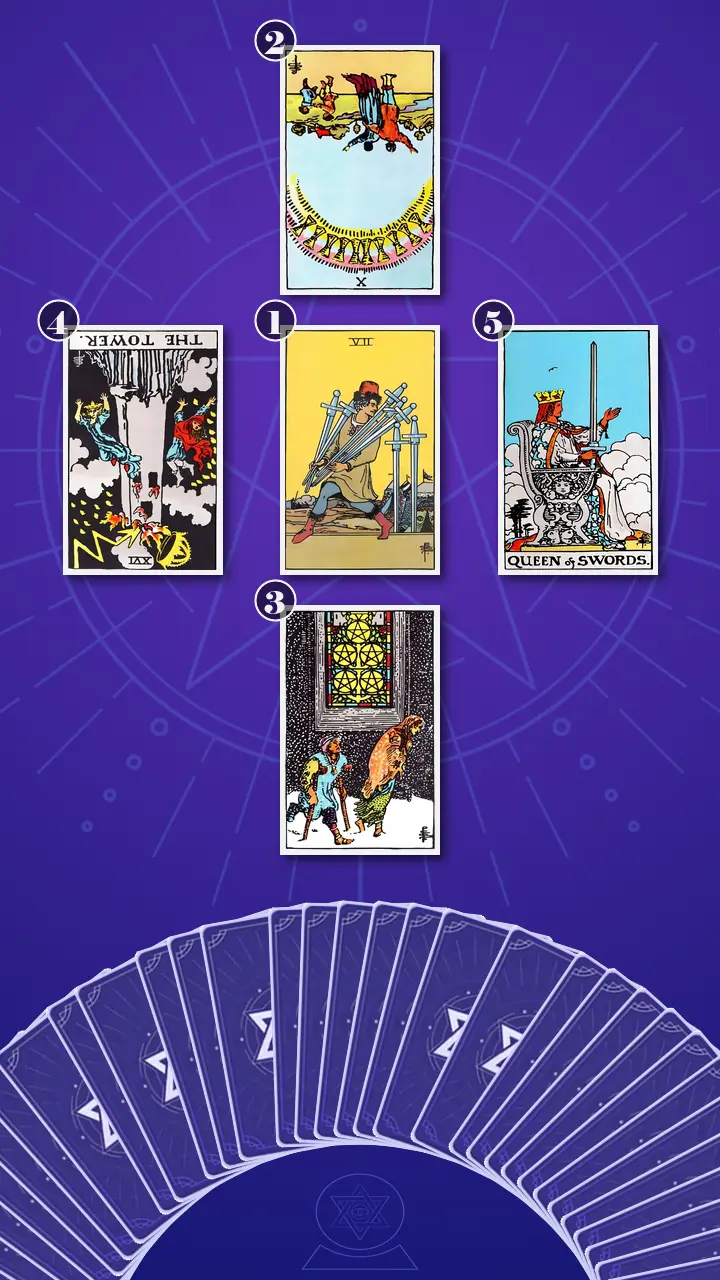
The spread fit Maya's focused "why" question because its sequence is precise. The center card shows the visible behaviour. The card above identifies the belief feeding it, while the card below reveals the vulnerable fear being protected. The left-hand card exposes the accumulated cost, and the right-hand card offers a conscious integration practice. A larger spread would have added future and environmental layers before we had understood the core loop.
I placed the five cards in a cross. Together they formed a compass around the concealed center: behaviour, belief, fear, cost, and integration. I told Maya that I would read each card meaning in context and keep checking it against what had actually happened at work.
The Warning Carried Out of Sight
Position One: The Seven of Swords and the Private Risk
"The card I'm turning now represents the active behaviour: editing, withholding, or privately carrying work risks to preserve the team's image," I said. I revealed the Seven of Swords, upright.
The figure was moving away with five swords while looking back over one shoulder. Two blades remained behind. I connected that image directly to Maya's Tuesday night: the clearest warning removed from the shared deck, the full impact retained in her private notes, and her attention divided between solving the dependency and watching the meeting for evidence that someone had noticed the omission.
I read the card's Air energy as an excess of private strategy combined with a blockage in collective visibility. Maya's intelligence was fully active, but it had been recruited into social surveillance. Every edit asked, "How might this make me look?" rather than, "Who needs this information in order to act?" The problem was not insufficient judgment. It was capable judgment being forced into hiding.
"When you changed the indicator," I asked, "what were you trying to prevent the team from seeing: the dependency, its impact, or the fact that you could not personally guarantee the outcome?"
Maya gave a short laugh with no warmth in it. Her hand rose toward her mouth, then dropped to the table. "That's so accurate it feels a little cruel. I call it being constructive, but I'm basically managing everyone's impression of me."
I did not rush past the sting. "Accurate does not have to mean condemning. The Seven shows a strategy that gave you immediate relief from conflict. We can respect why it formed and still measure what it costs now."
I pointed from the five swords in the figure's arms to the two left behind. "The audit here is simple: what information are you carrying alone, what has been excluded from shared view, and who actually needs access to it?"
Position Two: The Reversed Ten of Cups and the Polished Portrait
"The card I'm turning now represents the belief that feeds the pattern: the idea that seamless, family-like harmony must be maintained," I said. I revealed the Ten of Cups, reversed.
Upright, the rainbow of cups can depict shared joy and belonging. Reversed, it asked me to inspect what had been cropped out of the portrait. I saw Maya's team Slack channel full of birthday GIFs, after-work plans, and "we've got this" messages. I also saw the manager asking everyone to stay positive while the impact sentence quietly disappeared from Maya's slide.
I read the Water energy as blocked by idealisation. Connection itself was not the problem. The blockage appeared when one emotional picture became compulsory: a good team stayed upbeat, a loyal person absorbed extra work, and a red status threatened the relationship. It was as if the team's social algorithm kept down-ranking inconvenient context until necessary information began to feel like bad content.
"I want to care for them," Maya said, "but if I say it plainly, I might become the problem."
"That is the conflict," I replied. "Not caring versus not caring. Authentic care versus compulsory harmony. If a team can celebrate together but cannot record a blocker together, it may be protecting the appearance of belonging more than belonging itself."
I asked her what version of the team she felt responsible for maintaining whenever someone said, "We're a family." Her jaw tightened first. Then her fingers stopped moving around the mug, and her eyes remained on the inverted rainbow longer than they had stayed on the first card.
"The version where nobody makes anyone uncomfortable," she said. "And somehow I'm the one responsible for keeping it that way."
Position Three: The Five of Pentacles Outside the Warm Window
"The card I'm turning now represents the underlying fear the pattern protects: being treated as disloyal, excluded, or unsafe after speaking plainly," I said. I revealed the Five of Pentacles, upright.
Two figures moved through snow beneath an illuminated stained-glass window. I centered the light as much as the cold. The scene mirrored the social forecast Maya had described from her TTC commute: one candid warning, one manager's clipped reply, and suddenly she imagined herself moving from trusted insider to difficult outsider.
I read the Earth energy here as a deficiency in felt access to support. That did not prove support was absent, and I would not tell Maya that every workplace is safe if only someone communicates correctly. Toronto rent, job stability, organisational power, and the memory of a candid colleague being labelled negative all gave her forecast real emotional weight. The card asked us to separate those relevant conditions from an outcome her body was treating as if it had already occurred.
"Imagine saying, 'The evidence is X, the impact may be Y, and the next step is Z,'" I said. "What is the exact rejection you expect to follow?"
Her breath paused. Her fingertips tightened around the mug, then her gaze slipped away from the screen as though she were replaying an old meeting. Finally, she released a low breath and lowered both shoulders by less than an inch.
"That they'll call me negative when I'm not there," she said. "That I won't be trusted with the next big project. That I'll still be invited to things, but I'll know I'm not really inside anymore."
I nodded. "That is specific enough to test against evidence. We do not have to call it irrational, and we do not have to obey it as a settled fact. You can choose a proportionate disclosure and observe what actually follows. If a retaliation pattern appears, that becomes workplace information too, not proof that you should have carried the risk alone."
Position Four: The Reversed Tower and the Cost of Staying Green
"The card I'm turning now represents the long-term cost of concealment: delayed mitigation, concentrated responsibility, and increasing structural fragility," I said. I revealed The Tower, reversed.
I repeated a scene Maya had described from three consecutive Fridays. The same dependency remained in her private notes. She changed "high impact" to "could affect timing," postponed assigning an owner, and stayed in the Liberty Village office after most of the floor had emptied. The HVAC hummed, a streetcar bell sounded outside, and the dashboard stayed green while the team's response window grew smaller.
I read reversed Fire as blocked disruption. The card was not predicting disaster or punishment. It showed the operational cost of containing every uncomfortable signal until a manageable interruption had fewer available solutions. A visible risk is not the same thing as a crisis. Sometimes visibility is what prevents the crisis-shaped response.
This was where I reached for a diagnostic lens I call Career Cycle Phase Identification. I use it to distinguish a personal skill gap from a wider organisational or industry contraction. A single frozen moment can make any orbit look like a personal failure; after a decade of studying cycles, I have learned to look for repeated movement before assigning blame.
In Maya's case, the recurring data-handoff failure, missing ownership, and pressure to report green pointed away from "Maya needs to work harder" and toward a structural bottleneck that required shared visibility. The cards could not prove that conclusion. Documented patterns over time could test it. That distinction mattered because she had been trying to repair an organisational gap as if it were a private deficit in her competence.
"Maybe a small interruption is kinder than a dramatic one," Maya said. She pressed her palm against her lower back as if the late Friday shift had briefly returned to the room.
"Exactly," I said. "You do not protect a team by becoming the private container for every problem. The reversed Tower asks for a small channel through which reality can enter before pressure chooses a louder one."
When the Queen Raised One Sword in Full View
Position Five: The Queen of Swords and Boundaried Candor
The laptop fan fell quiet just before I turned the final card. A streetcar bell reached us faintly through Maya's window, one clear note beneath the building's constant hum.
"The card I'm turning now represents the key transformation: clear, bounded, evidence-based communication that does not equate disagreement with betrayal," I said. I revealed the Queen of Swords, upright, the key card and antidote of the reading.
The Queen held one sword vertically in full view while extending her other hand toward what approached. I compared her forward gaze with the Seven of Swords figure looking backward under the weight of five blades. The same Air element had changed form. What began as fragmented information and social monitoring had become balanced discernment: precise enough to set a boundary, open enough to invite a collaborative response.
In Maya's meeting, that energy looked ordinary and specific. She would keep the evidence visible, state the possible impact, propose a next step, and leave ownership with the appropriate group. She would not accuse anyone, apologise for uncertainty, or volunteer automatically to repair the entire dependency. Her inner line could become, "I can be clear without turning this into a character verdict."
I also brought in Promotion Window Calibration, my method for mapping organisational shifts and locating the path of least resistance for professional movement. I was not predicting a promotion. I was asking where Maya's workplace already had legitimate channels for visible judgment: the shared risk log, owner checkpoints, and the weekly status review. The Queen did not require a dramatic confrontation. She asked Maya to use an existing channel and make her discernment accountable. Whether the organisation valued that discernment would then be observed, not assumed.
At 10:47 p.m., Maya had been caught in the demand to produce the perfectly safe update before morning. She had treated the meeting as if her chest needed to hold it in advance, and as if removing the impact sentence could remove the risk itself.
You do not preserve belonging by sheathing the truth; raise the Queen's clear sword by naming one risk with evidence, impact, and a next step.
I stopped speaking. Maya's breath froze, and her right index finger hovered above the trackpad. Her eyes lost focus for a moment, as though the last three Friday evenings were replaying behind them. Her brows pulled together before her eyes began to shine.
"But doesn't that mean I got it wrong every week?" she asked. The first edge in her voice was anger, followed almost immediately by a quieter note of grief. "I did all that extra work to be good at my job."
I did not hurry to turn her resistance into relief. "It means your strategy protected you from a possibility that felt real, while its cost kept rising. We are updating the strategy, not putting your past self on trial."
Her closed hand loosened finger by finger. Her shoulders dropped, but the release left her briefly unsteady, like someone putting down a heavy bag and only then noticing how far she had carried it. She inhaled through her nose, looked again at the Queen's open hand, and let out a wavering breath that was almost a laugh.
"Now, with this new perspective, think back: was there a moment last week when this insight could have made you feel different?" I asked.
"Friday," she said. "When I opened Jira after everyone left. I still would have felt uncomfortable logging it, but maybe I wouldn't have treated discomfort as proof that I was outside the team."
I set a ten-minute timer and invited her to draft one current risk in private. She did not have to send it, disclose more than the work required, or continue if the exercise became too much. A private first version still counted. When the timer ended, she had three lines and the name of an appropriate owner.
"The deeper shift is not caring less about the team," I told her. "It is moving from protecting a flawless image to protecting people's ability to respond. A risk is not an accusation; it is information with a clock on it."
I named the emotional crossing clearly. This was a first move from apprehensive, belonging-driven self-silencing toward steady candor, professional connection, and shared ownership. It was not certainty that the room would respond perfectly. It was the smaller, more durable confidence that she could keep work facts separate from a verdict about her worth.
Evidence, Impact, Next Step: A Path to Shared Ownership
I laid the five cards into one coherent line. The Seven of Swords showed Maya editing risk into private responsibility. The reversed Ten of Cups revealed the polished "family" image that made the pattern feel loyal. The Five of Pentacles exposed the feared social cost of honesty. The reversed Tower showed how delaying a manageable disruption reduced time, options, and shared understanding. The Queen of Swords redirected the same intelligence away from impression management and toward usable truth.
The whole pattern was like muting a smoke alarm to keep the room peaceful, then carrying water through the building alone. Maya's cognitive blind spot was the binary underneath that choice: either protect harmony through silence or create a dramatic rupture through candor. The spread introduced a third place between silent loyalty and dramatic disruption: clear information, shared ownership, and room for a response.
The transformation direction was practical. Instead of editing risk language until nobody could react to it, Maya could report one bounded risk early and make only the work relevant to the update visible. Evidence, impact, next step: care with the guesswork removed.
- Draft the Queen's Three Lines Before the next weekly status meeting, open a blank note beside the project deck and spend no more than ten minutes writing: "Evidence: the data handoff is still incomplete." "Impact: the Thursday launch check may lose two working days." "Proposed next step: confirm an owner and checkpoint by 2 p.m. Wednesday." Read the lines aloud once, then state them once in the meeting and ask the group to confirm the owner or decision point. Tip: Keep the smallest factual version. Do not add paragraphs to prove your loyalty. If speaking live feels too exposed, post the same three lines in the shared risk channel and request a ten-minute owner check-in.
- Put the Risk Where Ownership Can Reach It Choose one existing dependency in Jira, Linear, or the team's current risk log. Add four fields: trigger, possible impact, current owner, and next review date. Send the owner one short Slack message asking them to confirm the next check, then use a single 15-minute end-of-day review instead of monitoring the issue throughout the evening. Tip: Define this as documentation, not dramatic escalation. Use an existing process, do not build a new one, and do not accept another person's corrective work without explicit agreement.
- Run the 30-Day Micro-Orbit Observation For 30 days, spend one minute after each relevant meeting recording what actually happened when a bounded risk appeared. Mark organisational blueshifts such as an owner being assigned, a question being welcomed, or an early warning being used. Mark redshifts such as repeated pressure to remove evidence, refusal to assign ownership, or retaliation after factual reporting. Tip: This is pattern tracking, not constant threat scanning or a layoff prediction. One cold Slack reply is not an orbit. Look for repeated signals. If a retaliation pattern emerges, preserve the record and choose an appropriate support channel, trusted adviser, union resource, or formal reporting route.
I reminded Maya that psychological safety at work could not be established by a tarot card or one successful meeting. Her task was not to prove the team safe by taking a bigger risk than she wanted. Her task was to choose the size and timing of one proportionate act, observe the response, and keep responsibility where it belonged.

A Week Later: One Amber Square and a Full Night's Sleep
Six days later, I received a message from Maya. She had kept one dependency amber, left the impact sentence on the slide, and used the three-line statement without apologising. There was no cinematic applause. One colleague asked a practical question, the appropriate owner added a Wednesday checkpoint, and the meeting moved on.
That night, she slept all the way through. Her first thought on waking was, "What if I was wrong?" She told me she smiled, checked the evidence once, and left the owner to own it.
I saw that as the quiet proof of our Journey to Clarity. The five-card Shadow Spread had not predicted her manager's response or made the disclosure for her. It had helped her see the loop clearly enough to choose a different move. The cards offered a map; Maya remained the person holding the direction.
If your throat tightens over a red status indicator, you may be editing the warning so the team still looks close while carrying the fear that plain truth will leave you outside. Simply noticing that bargain means you are no longer standing at its starting point.
During the next week, if you let one small piece of evidence remain visible without turning it into a verdict on anyone, what could your version of the Queen's open hand invite the people around you to do with it?