Finding Clarity in the 11:52 p.m. Scroll
If you’re a junior marketing person in Toronto who gets a “proud of you” text and immediately feels your stomach drop like you’re about to be audited, this is for you.
Jordan came into my café on College Street with that specific kind of tired you can’t fix with sleep. The espresso machine hissed like it was gossiping; outside, the streetcar rumbled past in slow waves. She wrapped both hands around her cup as if the heat could keep her from floating away.
“It was 11:52 PM,” she said. “Tuesday. Radiator clicking. I was under the blue phone glow, screen brightness turned down… and the text popped up. ‘Proud of you.’”
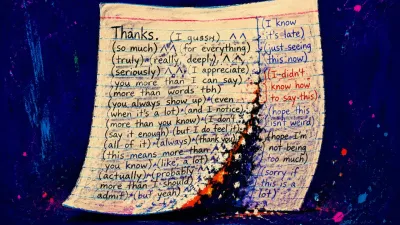
She swallowed hard, like the memory had teeth. “And my throat just… locked. My stomach dropped. Then I opened Notes and started rewriting a reply. Like I had to make ‘thank you’ smaller. Safer.”
In her words, I could hear the real question underneath the surface one: wanting to be seen and supported—and fearing that being seen will expose you as undeserving. Shame does that. It doesn’t shout. It tightens your jaw, pulls your shoulders up toward your ears, and convinces you that warmth is suspicious.
I leaned in, gentle but direct. “We’re not here to judge whether you ‘should’ feel grateful,” I told her. “We’re here to understand why your body treats praise like a threat—so we can find clarity, not more pressure.”

Choosing the Compass: The Four-Layer Insight Ladder Spread
I asked Jordan to take one slow breath in through her nose—like she was smelling the coffee before she drank it—and to hold the exact moment of that text in her mind. Not as a mystical ritual. As a focus shift: from spiraling to observing.
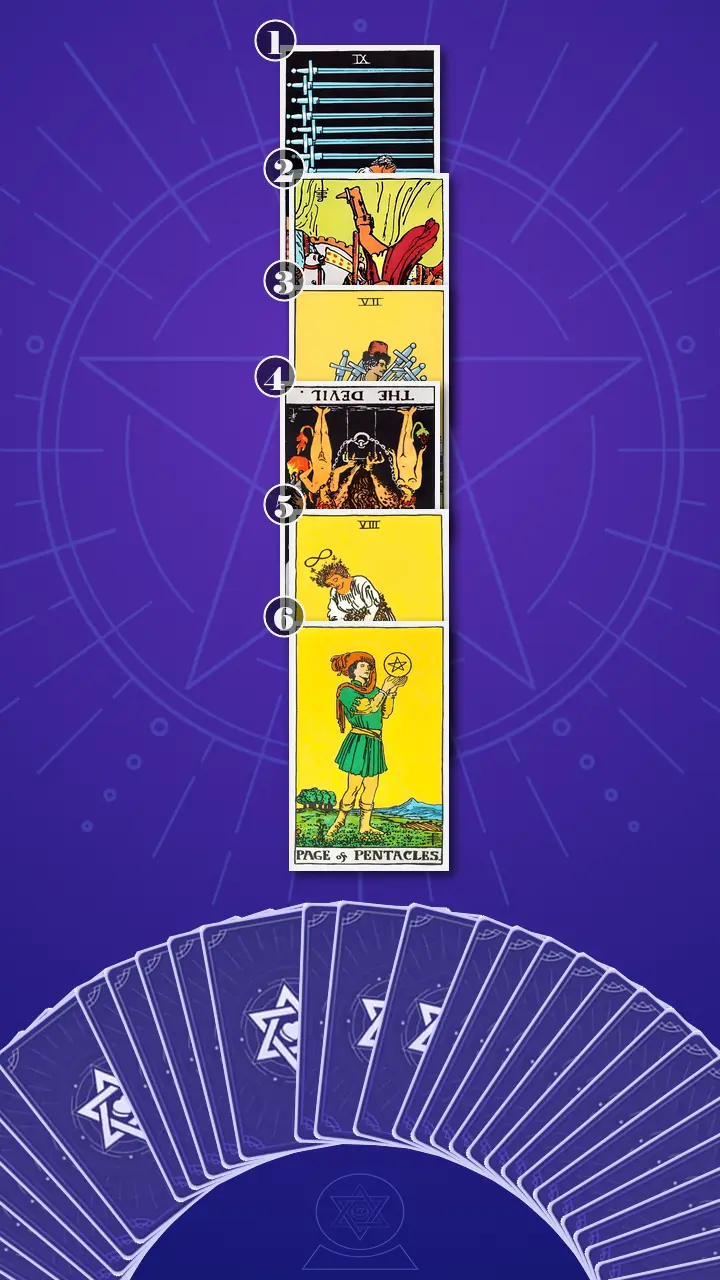
“Today, we’ll use a spread I call the Four-Layer Insight Ladder · Context Edition,” I said, laying six cards in a straight vertical line, like rungs descending into a basement and back up with a flashlight.
For you reading this: this is how tarot works at its most practical. We’re not predicting what the other person “really meant.” We’re mapping an inner pattern—symptom → trigger → root fear → repeating mechanism → medicine → grounded next step. A six-position ladder is the smallest structure that still gives actionable advice without turning your life into a courtroom.
I pointed to the rungs we’d pay closest attention to: the first card (the immediate spiral moment), the middle cards (the root fear and the loop that keeps repeating), and the “medicine” card (the pivot from feeling stuck to finding clarity).
The Internal Courtroom at 1:12 a.m.
Position 1 (Surface Reaction): When Your Brain Opens “Reasons This Doesn’t Count”
“Now flipping over is the card that captures your immediate emotional-cognitive reaction after receiving the ‘proud of you’ text,” I said. “Nine of Swords, upright.”
I didn’t even have to embellish it. The card already looked like her Tuesday night: upright in bed, darkness, thoughts lined up like weapons on the wall.
“This is you in a Toronto apartment with the radiator clicking, phone brightness down, rereading ‘proud of you’ like it’s evidence you have to audit,” I translated. “Your brain opens a private Slack thread called ‘What I messed up’ and starts dropping receipts—awkward phrasing, the one question you fumbled, the moment your voice shook.”
“The key here,” I added, “is energy. This is Air energy in excess—not ‘thinking’ as a useful tool, but thinking as a self-prosecution loop. Your body braces like you’re being attacked, even though the threat is only an idea.”
Jordan gave a short laugh—sharp, almost annoyed—and then her eyes softened. “That’s… so accurate it’s kind of mean,” she said. Her fingers tightened around the cup, then loosened, like her hands didn’t know whether to defend her or let her be seen.
I kept my voice steady. “Your ‘fraud’ feeling isn’t a truth detector. It’s a vigilance habit.”
Position 2 (Trigger): Why Validation Feels Like Pressure
“Now flipping over is the card that shows what the praise specifically activates in you,” I said. “Six of Wands, reversed.”
“This is the spotlight you didn’t consent to,” I told her. “A supportive text arrives, and immediately you want to shrink it. You type ‘lol it was nothing,’ delete it, retype, add a disclaimer, delete again. You start managing exclamation points like they’re risk levels.”
“In reversal, the recognition energy is blocked,” I explained. “The laurel wreath—earned acknowledgement—feels unsafe to wear. So you knock it off before anyone can ask you to wear it tomorrow.”
Jordan’s mouth pressed into a thin line. Her gaze flicked away from the card, toward the pastry case, like she wanted to disappear into something easier than being perceived.
“You’re not rejecting them,” I said, naming it cleanly. “You’re pre-empting the pressure.”
Position 3 (Root Fear): The “Getting Away With It” Story
“Now flipping over is the card that reveals the deeper root fear underneath feeling like a fraud,” I said. “Seven of Swords, upright.”
On the card, the figure carried swords like stolen goods and glanced over their shoulder, waiting for the sirens.
“Under the fraud feeling is a sneaky story,” I said. “That your competence is something you smuggled in, not something you built. That your wins are borrowed—from luck, timing, someone else’s low standards—and any minute now, the ‘gotcha’ moment will happen and the pride will be revoked.”
“This is Air energy in deficiency of trust,” I added. “You don’t lack skill. You lack permission to count your own effort as real.”
Jordan nodded once—slowly. Not agreement like a performance review. More like recognition, the kind that lands behind the ribs.
Position 4 (Repeating Pattern): The Praise-as-a-Contract Subscription
“Now flipping over is the card that names the self-reinforcing system—the mechanism that keeps you trapped in proving and minimizing,” I said. “The Devil, reversed.”
I tapped lightly near the loose chains in the image. “This is the loop: praise triggers a hidden contract in your head—‘If I accept this, I’m agreeing to never mess up.’ So you try to buy safety with output. You open your laptop to ‘just check one more thing,’ start a new to-do list, offer to take an extra task. Like being stuck on a never-ending ‘prove it’ subscription you forgot you signed up for.”
“Reversed,” I said, “this isn’t doom. It’s a blockage starting to loosen. The chains are real, but they’re also looser than they feel—because they’re made of habit, not handcuffs.”
Jordan exhaled, and the sound surprised her—like she didn’t realize she’d been holding her breath since Tuesday. Then she frowned. “Okay, but if I stop proving it, won’t I just… get exposed?”
“That question,” I told her, “is the exact doorway out.”
When Strength Spoke: Calm Hands, Steady Breath
Position 5 (Medicine): The Antidote to the Fraud Narrative
I let the café noise blur for a second—the steam wand, the low conversations, a spoon tapping porcelain—until it all felt like background instead of pressure.
“Now flipping over is the card that provides the key shift—self-trust and self-compassion that directly counters the fraud narrative,” I said. “Strength, upright.”
“This is the antidote,” I told her. “Not more achievement—steadiness. Strength is staying present with the flinch after ‘proud of you’ without negotiating yourself down. You don’t wrestle your inner critic into silence; you hold it gently and firmly.”
As a café owner, I’ve watched thousands of people meet their own intensity over a cup. So I used my Relationship Stage Diagnosis—but not for dating. For the relationship Jordan had with praise.
“Right now,” I said, “your relationship with recognition is like taking an espresso shot on an empty stomach. It’s potent. It hits fast. And your nervous system interprets that jolt as danger. Strength is learning to receive praise more like a latte: the same coffee, but held in something softer—warmth, breath, body. Not diluted. Integrated.”
I watched Jordan’s posture. Her shoulders were still high. Her jaw still tight. She was stuck in the old reflex: if I accept this, I’m promising perfection.
Stop treating praise like a contract you must uphold, and start meeting your inner lion with calm hands and steady breath.
Silence—just long enough for the sentence to settle like coffee grounds in the bottom of a cup.
Jordan’s reaction came in a chain. First, a freeze: her breath paused, her eyes fixed on the card like it had just said her legal name. Then cognition seeped in: her gaze went slightly unfocused, as if replaying Tuesday night with a new camera angle—less prosecutor, more witness. Then the release: her shoulders dropped a few millimeters, and she let out a shaky exhale that sounded half like relief, half like grief for how long she’d been carrying this alone.
“But if I do that,” she said, voice small and a little sharp, “doesn’t it mean I’ve been doing it wrong the whole time?”
I shook my head. “It means you were surviving with the tools you had.” I kept my tone practical. “And now you have a better tool. Praise isn’t a verdict. It’s data.”
“Now,” I asked her, “with this new lens—can you think back to last week? Was there a moment when someone validated you, and this insight could’ve changed how it felt in your body?”
Jordan blinked hard. “In the meeting room,” she said. “Someone said ‘great job’ and I smiled, but inside I was already listing everything I’d fix. If I’d… met it with breath first? Maybe I wouldn’t have sprinted back to my desk like I’d stolen something.”
That was the step across the threshold: from shame-driven self-prosecution after praise to the first taste of calm ownership of effort. Not perfect confidence—just a steadier place to stand.
The One-Cup Protocol: Actionable Advice for the Next 7 Days
I gathered the ladder into a single story for her: “Your mind goes into an Air-heavy courtroom the moment praise arrives (Nine of Swords). Recognition hits the trigger switch from comfort to obligation (Six of Wands reversed). Underneath is the fear you’re ‘getting away with it’ (Seven of Swords). The repeating mechanism is the contract story—the prove-it subscription (Devil reversed). And the way out is Strength: nervous-system steadiness first, then grounded proof built from real effort (Page of Pentacles).”
“Your cognitive blind spot,” I told her, “is that you’re treating a kind text like it contains fine print. You assume accepting praise equals signing a contract to never slip. The transformation direction is simpler, but not easy: shift from treating praise as a test you must pass to treating it as data you can receive and integrate.”
Then I made it practical—small steps, low friction, real life.
- The One-Sentence Receive RuleSend (or draft) exactly one sentence: “Thank you—that means a lot.” No qualifiers, no jokes, no explanation. (If you can’t send it yet, rehearse it in Notes.)Expect your brain to call it “cringe” or “cocky.” That’s old safety talking. Your job is not to feel confident—just to stop negotiating yourself down.
- The Contract-Breaking Pause (90 seconds)After you send it, put your phone face-down for 90 seconds. Notice throat/chest/stomach sensations without fixing them. If you spiral, label it: “My brain is building a case.” Then take 3 slow exhales.If 90 seconds feels impossible, do 20 seconds. Consistency beats intensity—this is nervous-system training, not a personality makeover.
- Cup Bottom Receipts (My Café Version of an Evidence Log)Once this week, after you finish a coffee or tea, look at what’s left in the bottom of the cup for ten seconds. Not to “predict the future”—to practice my Cup Bottom Divination as a grounding cue. Then write two bullets in a note titled “Receipts (Not Perfection)”: (1) “I did ____.” (2) “I practiced ____.”Keep it behavioral, not identity-based. Build receipts, not arguments. You’re collecting reality, not trying to win a debate with your feelings.

A Week Later: The Quiet Proof
A week later, Jordan messaged me a screenshot—not of a new achievement, but of a simple text she’d sent: “Thank you—that means a lot.” Full stop. Under it, she’d typed: “Phone face-down. Didn’t die.”
She told me she slept through the night once—no 1:12 a.m. internal courtroom. In the morning, the first thought still arrived—what if they overestimated me?—but this time she noticed it, exhaled, and made coffee without opening her laptop to “pay the premium.”
That’s the journey to clarity I trust most: not a dramatic transformation, but a nervous system learning—inch by inch—that being seen doesn’t have to equal danger.
When someone says they’re proud of you, and your throat tightens like you’re about to be exposed, that’s the exact ache of wanting to be seen and supported while fearing that being seen will cost you safety.
If you let one compliment be true for just 30 seconds this week—without paying for it with extra work—what might you notice about yourself?
This story is adapted from psychological research, written so that those in a similar struggle can see their own pattern in it — and find their next step clearly.These insights are not a substitute for professional psychological, medical, legal, or financial advice.
Learn more about our Journey to Clarity.
How did this insight land for you?
🫂 This Resonates Deeply
🌀 Living This Story
✨ Now I See Clearly
🌱 Seeing New Possibilities
🧰 Useful Framework
🔮 The Confirmation I Needed
💪 Feeling Empowered
🚀 Ready for My Next Step
Author Profile
 AI
AI“For twenty years, I’ve listened to stories unfold over the warm aroma of coffee. I don’t believe life’s complexities always require grand theories to be solved; often, we just need a safe place to tidy up our reality. I don’t offer high-minded preaching—just grounded, heartfelt insights to help you regain your sense of control amidst the clutter of daily life.”
In this Love Tarot Reading :
Core Expertise
- Daily Friction Deconstruction: Stripping away dramatic accusations to locate the mundane, mechanical breakdowns in your shared daily routine.
- Emotional Clutter Sorting: Separating actual relationship incompatibility from the stress of household chores, fatigue, or external life pressure.
Service Features
- The 24-Hour Micro-Boundary Reset: A highly pragmatic exercise to establish one non-negotiable physical or time boundary in your shared space to instantly reduce friction.
Also specializes in :
Explore Related Patterns:
Imposter SyndromeJordan's stomach drop after the 'proud of you' text is not treated in the story as simple nervousness; it becomes an immediate audit of whether the praise was deserved. Her mind turns a warm message into a case file, replaying the question she fumbled, the shaky voice, and the possibility that the other person has overestimated her. That is the core mechanism of Imposter Syndrome in this narrative: competence is not integrated as something built through effort, but held at a distance as something borrowed from luck, timing, or someone else's low standards. Because praise lands on an unstable sense of earned competence, it does not soothe her. It raises the stakes. You can see the pattern most clearly in the way recognition becomes a threat of future exposure. Accepting the compliment feels like accepting a standard she must now maintain perfectly, so she tries to shrink the moment, add disclaimers, or prove harder. The fraud feeling is therefore not evidence that she is false; it is a vigilance habit around being seen.
Visibility Shame LoopJordan does not simply dislike attention; her body reacts to the 'proud of you' text as if visibility itself has become unsafe. Her throat locks, her stomach drops, and her first impulse is to make the reply smaller, safer, and less claimable. Visibility Shame Loop fits because the story repeatedly shows recognition turning into exposure. The compliment offers support, but her nervous system reads being seen as the start of being evaluated, tested, or eventually found out. That creates a loop where visibility triggers shame, shame triggers shrinking, and shrinking prevents the praise from being metabolized as real support. You can feel the loop in the detail that she is not rejecting the sender. She is pre-empting the pressure she believes visibility will create. The pattern is not about arrogance or ingratitude; it is about a learned association between being acknowledged and losing psychological safety.
Productivity as SafetyJordan's loop after praise moves quickly from emotional discomfort into output. She opens the laptop to check one more thing, starts another to-do list, and feels pulled to take on extra work, as if the compliment has created a debt she now has to service. Productivity as Safety captures the defense underneath that behavior. More work becomes a way to manage the fear of exposure, not just a practical response to workload. The moment praise creates uncertainty, productivity offers a temporary feeling of control: if she keeps producing, maybe no one can question whether the recognition was valid. You can see why the pattern feels convincing from the inside. It gives her something concrete to do when receiving praise feels too vulnerable. But the cost is that validation never gets to land; it is immediately converted into labor, and the body learns that being seen must always be paid for.
Self-Judgment LoopJordan's mind responds to praise by opening an internal courtroom. Instead of letting 'proud of you' register as warmth, she begins collecting evidence against herself: the awkward phrasing, the fumbled question, the voice that shook. Self-Judgment Loop is the mechanism because the story shows judgment becoming self-reinforcing. The more she reviews possible flaws, the more credible the fraud feeling seems; the more credible it seems, the more her mind searches for additional proof. This is not useful reflection. It is a closed feedback loop where thought becomes prosecution. You can notice the shift when the story reframes her fraud feeling as a vigilance habit rather than a truth detector. That distinction matters: the pattern is not that she has standards, but that her inner evaluator keeps treating support as a cue to build a case against her own competence.
Self-SilencingJordan's drafted reply shows the pattern in miniature: she cannot simply let 'thank you' stand. She wants to make it smaller, safer, less exposed, as if accepting the full warmth of the message would be too much to hold. Self-Silencing fits because her protective move is to reduce her own visible claim on the moment. She is not attacking the other person or rejecting the praise outright. She is muting herself inside the exchange so the recognition carries less weight, less expectation, and less risk. You can see how this keeps the fraud feeling intact. When she negotiates herself down, she avoids the immediate discomfort of being seen, but she also deprives herself of the experience of receiving support without apology. The pattern preserves safety by shrinking presence.
Tunnel VisionJordan's attention does not spread evenly across the whole event. After the 'proud of you' text, her mind zooms in on the parts that could disqualify her: the question she fumbled, the awkward phrasing, the possible future standard she might fail to meet. Tunnel Vision fits because the cognitive field narrows under pressure. The supportive meaning of the text is technically present, but it gets pushed to the edge while threat cues take over the center. Her brain is not asking, 'What evidence supports that I did well?' It is asking, 'Where is the hidden risk?' You can see how this supports the fraud feeling without being identical to it. The narrowed attention supplies the raw material for the larger pattern: if she only looks at possible mistakes, praise will always feel inaccurate, premature, or unsafe to receive.
Explore Related Struggles:
Compliment Debt LoopAfter the proud-of-you text, Jordan does not just feel awkward and move on. She starts negotiating with the compliment, editing her reply, managing her tone, and later reaching for extra work as if praise has created a balance she now has to pay down. Compliment Debt Loop captures the moment recognition turns into obligation. You receive warmth, but your system converts it into a contract that says you must keep earning the right to have been praised. A simple kind message starts to feel like fine print, and acceptance feels dangerous because it seems to raise the standard for every future version of you. That is why the laptop, the new to-do list, and the extra task matter. They are not random productivity habits in the story; they are repayment behaviors. The fraud feeling persists because every compliment becomes a bill, and every bill demands another performance before you can feel temporarily safe again.
Visibility-Safety SplitJordan’s proud-of-you text lands in a quiet apartment, but her body reacts as if the room has become a spotlight. Her throat locks, her stomach drops, and the first practical move is not to receive the warmth, but to make her thank-you smaller and safer. That is the core of Visibility-Safety Split. You want the relief of being seen, yet the moment recognition makes you visible, your system reads visibility as exposure. Support stops feeling like connection and starts feeling like a place where someone could discover you are not as capable as they think. The story keeps returning to the same pressure point, from the late-night text to the meeting-room great job. Being noticed does not simply feel good or bad; it creates a collision between the need for validation and the need to stay protected. The work is not to force confidence, but to notice that being seen and being unsafe have been fused into the same body signal.
Inner Tribunal LockJordan’s night turns into an internal courtroom after one kind text. She rereads the message as if it is evidence, then her mind lines up awkward phrasing, the fumbled question, and the shaky voice as proof that the compliment should be challenged. Inner Tribunal Lock is not ordinary reflection. You are not calmly reviewing what could improve; you are trapped in a private prosecution cycle where every piece of praise summons a counterargument. The body freezes while the mind argues, and the result is a verdict that keeps getting postponed but never clears you. The same structure appears again in the meeting room, where she smiles at great-job feedback while already listing fixes inside. That split is what makes praise feel unsafe. You can appear gracious on the outside while an internal judge is still demanding evidence, objections, and penalties before allowing you to stand in what you did well.
Evidence DisconnectionJordan is given a clear piece of positive data, but her mind immediately opens a case file against it. The praise does not connect to the effort she actually put in; it gets rerouted into questions about whether the other person missed something, overestimated her, or is about to take the recognition back. Evidence Disconnection shows up when proof exists but cannot land. You may have done the work, received the feedback, and met the moment, yet your internal system treats those facts as inadmissible. Competence becomes something you are accused of faking instead of something you are allowed to count. The story’s evidence-log practice matters because Jordan does not need more achievement as much as she needs a bridge between reality and self-recognition. When your receipts never register, every compliment feels like a clerical error. The fraud feeling grows in the gap between what happened and what you allow yourself to believe happened.
Explore Related Emotions:
Cautious ReceptivityJordan’s shift begins in very small physical movements: a few millimeters of shoulder release, a shaky exhale, the phone turned face-down after sending a clean thank-you. The story does not ask her to become instantly confident; it asks her to stay with recognition without immediately reducing herself. The coffee metaphor gives that shift a body. Praise stops being an espresso shot on an empty stomach and becomes something warmer, slower, and more holdable. You are still receiving the same recognition, but you are learning to let it move through breath and sensation before it becomes a contract. Cautious Receptivity fits the upright movement because it captures a careful willingness to receive. The feeling is not effortless ease; it is the first practiced experience of letting support be true for a few seconds without paying for it with extra work.
Imposter Exposure FearThe story keeps returning to the same inner image: Jordan has not simply succeeded, she feels as if she has “smuggled” competence into the room. When someone notices her effort, the recognition does not stabilize her; it makes her glance over her shoulder for the moment when the pride gets taken back. This is why the supportive text feels dangerous. Being seen becomes linked with being found out, so the nervous system treats visibility like a countdown. The praise is not heard as “you did well”; it is heard through the fear that someone has overestimated her and will eventually correct the record. Imposter Exposure Fear names the specific edge of the fraud feeling. You are not only worried that you are inadequate; you are bracing for the imagined instant when other people discover the gap you already feel inside.
Impostor AnxietyJordan receives a simple “proud of you” text at 11:52 p.m., and her body reacts as if someone has opened an audit file on her. Her throat locks, her stomach drops, and the blue phone glow becomes less like a moment of support and more like evidence under review. That reaction gives the fraud feeling its shape. The praise does not land as confirmation of real effort; it triggers a scan for what might disqualify her from receiving it. You can feel the mind moving from “someone sees me” to “what if they saw the wrong version?” Impostor Anxiety fits because the story is built around competence that cannot fully be owned in the body. You are not simply doubting a compliment; you are trying to survive the sensation of being recognized while a part of you is already preparing a defense case against yourself.
Shame SpiralJordan does not just hesitate before replying; she starts editing herself down in real time. Notes becomes a tiny holding cell for every version of “thank you” that feels too exposed, too proud, or too easy to misread. That is the spiral: warmth arrives, then the body tightens around it, then the mind searches for a safer, smaller version of the self to present. The compliment has not attacked her, but the internal response behaves as if softness needs to be made defensible. Shame Spiral fits because the story shows a feeling that feeds on its own attempts to reduce risk. You shrink the reply to shrink the exposure, and the shrinking itself confirms the sense that something about being seen is unsafe.
Visibility PressureA supportive text arrives, and Jordan immediately starts making herself smaller around it. She drafts “lol it was nothing,” edits the exclamation points, adds disclaimers, and tries to turn a clean thank-you into something less exposed. The pressure is not coming from an actual demand in the text. It comes from the way recognition places her under a spotlight she did not choose. Once seen, she feels she has to keep being worth seeing, as if the compliment has silently raised the stakes of her next move. Visibility Pressure fits because the ache is tied to being perceived. You want the warmth of support, but the moment it arrives, your body prepares for the cost of having a visible self.
Capability ShameJordan is not shown lacking effort; she is shown struggling to let effort count. The story says her competence feels borrowed from luck, timing, or someone else’s low standards, which means the achievement exists externally but has not become internally claimable. That split creates a particular kind of sting. Praise asks her to stand beside her own capability, and she feels as if doing so would be overclaiming. The question “if I stop proving it, won’t I just get exposed?” shows how fragile ownership of her own skill feels. Capability Shame fits because the discomfort is not only about approval from another person. It is about the painful feeling that your own ability is somehow illegitimate, even when the evidence of effort is sitting right in front of you.
Cautious Self-TrustA week later, Jordan still has the first thought: “what if they overestimated me?” The difference is that she notices it, exhales, and makes coffee without opening her laptop to pay the premium. That small sequence is the emotional proof of the whole reading. Self-trust is not presented as a grand identity change; it appears as the ability to let the old alarm ring without immediately obeying it. You can register the fear of being exposed and still choose not to turn praise into another work debt. Cautious Self-Trust fits because the ending is steady but not overblown. You are beginning to trust the evidence of your effort, not because the doubt has vanished, but because it no longer gets to run the entire room.
Self-Audit AnxietyAfter the text, Jordan’s mind starts collecting receipts against itself: awkward phrasing, the question she fumbled, the moment her voice shook. A kind message becomes the trigger for a private review process where every detail is checked for disqualifying evidence. This inner audit gives the fraud feeling its procedure. Instead of asking whether the praise can be received, the mind asks whether it can be disproved. You are pulled into a case-building mode where the goal is not clarity but pre-emptive self-protection. Self-Audit Anxiety fits because the story is full of inspection language: evidence, receipts, fine print, courtroom, verdict. The emotional weather is the keyed-up state of scanning yourself for errors before anyone else can find them.
Tenderness OverwhelmThe text is gentle, but Jordan’s body meets it like a high-voltage current. Her throat locks, her hands grip the cup, and later her reaction to being understood comes out as a shaky exhale that is part relief and part grief. This matters because the story does not portray her as cold toward support. It shows support touching a place that is extremely sensitive. The warmth is wanted, but it arrives with more intimacy than her system can immediately absorb. Tenderness Overwhelm names that collision between longing and capacity. You may want to be seen and supported, but when care actually reaches you, the body can flood before the mind has time to decide that it is safe.
Grounded PresenceThe reading repeatedly brings Jordan back to concrete anchors: the breath before the cards, the cup in her hands, the phone face-down, the stomach and throat sensations noticed without fixing them. These details turn the spiral into something observable. That matters because the fraud feeling thrives when it becomes a total atmosphere. Grounding gives it edges. You can name “my brain is building a case” and return to the body before the courtroom takes over. Grounded Presence fits the story’s practical medicine. The emotional movement is the ability to stay in the room with the sensation of praise, rather than disappearing into analysis, apology, or extra work.
Explore Related Contexts:
Praise as Performance ContractAfter praise lands, Jordan does not simply receive it and move on. The story shows her opening the laptop to 'just check one more thing,' starting a new to-do list, and offering to take an extra task, as if acknowledgment has created a bill she now has to pay. The external structure here is transactional. A supportive message becomes loaded with implied fine print: if she accepts being seen as competent, she feels pressed to keep proving that the judgment was not a mistake. That is why the story's language of a 'prove-it subscription' matters; it describes a recurring social contract that turns validation into obligation. Praise as Performance Contract captures the exact pressure behind the fraud feeling. You are not only reacting to kindness; You are reacting to the workload, vigilance, and future expectations that recognition seems to activate. The path back to agency begins by separating acknowledgment from extra labor, so praise can become information instead of an unpaid invoice.
Workplace Recognition PressureJordan receives a 'proud of you' text at 11:52 p.m. and immediately starts treating a warm message like a social exposure event. The scene is concrete: phone glow, radiator clicking, Notes open, a simple thank-you being rewritten until it feels smaller and safer. That reaction is not just about a compliment landing awkwardly. The text places her work identity under a kind of informal review, where recognition feels like it might raise the standard she has to meet next. You can see the external pressure in how she edits tone, adds disclaimers, and tries to lower the social stakes before anyone can expect more from her. Workplace Recognition Pressure fits because the story turns praise into a visible performance moment. The pressure is not coming from an openly hostile person; it comes from the social meaning of being recognized while still feeling professionally unproven. For You, the useful audit point is that the problem is not whether the praise was real, but how quickly recognition becomes a demand to defend your right to receive it.
Always On AvailabilityThe first recognition moment happens at 11:52 p.m., inside Jordan's apartment, with her phone brightness turned down and the radiator clicking. The later pattern is just as concrete: after validation, she is pulled toward the laptop to check one more thing and make sure she has not left any proof of imperfection behind. Always On Availability fits because the story shows work-adjacent evaluation leaking into personal time and private space. The phone carries praise into the bedroom, Notes becomes a place to manage risk, and the laptop stays close enough to turn acknowledgment into more checking. Her apartment is not functioning as a clean boundary from performance pressure. For You, this context points to the external container around the fraud feeling. The issue is not only the message itself; it is the always-reachable setup that lets praise, reply management, and self-auditing continue after the work moment should be over. Reclaiming clarity means noticing where recognition is being allowed to reopen the workday.